
Professional Creosote Removal in Seattle, WA
Creosote buildup is the #1 cause of chimney fires in America. Our thorough, professional cleaning eliminates all three stages of hazardous creosote deposits — keeping your family safe and your chimney functioning at peak efficiency.
How It Works
Assessment
We inspect your chimney to determine the type and stage of creosote buildup. Stage 1 is flaky, Stage 2 is tar-like, and Stage 3 is glazed and extremely flammable.
Clean & Treat
Using professional-grade rotary brushes and, when needed, chemical treatments, we remove every trace of dangerous creosote from your flue system.
Protect
We apply a preventive coating, provide a safety report, and share tips to minimize future buildup. Your chimney is clean, safe, and ready to use.
Signs of Dangerous Creosote Buildup
- ! Black, flaky deposits visible in the firebox
- ! Thick, tar-like coating on flue walls
- ! Hard, shiny glaze that's difficult to scrape (Stage 3)
- ! Reduced draft — smoke doesn't rise properly
- ! Strong, acrid smell from the fireplace (even when not in use)
- ! It's been over 12 months since your last cleaning
- ! You burn unseasoned or wet wood regularly
- ! Previous chimney fire (even a small one)
Pricing Guide
Light
$221
Flaky/dusty creosote, standard sweep, anti-creosote coating
Moderate
$470
Tar-like coating, rotary brush cleaning, smoke shelf treatment
Extensive
$553
Glazed creosote, chemical treatment, high fire risk — urgent
Prices are estimates for the Seattle metro area. Exact pricing depends on creosote stage, flue size, and buildup severity. You get a detailed written quote after the $99 inspection — credited toward the work — before anything begins. All prices tax included.
Why Choose Us
What Customers Say
“Seattle Chimney Pros saved us from what could have been a disaster. They found a major crack in our flue liner during a routine inspection. Professional, honest, and fairly priced!”
“We've used three different chimney companies over the years. Seattle Chimney Pros is by far the best. They showed up on time, explained everything, and the creosote removal was thorough.”
“Had an emergency leak during a rainstorm. Called Seattle Chimney Pros and they were at my house within 2 hours. Fixed the crown and flashing the next day. The real deal!”
“Our gas fireplace hadn't been serviced in years. They did a full maintenance check, replaced a faulty valve, and now it runs perfectly. Fair pricing with no upselling.”
“The team rebuilt the top section of our 80-year-old chimney. The brickwork is flawless — you can't even tell which part is new. True craftsmen.”
“I was quoted $4,000 by another company. Seattle Chimney Pros gave an honest assessment and fixed the issue for under $1,200. They've earned a customer for life.”
“We had our chimney waterproofed before the rainy season. No leaks all winter — first time in 10 years. Wish we'd found them sooner. Highly recommend!”
“Fast, clean, and professional. They installed a new chimney cap and inspected the crown in one visit. Everything explained clearly with photos. 5 stars.”
“Our old clay liner was crumbling. They installed a stainless steel liner and the difference in draft is incredible. Job done right the first time.”
Frequently Asked Questions
What is creosote and why is it dangerous? +
How often should creosote be removed? +
What are the stages of creosote? +
How much does creosote removal cost in Seattle? +
Can I remove creosote myself? +
Does burning wet wood cause more creosote in Seattle? +
What's the difference between chimney sweeping and creosote removal? +
Can creosote buildup cause carbon monoxide poisoning? +
Learn More
The Science of Creosote Formation — Why It Builds Up in Your Chimney
Understanding how creosote forms is the first step toward preventing dangerous buildup. When you light a wood fire, the combustion process releases volatile organic compounds (VOCs), water vapor, particulate matter, and unburned carbon particles into the rising smoke. As this hot, moisture-laden smoke travels upward through your flue, it encounters cooler surfaces — especially in the upper third of the chimney and near the chimney crown where outside temperatures in Seattle regularly hover between 35°F and 50°F during winter months. When the smoke temperature drops below approximately 250°F (the condensation threshold), these volatile compounds transition from gas to liquid and then to solid form, adhering to the inner walls of the flue liner. This condensation process is identical to the way moisture forms on a cold glass of water in summer — except instead of water, you're depositing a complex mixture of tar, creosol, phenolic compounds, and polycyclic aromatic hydrocarbons (PAHs). The chemical composition of creosote includes over 300 identified compounds, many of which are classified as carcinogenic by the EPA. The primary components are guaiacol (a methoxy phenol derived from lignin combustion), cresols (methylated phenols that give creosote its distinctive sharp odor), and various PAHs including benzo[a]pyrene — one of the most potent known carcinogens. Temperature is the single most important variable in creosote formation. The flue can be divided into three temperature zones: the combustion zone (600°F–1,100°F) at the firebox, the transition zone (250°F–600°F) in the mid-flue, and the condensation zone (below 250°F) in the upper flue and near the top. Seattle's cool, damp climate means your chimney's condensation zone is larger than in warmer, drier regions — sometimes extending to two-thirds of the flue length during the shoulder seasons of fall and spring when homeowners light short, smoldering fires. The moisture content of the wood you burn dramatically amplifies this process. Freshly cut 'green' wood contains 50–60% water by weight. When burned, all that moisture must be evaporated before combustion can occur, robbing the fire of heat energy and producing cooler, wetter smoke that condenses faster and deposits more heavily. This is why Seattle-area chimneys often accumulate creosote 2–3 times faster than chimneys in dry climates like Phoenix or Denver — the combination of damp local firewood, cool ambient flue temperatures, and frequent short burns during our mild but prolonged winters creates the perfect storm for aggressive creosote accumulation.
Stage 1, Stage 2, and Stage 3 Creosote — A Visual Identification Guide
Not all creosote is the same. The Chimney Safety Institute of America (CSIA) classifies creosote into three distinct stages, each with different characteristics, danger levels, and removal methods. Knowing which stage you're dealing with helps you understand the urgency and the type of professional treatment required.
Stage 1 Creosote (Soot) — Stage 1 creosote appears as a light, dusty, or flaky black deposit. It has a velvety or powdery texture, similar to fine black sand or fireplace soot. When you run your finger along the inside of the firebox opening, Stage 1 deposits leave a gray-black smudge that wipes off easily. The smell is mild — a faint smoky odor that most homeowners associate with a 'normal' fireplace scent. Stage 1 creosote typically forms during well-managed fires with seasoned wood, adequate airflow, and high combustion temperatures. It represents the lightest and least dangerous form of buildup. A standard chimney sweep with professional brushes removes Stage 1 deposits effectively. However, even Stage 1 creosote is flammable when accumulated in sufficient quantity — the NFPA 211 standard recommends cleaning whenever deposits reach 1/8 inch thickness, regardless of stage.
Stage 2 Creosote (Tar-like Flakes) — Stage 2 is where creosote becomes significantly more dangerous. It appears as thick, shiny black flakes that resemble dried tar or hardened black paint chips. When you look up into the flue from the firebox with a flashlight, Stage 2 creosote reflects light with a dull, greasy sheen. The texture is dense, crunchy, and brittle — like breaking apart a piece of hard toffee. The smell is notably stronger: a sharp, acrid, chemical odor that many homeowners describe as 'bitter' or 'chemical-like,' especially noticeable on humid Seattle days when moisture in the air activates the volatile compounds. Stage 2 creosote forms during fires with restricted airflow — typically when the damper is partially closed to extend burn time, or when smoldering fires are left to die overnight. This practice is extremely common in Seattle, where homeowners often load up the firebox before bed and close down the damper. Stage 2 deposits require professional-grade rotary cleaning tools — flat wire brushes or chain-style flails spinning at high RPM — to dislodge. Standard chimney brushes alone are insufficient.
Stage 3 Creosote (Glazed Creosote) — Stage 3 is the most dangerous form of creosote and the most difficult to remove. It appears as a dense, hard, ultra-shiny coating that looks like black glass or lacquer has been painted inside the flue. When tapped with a metal tool, it produces a hard, ceramic-like sound. You cannot scrape it off with your fingernail or a standard brush — it is essentially baked onto the flue liner at a molecular level. The smell is intense and distinctive: a thick, oily, chemical stench that permeates the room even when the fireplace is not in use, particularly during hot summer days when heat radiating through the chimney volatilizes the surface compounds. Stage 3 glazed creosote forms when repeated layers of condensed smoke are subjected to high temperatures — essentially, the earlier creosote deposits get 'cooked' by subsequent fires, fusing into a vitrified glaze. This happens most often in chimneys with significant Stage 2 accumulation that continues to be used without cleaning. Stage 3 creosote is extraordinarily flammable. It can ignite at temperatures as low as 451°F (the same temperature at which paper burns — not a coincidence, as Ray Bradbury's famous novel title references this exact phenomenon with combustible materials). Once ignited, Stage 3 creosote burns at temperatures exceeding 2,000°F — hot enough to crack clay flue liners, warp stainless steel liners, ignite adjacent wood framing, and spread fire to the roof structure. Removal requires specialized chemical treatments (typically sodium hydroxide-based products applied in multiple sessions) that break the molecular bonds of the glazed deposit, softening it over 24–48 hours so it can then be mechanically removed with rotary tools. In severe cases, the flue liner may be too damaged for chemical treatment and will require complete chimney relining.
Creosote Prevention Guide for Pacific Northwest Homeowners
Prevention is always better (and cheaper) than cure. For Seattle-area homeowners who heat with wood, following these evidence-based prevention strategies can reduce creosote accumulation by 60–80% between professional cleanings.
Choosing the Right Firewood for the Pacific Northwest — The species of wood you burn matters enormously. The best firewood options available in the Seattle/Puget Sound area, ranked by heat output and creosote potential, are: Douglas fir — the most widely available local firewood, Douglas fir burns hot (21.4 million BTUs per cord) and relatively clean when properly seasoned. It requires 12–18 months of seasoning time in our climate. Many Seattle firewood suppliers sell it as 'seasoned' after only 6 months — this is not enough. Always verify with a moisture meter. Red alder — a Pacific Northwest native, alder seasons faster than any local hardwood (6–12 months). It burns cleaner than fir with slightly lower heat output (17.5 million BTUs per cord). Alder produces a mild, pleasant smoke and is an excellent choice for homeowners concerned about creosote. Bigleaf maple — the hardwood gold standard for our region. Maple burns long and hot (24 million BTUs per cord) with relatively low creosote production. The catch: it requires 18–24 months of proper seasoning, and it's harder to find than fir or alder locally. Madrone (Pacific madrone) — when you can get it, madrone is the densest hardwood native to western Washington. It burns extremely hot (28+ million BTUs per cord) and very clean. Seasoning time is 18–24 months. Avoid burning: western red cedar (pops, sparks, and produces heavy creosote), Sitka spruce (high sap content, rapid creosote buildup), and any softwood that hasn't been seasoned for at least 12 months. Never burn construction lumber, painted wood, plywood, or pressure-treated wood — these produce toxic creosote compounds and are illegal to burn in King County under Puget Sound Clean Air Agency regulations.
Using a Moisture Meter — A pin-type moisture meter (available for $20–$40 at any hardware store) is the single most effective creosote-prevention tool a homeowner can own. Split a piece of firewood and test the freshly exposed interior face. The reading should be below 20% moisture content — ideally between 15% and 18%. Above 25%, the wood will smolder, produce excessive smoke, and deposit creosote at 3–4 times the rate of properly seasoned wood. We recommend testing every new firewood delivery before accepting it, regardless of what the supplier claims about seasoning time.
Optimal Burning Practices — Creosote forms most aggressively during low-temperature, oxygen-starved burns. To minimize buildup: always start fires with the damper fully open, use the top-down fire-starting method (large logs on bottom, kindling on top) for faster, hotter initial combustion, avoid closing the damper to less than 50% while wood is actively burning, and never leave a smoldering fire overnight. The combustion zone temperature should stay above 300°F at the flue entrance — below this threshold, condensation accelerates dramatically. For homeowners with an EPA-certified wood stove or insert, operate in the 'secondary burn' range indicated by your stove's thermometer for cleanest combustion and minimal creosote production.
Health Risks of Creosote Exposure — What Every Homeowner Should Know
Creosote isn't just a fire hazard — it's a documented health hazard that poses real risks to Seattle families, especially in homes where the fireplace is used frequently during our 6–7 month heating season.
Respiratory Risks — Creosote particles released into the home (through the firebox opening, through gaps in the damper seal, or through cracks in the flue liner) are classified as fine particulate matter (PM2.5). These particles are small enough to penetrate deep into lung tissue. Short-term exposure symptoms include eye irritation, sore throat, coughing, and headache. For individuals with asthma, COPD, or other respiratory conditions, creosote particle exposure can trigger severe bronchospasm and exacerbations. The Puget Sound Clean Air Agency has specifically flagged indoor wood smoke exposure (including creosote off-gassing) as a significant contributor to poor indoor air quality in Seattle homes during winter months.
Cancer Risk from PAHs — The polycyclic aromatic hydrocarbons (PAHs) present in creosote are classified as Group 1 carcinogens by the International Agency for Research on Cancer (IARC). The most concerning compound is benzo[a]pyrene, which is present in all stages of creosote but concentrated most heavily in Stage 2 and Stage 3 deposits. Long-term occupational exposure to creosote (studied extensively in chimney sweep workers dating back to the 18th century) is associated with increased rates of skin cancer, lung cancer, and bladder cancer. While homeowner exposure levels are lower than occupational levels, the EPA recommends minimizing all unnecessary contact with creosote deposits and ensuring adequate ventilation when fireplaces are in use.
Chimney Fire Temperatures and Structural Risks — When creosote ignites inside a chimney, the resulting fire burns at temperatures between 2,000°F and 2,500°F. To put this in perspective, structural steel weakens at 1,100°F and melts at 2,750°F. A chimney fire at these temperatures can crack clay tile flue liners (creating pathways for fire to reach combustible wood framing), warp or collapse stainless steel chimney liners, ignite roof sheathing and rafters within inches of the chimney chase, and cause the mortar in brick chimneys to fail catastrophically, potentially leading to chimney collapse. Many chimney fires go undetected by homeowners — they burn intensely for 5–10 minutes, damage the flue liner, and self-extinguish. The homeowner never sees flames, but the compromised liner now allows subsequent fires to reach the wood structure. This is why a thorough chimney inspection after any suspected chimney fire is critical.
Carbon Monoxide Connection — Heavy creosote deposits restrict the cross-sectional area of the flue, reducing draft capacity. In well-insulated Seattle homes (especially newer construction with tight building envelopes and energy-efficient windows), reduced draft combined with negative pressure from exhaust fans, dryers, and HVAC systems can cause backdrafting — where combustion gases, including carbon monoxide (CO), are pulled back into the living space instead of rising up the chimney. CO is colorless and odorless. At moderate concentrations (100–200 ppm), symptoms mimic the flu: headache, dizziness, nausea, fatigue. At higher concentrations (400+ ppm), CO exposure can cause loss of consciousness and death within hours. The combination of creosote-restricted draft and Seattle's tight home construction makes annual cleaning and chimney inspection a literal life-safety measure, not just a maintenance task.
DIY Creosote Removal vs. Professional Service — What You Can and Can't Do Safely
We understand the appeal of saving money with DIY chimney maintenance. There are some tasks homeowners can safely perform — and others that absolutely require a professional. Here's our honest breakdown.
What Homeowners Can Safely Do — Visual inspection: Using a flashlight, look up into the firebox (with the damper open) and examine the first 2–3 feet of visible flue liner for buildup. If you see a light dusting of gray-black soot, your chimney is in reasonable shape but should still be professionally cleaned annually. If you see thick, shiny, tar-like deposits, call a professional immediately. Exterior check: From the ground, visually inspect the chimney crown, cap, and visible brickwork for cracks, missing mortar, or a damaged chimney cap. Report any issues to your chimney professional during your next service. Firebox cleaning: Removing cold ashes, sweeping the firebox floor, and wiping down the firebox walls with a dry brush is safe for homeowners and helps maintain efficiency.
What Requires a Professional — Stage 2 and Stage 3 removal: These deposits require professional rotary cleaning equipment — flat wire brushes or chain-style flails powered by a drill at 300+ RPM. Using improper tools can damage the flue liner, create cracks, and actually increase fire risk. Chemical treatment: Stage 3 glazed creosote requires industrial chemical application (typically containing sodium hydroxide or potassium hydroxide) that must be applied carefully, allowed to dwell for the prescribed period, and then mechanically removed. These chemicals are caustic and can cause severe burns if mishandled. Professional chimney technicians wear appropriate PPE and understand application rates. Smoke shelf and smoke chamber cleaning: The smoke shelf — the flat area behind the damper where the firebox meets the flue — is the single largest creosote accumulation point in most chimneys, and it's completely inaccessible to homeowners. A professional technician accesses this area with specialized tools and vacuums. Full-length flue cleaning: The entire flue, from the smoke chamber to the chimney crown, must be cleaned uniformly. Roof-top access, proper rod-and-brush technique, and professional-grade HEPA vacuum containment are required.
Why Chimney Sweep Logs Are Insufficient — Chimney sweep logs (such as Creosote Sweeping Log or CSL) are marketed as an easy DIY solution. While they do release a chemical additive (typically aluminum and ammonium chloride compounds) that can help dry out and loosen some Stage 1 deposits, independent testing by the CSIA has shown that they reduce creosote deposits by only 10–15% on average — and they have virtually no effect on Stage 2 or Stage 3 buildup. More importantly, sweep logs do not clean the smoke shelf, do not address the smoke chamber, do not inspect for damage, and can give homeowners a false sense of security that leads them to skip professional cleaning. We recommend sweep logs only as a supplemental measure between annual professional cleanings, never as a replacement.
The Seattle Climate Factor — Why the Pacific Northwest Is the Worst Region for Creosote Buildup
If there were a map of creosote risk across the United States, the Pacific Northwest — and Seattle specifically — would be painted bright red. Our unique combination of climate factors creates conditions that maximize creosote formation in ways that homeowners in drier, warmer, or colder regions simply don't experience.
Short, Smoldering Burns — Seattle's winters are mild compared to the Midwest or Northeast. Daytime temperatures typically range from 40°F to 50°F, and nighttime lows rarely drop below 30°F. This means most Seattle homeowners don't run roaring all-day fires — they light a modest fire in the evening for 2–4 hours of ambiance and supplemental warmth, then let it die. These short, relatively cool burns are the single worst pattern for creosote formation. The fire never reaches the sustained high temperatures needed to burn off volatile compounds before they condense in the flue. By the time the flue warms up enough to improve draft and reduce condensation, the fire is dying down and smoke temperatures are dropping again.
Damp Firewood — The Pacific Northwest Curse — Seattle receives approximately 37 inches of rain annually, with 150+ days of measurable precipitation. Even 'covered' firewood stored outdoors absorbs ambient moisture from our persistent 75–90% relative humidity. Wood stored in a carport, under a tarp, or against the side of the house will measure 25–35% moisture content after just a few weeks of exposure to Seattle's winter air — even if it was properly seasoned when delivered. This means that many Seattle homeowners are unknowingly burning partially wet wood for most of the heating season, producing the cool, moisture-laden smoke that deposits creosote most aggressively.
Cool Flue Temperatures — Masonry chimneys in Seattle's climate take a long time to warm up. An exterior chimney (one built on the outside wall of the house, common in older Seattle neighborhoods like Ballard, Wallingford, Greenwood, and Capitol Hill) may have a flue temperature of just 40–50°F when you light your first fire of the evening. The smoke must travel through 15–25 feet of cold masonry before exiting — and every inch of that cold liner is a condensation surface. By comparison, an interior chimney (running through the center of the house) stays warmer because it's surrounded by heated living space. If you have an exterior chimney in Seattle, you're at significantly higher creosote risk and should consider cleaning twice annually if you use your fireplace regularly.
Recommended Cleaning Frequency for Seattle Homeowners — Based on 15+ years of experience serving the greater Seattle area, here are our recommendations: Light use (fewer than 20 fires per season): Annual cleaning and inspection, scheduled before the heating season begins (September–October). Moderate use (20–50 fires per season): Annual cleaning minimum, with a mid-season visual check by the homeowner in January. If you're burning a mix of wood species or aren't using a moisture meter, schedule twice-annual cleaning. Heavy use (50+ fires per season, primary heat source): Twice-annual cleaning — once before the season (September–October) and once mid-season (January–February). Heavy users with exterior chimneys should seriously consider upgrading to an EPA-certified wood stove insert with a stainless steel liner, which dramatically reduces creosote formation compared to an open masonry fireplace. After any chimney fire: Immediate professional inspection and cleaning, regardless of when the last service was performed. Even a small chimney fire can damage the flue liner and create hidden fire pathways that require chimney repair or relining.
Why Professional Creosote Removal Is an Investment, Not an Expense
According to the National Fire Protection Association (NFPA), chimney fires cause an estimated $125 million in property damage annually in the United States. The average chimney fire results in $10,000–$50,000 in home damage — and that figure doesn't account for the potential loss of life. A professional creosote removal service at $221–$553 is not just maintenance; it's an insurance policy that costs a fraction of the potential loss. Additionally, clean chimneys operate significantly more efficiently. When creosote accumulates, it insulates the flue liner (counterintuitively, this is bad — the flue needs to be warm to maintain proper draft, and the creosote layer prevents the fire's heat from warming the liner effectively). A clean flue warms faster, establishes stronger draft sooner, pulls more air into the combustion zone for a hotter and cleaner burn, and extracts more heat from each log. Seattle homeowners who clean their chimneys annually report using 15–20% less firewood per season compared to when they cleaned every other year. For homes that rely on wood heat as a meaningful supplement to their HVAC system, that firewood savings alone can offset the cost of professional cleaning. At Seattle Chimney Pros, we've been serving the greater Puget Sound area with honest, thorough creosote removal services for over 15 years. Every job includes Stage 1–3 removal as needed, smoke shelf cleaning, a basic safety inspection, anti-creosote coating, and personalized burning recommendations for your specific chimney configuration and wood-burning habits. We also offer chimney cap installation and chimney waterproofing to protect your freshly cleaned chimney from moisture intrusion — one of the leading causes of accelerated creosote re-accumulation in Seattle's wet climate. Call us at (206) 278-2924 or book online to schedule your creosote removal today.
Book Your $99 Inspection
Book your visit online — receive your personalized quote within 30 minutes.
Book Your InspectionRelated Services
Chimney Inspection
Our cleaning includes a basic inspection, but for a comprehensive Level II assessment with HD camera, schedule a full inspection.
Learn moreChimney Repair
Creosote buildup often masks underlying damage. If our cleaning reveals cracked liners or deteriorated mortar, our masons can fix it.
Learn moreGas Fireplace Maintenance
Tired of creosote hassle? Consider converting to gas. We install and maintain all major gas fireplace brands — clean, efficient heat.
Learn moreAvailable in Your Area
We provide creosote removal across Greater Seattle & Puget Sound
Licensed & Insured
WA State L&I
CSIA Certified
NFPA 211 Compliant
Family-Owned Since 2011
2,500+ Homes Served
15+ Years Experience
Seattle Metro Area
Ready to Protect Your Home?
Book online and receive your personalized quote within 30 minutes. Seattle's most trusted chimney experts since 2011.
Our Work on This Service
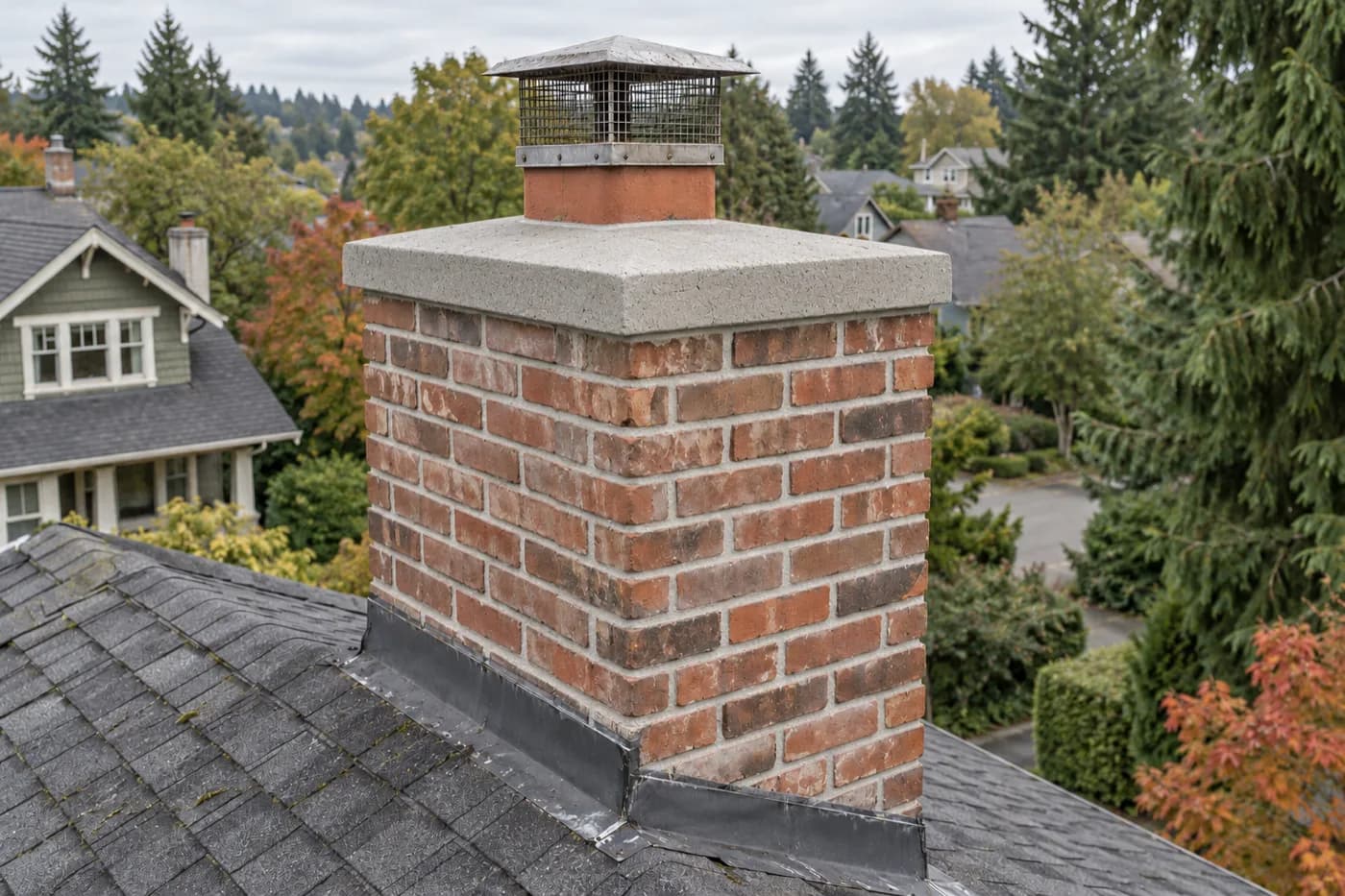
Real chimneys, photographed before and after
Expert Resources
In-depth guides from our chimney professionals