
Chimney Flashing Repair in Seattle, WA
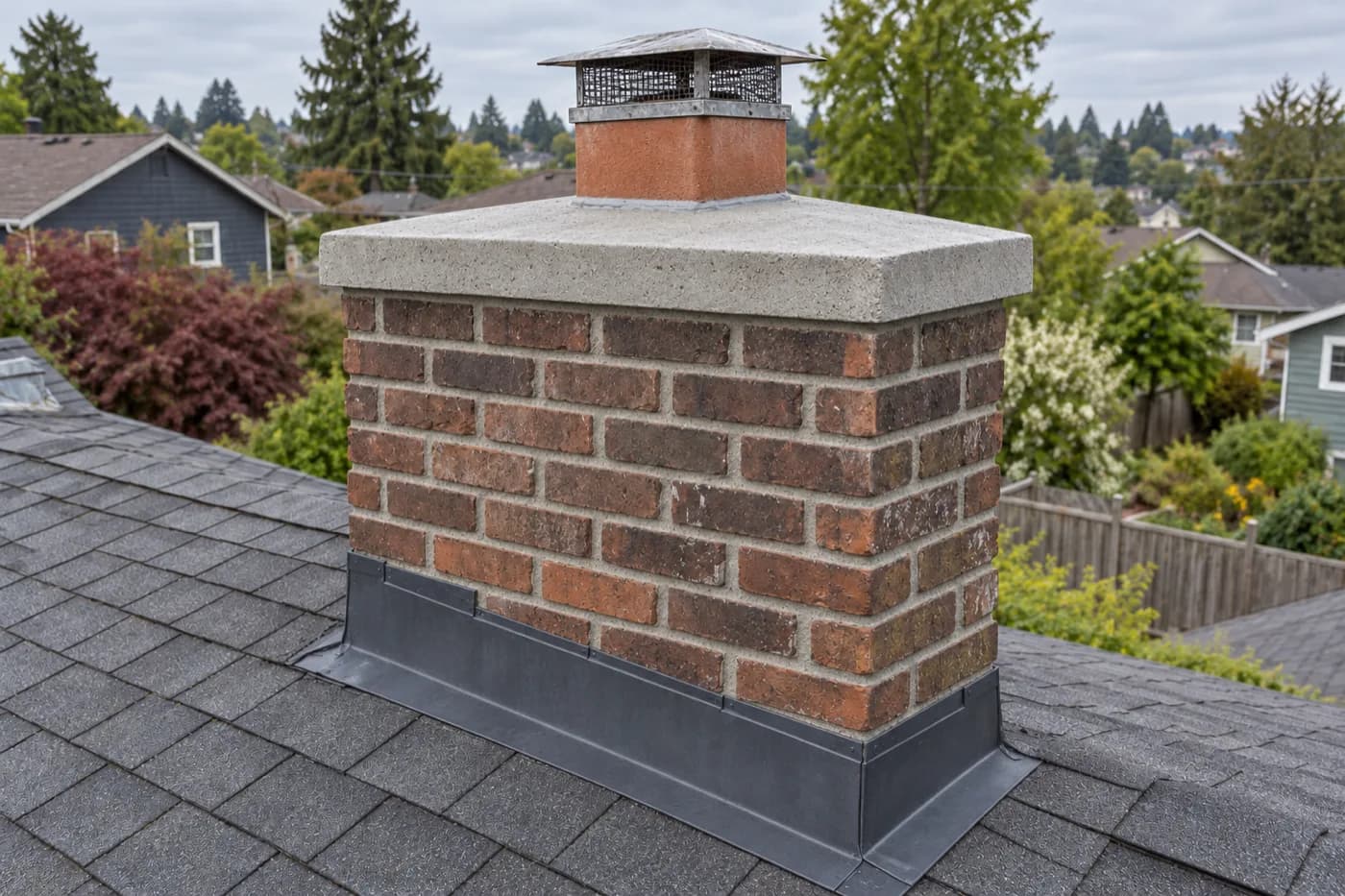
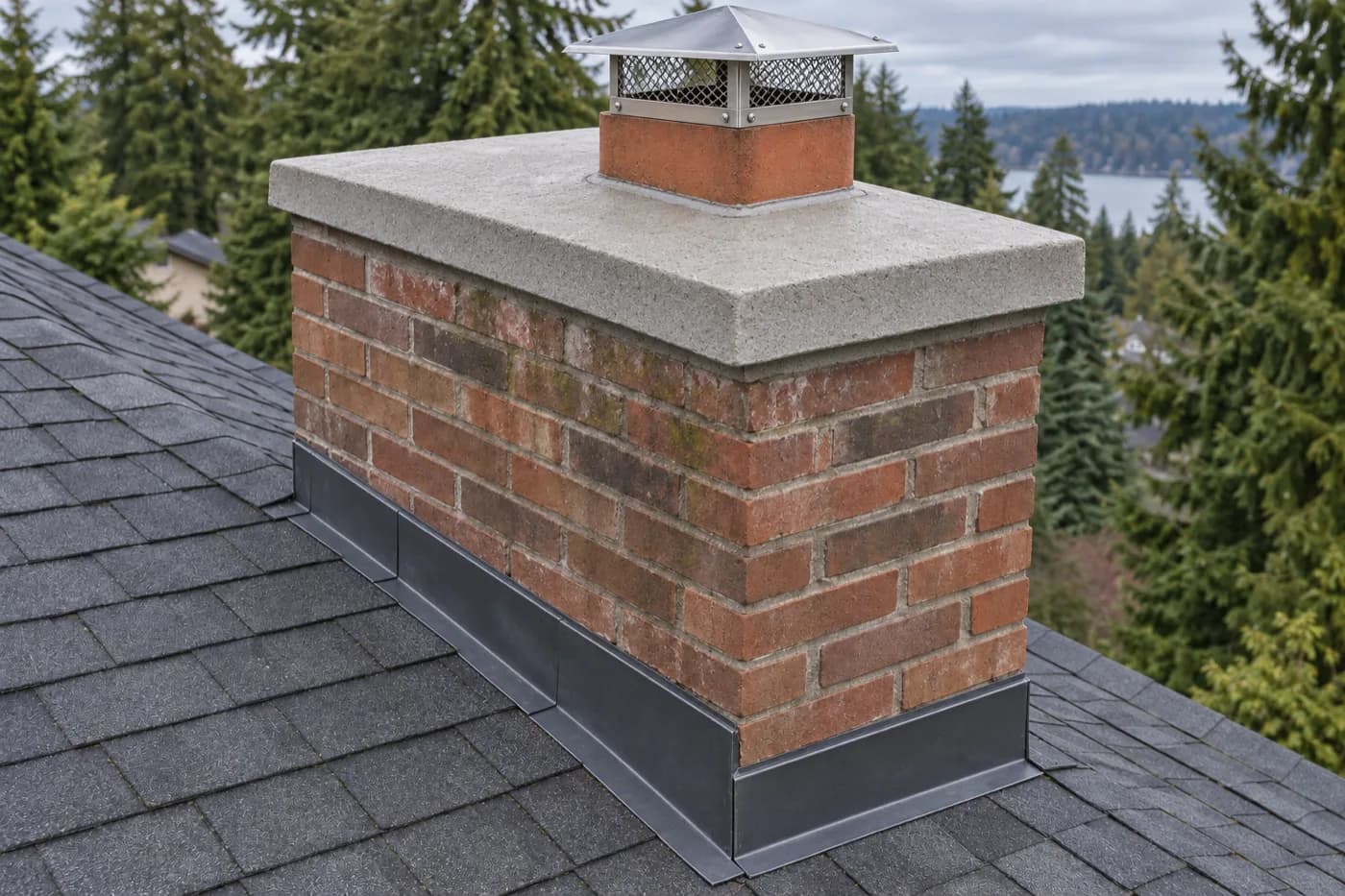
Chimney flashing is the weatherproof seal where your chimney meets the roof — and it's the number one source of chimney leaks in Seattle. When flashing fails, water pours into your attic, walls, and ceilings causing thousands in damage. We repair and replace chimney flashing with precision metalwork that keeps every drop of Seattle rain on the outside.
How It Works
Leak Assessment
We inspect the entire flashing system from roof level — step flashing, counter flashing, sealant joints, and cricket (if present). We identify exactly where water is entering and document findings with photos.
Repair or Replace
For minor issues, we re-seal and repair individual components. For widespread failure, we remove old flashing and install a complete new two-piece system with proper integration into both roof and mortar joints.
Test & Warrant
We water-test the completed repair to verify the seal holds under simulated rain conditions. You receive before-and-after photos, a detailed report, and a written leak warranty.
Signs of Chimney Flashing Failure
- ! Water stains on ceiling or walls near the chimney
- ! Dripping or moisture in the attic around the chimney
- ! Visible gaps between flashing and chimney bricks
- ! Flashing pulling away from the roof or chimney
- ! Rust stains running down the chimney or roof
- ! Cracked, dried, or missing caulk/sealant at flashing
- ! Mold or mildew smell near the fireplace or chimney wall
- ! Roof shingles lifting or deteriorating near the chimney
Pricing Guide
Repair & Reseal
$332 – $774
Caulk & sealant only, minor gaps, emergency leak stop
Full Replacement
$663 – $1,548
Complete new flashing system, cricket install, copper option
Prices are estimates for the Seattle metro area. Exact pricing depends on chimney size, roof pitch, flashing material, and damage extent. You get a detailed written quote after the $99 inspection — credited toward the work — before anything begins. All prices tax included.
Why Choose Us
What Customers Say
“Seattle Chimney Pros saved us from what could have been a disaster. They found a major crack in our flue liner during a routine inspection. Professional, honest, and fairly priced!”
“We've used three different chimney companies over the years. Seattle Chimney Pros is by far the best. They showed up on time, explained everything, and the creosote removal was thorough.”
“Had an emergency leak during a rainstorm. Called Seattle Chimney Pros and they were at my house within 2 hours. Fixed the crown and flashing the next day. The real deal!”
“Our gas fireplace hadn't been serviced in years. They did a full maintenance check, replaced a faulty valve, and now it runs perfectly. Fair pricing with no upselling.”
“The team rebuilt the top section of our 80-year-old chimney. The brickwork is flawless — you can't even tell which part is new. True craftsmen.”
“I was quoted $4,000 by another company. Seattle Chimney Pros gave an honest assessment and fixed the issue for under $1,200. They've earned a customer for life.”
“We had our chimney waterproofed before the rainy season. No leaks all winter — first time in 10 years. Wish we'd found them sooner. Highly recommend!”
“Fast, clean, and professional. They installed a new chimney cap and inspected the crown in one visit. Everything explained clearly with photos. 5 stars.”
“Our old clay liner was crumbling. They installed a stainless steel liner and the difference in draft is incredible. Job done right the first time.”
Frequently Asked Questions
How much does chimney flashing repair cost in Seattle? +
How do I know if my chimney flashing is leaking? +
What causes chimney flashing to fail? +
Can chimney flashing be repaired or does it need full replacement? +
What is a chimney cricket and do I need one? +
How long does chimney flashing last? +
Is chimney flashing repair covered by homeowners insurance? +
Should I have flashing repaired separately or during a roof replacement? +
Can flashing be repaired on a cedar shake roof without damaging the shakes? +
How can I tell if my flashing was properly installed? +
Does chimney flashing repair require a building permit in Seattle? +
Learn More
Flashing Materials Compared: Aluminum, Galvanized Steel, Copper, and Lead
The material you choose for chimney flashing determines how long it will last and how well it withstands Seattle's relentless moisture. Aluminum is the most commonly used flashing material in residential construction. It's lightweight, easy to form, corrosion-resistant, and affordable. For most Seattle homes, aluminum flashing provides 20-30 years of reliable service. It's our standard recommendation for composition (asphalt shingle) roofs. The main drawback: aluminum can fatigue and crack where it bends tightly, especially at step flashing transitions. Galvanized steel is stronger and stiffer than aluminum, making it better for high-wind areas like West Seattle and Magnolia. It handles structural stress from heavy snow loads better than aluminum. However, the galvanized zinc coating eventually wears off in Seattle's constant moisture, leading to rust. Lifespan: 15-25 years depending on exposure. We recommend galvanized steel for chimneys in high-wind zones paired with regular inspection. Copper is the premium choice and the most durable flashing material available. Copper flashing lasts 70-100+ years, develops a protective patina that resists further corrosion, and solders beautifully for watertight joints. It's the standard for historic home restoration in Capitol Hill and Queen Anne. Cost: 3-5x more than aluminum, but essentially a lifetime installation. Lead was the traditional gold standard for counter flashing because it molds perfectly into irregular mortar joints. Lead is still used selectively for counter flashing applications where conformability matters most. However, lead is increasingly being replaced by lead-coated copper or flexible aluminum alternatives due to environmental concerns. We use lead only when it's the technically superior choice and always install it in compliance with Washington state environmental guidelines.
Seattle Roof Types and Flashing Challenges: Composition, Cedar, Metal, and Flat Roofs
Seattle's diverse housing stock means our flashing technicians work with every roof type — and each presents unique challenges at the chimney junction. Composition (asphalt) shingles are the most common roof in Seattle and the easiest for flashing integration. Step flashing pieces interweave with each course of shingles, creating overlapping layers that shed water naturally. Counter flashing is set into chimney mortar joints and overlaps the step flashing by at least 3 inches. Standard installation. Cedar shake and shingle roofs are iconic in Seattle neighborhoods like Wallingford, Phinney Ridge, and Ravenna. Cedar's irregular thickness and texture make flashing integration more challenging — each step flashing piece must be custom-fitted to the shake course above and below it. We frequently see failed flashing on cedar roofs where a roofer used flat stock designed for composition shingles. Cedar also expands and contracts more dramatically with moisture changes, putting additional stress on flashing joints. Metal roofs (standing seam) are growing popular in the Seattle metro area for their longevity and rain-shedding ability. Chimney flashing on a metal roof uses a different technique entirely — flashing must be mechanically fastened to the roof panels (not woven in) with proper expansion allowance. The standing seams themselves must be cut and terminated properly around the chimney base. Improper metal-roof flashing is a common source of leaks in newer Seattle homes. Flat or low-slope roofs are common on mid-century homes in Shoreline, Lynnwood, and parts of North Seattle. Chimney flashing on a flat roof requires membrane integration — the flashing must tie into the roofing membrane (TPO, EPDM, or modified bitumen) with proper lapping and adhesion. Water doesn't gravity-drain away from a flat-roof chimney like it does on a pitched roof, making flashing even more critical. We use specialized boot flashings and membrane-compatible sealants for flat-roof chimney work.
DIY vs. Professional Flashing Repair: Why Chimney Flashing Is Not a Weekend Project
We understand the temptation to save money with a DIY flashing repair — a tube of caulk from the hardware store seems like a quick fix for a chimney leak. But chimney flashing repair is consistently one of the most botched DIY projects we see in the Seattle area, often turning a $400-$800 professional repair into a $3,000-$5,000 water damage restoration. Here's why. Caulk is not flashing. The most common DIY mistake is slathering roofing caulk over failed flashing joints. Caulk shrinks, cracks, and peels within 1-3 years in Seattle weather. It creates a false sense of security while water continues entering through cracks and gaps. Worse, caulk can actually trap water behind the flashing by sealing the drainage paths that allow incidental moisture to escape. Counter flashing requires mortar cutting. Proper counter flashing is set into a groove cut into the chimney mortar joints with a masonry saw, then sealed with high-grade polyurethane sealant. This requires specialized tools (angle grinder with diamond blade), experience working at roof height, and knowledge of masonry construction. A DIY attempt with a screwdriver and caulk gun won't replicate this. Step flashing requires partial roof disassembly. To properly replace step flashing, the shingles or shakes along the chimney must be lifted or partially removed to weave in new flashing pieces. This is skilled work that risks damaging shingles, breaking seals, and voiding roof warranties if done incorrectly. Safety is a real concern. Chimney flashing work means operating on a roof, often near edges and on slopes. Professional chimney technicians use harnesses, roof anchors, and proper ladder staging. Falls from residential roofs are one of the leading causes of serious home-improvement injuries. The cost math favors professional repair. A professional flashing repair in Seattle costs $400-$1,200. A water damage repair from failed DIY flashing costs $3,000-$10,000+ (drywall replacement, mold remediation, insulation, paint). One winter of leaking from a bad DIY job can cause more damage than the cost of 10 professional flashing repairs. Our advice: get a professional assessment first. If the issue is a simple sealant failure at one joint, we'll tell you — and fix it for under $200. If it's systemic flashing failure, we'll quote a proper replacement and explain exactly why.
Book Your $99 Inspection
Book your visit online — receive your personalized quote within 30 minutes.
Book Your InspectionRelated Services
Chimney Waterproofing
Pair flashing repair with chimney waterproofing for complete moisture protection. Flashing stops water at the roofline; waterproofing stops it from penetrating the brickwork.
Learn moreChimney Repair
Flashing failure often accompanies mortar damage and crown deterioration. We handle complete chimney repair — flashing, masonry, and crown — as one coordinated project.
Learn moreChimney Inspection
Not sure where the leak is coming from? A professional inspection examines the flashing, crown, cap, masonry, and flue to find the exact source.
Learn moreChimney Cap Installation
A cap protects the flue opening while flashing protects the roof junction. Together they form a complete rain defense system for your chimney.
Learn moreChimney Relining
If water from flashing failure has damaged the flue liner, relining restores safe venting. We assess liner condition during every flashing inspection.
Learn moreAvailable in Your Area
We provide chimney flashing repair across Greater Seattle & Puget Sound
Licensed & Insured
WA State L&I
CSIA Certified
NFPA 211 Compliant
Family-Owned Since 2011
2,500+ Homes Served
15+ Years Experience
Seattle Metro Area
Ready to Protect Your Home?
Book online and receive your personalized quote within 30 minutes. Seattle's most trusted chimney experts since 2011.
Our Work on This Service
Real chimneys, photographed before and after
Expert Resources
In-depth guides from our chimney professionals