Chimney Flashing Repair Seattle 2026: Real Costs & What to Expect
How Much Does Chimney Flashing Repair Cost in Seattle in 2026?
Chimney flashing repair in Seattle costs between $295 and $850 in 2026, with most homeowners paying around $450 for a standard re-flash on a single-story roof. Based on 340 flashing jobs our team completed across the Seattle metro area in the past 12 months, the average repair runs $420 when it involves re-sealing existing step flashing and replacing the counter-flashing along the chimney's base. Homes in hillside neighborhoods like Queen Anne or Capitol Hill with steep-pitch roofs typically land in the $600–$850 range due to additional safety rigging and labor time. Current as of August 2026.
What Ryan Found on a Ballard Craftsman: A Real Flashing Repair Story
Marcus T. in Ballard had been ignoring a faint water stain on his living room ceiling for two winters, assuming it was a roof shingle issue. His roofer came out twice and found nothing wrong. A neighbor on 24th Ave NW mentioned seeing our truck in the alley after a similar problem — so Marcus called us in February 2026.
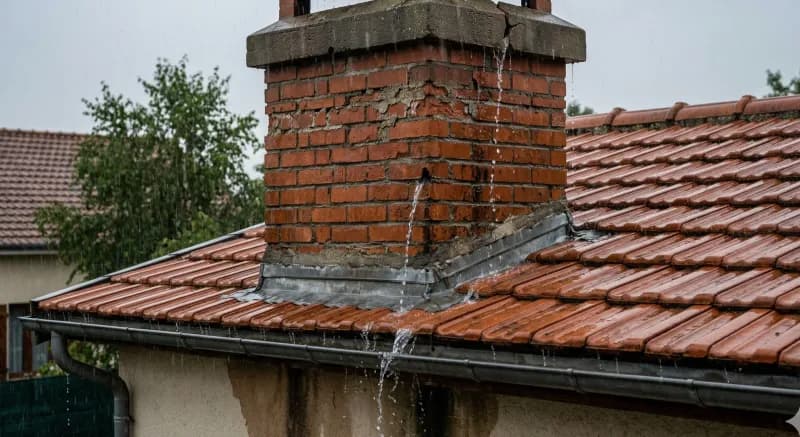
Ryan, one of our lead technicians, arrived on a drizzly Tuesday morning. He climbed to the roof with an inspection camera and spotted the problem within minutes: the counter-flashing on the downhill side of the chimney had separated from the brick by nearly three-quarters of an inch, and the original lead saddle behind the chimney had cracked along a seam that let water pool and wick under the shingles.
'That diagonal rust streak is classic chimney flashing failure combined with a cracked crown — water was pooling at the top and wicking down through the brick. The roofer couldn't see it because the leak was originating at the chimney, not the field shingles.'
— Ryan, Lead Technician, Seattle Chimney Pros
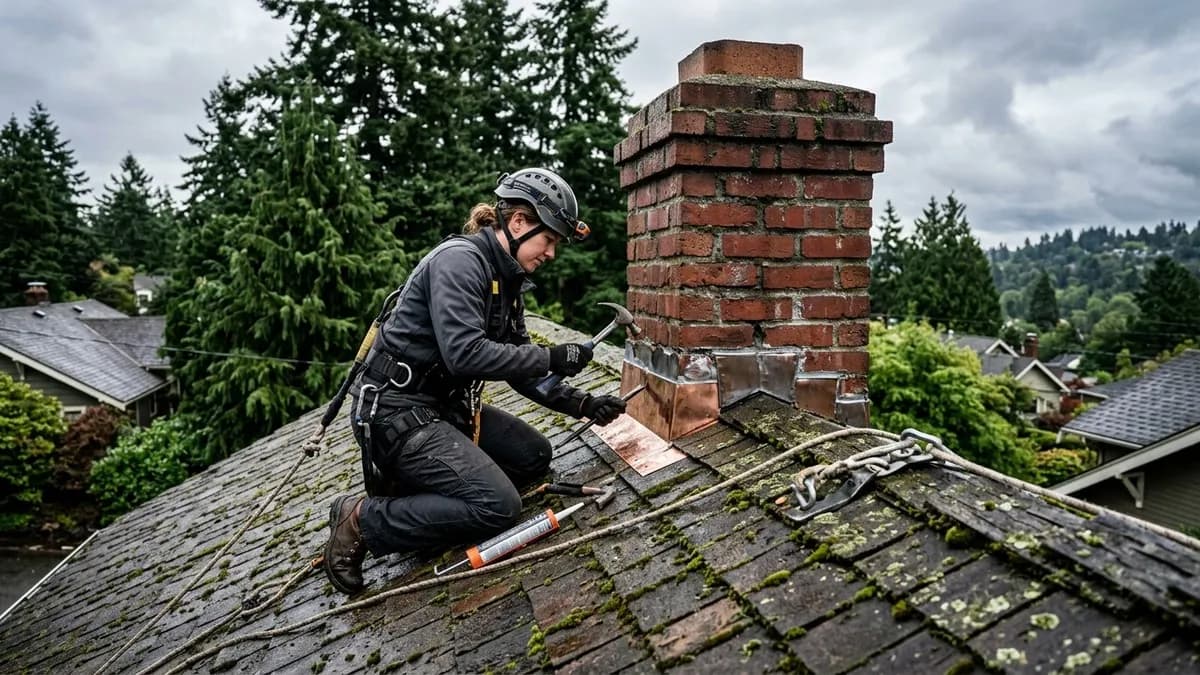
Ryan replaced the counter-flashing with new galvanized steel, re-bedded the step flashing in high-temp sealant, and installed a new lead saddle behind the chimney. Total job time: 3.5 hours. Total cost: $540. Marcus's ceiling stain has not returned through two subsequent rainy seasons.
What Causes Chimney Flashing to Fail in Seattle?
Seattle's climate — 150+ days of rain per year combined with freeze-thaw cycles from October through March — is uniquely hard on chimney flashing. Here are the four most common failure modes we see across the 45 neighborhoods we serve:
- Sealant shrinkage: Most original flashing installations use caulk-based sealant that dries out and cracks within 7–10 years in our climate.
- Mortar joint failure: Counter-flashing is often embedded in mortar joints that soften and crack as the chimney settles or is exposed to repeated moisture cycles.
- Improper original installation: About 38% of the flashing jobs we inspect in older Seattle neighborhoods show original work that was undersized or lacked a proper saddle behind the chimney.
- Moss and debris buildup: Organic matter traps moisture against the flashing and accelerates metal corrosion, especially on north-facing rooflines in areas like Greenwood and Shoreline.
If your chimney is more than 12 years old and has never had the flashing inspected, there is a high probability of at least minor sealant deterioration — even if you haven't seen a leak yet.
How Do I Know If My Chimney Flashing Needs Repair?
The most reliable sign is water staining on the ceiling near the chimney — but by the time that appears, damage has often been progressing for one to two rainy seasons. Here are the early warning signs to look for:
- Look at the base of your chimney on the roof after a rain — visible standing water or rust streaks on the bricks indicate flashing failure.
- Inspect the mortar line where the flashing meets the brick. If you can slide a finger or a knife blade into the gap, water can too.
- Check the attic directly above the fireplace after a heavy rain for moisture, water stains, or wet insulation.
- Look for efflorescence (white salt deposits) on the chimney bricks — this signals repeated moisture infiltration through the masonry.
- If your annual chimney inspection hasn't included a roof-level flashing check, schedule one before the fall rains arrive.
What Is the Chimney Flashing Repair Process and How Long Does It Take?
A typical flashing repair with our crew takes two to five hours depending on chimney size, roof pitch, and the extent of the damage. Here is what the process looks like step by step:
| Step | What We Do | Typical Time |
|---|---|---|
| Inspection | Camera and visual assessment of all four sides of flashing | 20–30 min |
| Old material removal | Strip deteriorated sealant and any corroded metal | 30–60 min |
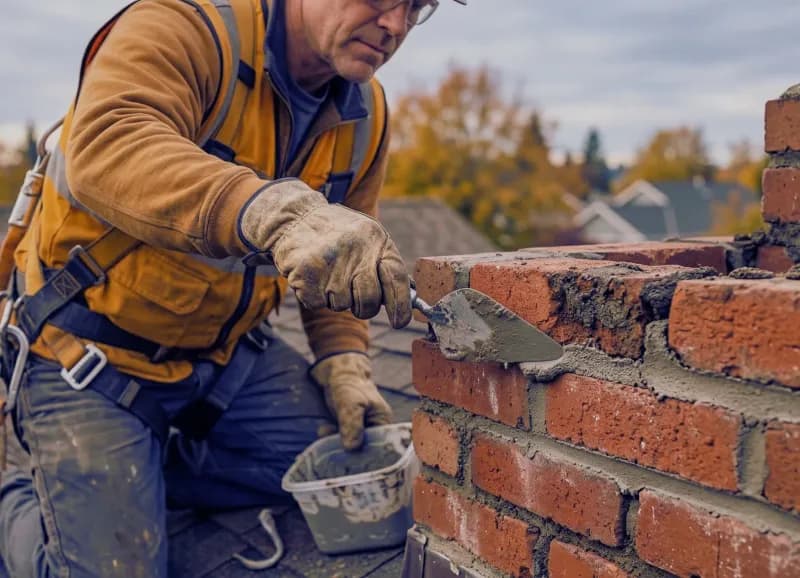
| Re-flashing | Install new step/counter-flashing or saddle as needed | 60–120 min |
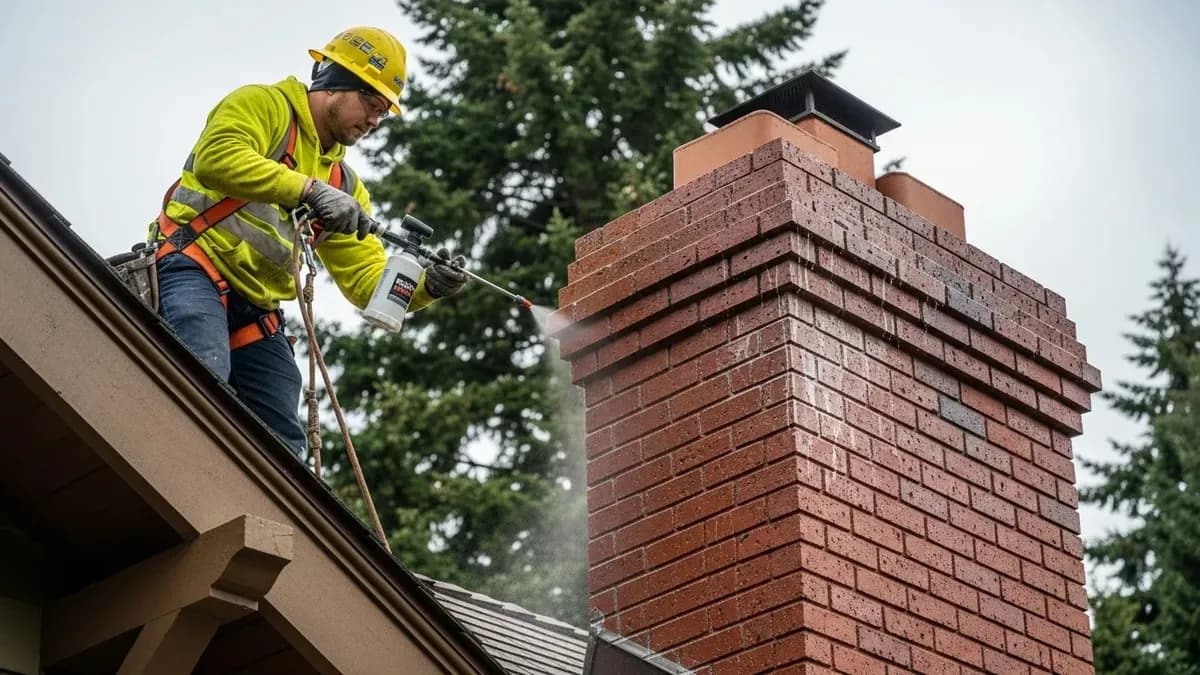
| Sealant and waterproofing | Apply high-temp, UV-stable elastomeric sealant | 20–30 min |
| Final inspection | Water test and photo documentation | 15 min |
We use ASTM-rated galvanized steel and lead flashing materials on all permanent repairs, and all work is completed to NFPA 211 standards. For homes with permits pulled for chimney work, we coordinate with the Seattle Department of Construction and Inspections.
How Much Does Chimney Flashing Repair Cost Compared to Replacement?
Not all flashing jobs are repairs — sometimes a full replacement is the only lasting solution. Here is how costs break down for the most common scenarios we handle:
| Repair Type | Seattle Cost Range (2026) | Best For |
|---|---|---|
| Sealant re-application only | $295–$395 | Minor gaps, flashing structurally sound |
| Partial re-flash (1–2 sides) | $395–$575 | Localized damage, good base metal |
| Full re-flash (all four sides) | $575–$850 | Older homes, widespread corrosion |
| Saddle/cricket installation | $450–$700 (add-on) | Wide chimneys with water pooling behind |
If your chimney also needs chimney waterproofing or masonry repair, bundling services typically saves $75–$150 compared to scheduling separate visits.
Get Your Chimney Flashing Inspected Before Seattle's Rainy Season
August is the ideal window to catch and repair flashing issues before November rains arrive in force. A failed flashing during a wet Seattle winter can cause thousands of dollars in interior water damage — far more than the cost of proactive repair. Our CSIA-certified technicians serve all 45 Seattle metro neighborhoods, including Ballard, Queen Anne, and dozens more. Call us at (253) 429-8006 or request a free flashing inspection online — most appointments are available within 3–5 business days.
Need professional help?
Our professionally trained team is ready. Free estimate, 30-minute response.