Birds & Animals in Your Seattle Chimney: 2026 Removal Guide
Animals in Your Seattle Chimney: What You Need to Know Right Now
If you hear scratching, fluttering, or chirping coming from your chimney, here is the short answer: do not light a fire, close your damper, and identify the animal before doing anything else. In Seattle, the most common chimney intruders are chimney swifts (federally protected — illegal to disturb May through August), raccoons, squirrels, and bats. Removal costs range from $0 (DIY squirrel rope method) to $1,299 for full wildlife removal, sanitization, and chimney cap installation. Based on over 200 animal-related chimney calls our team handled across the Seattle metro in 2025, nearly 80% of cases could have been prevented entirely with a $200–$450 stainless steel chimney cap. Current as of August 2026.
Hearing scratching or chirping right now? Do not light a fire and do not seal the flue — you may trap a protected bird or a litter of raccoon kits inside. Book a same-week chimney check online or call (206) 278-2924 — we identify the animal, remove it legally, and cap the flue so it never happens again.
A Real Call: Marcus T. in Fremont and the Raccoon Family Nobody Expected
Marcus T. had been putting off chimney maintenance on his 1952 Fremont bungalow for a couple of years. Last April, he noticed a heavy thumping sound coming from the fireplace wall — not just scratching, but something with real weight behind it. His first thought was a plumbing issue. His second thought, after hearing what sounded like a low growl, was that something alive had moved in.
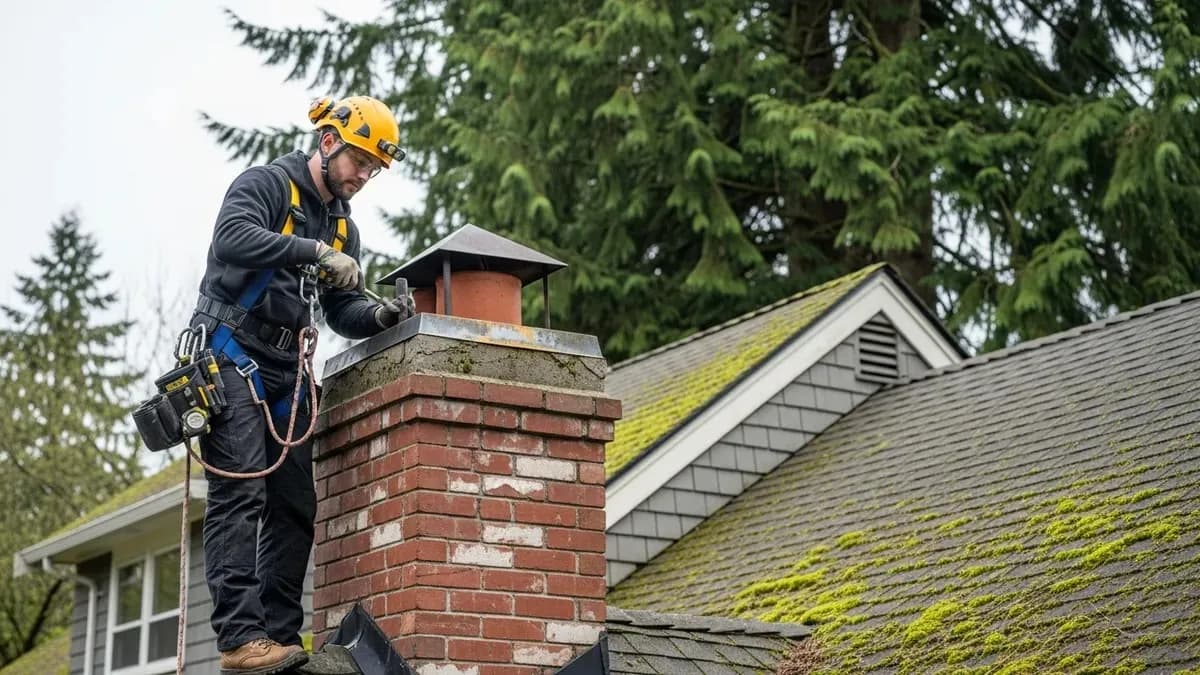
He found us through a Google search for 'animal in chimney Seattle' and called the same morning. Carlos arrived that afternoon with an inspection camera and full safety kit. What the camera revealed stopped the job before it started: a female raccoon had established a den about four feet down from the chimney crown, and there were three kits visible nestled against the flue wall.
'That crown has a two-inch crack running the full width — she basically had a welcome mat. Raccoons are smart; they find the one spot that's soft and wet and work it open over winter. The kits looked maybe three weeks old, so we're looking at a six-week wait before humane relocation is even on the table. In the meantime, the damper stays shut and no fires.'
— Carlos, Field Technician, Seattle Chimney Pros
We coordinated with a licensed wildlife removal specialist who monitored the chimney through late May. Once the family relocated naturally, Carlos returned to complete a full sanitization sweep — raccoon droppings carry Baylisascaris roundworm, which requires thorough cleaning before any fireplace use. We then installed a heavy-gauge stainless steel chimney cap with a welded animal mesh. Total cost for the cap installation and post-removal sweep: $618. Marcus told us afterward he wished he had spent the $350 on a cap two years earlier. He was right.
What Animal Is in Your Chimney? How to Tell the Difference
The sound pattern and timing give away the species almost every time. Here is what our technicians listen for on every animal-related call.
| Animal | Sound | Peak Season | Protected? |
|---|---|---|---|
| Chimney Swifts | Rapid chattering, high chirps | April–October | Yes — federal law |
| Raccoons | Heavy thumping, low growl | March–June | No, but kits may delay removal |
| Squirrels | Fast scurrying, frantic scratch | Year-round | No |
| Bats | High-pitched squeaks at dusk | May–September | Species-dependent in WA |
| Starlings | Loud whistling, constant rustling | Spring–Summer | No |
| Owls | Deep hooting, feather debris at firebox | Year-round (rare) | Yes — federal law |
If you are unsure, close the damper and call us. Our technicians can identify the species with a camera inspection before any removal attempt is made.
Are Chimney Swifts in Seattle Chimneys Legal to Remove?
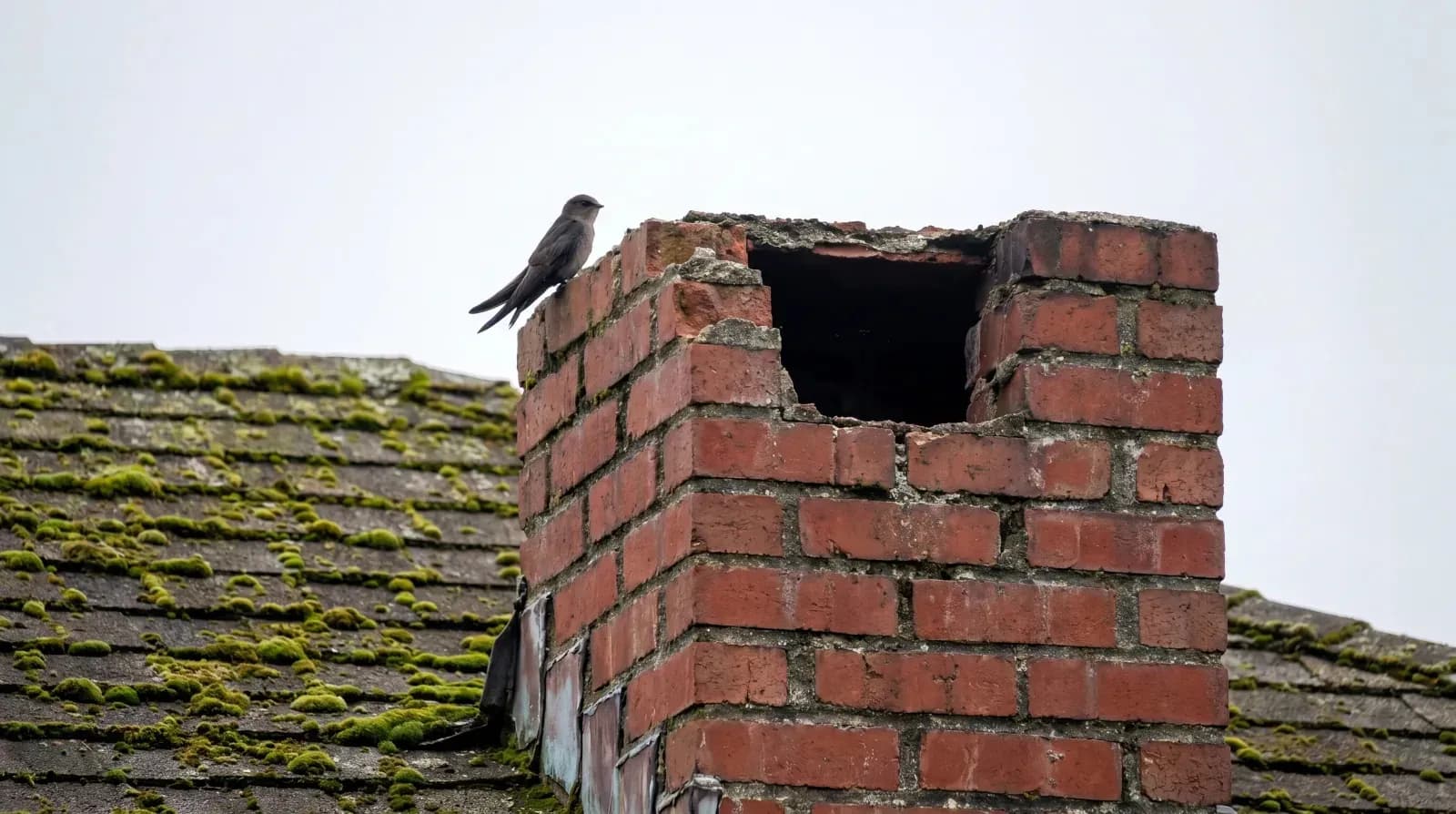
No — chimney swifts are fully protected under the federal Migratory Bird Treaty Act (MBTA), and it is illegal to remove, harm, or displace them during nesting season, which runs May through August in the Seattle area. Federal fines for violations reach $15,000 per incident. Seattle sits directly along the Pacific Flyway, and swift colonies have been returning to the same uncapped chimneys in neighborhoods like Wallingford, Greenwood, and Ballard for decades.
If swifts have moved into your chimney this summer, here is the legally compliant approach:
- Keep the damper fully closed at all times to prevent swifts from entering your living space.
- Do not light any fires — this is both illegal and lethal to the colony.
- Note the approximate date the sounds began. Swifts typically migrate out by mid-September.
- Once the chimney falls silent for at least two weeks, schedule a chimney sweep and inspection to clear nesting debris.
- Immediately schedule chimney cap installation before the following April to prevent their return.
Worth noting: a single swift colony consumes over 12,000 flying insects per day, mosquitoes included. Many Fremont and Capitol Hill homeowners we work with have made peace with their summer tenants — the swifts leave, we clean the flue, we install a cap, and that's the end of it.
How Do You Remove a Raccoon from a Seattle Chimney Safely?
Safely means: you don't. Raccoons are the most physically dangerous chimney intruder we encounter. A cornered or lactating female will bite and scratch aggressively, and Washington State raccoons carry a meaningful risk of rabies, leptospirosis, and Baylisascaris roundworm. DIY removal is not recommended under any circumstances.
The correct process in Washington State:
- Confirm the presence of kits before any removal attempt — if kits are present, removal must wait 6–8 weeks until they are mobile (WAC 220-440 governs wildlife handling in WA).
- Engage a Washington Department of Fish and Wildlife licensed wildlife removal contractor — this is a separate service from chimney work.
- Once removal is confirmed, schedule a full sanitization sweep before any fireplace use. Raccoon droppings are a biohazard.
- Install a heavy-gauge chimney cap rated for large animals within 48 hours of confirmed departure.
In our experience across 200+ animal calls in the Seattle metro in 2025, raccoon situations added an average of $380 to the total remediation cost compared to swift or squirrel cases, largely due to the required sanitization sweep and coordination with licensed wildlife contractors.
What Should You Do If a Squirrel or Bat Is in Your Chimney?
Squirrels and bats require different approaches, and getting them confused leads to problems. Squirrels are not protected and are often accessible with a DIY method. Bats may be protected depending on species, and touching one with bare hands is always a medical risk due to rabies exposure.
For squirrels: They typically fall in from an uncapped flue and cannot climb smooth metal liner walls back out. If you can safely access your rooftop, lower a 3/4-inch or thicker rope into the flue and leave it overnight. Most squirrels will climb out independently by morning. If the sound persists after 24 hours, call us — the animal may be injured or wedged below the damper plate.
For bats: Washington's little brown bat (Myotis lucifugus) is a species of concern and should not be handled or removed without a licensed wildlife specialist. If you find a bat inside your living space — which can happen when a bat enters through an open damper — do not release it outdoors until Seattle-King County Public Health has been notified, as exposure to an unknown bat is treated as a potential rabies exposure. Contact us for the flue inspection and cap installation once the specialist has cleared the animal.
How Much Does Animal Removal and Chimney Cleanup Cost in Seattle?
Costs vary significantly based on species, whether a wildlife contractor is needed, and the condition of the flue after occupation. Here is what Seattle homeowners typically pay in 2026:
| Service | Typical Cost Range |
|---|---|
| Licensed wildlife removal (contractor) | $150–$500 |
| Post-animal sanitization sweep | $199–$329 |
| Level 1 inspection after animal intrusion | Included with sweep |
| Chimney cap installation (stainless steel) | $200–$450 |
| Crown repair (if cracked — common entry point) | $195–$375 |
| Total typical remediation | $549–$1,300 |
The single most cost-effective intervention is a chimney cap installed before the animal season begins. At $200–$450 installed, it costs less than the sanitization sweep alone — and it prevents the entire situation from occurring. If your Seattle home does not currently have a cap, or if your cap has damaged mesh, cap installation is the first call to make heading into summer.
When Is Animal-in-Chimney Season in Seattle? Why Late Summer Is Peak
August through October is the busiest stretch of the year for animal-in-chimney calls in Seattle — and most homeowners are surprised by that. Three seasonal patterns collide: raccoon families become mobile (kits born in spring are now big enough to climb, and mothers move them between den sites — an uncapped flue is a perfect nursery), chimney swifts stage for migration (through late September, Seattle swifts gather in large roosts before flying south; a colony can occupy a flue for weeks and is federally protected the entire time), and squirrels start caching for winter (fall is when they test every opening on your roofline, and a squirrel that falls down a flue usually cannot climb back out).
The practical takeaway: if your chimney is uncapped, the 6-week window before heating season is when it is most likely to be colonized — right before you want to light your first fire. A pre-season inspection confirms the flue is clear of nests (a blocked flue is a carbon monoxide risk, not just a noise problem), and a stainless steel cap closes the door for good. Book online before the September rush.
How Do You Permanently Prevent Animals from Entering Your Chimney?
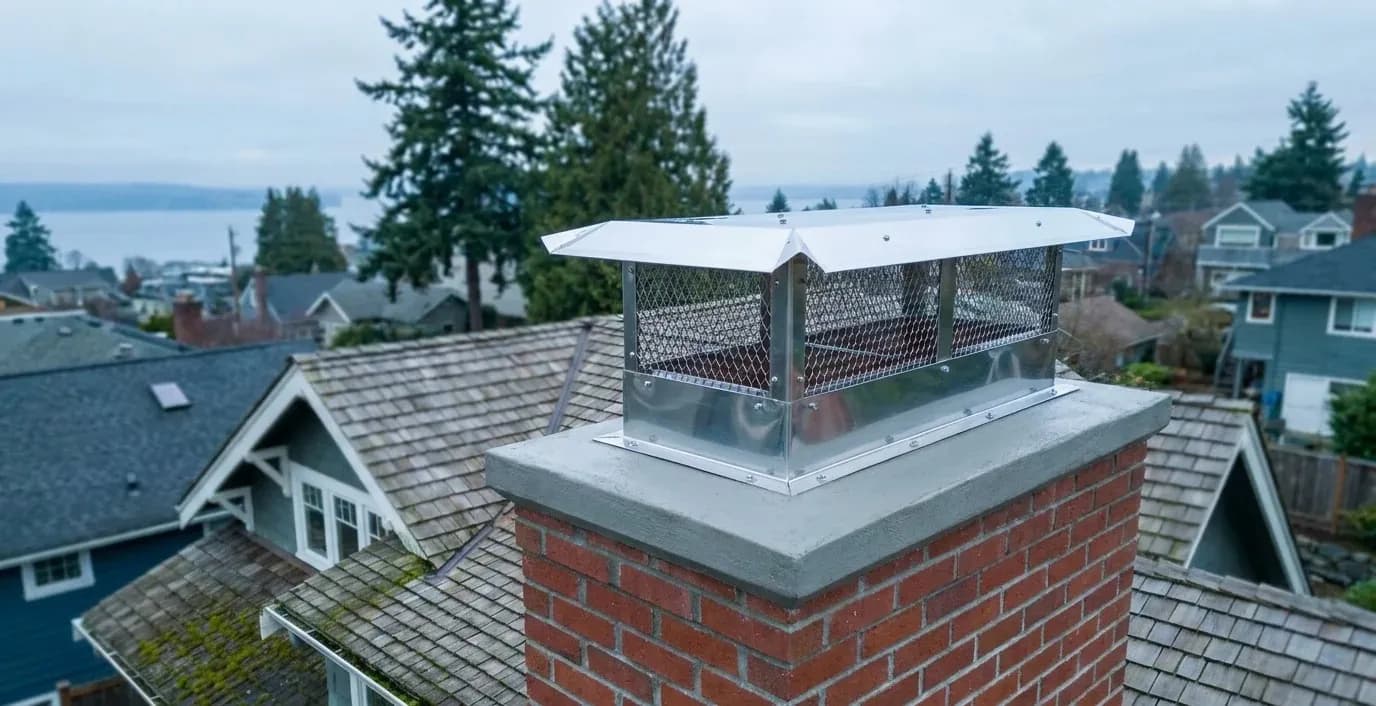
There is one reliable solution: a stainless steel chimney cap with animal-proof mesh installed by a professional. Every other prevention method — repellent sprays, ultrasonic devices, netting — fails within one to two seasons in Seattle's wet climate. A properly installed cap lasts 15–25 years and blocks every species on the list above.
Key specifications to ask for when scheduling cap installation in Seattle:
- 316 stainless steel or copper — galvanized caps rust within 3–5 years in our climate; we stopped recommending them in 2021
- 1/2-inch welded mesh — large enough for airflow, small enough to exclude bats and birds
- Full-width coverage — single-flue caps leave brick shoulders exposed; a full-width cap covers the entire chimney crown
- Professional sizing — an incorrectly sized cap creates draft problems; our technicians measure the flue before ordering
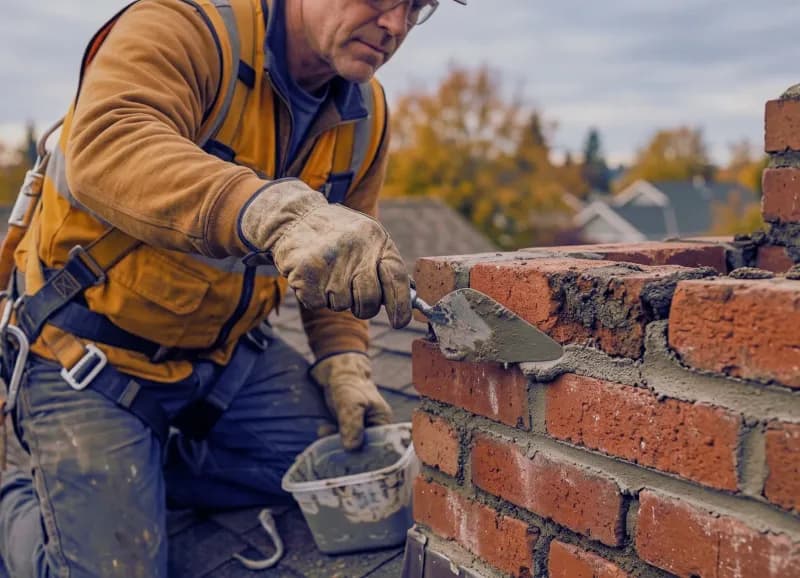
In addition to the cap, if your chimney crown has visible cracks, seal those before or during cap installation. A cracked crown is how Marcus T.'s raccoon got in — and it's the most common secondary entry point we find on animal calls across Fremont, Ballard, and other older Seattle neighborhoods where pre-1960s masonry is the norm.
If you have had an animal in your chimney this season, schedule a post-intrusion inspection before your first fall fire. Nesting debris — twigs, feathers, fur, and droppings — is highly flammable and can ignite at firebox temperatures. We see at least a dozen chimney fires per year traced directly to undiscovered nesting material in Seattle-area flues.
If you are hearing sounds in your chimney right now, the safest move is to close the damper, avoid any fires, and call us at (206) 278-2924. We will identify the animal, coordinate with wildlife specialists when legally required, and complete the full sweep, inspection, and cap installation to make sure it never happens again. You can also schedule online — most animal calls are seen within 24 to 48 hours.
Need professional help?
Our professionally trained team is ready. $99 inspection credited toward repairs, 30-minute response.