7 Signs Your Seattle Chimney Needs Repair in 2026 (Don't Ignore #4)
What Are the Signs Your Chimney Needs Repair?
The seven most common signs a Seattle chimney needs professional repair are: white mineral staining on bricks (efflorescence), crumbling or missing mortar joints, water leaks near the fireplace, a visibly leaning or tilting stack, a damaged or missing chimney cap, smoke backing into the home, and rust on the firebox or damper. In Seattle — where rain falls on roughly 152 days per year — these problems develop faster than in drier climates and compound quickly when left unaddressed. Based on over 1,100 repair calls our team handled across the Seattle metro area in the past two years, the average homeowner who catches these signs early pays between $350 and $900 to fix the issue. Homeowners who wait until the damage is advanced pay $3,500 to $12,000. Current as of June 2026.
What We Found at Marcus T.'s Beacon Hill Home
Marcus T. reached out to us in late April after noticing a faint rust-colored streak running down the interior of his firebox. His 1952 Beacon Hill brick colonial had been sitting unused all winter, and when he opened the damper for the first time in spring, the smell hit him immediately — damp, musty, faintly metallic. He found us after searching 'chimney water damage Seattle' from his phone.
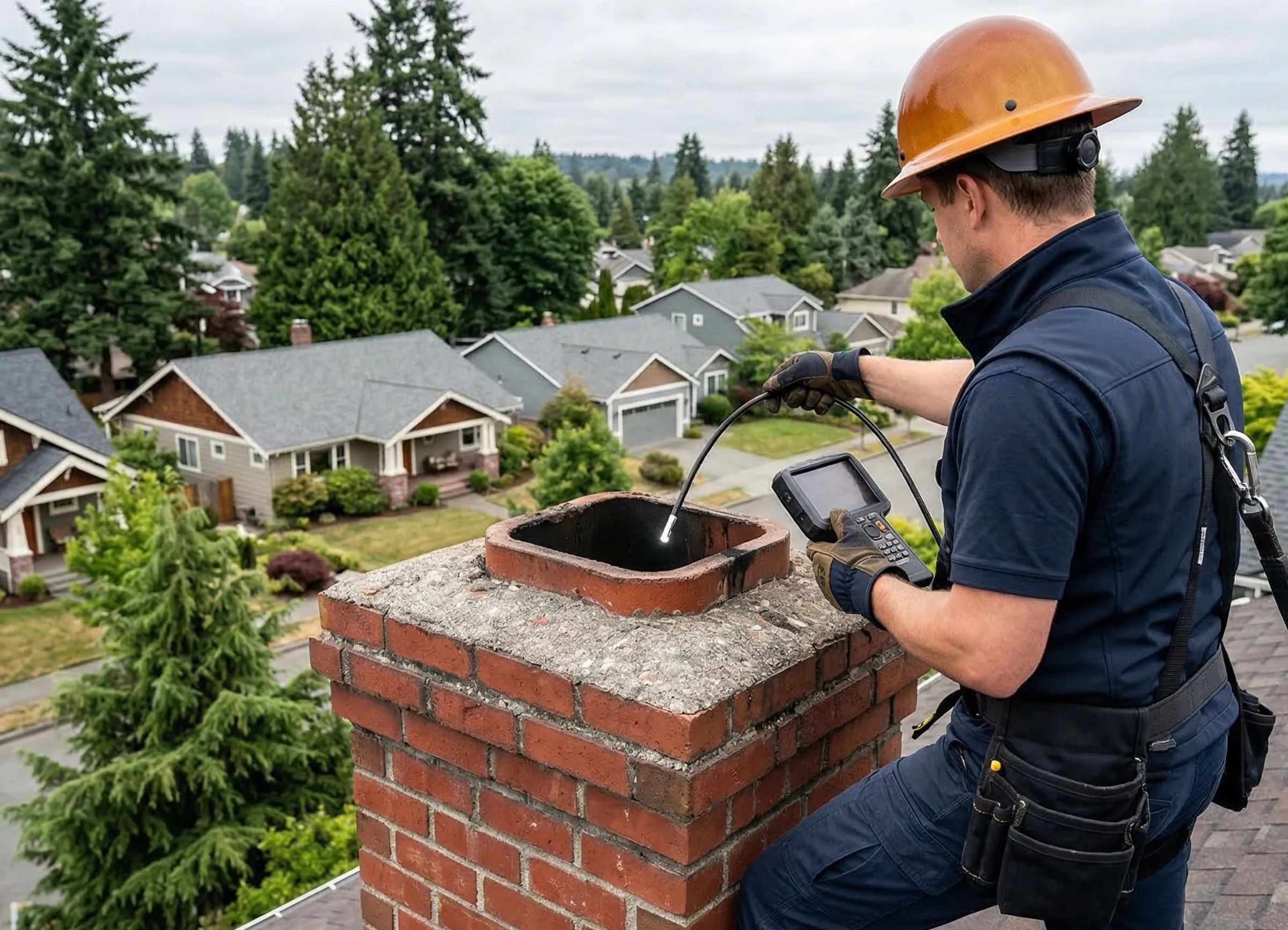
Our lead tech Alex arrived the next morning and did a full exterior walk before even opening the firebox. 'The crown was the giveaway,' Alex recalls. 'I could see the crack from the driveway — a diagonal split running almost the full width. Every rain this winter was funneling directly into the flue.' Inside, the level II camera confirmed it: the clay tile liner had two hairline fractures in the upper section, and the damper plate had surface rust on both edges from sustained moisture exposure. The flashing at the roofline was still intact, which was the one piece of good news.
Alex walked Marcus through each finding on the camera screen, explaining what a healthy flue tile looks like versus the damaged sections they were looking at. The repair scope included crown resurfacing, two liner tiles replaced with a stainless steel sleeve segment, and a new stainless chimney cap. Total cost: $1,340, completed in a single five-hour visit. Marcus texted us the following week: 'First fire of the season last night — no smell, no smoke. I had no idea how bad it had gotten.'
'That diagonal crack in the crown is the number-one thing we find on Beacon Hill and Columbia City homes from this era. The original concrete mix wasn't air-entrained, so 70 years of Seattle freeze-thaw cycles just works it apart. Once the crown splits, everything below it is vulnerable.'
— Alex, Lead Technician, Seattle Chimney Pros
Sign #1: White Staining on Your Chimney Bricks — What Is Efflorescence?
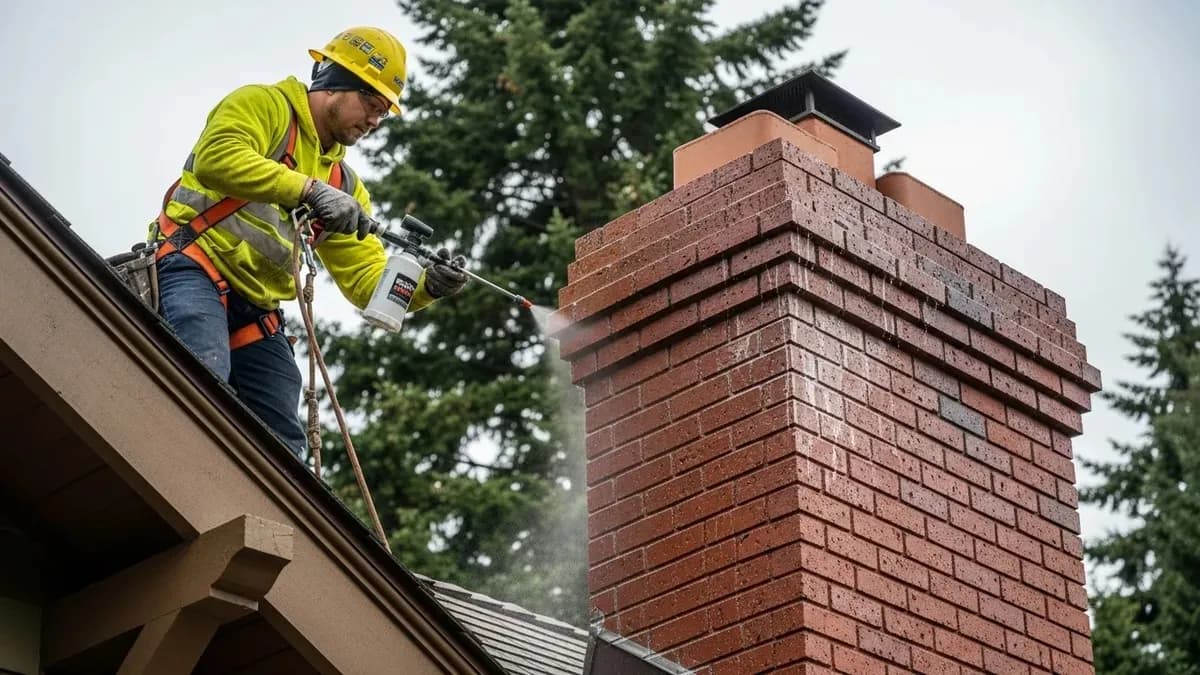
Efflorescence is the white, powdery or chalky deposit that appears on brick chimneys when water infiltrates the masonry, dissolves mineral salts inside, and deposits them on the surface as the water evaporates. It is not a cosmetic problem — it is a moisture alarm. In Seattle's wet climate, efflorescence is the single most common exterior chimney symptom we document, appearing on roughly 62% of the chimneys we inspect in neighborhoods built before 1980.
Left untreated, efflorescence signals the moisture cycle that eventually causes spalling — where the face of the brick pops off in sheets — and deep mortar erosion. The fix at the efflorescence stage typically costs $400–$900 for cleaning, waterproofing, and sealing. The fix after spalling begins runs $1,500–$4,000 for brick replacement and tuckpointing. Schedule a chimney inspection as soon as you notice white staining, and ask specifically about chimney waterproofing to stop the cycle.
Sign #2: Crumbling or Recessed Mortar Joints — When Is Tuckpointing Necessary?
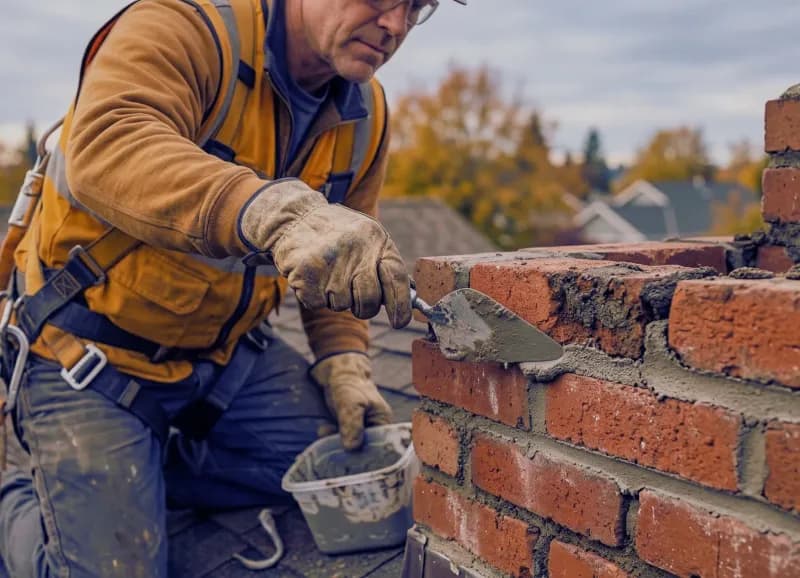
Run your finger along the mortar joints between your chimney bricks. If mortar crumbles easily, falls out in chunks, or has receded more than ¼ inch from the brick face, your chimney needs tuckpointing. Mortar is the sacrificial element in masonry — it's designed to absorb moisture and expand before the bricks do. But once mortar fails, water penetrates directly into the brick courses and the structural integrity of the chimney deteriorates rapidly.
Seattle's mild but persistent freeze-thaw cycles — temperatures that hover around 32–38°F on winter nights — are particularly damaging to mortar. We see accelerated mortar failure in exposed, south-facing chimneys in open neighborhoods like Magnolia and West Seattle where wind-driven rain hits the chimney face directly. Tuckpointing in Seattle costs $600–$2,200 depending on how many linear feet of joint need to be repointed — catching it at one or two courses versus the entire chimney is a significant cost difference. See our full chimney tuckpointing cost guide for a detailed breakdown.
Sign #3: Water Leaks Near Your Fireplace — How Do You Find the Source?
Water stains on the ceiling or walls adjacent to your fireplace, a damp or moldy smell from the firebox, or visible dripping during or after rainstorms are all signs of active chimney water intrusion. The challenge is that the leak source is rarely where the water appears — water entering at the crown or flashing can travel several feet inside the chimney structure before showing up as a stain inside your home.
In our experience across Seattle-area homes, the four most common water intrusion sources are:
- Damaged or failed flashing — the metal seal where the chimney meets the roofline, responsible for approximately 38% of chimney leaks we repair
- Cracked or deteriorated chimney crown — the concrete cap at the very top of the brick stack, which takes the full force of Seattle rainfall
- Missing, damaged, or undersized chimney cap — allows rain to fall directly into the flue
- Porous or unsealed brick — older brick absorbs moisture directly through the face, especially without a waterproof sealer
Water damage is progressive. A small ceiling stain ignored for one Seattle rainy season can mean rotted roof framing, black mold in the chase, and damaged firebox components by the following year. See our detailed guide on why chimneys leak when it rains for diagnostic steps you can do before calling us.
Sign #4: Your Chimney Is Leaning or Tilting — Why This Cannot Wait
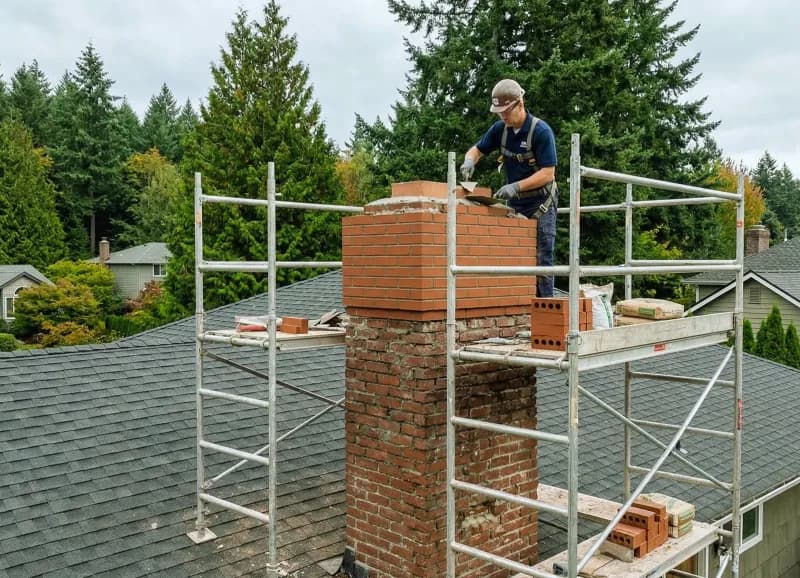
A chimney that is visibly out of plumb — leaning away from the house, tilting to one side, or showing a stair-step crack pattern in the brick courses — is the single most urgent structural warning sign a homeowner can observe. A leaning chimney indicates foundation settlement, extensive mortar joint failure, or earthquake-related displacement. It can collapse without warning, fall through the roof, and cause catastrophic property damage or injury.
In Seattle, leaning chimneys are disproportionately common on hillside properties where soil movement is ongoing. Neighborhoods like Queen Anne, Beacon Hill, and West Seattle account for a significant share of the structural chimney collapses we're called to assess each year. Past seismic events also contribute — our guide on earthquake chimney damage in Seattle covers how to assess post-quake risk. If your chimney leans more than 1 inch out of plumb, stop using the fireplace immediately and call for an emergency inspection. Do not attempt to stabilize or brace it yourself.
Signs #5–7: Cap Damage, Smoke Backdraft, and Firebox Rust — A Quick Reference
| Warning Sign | What It Indicates | Urgency | Typical Repair Cost (Seattle 2026) |
|---|---|---|---|
| Damaged or missing chimney cap | Rain, animals, and debris entering flue directly | High — schedule within 2–4 weeks | $250–$550 for stainless steel cap installation |
| Smoke backing into living space | Blocked or restricted flue, failed damper, heavy creosote, draft reversal | High — stop using fireplace immediately | $200–$800 depending on cause (sweep + repair) |
| Rust on firebox walls or damper | Sustained moisture reaching internal components; possible cracked liner | Medium — inspect within 30 days | $350–$1,800 depending on liner condition |
A damaged or missing chimney cap is the lowest-cost fix on this list, but it has an outsized impact if ignored. Galvanized caps corrode in Seattle's environment within 10–15 years; we recommend replacing them with stainless steel or copper caps, which last 20+ years even in coastal neighborhoods like Ballard and Magnolia where salt air accelerates corrosion.
Smoke backing into your home — backdrafting — is not just unpleasant. It can push carbon monoxide into occupied living spaces. Common causes include heavy creosote buildup narrowing the flue, animal nests blocking the throat, a stuck or warped damper, and negative air pressure from exhaust fans in newer, tightly sealed homes. See our full troubleshooting guide on smoke coming back into the house for a step-by-step diagnosis process. For a deeper dive on draft problems specifically, see our guide on fireplace not drawing properly.
Rust on the firebox or damper is often the first interior sign of a moisture problem originating above — a cracked crown, failed cap, or compromised liner. A Level II inspection with an HD flue camera is the only reliable way to find the moisture entry point. Don't just treat the rust; find the source.
What Should You Do If You Spot One of These Signs? A Step-by-Step Plan
If you've identified one or more of the warning signs above, here is the action sequence we recommend to every Seattle homeowner:
- Stop using the fireplace if you see smoke backdrafting, a leaning chimney, or active water dripping. Using a compromised chimney risks carbon monoxide exposure and fire.
- Document what you see — take photos of any exterior staining, cracking, or cap damage from ground level. Note when you first noticed it and whether recent weather events (heavy rain, windstorm, minor earthquake) preceded it.
- Do a safe exterior visual check — from the ground or a window, look for: efflorescence, missing mortar, visible crown cracks, leaning, damaged cap, staining on the chimney breast below the roofline.
- Schedule a professional inspection within 30 days — or immediately if the chimney is leaning, smoke is backdrafting, or you can smell gas near a gas fireplace. A Level I or Level II inspection will give you a complete picture and a written repair scope.
- Get a written estimate before authorizing repairs — a reputable contractor will provide itemized pricing. Be cautious of any company that quotes repairs sight-unseen or pressures you to authorize work on the spot during an inspection visit.
How Much Does Chimney Repair Cost in Seattle? A 2026 Summary
Repair costs vary widely based on the specific problem, chimney height, and access conditions. Here is a realistic range based on jobs our team completed across the Seattle metro area in 2025–2026:
| Repair Type | Low Estimate | High Estimate | Average (Seattle) |
|---|---|---|---|
| Chimney cap replacement (stainless) | $250 | $550 | $340 |
| Crown repair or resurfacing | $350 | $900 | $540 |
| Tuckpointing (partial) | $600 | $1,400 | $870 |
| Flashing repair or replacement | $450 | $1,200 | $720 |
| Chimney waterproofing (full application) | $350 | $750 | $990 |
| Liner repair or partial relining | $900 | $3,200 | $1,650 |
| Full chimney rebuild (leaning/collapse) | $4,500 | $14,000 | $7,800 |
For a complete breakdown of repair pricing by scenario, see our Seattle chimney repair cost guide. For waterproofing specifically, our chimney waterproofing cost guide covers product types, application methods, and what to expect during a service visit.
Don't Let Seattle's Rain Turn a Small Repair Into a Major One
Every one of the seven warning signs in this guide starts as a manageable, affordable repair and becomes an expensive structural problem if Seattle's rainfall is allowed to do its work unchecked. The homeowners who call us earliest — usually because they noticed something small during a spring walkthrough — consistently pay the least and have the smoothest repair experience. The homeowners who call us after ignoring signs for two or three rainy seasons are the ones facing liner replacements and partial rebuilds.
If you spotted any of these signs at your home, call our team at (206) 278-2924 or schedule an inspection online. We serve the full Seattle metro area — from Ballard to Bellevue, Queen Anne to Renton — and can typically schedule within 3–5 business days for non-emergency inspections, or same-day for urgent situations like active leaks or a leaning chimney.
Need professional help?
Our professionally trained team is ready. $99 inspection credited toward repairs, 30-minute response.