Chimney Care for Seattle's Historic & Craftsman Homes in 2026
What Makes Historic Chimney Care Different in Seattle?
Caring for a chimney on a pre-1940 Seattle home costs 20–40% more than standard chimney work — and for good reason. These chimneys were built with lime-based mortar, hand-molded soft brick, and often no flue liner at all. Using modern Portland cement to repair them accelerates deterioration rather than stopping it. Based on over 340 inspections we've completed on Seattle homes built before 1945, roughly 68% have at least one condition requiring historically appropriate repair methods: deteriorated lime mortar, an unlined or partially lined flue, or spalling brick caused by prior incorrect repairs. Current as of June 2026, our service area covers 45 Seattle-metro neighborhoods, and the oldest chimneys we regularly work on date to 1902.
A Real Historic Chimney Job: Margaret T. in Queen Anne
Last April, Margaret T. contacted us after her real estate agent flagged her 1914 Queen Anne Victorian's chimney during a pre-listing inspection. The report noted 'significant mortar deterioration and possible unlined flue' — language that worried Margaret enough to get a second opinion before putting the house on the market.
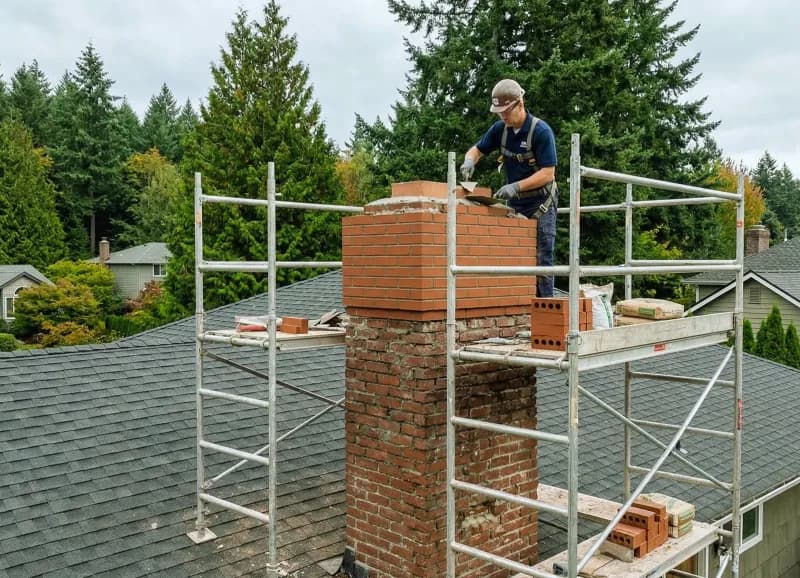
Carlos arrived on a cool Tuesday morning, the kind of overcast Pacific Northwest day where the moss on the chimney's north face practically glows green. He started at the rooftop and worked his way down. 'The first thing I noticed was the gray color of the repair joints,' Carlos explains. 'Someone had done a Portland cement repoint on the lower third of this chimney — probably in the 1990s. The original lime mortar joints were actually in decent shape, but those cement patches were trapping moisture and the brick behind them was starting to pop.' He found two spalled bricks near the crown and, on the camera drop, confirmed the flue was completely unlined — bare brick from firebox to cap, 28 feet of unprotected masonry.
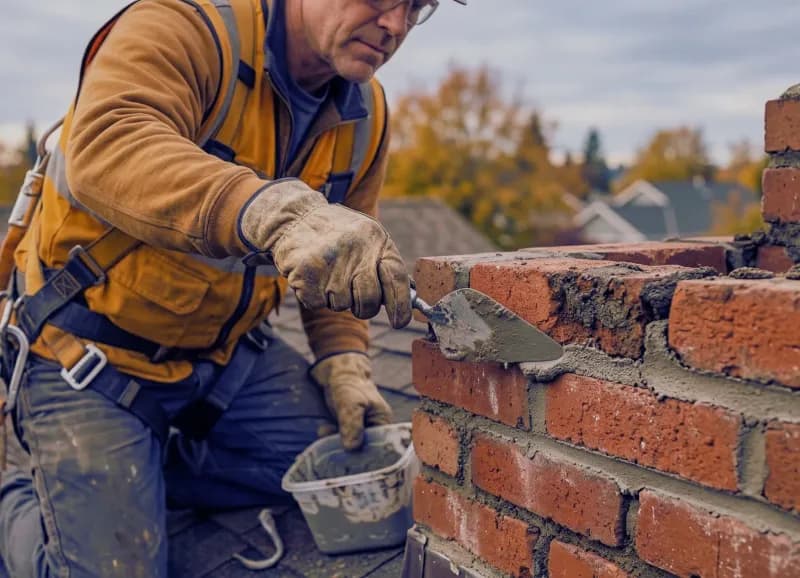
'The Portland cement repair was well-intentioned but it was the wrong call. Lime mortar is softer than the brick — it's designed to be the sacrificial element that weathers and gets replaced. Cement is harder than the brick, so when moisture expands, the brick loses, not the mortar. We see this pattern constantly on pre-1920 homes across Queen Anne and Capitol Hill.'
— Carlos, Senior Technician, Seattle Chimney Pros
The repair scope: remove the Portland cement patches, repoint with NHL 3.5 natural hydraulic lime mortar color-matched to the original joints, replace the two spalled bricks with salvaged period-appropriate units, and install a 6-inch stainless steel liner with a top-mount damper. Total cost: $4,200. Margaret's listing went live the following week, and the chimney passed the buyer's inspection with no exceptions. 'I was dreading this,' she told us afterward. 'But Carlos walked me through every single thing he found and why it mattered. I actually feel like I understand my house better now.'
Why Do Pre-1940 Chimneys Require Different Mortar?
The mortar type used in your chimney isn't cosmetic — it's a structural and moisture-management decision that affects every brick around it. Pre-1920 Seattle chimneys used lime-based mortar because it was the standard of the era, and it has specific properties that modern Portland cement lacks.
Lime mortar is softer and more flexible than Portland cement. In a masonry assembly, the mortar is intended to be the 'sacrificial' element — it weathers gradually over decades and can be replaced (repointed) without disturbing the brick. It also allows moisture vapor to move through the assembly and escape, which is critical in Seattle's wet climate.
Portland cement mortar, by contrast, is significantly harder than historic soft brick. When moisture penetrates the assembly and freezes or simply expands through vapor pressure, the force has to go somewhere. With lime mortar, it exits through the joint. With Portland cement, it fractures the brick face — a process called spalling. We've seen chimneys lose 30–40% of their brick face within 15 years of an incorrect Portland cement repoint.
| Property | Lime Mortar (Historic) | Portland Cement (Modern) |
|---|---|---|
| Hardness vs. historic brick | Softer — brick is protected | Harder — brick takes the stress |
| Moisture movement | Breathable — vapor escapes | Traps moisture inside assembly |
| Flexibility | Slight flex with thermal movement | Rigid — cracks under movement |
| Repair lifespan on historic chimney | 30–60 years | 5–15 years before brick damage |
| Cost (per linear foot repointing) | $18–$28 | $12–$18 |
| Appropriate for pre-1920 Seattle chimney? | Yes — required | No — causes long-term damage |
The correct material for most Seattle pre-1920 chimneys is natural hydraulic lime (NHL) in a 2.5 or 3.5 grade, mixed to match the original joint color. For homes built 1920–1945, a transitional lime-cement blend is sometimes appropriate depending on the original mix. Our technicians test the existing mortar hardness before recommending a repair formulation.
What Are the Risks of an Unlined Historic Chimney Flue?
An unlined flue — bare brick with no clay tile or metal liner — is the single biggest safety concern in pre-1940 Seattle chimneys, and it's surprisingly common. Based on our inspections, approximately 44% of Seattle chimneys built before 1930 are either fully unlined or have a liner that terminates before the top.
The risks are not theoretical. Heat from combustion transfers through unlined brick to adjacent wood framing, and at sustained temperatures, that framing can ignite — sometimes slowly, sometimes without warning. Combustion gases including carbon monoxide can seep through deteriorated mortar joints into wall cavities and living spaces. NFPA 211, the national standard for chimneys and fireplaces, requires a liner in all new and significantly modified chimneys, and the standard strongly recommends liner installation in any unlined historic chimney that is actively used.
- Heat transfer risk: Unlined brick can reach 900°F on the interior surface during a hot fire. Adjacent wood framing ignites at approximately 700°F after sustained exposure.
- Carbon monoxide infiltration: CO is odorless and can reach dangerous levels in adjacent rooms through mortar gaps in an unlined flue.
- Creosote accumulation: Without a smooth liner surface, creosote adheres more readily to rough brick — increasing chimney fire risk.
- Insurance implications: Some Washington State homeowner insurers require documentation of a lined flue for coverage on wood-burning fireplaces in pre-1940 homes.
The solution for most historic Seattle chimneys is a stainless steel relining with a flexible liner — a process that installs a continuous metal flue inside the existing brick structure. It does not change the exterior appearance of the chimney, preserves the historic masonry, and brings the system into compliance with NFPA 211 and current Seattle building codes.
How Much Does Historic Chimney Repair Cost in Seattle in 2026?
Historic chimney work costs more than standard repairs — budget 20–40% above typical chimney pricing — due to specialized materials (NHL lime mortar, source-matched brick), slower hand-application techniques, and the care required to avoid damaging irreplaceable historic fabric. Here's what to expect across common repair types:
| Service | Standard Chimney Cost | Historic Chimney Cost | Why the Difference |
|---|---|---|---|
| Mortar repointing (per linear ft) | $12–$18 | $18–$28 | NHL lime mortar, color matching, hand application |
| Full chimney repoint (average) | $800–$1,400 | $1,200–$2,200 | Same as above, more joints on taller historic stacks |
| Brick replacement (per brick) | $20–$35 | $35–$75 | Salvaged period brick sourcing, careful extraction |
| Stainless steel relining | $1,500–$3,000 | $1,800–$3,800 | Older flue dimensions often non-standard |
| Crown repair or replacement | $350–$800 | $400–$950 | Lime-compatible crown mix required |
| Full historic restoration | N/A | $4,000–$14,000 | Multi-element scope: repoint + liner + crown + cap |
For budgeting purposes: the average historic chimney job we complete in Seattle's Craftsman-era neighborhoods (Queen Anne, Capitol Hill, Wallingford, Ballard, Fremont) runs $2,800–$5,500 for a comprehensive repair scope. Annual maintenance — Level I inspection plus sweep — runs $199–$289 on historic chimneys, roughly the same as standard.
What Are the Signs That a Historic Chimney Needs Immediate Attention?
Historic chimneys show distress differently than modern ones. These are the warning signs that should prompt an immediate inspection call — not a 'wait and see':
- White or gray patches on the exterior brick: Efflorescence indicates moisture is moving through the masonry and depositing minerals on the surface. On a historic chimney, this often signals deteriorating lime mortar or failed prior Portland cement patches. Do not ignore this — it means active water infiltration. See our efflorescence guide for more detail.
- Gaps or crumbling at mortar joints: If you can see daylight or run a finger into a joint more than 1/4 inch, the joint needs repointing. On a Seattle chimney, deteriorated joints are the primary entry point for the moisture that causes all downstream damage.
- Brick faces popping or flaking (spalling): This is almost always moisture-driven and in historic chimneys is frequently caused by prior Portland cement repairs trapping water. Stop use of the fireplace until assessed.
- Leaning or visible displacement: Any shift in the chimney's plumb line requires immediate structural assessment. Pre-1945 Seattle chimneys have no seismic reinforcement — see our earthquake chimney damage guide.
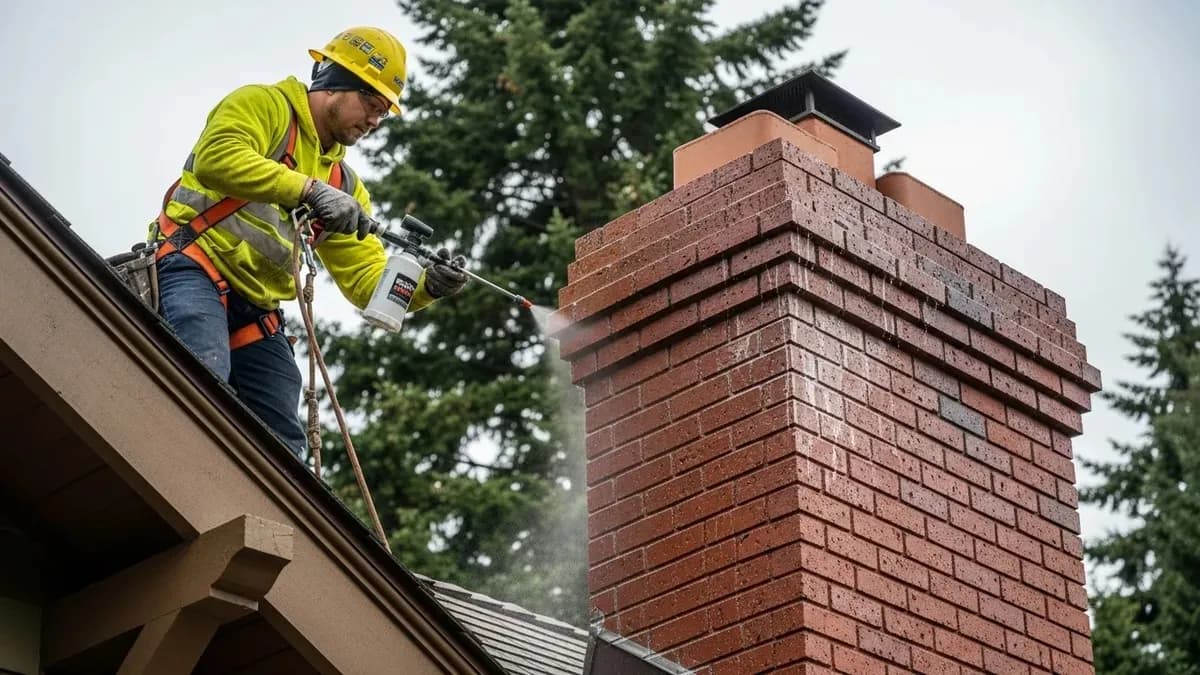
- Water in the firebox after rain: Historic chimneys frequently lack effective flashing and crowns. Water pooling in the firebox is a direct sign the chimney system is open to weather. Chimney waterproofing with a breathable penetrating sealant is typically the first-line repair.
How Should You Find a Chimney Contractor Who Understands Historic Seattle Homes?
Not every chimney company has experience with pre-1940 masonry, and the wrong repair can cause more damage than doing nothing. Here's what to look for — and ask — before hiring:
- Ask specifically about mortar type: 'What mortar would you use on a pre-1920 chimney?' The correct answer involves lime mortar or natural hydraulic lime (NHL). If they say 'standard mortar mix' or don't ask about the home's age, that's a red flag.
- Look for CSIA certification: A CSIA Certified Chimney Sweep has passed national examinations on chimney systems, including historic construction.
- Ask about brick sourcing: If brick replacement is needed, can they source salvaged or period-appropriate brick? Visual matching matters for both aesthetics and historic preservation value.
- Check for seismic awareness: In Seattle, any contractor working on a pre-1945 chimney should be able to discuss seismic vulnerability and whether the structure is a candidate for assessment.
- Review their before/after photos: Specifically look for examples of work on Craftsman, Victorian, or Foursquare homes in Seattle's historic neighborhoods.
Our lead technician Alex and our senior team have collectively completed over 2,000 inspections and repairs on Seattle's historic housing stock. We carry CSIA certification and maintain a supply of salvaged period brick for color-matching repairs in Queen Anne, Capitol Hill, Wallingford, Ballard, and Fremont.
Schedule a Historic Chimney Assessment in Seattle
If your Seattle home was built before 1945, the best thing you can do this summer is schedule a Level II inspection before the fall burning season. We'll assess mortar type, liner status, seismic condition, and moisture intrusion — and give you a clear, prioritized repair plan with historically appropriate material specifications. Call us at (206) 278-2924 or schedule online. We serve all of Seattle's historic neighborhoods and bring the right materials on the first visit.
Need professional help?
Our professionally trained team is ready. $99 inspection credited toward repairs, 30-minute response.