Earthquake Chimney Damage in Seattle: What to Do in 2026
Does Your Seattle Chimney Have Earthquake Damage?
Earthquake chimney damage in Seattle ranges from hairline mortar cracks (a $300–$800 tuckpointing repair) to full structural collapse requiring a $6,000–$14,000 rebuild — and the danger is that most serious damage is invisible from the ground. Based on post-seismic inspections our team completed across the Seattle metro area following felt earthquakes over the past three years, roughly 1 in 4 pre-1945 masonry chimneys showed some form of seismic damage requiring repair. Seattle sits directly above the Cascadia Subduction Zone, and according to USGS data, there is an 86% probability of a magnitude 6.5+ earthquake hitting the Puget Sound region within the next 50 years. Current as of June 2026 — if you felt a recent tremor, do not use your fireplace until a Level II inspection has been completed.
What Happened at Marcus T.'s Queen Anne Home After the Last Tremor
Marcus T. had owned his 1912 Queen Anne Victorian for eleven years without a single chimney problem. Then, in early spring 2026, a magnitude 4.3 tremor centered near Issaquah rattled his neighborhood enough to knock a framed photo off the wall. He barely thought about it — until he lit his first fire of the evening two weeks later and noticed a faint sulfur smell and smoke curling back into the room instead of drafting cleanly up the flue.
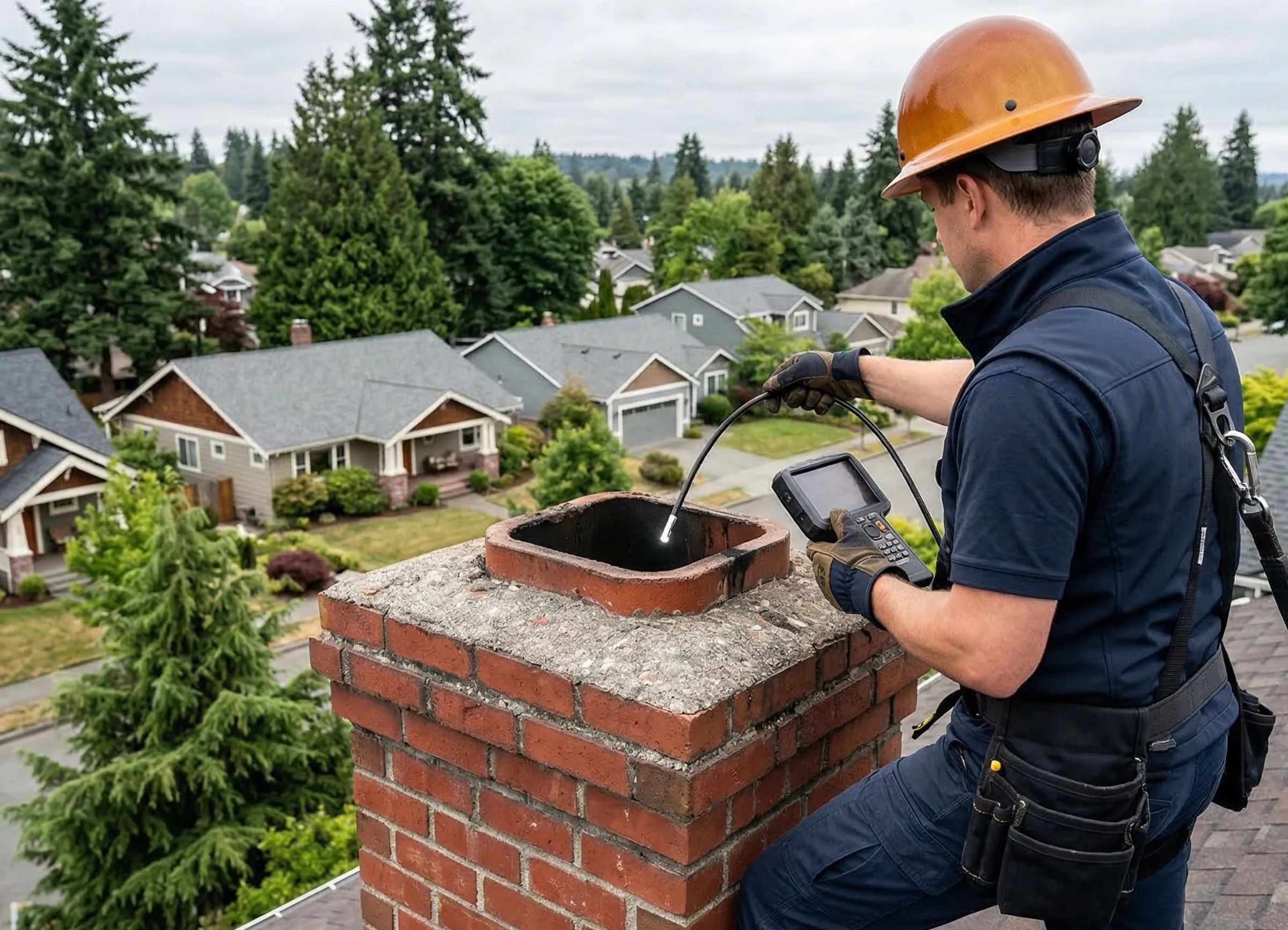
A neighbor two streets over had recently used our service and mentioned our name. Marcus called the next morning. Alex arrived mid-afternoon, started at the roofline, and within five minutes of camera work inside the flue had a diagnosis.
The upper 18 inches of the clay tile liner had a clean diagonal fracture — the classic signature of lateral seismic movement. The chimney crown had also developed a through-crack, and two courses of brick just above the roofline showed mortar joint separation wide enough to slip a credit card into. None of this was visible from the yard.
'That diagonal crack in the liner is exactly what we see after lateral shaking — the tile can't flex, so it snaps clean across. The smoke backing up into the room is actually a safety system working correctly: the draft was disrupted enough that the fireplace wouldn't draw properly. If it had drawn fine, Marcus might have used it all winter with cracked flue tiles and never known.'
— Alex, Lead Technician, Seattle Chimney Pros
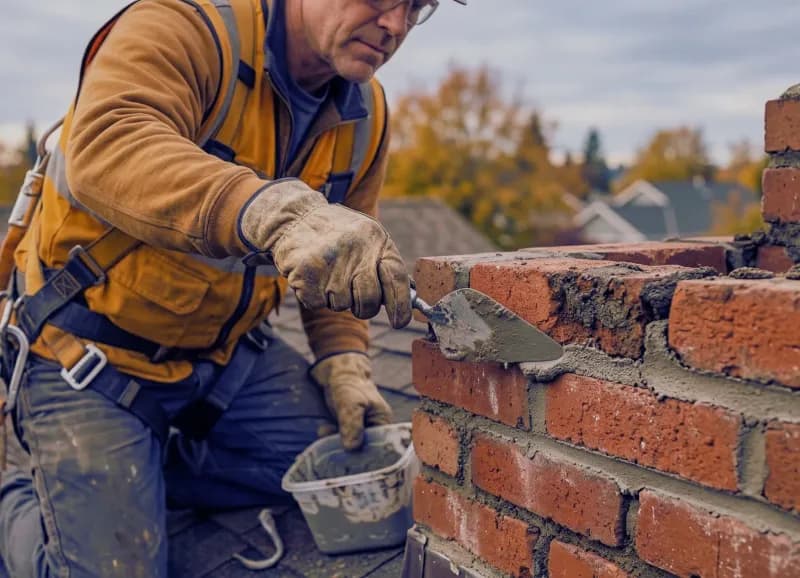
Alex walked Marcus through the findings on a tablet showing the camera footage in real time. The repair plan: replace the fractured liner section with a stainless steel liner sleeve, repoint the separated mortar joints above the roofline, and apply a new crown coat with elastomeric sealer. Total cost: $2,140, completed in a single day. Marcus had the fireplace back in service by that evening — with documentation he later filed with his earthquake insurance provider.
How Do Earthquakes Actually Damage a Chimney?
Chimneys fail in earthquakes because they are tall, narrow, and heavy — essentially a freestanding masonry column attached to your house with minimal lateral bracing. When the ground shakes, the base of the chimney moves with the house, but the mass at the top wants to stay put, creating enormous shear forces through the mortar joints and liner tiles.
The damage patterns we see most often, ranked by frequency across our post-seismic inspections:
| Damage Type | Where It Occurs | Typical Repair Cost | DIY Detectable? |
|---|---|---|---|
| Mortar joint cracking | Exterior brickwork, especially above roofline | $300–$900 | Sometimes (binoculars) |
| Crown fracture | Top cap of chimney stack | $400–$850 | Rarely (need roof access) |
| Flue liner fracture | Interior clay tile, upper section | $900–$3,200 | No (camera required) |
| Chimney-to-house separation | Flashing zone and upper walls | $600–$2,000 | Sometimes (gap visible) |
| Partial collapse (above roofline) | Top 2–4 courses of brick | $1,800–$5,500 | Yes |
| Full structural failure | Entire stack | $6,000–$14,000 | Yes |
The most dangerous scenario is a fractured flue liner with no visible exterior damage — the chimney looks fine from the yard, so homeowners resume normal use. Carbon monoxide and heat can then escape through the cracks into wall cavities and living spaces. This is why NFPA 211 and CSIA both require a Level II camera inspection after any felt seismic event before resuming fireplace use.
Which Seattle Neighborhoods Face the Highest Seismic Chimney Risk?
Seismic risk is roughly uniform across the Puget Sound region, but chimney vulnerability concentrates heavily in neighborhoods with the oldest housing stock. Homes built before 1940 used lime-based mortar, which hardens and becomes brittle over decades — it performs far worse under lateral loading than modern Portland cement mortar. Based on our inspection data, pre-1940 homes show earthquake-related damage at nearly three times the rate of post-1980 construction.
- Queen Anne — High concentration of Victorian and Edwardian homes with tall ornate chimneys and original lime mortar. Our highest post-seismic call volume historically comes from this neighborhood.
- Capitol Hill — Dense pre-1920 housing stock. Many chimneys here have never had mortar repointing work done.
- Wallingford — 1920s–1940s craftsman homes with aging clay tile liners that are especially prone to diagonal fracture.
- Ballard — Early 1900s homes near the water; salt air exposure accelerates mortar deterioration, increasing seismic vulnerability.
- Fremont, Ravenna, Columbia City — Mixed-era housing with widely varying chimney construction quality; condition varies house to house.
If your Seattle home was built before 1945 and has an original masonry chimney, a seismic vulnerability assessment should be part of your annual chimney inspection. We include this evaluation at no extra charge with every Level II inspection on pre-1945 homes.
What Are the Warning Signs of Earthquake Damage to a Chimney?
Some seismic damage is unmistakable. Most of it is not. Here is what to look for, starting from the ground and working up — and what each sign likely means:
- New cracks in interior walls near the fireplace — Stair-step cracks in drywall or plaster adjacent to the chimney chase suggest the chimney shifted relative to the house framing. This warrants immediate inspection.
- Fireplace damper sticking or misaligned — If a damper that operated smoothly now binds or won't seal, the firebox surround may have racked slightly.
- Smoke backing into the room — As Marcus T. discovered, a disrupted draft is often the first functional sign of internal flue damage. Do not continue using the fireplace.
- Visible gaps at the roofline — Any separation between the chimney stack and the roof deck or flashing is a structural warning sign. Daylight through that gap means water and pests can enter immediately.
- Brick or mortar debris in the firebox — Material falling into the firebox means pieces are loose inside the flue. This is a fire hazard — do not use the fireplace.
- Chimney tilting or leaning — Sight up the stack from the yard. Even a 1–2 degree lean that wasn't there before indicates foundation movement.
- Diagonal cracks in exterior brickwork — Hairline diagonal cracks across brick faces or along mortar joints above the roofline indicate shear forces moved through the masonry.
If you observe any of these signs after a felt earthquake, stop using your fireplace and schedule an inspection. For emergency assessments, call us at (206) 278-2924 — we prioritize post-seismic calls and typically get on-site within 24–48 hours.
What Should You Do Immediately After an Earthquake in Seattle?
If you felt the earthquake — meaning the shaking was noticeable rather than something you only read about on PNSN — follow these steps before using your fireplace again:
- Stop using the fireplace immediately. Do not light a fire 'just to see if it draws fine.' Internal flue damage is invisible and can allow carbon monoxide and heat to enter wall cavities even when draft seems normal.
- Inspect the firebox from below. Open the damper and look up with a flashlight. Visible debris, dislodged liner tiles, or loose brick indicate damage that warrants professional inspection before any further use.
- Walk the exterior perimeter. Look for visible cracks in the chimney stack above the roofline, any separation between the chimney and the house wall, or brick debris on the roof or around the foundation.
- Check interior walls near the fireplace. New stair-step cracks in drywall adjacent to the chimney chase, or a suddenly stiff damper handle, are secondary indicators of structural movement.
- Schedule a Level II inspection with HD camera. This is the only way to definitively assess internal flue liner condition. Per NFPA 211, a Level II inspection is required after any event that could have affected chimney integrity — including earthquakes. Our inspections are $99 plus tax, whatever the flue configuration.
How Much Does Earthquake Chimney Repair Cost in Seattle in 2026?
Repair costs vary widely depending on how much damage the seismic event caused and whether you have a single-flue or multi-flue system. Based on post-seismic repair jobs our team completed across the Seattle metro area through early 2026, here is a realistic cost breakdown:
| Repair Type | Low Estimate | High Estimate | Notes |
|---|---|---|---|
| Mortar joint repointing (above roofline) | $300 | $900 | Price depends on number of courses affected |
| Crown repair or replacement | $400 | $850 | Crown coat vs. full cast replacement |
| Stainless steel liner (partial section) | $900 | $2,400 | Single damaged section replacement |
| Full stainless steel relining | $2,200 | $4,800 | Per flue; for extensively cracked tile liners |
| Chimney-to-house gap repair + flashing | $600 | $2,000 | Often combined with flashing repair |
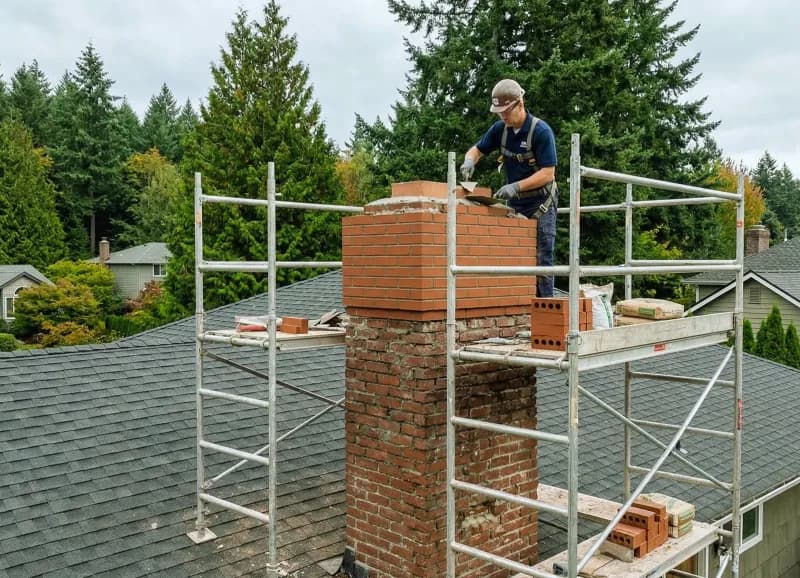
| Partial rebuild (above roofline) | $1,800 | $5,500 | Collapsed or severely damaged upper section |
| Full chimney rebuild with seismic reinforcement | $6,000 | $14,000 | Includes steel rebar, new footing connection |
| Seismic bracing installation | $1,000 | $3,000 | Preventive; connects chimney to house framing |
Most homeowners with post-seismic damage in the $1,000–$4,000 range can file under earthquake insurance if they carry a separate earthquake policy — standard homeowners insurance does not cover seismic damage in Washington state. We provide detailed written reports with photo and video documentation that insurance adjusters accept. Learn more about our chimney repair services or the full process for filing a chimney insurance claim in Washington.
How Can You Protect Your Seattle Chimney from Future Earthquakes?
Post-seismic repair addresses existing damage, but proactive seismic retrofitting significantly reduces the risk of catastrophic failure in a future event. In 14 years of serving Seattle-area homeowners, we have seen the difference between a retrofitted chimney and an unbraced one after the same seismic event: the retrofitted chimney develops minor mortar cracks, the unbraced one collapses through the roof.
- Seismic chimney bracing — Steel angle brackets anchor the chimney stack to the house's structural framing at the roofline. This is the single most cost-effective seismic upgrade for an existing masonry chimney, running $1,000–$3,000 depending on chimney size and access.
- Mortar repointing before deterioration advances — Fresh Portland cement mortar in all joints dramatically improves a chimney's ability to absorb lateral loads without cracking. A chimney with failing mortar is far more vulnerable than one that has been regularly maintained. See our tuckpointing cost guide for Seattle pricing.
- Crown sealing and waterproofing — A sealed, flexible crown coat and chimney waterproofing treatment reduces the freeze-thaw spalling that weakens masonry before seismic events even occur.
- Consider a lightweight prefab system — For severely deteriorated pre-1940 chimneys, replacing the masonry stack with a factory-built insulated metal chimney system eliminates seismic risk entirely. These systems weigh roughly one-tenth of a comparable masonry chimney and flex with the house during shaking.
- Annual inspections for older homes — Regular chimney inspections catch emerging mortar failure, liner cracking, and crown damage before a seismic event turns minor deterioration into catastrophic failure. We inspect over 800 Seattle-area chimneys per year and track condition trends by neighborhood.
Get Your Seattle Chimney Seismically Assessed in 2026
If you live in a pre-1945 Seattle home and haven't had a post-seismic Level II inspection, now is the right time — before the next felt event, not after. Our CSIA-certified technicians perform full camera inspections with written reports, including seismic vulnerability assessment for older masonry systems. Inspections are $99 plus tax and we're typically on-site within 48 hours of scheduling.
Call us at (206) 278-2924 or schedule online — we serve all 45 Seattle metro areas and prioritize post-seismic calls.
Need professional help?
Our professionally trained team is ready. $99 inspection credited toward repairs, 30-minute response.