Chimney Flashing Repair Cost in Seattle: A 2026 Homeowner Story
What Does Chimney Flashing Repair Cost in Seattle in 2026?
Chimney flashing repair in Seattle costs between $350 and $1,200 in 2026, depending on the extent of damage, flashing material, and roof pitch. Based on 187 flashing jobs our team completed across the Seattle metro area last year, the average homeowner pays $520 for a standard single-chimney reflash using galvanized steel step flashing and counter flashing. Jobs requiring lead flashing, steep roof access, or extensive mortar joint repointing run $750–$1,200. Minor resealing of existing flashing with elastomeric caulk starts around $150–$280 but is rarely a permanent fix in Seattle's high-rainfall climate. Current as of July 2026.
A Real Flashing Job: Marcus T. in Fremont
Marcus T. had been ignoring a faint water stain on the ceiling above his fireplace for two rainy seasons. He figured it was condensation. By January 2026, the stain had doubled in size and the drywall near his chimney breast was soft to the touch. A neighbor mentioned she'd seen our truck on Fremont Ave the week before, which is how Marcus found us.
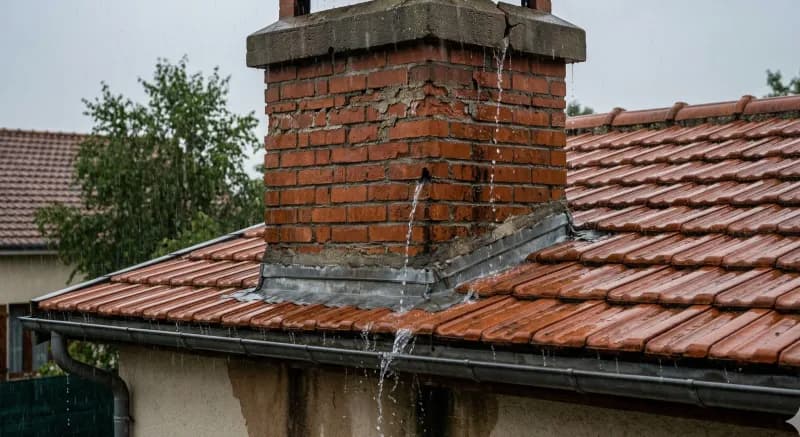
Ryan arrived on a Tuesday morning, climbed to the rooftop, and found the problem within minutes. The original aluminum step flashing had pulled away from the chimney's south face — a gap of nearly a quarter inch in one section. Beneath it, water had been tracking down the brick and into the framing cavity for at least two seasons.
"That gap might look small from up here, but in a Seattle winter that's a firehose aimed at your ceiling. Aluminum flashing expands and contracts a lot with temperature swings — on older chimneys like this one, it almost always works loose eventually."
— Ryan, Lead Technician, Seattle Chimney Pros
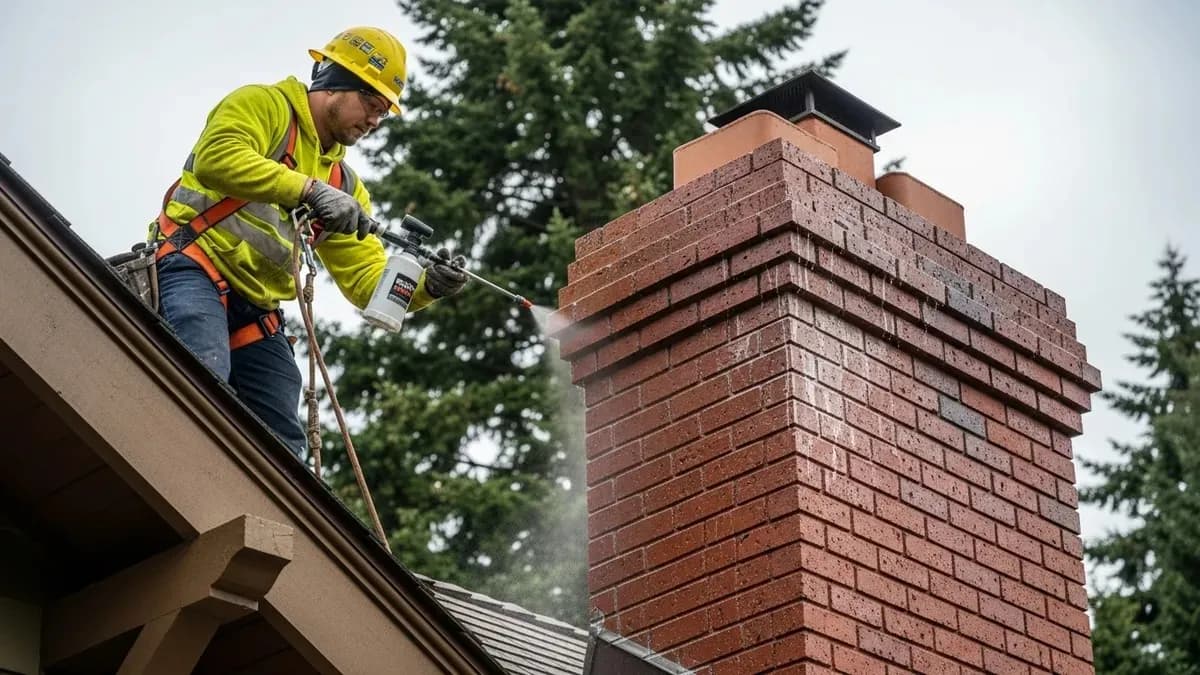
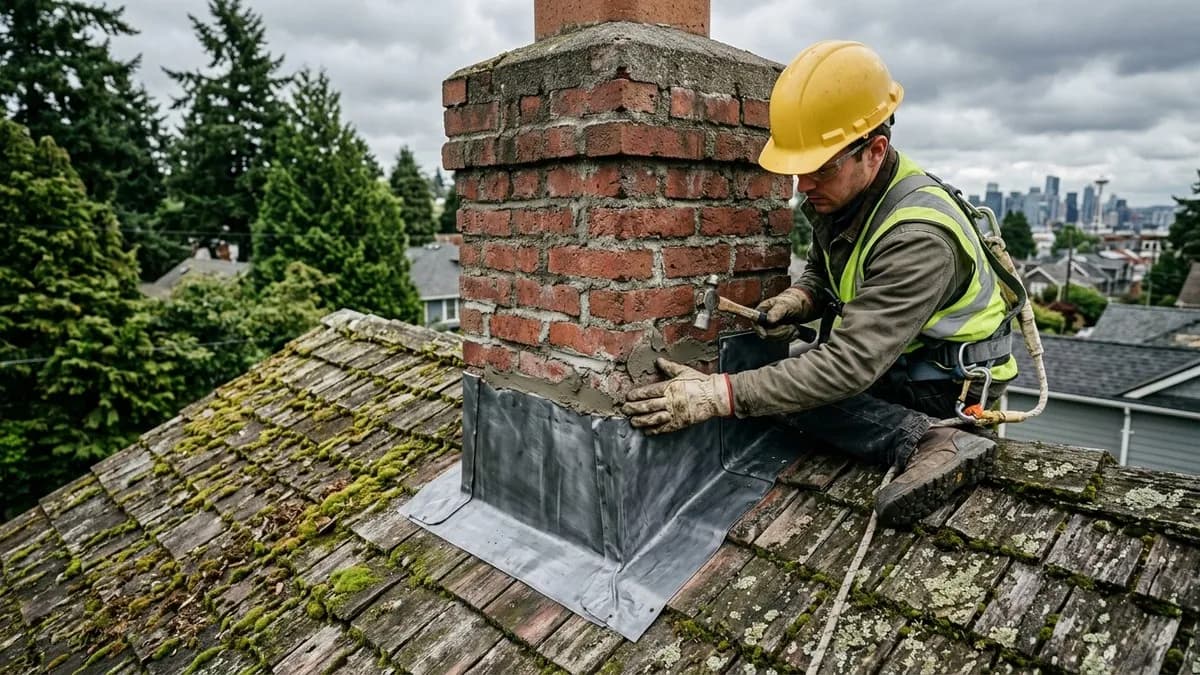
Ryan replaced the step flashing on all four sides with galvanized steel, repointed the counter flashing joints with hydraulic mortar, and applied a elastomeric sealant bead along the top edge. Total job time: 3.5 hours. Marcus paid $680, which included a full Level 1 chimney inspection to confirm no water had reached the liner. "I kept putting it off because I figured it'd be thousands," Marcus said. "Should've just done it two winters ago."
What Causes Chimney Flashing to Fail in Seattle?
Seattle's climate — averaging 38 inches of rain per year with freeze-thaw cycles from October through March — accelerates every flashing failure mode faster than drier climates. The four most common causes we see:
- Thermal expansion fatigue: Aluminum flashing expands up to 1/8" per linear foot across a 100°F temperature range. Over 10–15 years, the repeated movement loosens mortar joints and creates gaps.
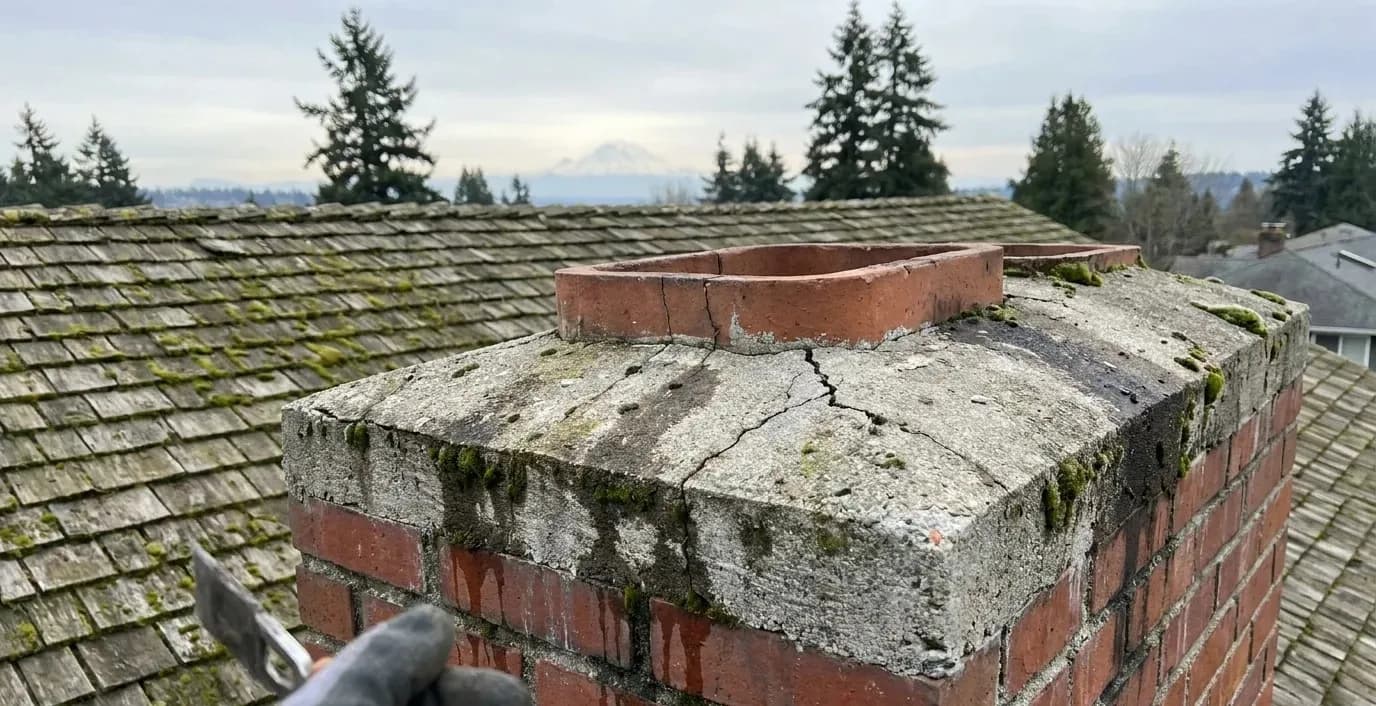
- Mortar joint deterioration: Counter flashing is embedded in mortar. As Seattle rain saturates and freeze-thaws the mortar, it crumbles, releasing the flashing edge.
- Improper original installation: In 42% of the flashing jobs we complete, the original installation used only caulk instead of properly embedded step and counter flashing — a shortcut that fails within 5–8 years.
- Moss and organic growth: Common on north-facing Seattle roofs, moss holds moisture against the flashing seam and accelerates corrosion and seal failure.
How Do You Know If Your Chimney Flashing Is Failing?
Flashing failure rarely announces itself with an obvious roof leak. More often it's subtle and slow — which is why it causes so much damage before homeowners act. Watch for these signals:
- Water stains on the ceiling near the chimney — especially after heavy rain, not condensation patterns
- Soft or bubbling drywall on the chimney breast wall
- Rust streaks on the exterior brick, running diagonally from the chimney base
- Visible gaps or lifted edges where metal meets brick on the rooftop
- A musty smell in the room with the fireplace during or after rain
If you see any two of these together, schedule a chimney repair inspection before the next rain season. Water damage compounds fast once it reaches framing.
Chimney Flashing Repair Cost Breakdown: Seattle 2026
Here's what homeowners across our 45 service areas typically pay for flashing work:
| Repair Type | Typical Cost Range | Time on Site |
|---|---|---|
| Resealing existing flashing (caulk) | $150–$280 | 1–1.5 hrs |
| Step flashing replacement (1 side) | $350–$520 | 2–3 hrs |
| Full reflash (all 4 sides, galvanized) | $520–$850 | 3–5 hrs |
| Full reflash with lead flashing | $750–$1,200 | 4–6 hrs |
| Reflash + crown repair combo | $900–$1,500 | 5–8 hrs |
Permits: Most flashing repair in Seattle does not require a building permit unless structural framing repair is included. Our techs can advise on-site. For larger projects involving masonry repair, we recommend reviewing Seattle DCI requirements.
Can You Repair Chimney Flashing Yourself?
Technically yes — caulking visible gaps is a DIY task. But effective flashing repair requires removing existing flashing, repointing mortar joints, and re-embedding new metal into the chimney's wythe. This is masonry and roofing work simultaneously, and errors create more damage than the original failure. NFPA 211 requires properly integrated flashing as part of a safe chimney system. For a task this consequential to your home's structure, professional installation is strongly recommended. Our chimney waterproofing service pairs well with flashing repair for full moisture protection.
Ready to Stop the Leak? Book a Flashing Inspection
If you've seen water stains, soft drywall, or rust streaks near your chimney, don't wait until fall. Flashing damage caught early costs $350–$520. The same job after two wet seasons of framing damage can run $2,000+. Our team serves all 45 Seattle-area neighborhoods with same-week scheduling through summer. Call (253) 429-8006 or request a free estimate online — we'll tell you exactly what it'll cost before we start.
Need professional help?
Our professionally trained team is ready. Free estimate, 30-minute response.