Chimney Crown Repair Cost in Seattle 2026: What You'll Actually Pay
How Much Does Chimney Crown Repair Cost in Seattle in 2026?
Chimney crown repair in Seattle costs between $250 and $3,500 in 2026, depending on the severity of the damage and which repair type your chimney actually needs. Based on 340 crown-related jobs our team completed across the Seattle metro last year, here's how that breaks down: a crown seal or elastomeric coating runs $250–$500 and is the right call for early-stage hairline cracks; a patch repair for moderate damage costs $500–$1,500; and a full concrete crown rebuild — the only lasting fix when the slab is structurally compromised — runs $1,500–$3,500. Historic homes in neighborhoods like Capitol Hill or Madrona with lime-mortar profiles can reach $4,500 due to specialty materials and matched-profile work. Current as of June 2026.
A Real Crown Repair Job: Marcus T. in Fremont
Last April, Marcus T. noticed a dark water stain spreading across the ceiling of his Fremont bungalow's living room — directly above the fireplace. He'd seen it after heavy rain before, but this time it was larger than his hand and the plaster was starting to bubble. A neighbor had used us the previous fall and recommended we take a look.
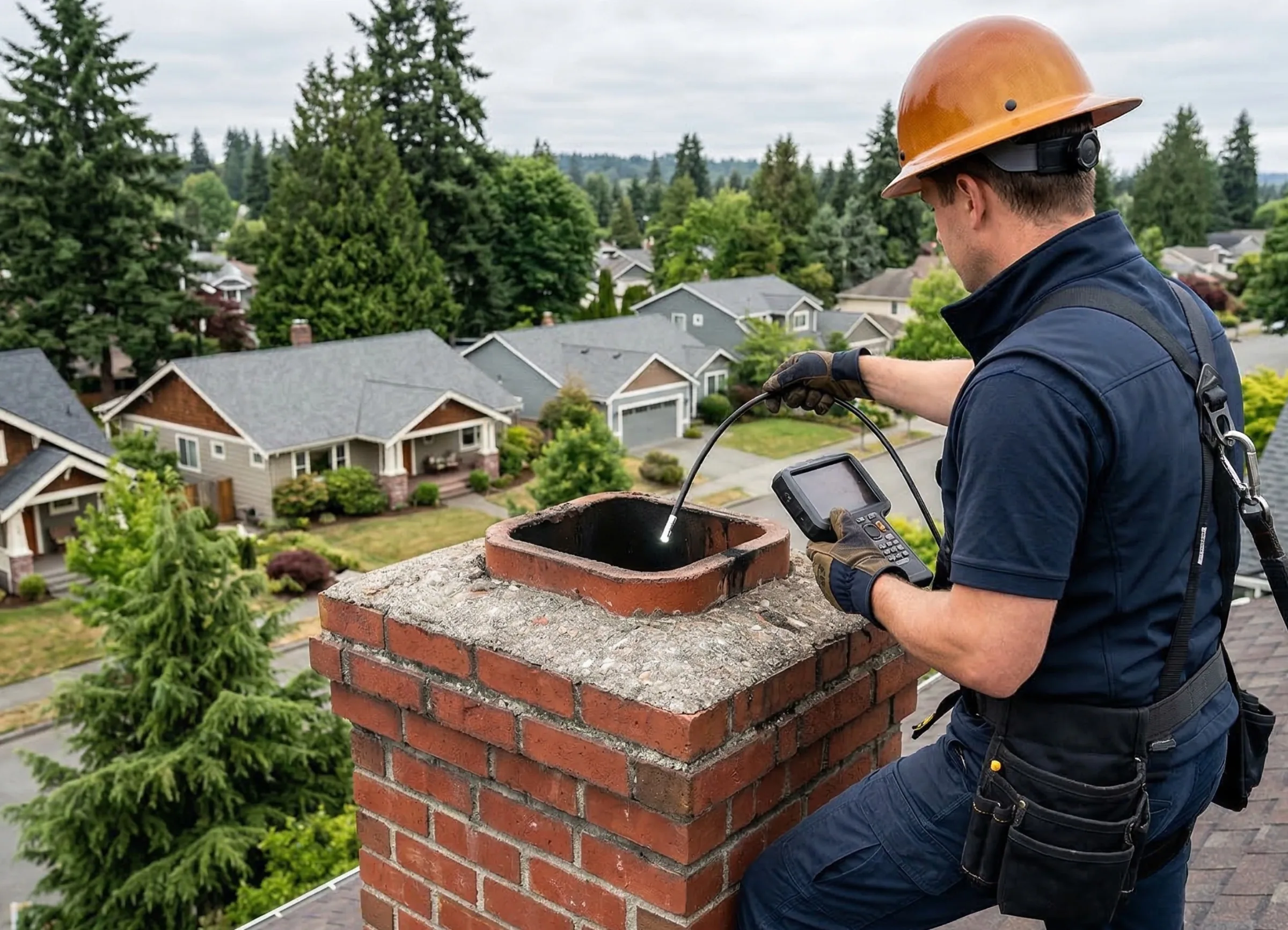
Alex arrived the next morning. He set up his ladder on the back side of the steeply pitched roof, clipped in, and climbed up to the crown. What he found was a textbook example of Seattle freeze-thaw damage: a crown originally poured in the late 1980s with no expansion joint around the flue tile and a flush edge — no overhang at all. Water had been sheeting directly onto the brick face for decades. Three large cracks, each nearly a quarter-inch wide, radiated out from the flue collar like spokes. A chunk the size of a paperback book had broken off the southwest corner entirely.
'That corner piece missing is the smoking gun,' Alex told Marcus, showing him the photos on a tablet at the kitchen table. 'Every southwest wind-driven rain we get — and we get a lot of those in spring — is driving water straight into that gap and down through the brick. That stain on your ceiling is where it's ending up.'
'The crown itself was never built right to begin with — no drip edge, no bond break around the flue. It was going to fail eventually no matter what. A patch would buy a few years, but given the size of the missing section and those crack widths, a full rebuild is the only fix that's going to last.'
— Alex, Lead Technician, Seattle Chimney Pros
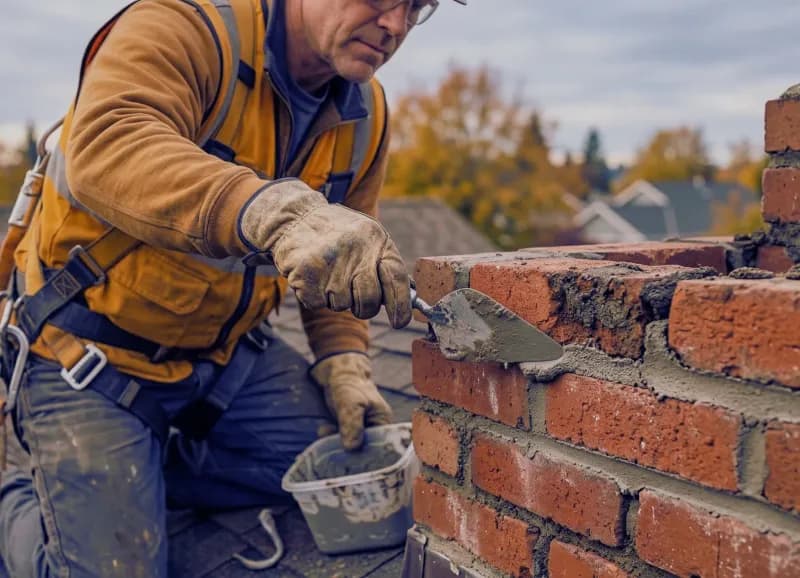
Marcus opted for the full rebuild. The old crown was demolished down to the top brick course, the flue tile was wrapped with a compressible gasket to create a proper expansion joint, reinforcing mesh was laid, and a fresh concrete slab was poured with a two-inch drip edge and a positive slope away from the flue. While access was set up, Marcus also added a new stainless steel chimney cap — smart, given that a missing cap had contributed to crown saturation in the first place. Total cost: $2,150 for the rebuild plus $285 for the cap. The ceiling stain dried out and was patched with drywall compound six weeks later. Marcus is now on our annual inspection schedule.
What Are the Signs Your Chimney Crown Needs Repair?
Crown damage almost always announces itself before it becomes a full interior leak — if you know where to look. These are the seven warning signs our crews document most frequently on Seattle-area inspections:
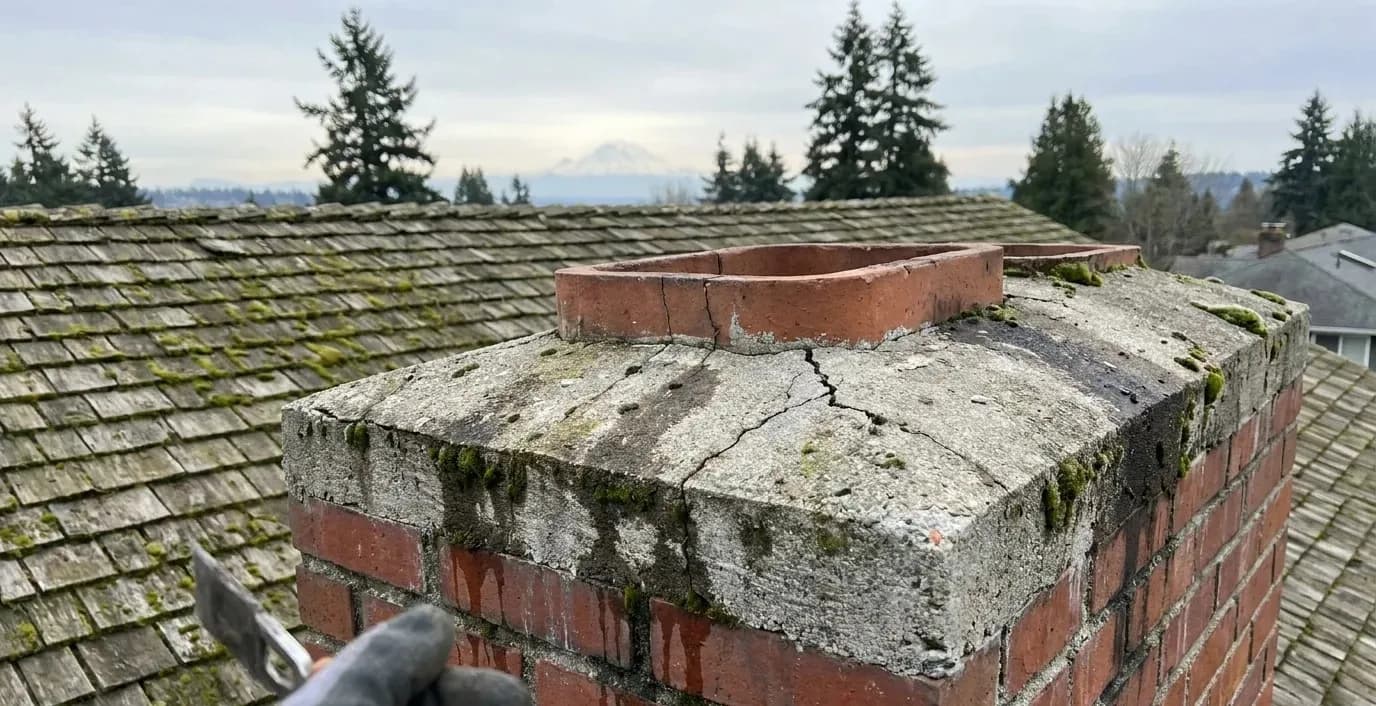
- Hairline cracks radiating from the flue tile — the earliest and most common sign, visible from the ground with binoculars on a bright day.
- Larger cracks or missing chunks at the crown's edge — once pieces start breaking off, structural repair is overdue.
- Spalling brick directly below the crown — faces popping off bricks means water is saturating the masonry from above.
- White staining (efflorescence) on the upper chimney — mineral salts carried to the surface by water migrating through the crown.
- Rust streaks running down from the flue — water is pooling inside and corroding the damper or top-sealing cap hardware.
- Moss or plant growth rooted in the crown — organic matter holds moisture against the concrete 12 months a year in Seattle's climate.
- Interior water stains near the fireplace or on the ceiling above it, especially after southwest wind-driven rain.
If you spot any two of these together, schedule a professional chimney inspection before the next rainy stretch. In our experience, waiting one additional Seattle winter after visible crown cracking appears increases repair cost by an average of $400–$800 due to additional brick and mortar damage.
Crown Seal vs. Patch vs. Full Rebuild: Which Does Your Chimney Need?
The repair type determines 80% of your cost, so getting this diagnosis right matters. Here is the framework our estimators use on every job:
Crown Seal / Elastomeric Coating — appropriate when the crown is structurally sound but has fine cracks under 1/8 inch with no missing material. Two coats of flexible elastomeric coating bridge the micro-cracks, shed water, and extend the crown's life 10–15 years. This is preventive maintenance, not a structural fix.
Crown Patch Repair — right for cracks wider than 1/8 inch, small missing sections under one square foot, or edges that have broken away while the main slab remains solid. Polymer-modified mortar or hydraulic cement is packed in, bonded, and then the entire surface is sealed. Works well as long as the underlying slab isn't crumbling and the flue tile is intact.
Full Crown Rebuild — necessary when the slab is crumbling, large sections are missing, the crown has pulled away from the flue, or it was built incorrectly from the start (no overhang, no expansion joint). In Seattle, a significant share of homes built 1960–1995 have builder-grade mortar crowns that were never properly constructed — patching them is a temporary fix that returns within three to five years.
Here is what to do if you suspect crown damage and want to act quickly before getting a professional out:
- Use binoculars from the yard or a second-floor window to visually inspect the crown for visible cracking or missing sections.
- Check the upper brick courses for white efflorescence staining — a sign water is already migrating through.
- Inspect the firebox interior for water pooling or rust streaks on the damper after rain.
- Check ceilings and walls near the fireplace for water stains, bubbling paint, or soft plaster.
- Do NOT light a fire if you see active water intrusion — schedule an inspection first to rule out flue liner damage.
2026 Seattle Chimney Crown Repair Cost Breakdown
Prices below reflect current Seattle-metro pricing for single-story homes with standard roof access. Steep-pitch, multi-story, hillside, or historic homes typically add 20–50% to the labor component.
| Repair Type | Typical Cost (Seattle 2026) | Best For | Expected Lifespan |
|---|---|---|---|
| Crown seal / elastomeric coating | $250–$500 | Hairline cracks, preventive maintenance | 10–15 years |
| Crown patch repair | $500–$1,500 | Moderate cracks, small missing sections | 15–20 years |
| Full crown rebuild (poured concrete) | $1,500–$3,500 | Structural failure, missing sections, wrong original build | 40–50+ years |
| Historic home crown (lime mortar, matched profile) | $2,000–$4,500 | Pre-1940 homes with soft brick | 40–50+ years |
| Precast concrete crown (custom off-site pour) | $2,500–$4,000 | Standard rectangular chimneys, faster install | 50+ years |
Want a firm number for your specific chimney? Request a free same-day estimate — we inspect from the roof, photograph everything, and send a written quote the same day.
Why Does Seattle Crown Repair Cost More Than National Averages?
National cost guides quote crown repair at $200–$2,000. That range consistently underestimates what Western Washington homeowners actually pay, for three concrete reasons:
1. Seattle's weather cycles work crowns harder than almost anywhere in the continental US. We average 152 rain days and 37 inches of precipitation annually, but the real damage mechanism is freeze-thaw cycling. Water saturates micro-cracks during our wet season, then freezes on cold nights — particularly on elevated neighborhoods like Queen Anne, Magnolia, and the hillside properties of Bellevue and Mercer Island. Ice expands 9% in volume, mechanically widening each crack with every cycle. Twenty to forty freeze-thaw events per winter turns a hairline crack structural in three to four seasons.
2. Our housing stock is older and architecturally complex. A large percentage of homes in Capitol Hill, Ballard, Fremont, and Wallingford were built between 1900 and 1940. Chimneys from that era are tall, often multi-flue, and require specialty lime mortars that are compatible with the original soft brick. Matching period profiles and using breathable historic mortar — critical to avoiding accelerated brick damage — drives material and labor cost significantly above national benchmarks.
3. Roof access is genuinely harder here. Steep-pitch roofs at 12/12 are common. Cedar shingles cannot be walked on without roof jacks. Hillside properties require crane positioning on the hardest sites. Moss-slick surfaces require additional safety rigging. Every one of these factors adds labor hours that national averages simply don't account for.
What Actually Causes Chimney Crown Damage in the Pacific Northwest?
Understanding the failure mode helps you prevent the next one. Across our 340-plus crown jobs last year, the root causes were remarkably consistent:
- Freeze-thaw expansion — the leading cause in Seattle by a wide margin. Water in a crack freezes, expands 9%, and pries it wider every cycle through winter.
- Builder-poured mortar crowns — common on 1960s–1990s construction, these are thick mortar rather than reinforced concrete. They typically fail within 15–25 years and are not worth patching.
- No expansion joint around the flue tile — clay flue tile and concrete expand at different rates. Without a compressible bond break, the crown cracks at the flue collar every thermal cycle.
- No drip edge or overhang — when a crown is poured flush with the brick edge, water sheets directly down the chimney face instead of dripping away. This is how Marcus's crown failed.
- Moss and lichen growth — a signature Seattle problem. Moss roots physically pry cracks open and hold moisture against the concrete year-round, accelerating both freeze-thaw damage and concrete erosion.
- Failed or missing chimney cap — without a cap, rain pours directly onto the crown and into the flue. See our guide on chimney cap inspection in Seattle for what to look for.
- Earthquake micro-shifts — the 2001 Nisqually earthquake cracked thousands of crowns across the region, and smaller tremors since have continued the pattern. See our full guide to earthquake chimney damage in Seattle.
How Long Does Chimney Crown Repair Take?
Timeline varies significantly by repair type, and Seattle's weather adds a variable that contractors in drier climates don't deal with — concrete cannot be poured in active rain or temperatures below 40°F.
| Repair Type | On-Site Time | Cure / Dry Time | Weather Dependency |
|---|---|---|---|
| Crown seal / coating | 2–4 hours | 4–6 hours (dry to touch) | Low — apply in dry conditions only |
| Patch repair | 4–6 hours | 24 hours | Moderate — no rain for 24 hours after |
| Full crown rebuild | 6–8 hours (1 full day) | 24–48 hours under tarp | High — requires dry window + temp above 40°F |
In practice, we schedule full rebuilds during Seattle's drier windows — typically late spring through early fall — and keep flexible scheduling buffers for weather delays in shoulder seasons. June and July are our highest-volume crown rebuild months for exactly this reason.
How to Prevent Crown Damage and Get 40+ Years Out of a Rebuild
Once you've paid for a full rebuild, protecting the investment is straightforward and inexpensive relative to what you've already spent:
- Install a proper stainless steel chimney cap. Blocks rain from hitting the crown directly, stops animals, and keeps debris out of the flue. About half our crown clients add a cap during the same visit — access is already set up and the mobilization cost is already sunk.
- Apply crown coating every 10–12 years. A $300 elastomeric recoat prevents the hairline cracks that progress to structural damage. This is the single highest-ROI chimney maintenance item for Seattle homeowners.
- Pair the crown with brick waterproofing. A breathable siloxane sealer on the brick face works with the crown to shed water off the entire chimney system. See our chimney waterproofing service for details.
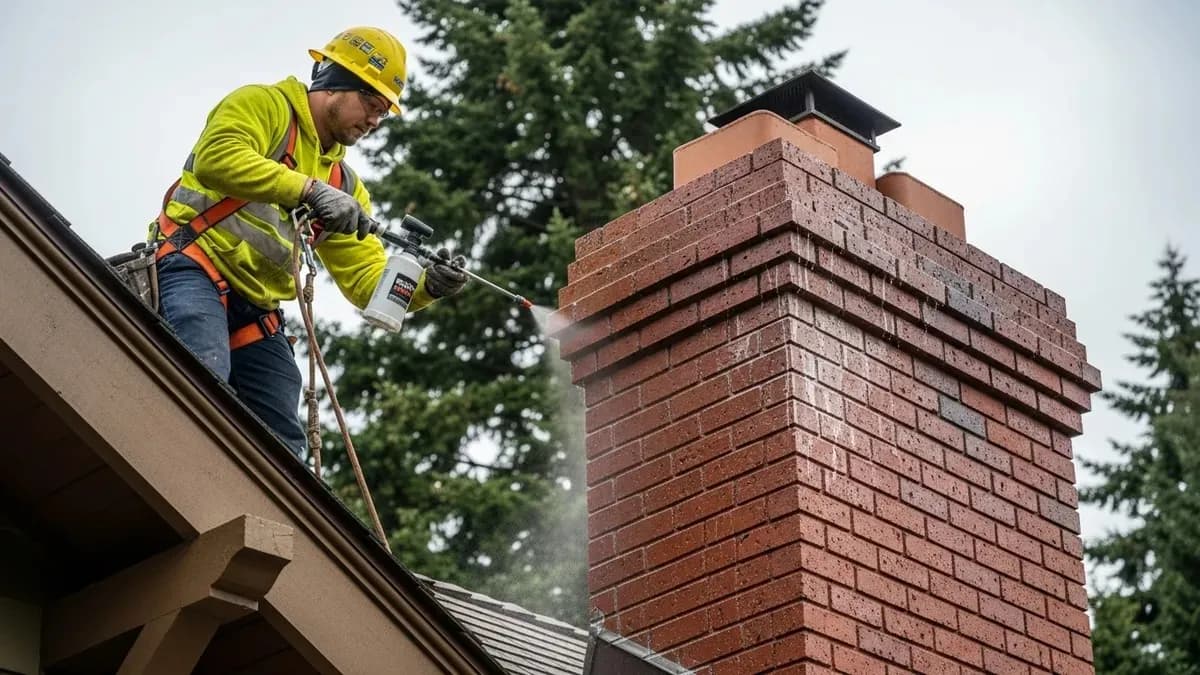
- Remove moss annually. Zinc strips at the ridge or gentle manual brushing — never pressure washing, which erodes mortar joints and forces water deeper into the masonry.
- Schedule a Level 1 inspection every year. NFPA 211 recommends annual inspections for any chimney in regular use, and it's the earliest way to catch crown deterioration before it becomes a leak.
- Address flashing at the same time. Crown leaks and flashing leaks are frequently misdiagnosed as each other — fixing one while ignoring the other leads to a return call within a season.
Get a Chimney Crown Estimate in Seattle Today
If you've spotted cracks, white staining, moss growth, or a water stain on the ceiling near your fireplace, the crown is the most likely culprit — and the repair is almost always less expensive than the water damage it causes if left alone. Our team has rebuilt and repaired chimney crowns on more than 2,500 Seattle-area homes since 2011, and we'll tell you honestly whether your chimney needs a $300 seal or a full concrete rebuild.
Call (253) 429-8006 or request a free same-day estimate online. We photograph everything from the rooftop and send a written quote before we leave. For a broader look at what chimney repairs cost across all service types, see our complete Seattle chimney repair cost guide.
Need professional help?
Our professionally trained team is ready. Free estimate, 30-minute response.