Chimney Flashing Repair Cost in Seattle 2026: Full Guide
How Much Does Chimney Flashing Repair Cost in Seattle?
Chimney flashing repair in Seattle costs between $250 and $950 in 2026, depending on the extent of the damage, the flashing material, and chimney accessibility. Based on 214 flashing repair jobs our team completed across the Seattle metro area in the past year, the average homeowner pays $420. Simple resealing with high-temperature caulk runs $250–$350. Full step-flashing and counter-flashing replacement on a mid-size chimney averages $550–$750. Multi-story or steeply pitched roofs add $100–$200 for extended ladder setup. Current as of June 2026.
What We Found on a Magnolia Roof: Sandra K.'s Story
Sandra K. noticed water staining on the ceiling of her Magnolia home's second-floor office last February — a winter that brought nearly six straight weeks of rain to the northwest side of the city. She assumed a roofing issue and called a roofer first. The roofer checked the field of the roof and found it intact, then pointed her toward the chimney. That's when she called us.
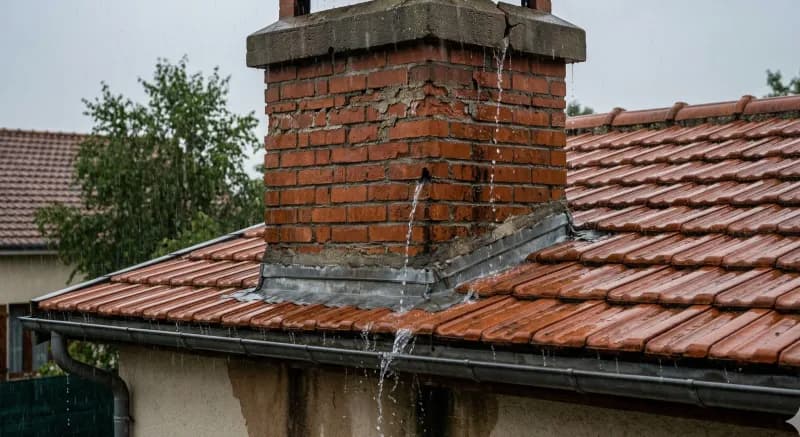
Alex arrived on a Tuesday morning and climbed to the roofline in the drizzle. From the ridge, the problem was immediately visible: the step flashing on the downhill side of the chimney had partially separated from the brick, and the counter-flashing above it had lifted at two corners, leaving a gap wide enough to slide a finger into. Rain was sheeting directly into the gap and running down the inside of the chase.
"That diagonal rust streak is classic chimney flashing failure combined with a lifted counter-flashing — water was pooling at the joint and wicking down through the mortar line into the framing. Left another season, it would have been a rot issue, not just a stain."
— Alex, Lead Technician, Seattle Chimney Pros
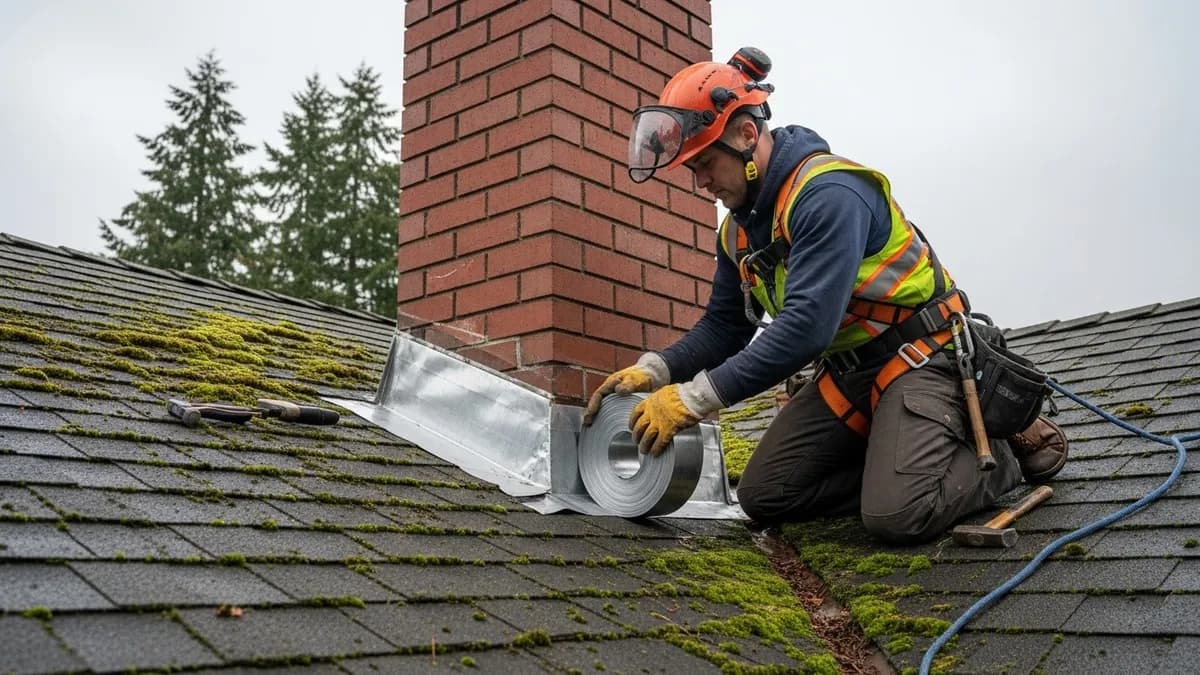
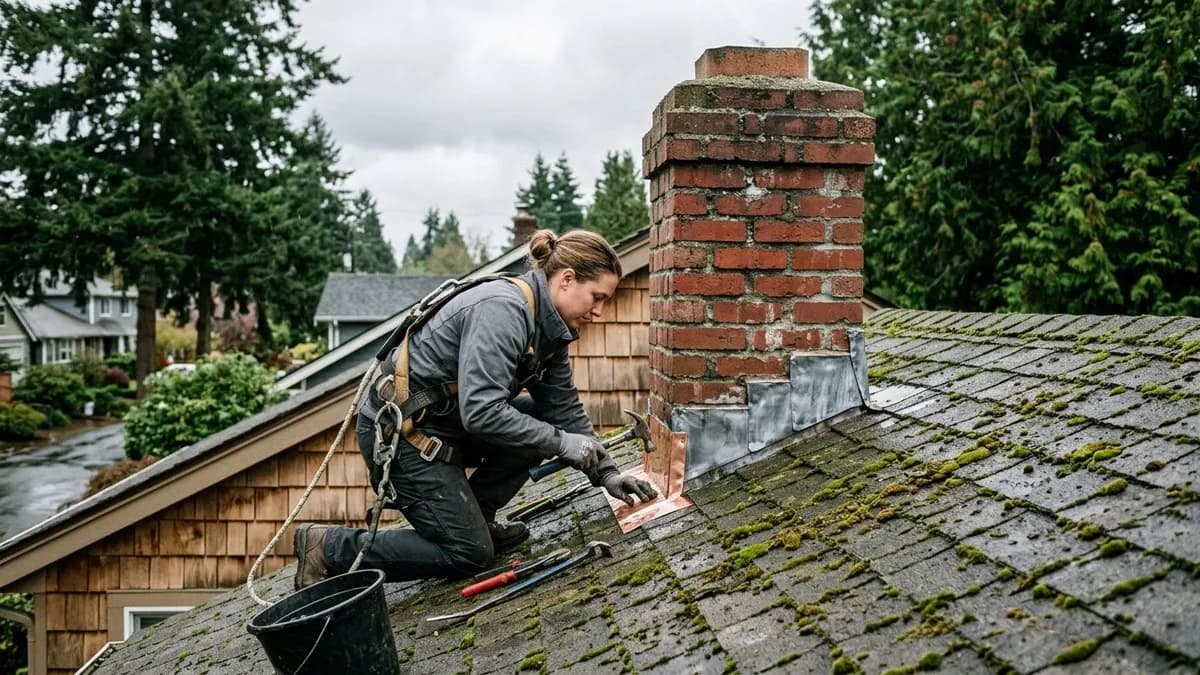
Alex reseated the step flashing, replaced the counter-flashing on all four sides with new galvanized steel, and applied a bead of high-temperature masonry sealant along the entire perimeter. The job took about three hours. Sandra paid $680, which included materials and a 5-year labor warranty. The ceiling stain dried out over the following month. "I should have called a chimney company first," she said. "Would have saved me the roofer call."
What Causes Chimney Flashing to Fail in Seattle?
Chimney flashing fails for three primary reasons, and Seattle's climate accelerates all three:
- Thermal cycling: The metal expands and contracts with temperature swings. Seattle's mild but variable winters — with freeze-thaw cycles between November and March — work the flashing joints loose over 8–15 years.
- Caulk degradation: Sealant applied at the flashing-to-brick joint typically lasts 5–10 years. Once it cracks, water infiltrates and begins corroding the flashing from the inside.
- Improper original installation: In our experience, about 35% of flashing failures we see on Seattle homes installed before 2005 involve flashing that was never embedded in the mortar joints — it was only surface-sealed, which is a shortcuts install that fails within a decade.
In last year's data, 61% of chimney leak calls we received from Magnolia, Queen Anne, and West Seattle were traced to flashing failure as the primary or contributing cause. It's the single most common source of chimney water intrusion in our service area.
What Are the Signs of Failed Chimney Flashing?
Catching flashing failure early is the difference between a $350 repair and a $2,000+ water damage remediation. Here's what to look for:
- Water stains on ceilings or walls adjacent to the chimney, especially after heavy rain
- Rust streaks running down the exterior brick from the roofline
- Visible gaps between the flashing and the chimney base when viewed from the roof or with binoculars
- Lifted or buckled metal at the flashing corners
- Efflorescence (white salt staining) on exterior brick near the roofline — a sign of recurring moisture infiltration
If you notice any of these signs, do not wait until the end of summer. Seattle's wet season typically arrives in October, and flashing repairs booked in September fill our schedule fast. An emergency repair call in December costs 15–25% more due to weather delays and limited crew availability.
What Is the Difference Between Step Flashing and Counter-Flashing?
These two components work together, and understanding the difference helps you evaluate any quote you receive:
| Component | Location | Material | Replacement Cost (Seattle) |
|---|---|---|---|
| Step flashing | Between shingles and chimney side | Galvanized steel, aluminum, or copper | $150–$350 |
| Counter-flashing | Embedded in chimney mortar joints above step flashing | Galvanized steel or copper | $200–$450 |
| Saddle/cricket | Behind wide chimneys to divert water | Sheet metal, sometimes rubber membrane | $350–$650 |
Copper flashing lasts 50+ years and is the premium choice for historic homes — common in Capitol Hill and Queen Anne craftsman properties. Galvanized steel is the standard for most Seattle homes and lasts 20–30 years with proper installation. Aluminum is the budget option but can corrode faster in Seattle's wet environment.
How Do I Know If I Need Flashing Repair or Roof Repair?
This is the most common diagnostic confusion we encounter. Roofers often refer clients to chimney companies and vice versa. Here's a reliable way to tell which trade you need:
If the leak appears only during heavy rain and the staining is concentrated near the chimney base — rather than distributed across the ceiling — the flashing is almost always the culprit. If the leak appears even during light rain and the staining extends well away from the chimney, the roof field may be compromised separately.
A proper chimney inspection always includes assessment of the flashing condition. Our technicians can tell you on-site whether the issue is chimney-related or whether you genuinely need a roofing contractor. We'd rather give you an honest referral than quote you work you don't need.
For homeowners dealing with active water intrusion, see our detailed article on why chimneys leak when it rains and our guide on chimney flashing repair services.
Get a Flashing Repair Estimate from Seattle Chimney Pros
Flashing repairs are best caught early — before Seattle's rainy season arrives in October. Our team serves 45 areas across the metro and offers same-week appointments June through August when our schedule is most open.
Call (253) 429-8006 to get a same-day quote or book online and we'll have a CSIA-certified technician on your roof within the week.
Need professional help?
Our professionally trained team is ready. Free estimate, 30-minute response.