Chimney Flashing Repair in Seattle: What to Expect in 2026
How Much Does Chimney Flashing Repair Cost in Seattle in 2026?
Chimney flashing repair in Seattle costs between $295 and $895 in 2026, depending on flashing type, chimney size, and the extent of water intrusion damage. Based on 340 flashing jobs our team completed across the Seattle metro area last year, the average homeowner pays $445 for a full re-flash using lead-coated copper on a standard single-flue chimney. Homes in steep-roof neighborhoods like Queen Anne and Capitol Hill typically fall in the $595–$895 range due to the added complexity of high-pitch roof access. Current as of July 2026.
Flashing failure is the leading cause of chimney-related water damage we see — accounting for 58% of all leak calls we received in King County last year. Seattle's rain-heavy climate (averaging 38 inches annually) accelerates the deterioration of original step and counter flashing, especially in homes built before 1980 when roofing caulk — not interlocked metal — was the standard.
A Real Flashing Repair: Marcus T. in Ballard
When Marcus T. noticed a water stain spreading across the ceiling of his Ballard bungalow's living room last March, he assumed it was a roof problem. A roofer came out, found nothing wrong with the shingles, and pointed him toward the chimney. That's when Marcus searched 'chimney flashing repair Seattle' and called us.
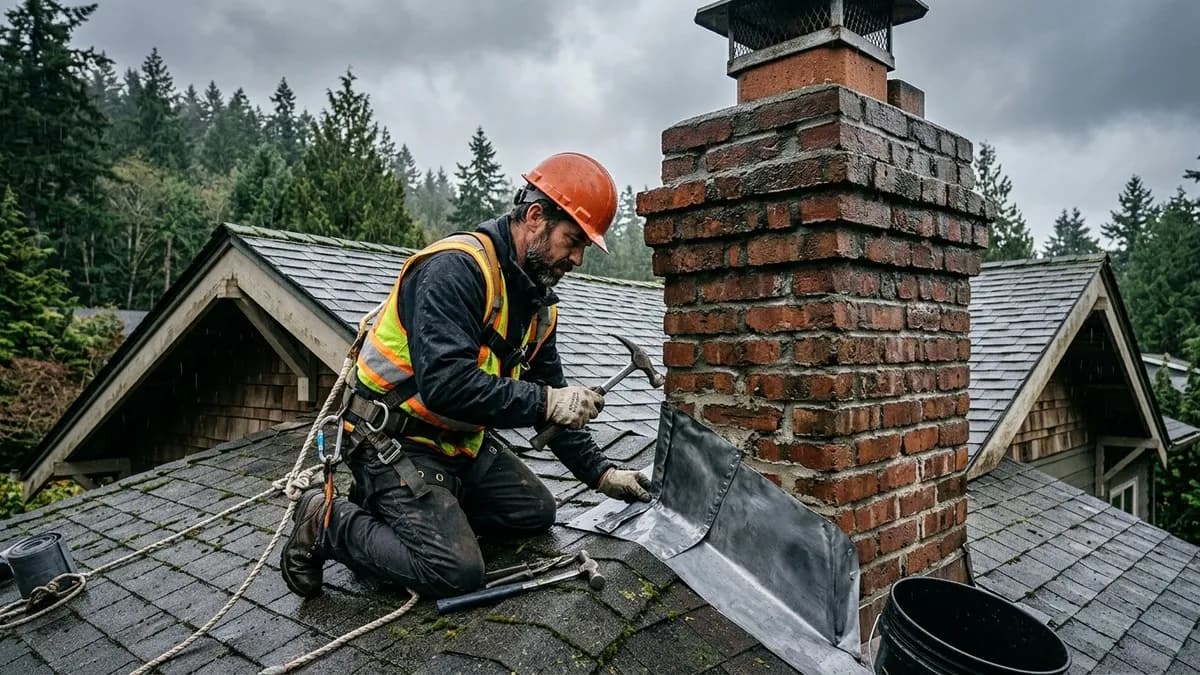
Ryan arrived the following morning. The moment he set up his ladder and reached the roofline, the problem was clear.
'The original flashing was just roofing caulk pressed into the brick joints — no metal at all. Whoever re-roofed this house in the 1990s skipped the counter flashing entirely. Every heavy rain, water was running straight down the chimney face and into the ceiling cavity.'
— Ryan, Technician, Seattle Chimney Pros
Ryan removed the failed caulk, installed new two-piece step and counter flashing in lead-coated copper, and applied a chimney crown sealant coat while he was up top. Total time: 3.5 hours. Total cost: $595, which included the inspection, materials, and a 5-year waterproofing warranty. Marcus's ceiling stain dried out completely within two weeks — no drywall repair needed.
'I wish I'd called a chimney company first instead of the roofer,' Marcus told us. 'Would have saved me $150 on the roofer's visit.'
What Causes Chimney Flashing to Fail in Seattle?
Flashing fails for three primary reasons in the Pacific Northwest: thermal cycling, improper original installation, and moss/debris accumulation at the roof-chimney junction.
- Thermal cycling: Seattle's temperature swings between 28°F winter lows and 90°F summer highs cause metal and mortar to expand and contract at different rates, cracking sealant joints over time.
- Caulk-only installations: Homes built or re-roofed before modern flashing codes often have caulk where interlocked metal should be. Caulk lasts 5–10 years; properly installed lead or copper flashing lasts 30–50 years.
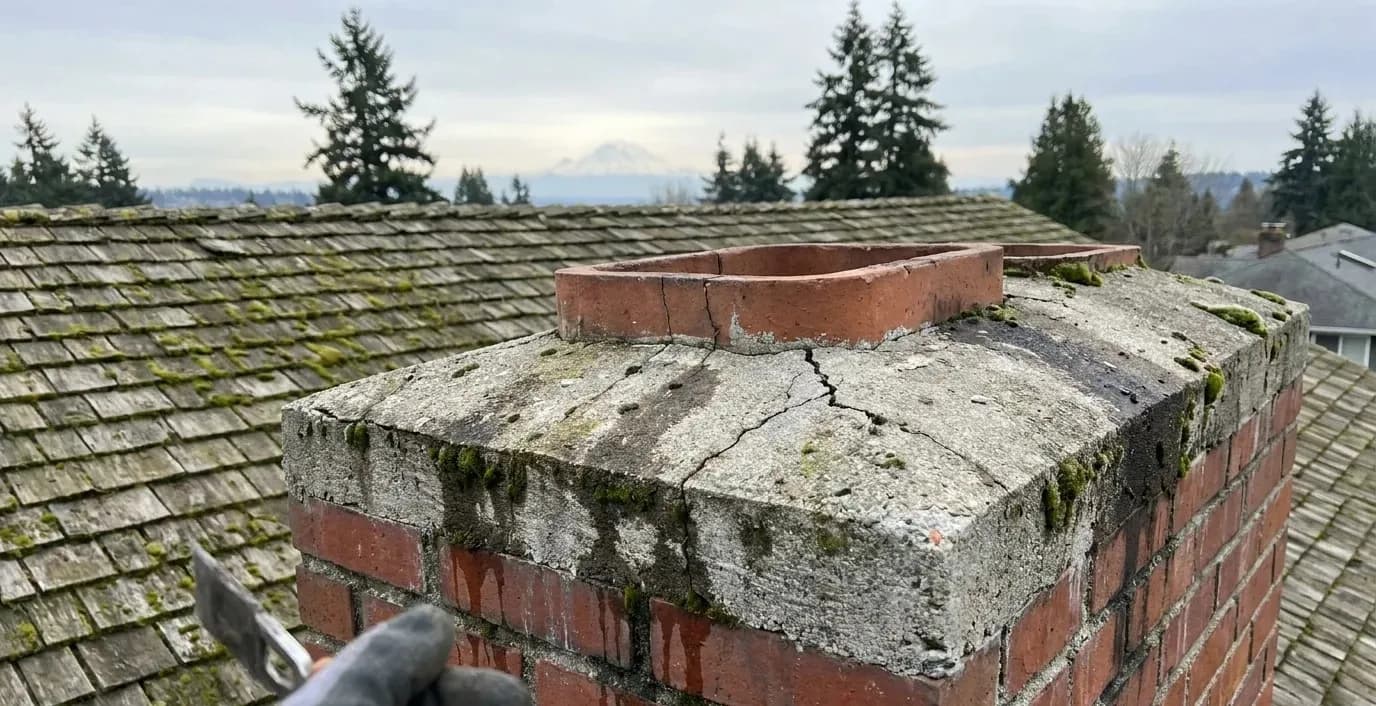
- Moss buildup: Moss at the chimney base traps moisture against the flashing seam constantly — accelerating rust on galvanized steel and softening mortar joints around the counter flashing.
- Settling: After the 2001 Nisqually earthquake, we saw a surge in flashing failures across older Seattle neighborhoods — masonry movement breaks the seal between flashing and mortar.
According to NFPA 211, all chimney-to-roof junctions require properly installed, water-tight flashing systems. Washington State building code (WAC 51-51) aligns with this requirement for any permitted chimney work.
What Are the Different Types of Chimney Flashing — and What Do They Cost?
Not all flashing is the same. The material and configuration significantly affect both price and longevity.
| Flashing Type | Material | Seattle Cost Range | Lifespan |
|---|---|---|---|
| Caulk re-seal (temporary) | Elastomeric caulk | $95–$195 | 3–7 years |
| Galvanized steel re-flash | Galvanized steel | $295–$495 | 15–20 years |
| Lead-coated copper re-flash | Lead-coated copper | $495–$895 | 30–50 years |
| Full chimney waterproofing package | Copper + crown coat + ChimneySaver | $750–$1,400 | 25+ years |
We recommend lead-coated copper for any Seattle home planning to stay long-term. Galvanized steel is a solid mid-tier option, but it does rust at seams in our wet climate — we see replacements within 12–18 years on homes near the water in Magnolia and West Seattle.
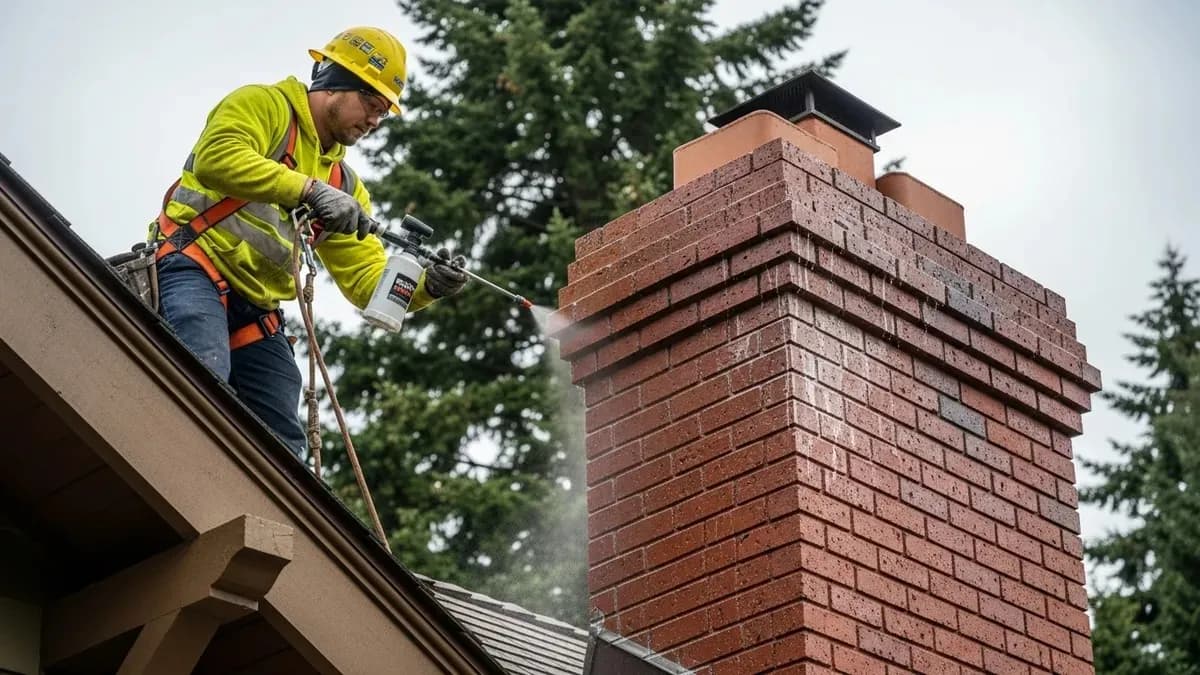
For homeowners dealing with a full chimney waterproofing situation, bundling the flashing replacement with a crown coat and sealant application can save $150–$300 versus separate visits. Learn more about our chimney flashing repair service options.
How Do You Know If Your Chimney Flashing Is the Source of a Leak?
Flashing leaks have a specific signature. Here's what to look for — and what to do right now if you suspect a problem:
- Check the ceiling or wall directly adjacent to the chimney — flashing leaks show up as water stains within 18 inches of the chimney mass, typically after heavy rain.
- Look at the firebox interior — run your hand along the back wall and sides. Dampness or rust streaking indicates water entry, though it could be flashing or crown-related.
- Inspect the exterior brick at the roofline — efflorescence (white salt deposits) just below the roof junction is a classic flashing leak sign.
- Do NOT light a fire if you see active water intrusion — wet masonry combined with high heat can accelerate cracking and create carbon monoxide risks.
- Schedule a Level 1 inspection — our techs use a moisture meter to pinpoint the exact entry point before any repair work begins.
In our experience across 1,200+ Seattle-area leak investigations, flashing accounts for the majority of cases. The second most common source is a cracked chimney crown, which often fails alongside aging flashing. See our guide on chimney crown repair costs in Seattle if you suspect both issues.
Does Homeowner's Insurance Cover Chimney Flashing Repair?
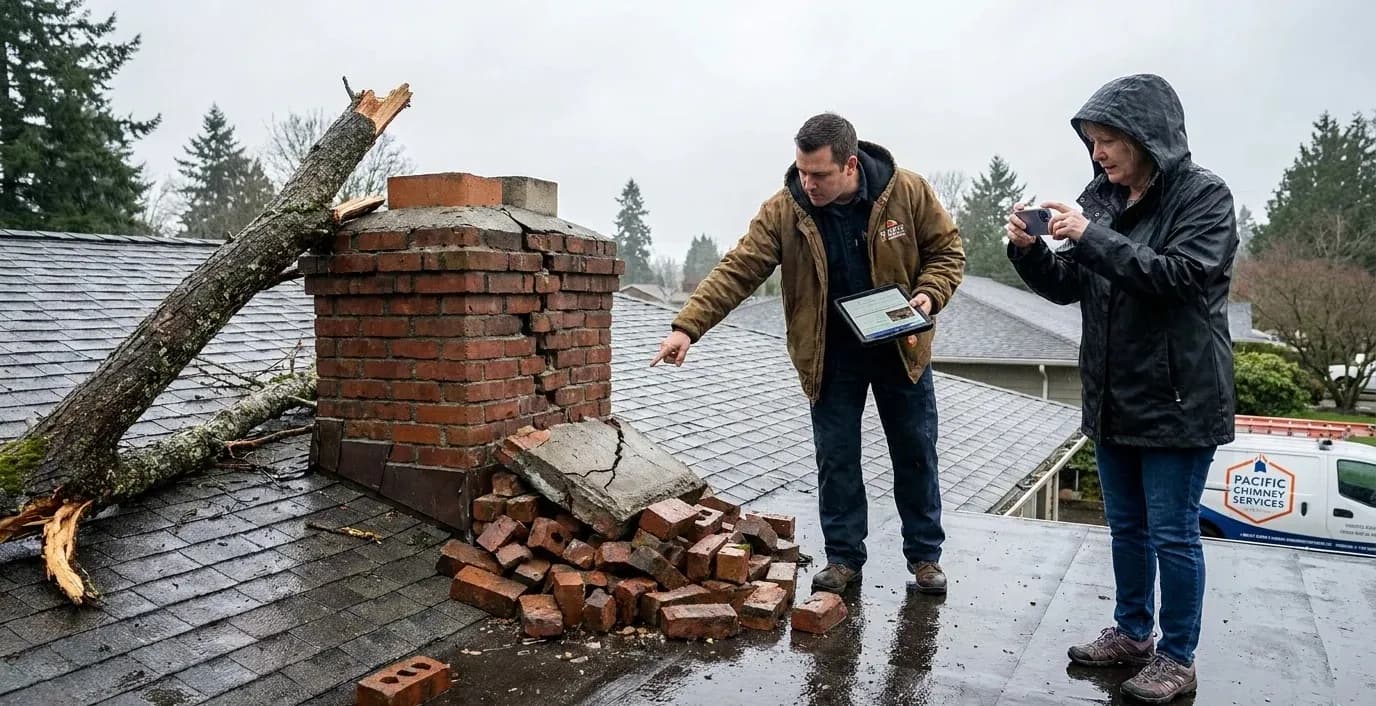
Sometimes — but the answer depends on the cause. Washington State homeowner's policies (under RCW 48.18) typically cover sudden, accidental water damage but exclude gradual deterioration. If a wind event or falling tree damaged your flashing, you likely have a valid claim. If it simply wore out over 20 years, most insurers will decline.
We provide detailed written inspection reports and photo documentation for every flashing repair — which our customers have used successfully in insurance claims. Our lead tech Alex has supported over 80 documented insurance claims in the past three years. Check our full guide on chimney damage insurance claims in Washington before you file.
If you're in the Ballard, Fremont, or Queen Anne area and want a same-week inspection, call us at (253) 429-8006 or schedule online. We'll give you a firm quote before we touch anything.
Need professional help?
Our professionally trained team is ready. Free estimate, 30-minute response.