Chimney Insurance Claims in Washington State: 2026 Homeowner Guide
Does Homeowner Insurance Cover Chimney Damage in Washington State?
Homeowner insurance in Washington State covers chimney damage caused by sudden, accidental events — but not gradual wear and tear. In 2026, a covered chimney repair claim typically ranges from $2,500 to $18,000 depending on the extent of damage, while a denied claim leaves the homeowner paying 100% out of pocket. Based on the post-event inspections our team has completed across the Seattle metro area, roughly 40% of homeowners who call us after a storm, chimney fire, or suspected earthquake damage don't know whether their policy covers them — and many discover too late that their documentation was insufficient to support approval. Current as of July 2026.
The difference between an approved $15,000 chimney claim and a denied one almost always comes down to three things: maintenance records that prove the damage is new, prompt photo documentation tied to a specific event date, and a written inspection report from a certified chimney professional. This guide walks you through all three — plus Washington-specific hazards, earthquake endorsements, and step-by-step filing instructions.
A Real Claim: Marcus T. in Beacon Hill
Last November, a powerful windstorm rolled through the Seattle area with sustained gusts topping 58 mph — the kind of event the National Weather Service issues advisories for. Marcus T., a homeowner in Beacon Hill with a 1952 brick chimney, noticed the morning after the storm that his chimney cap was gone and several bricks near the crown were visibly displaced. He called his insurer that same day, then called us.
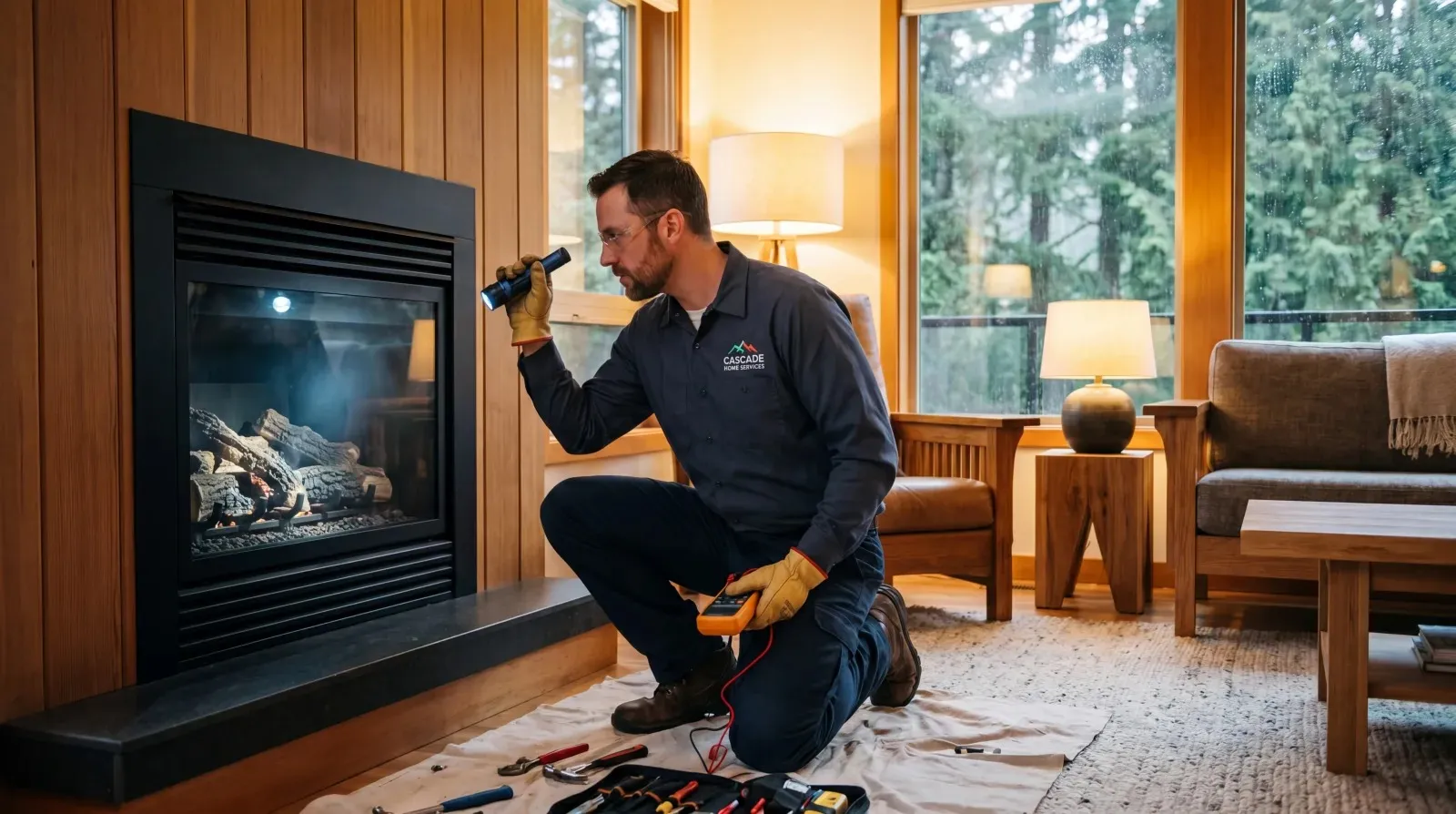
Alex arrived the following morning with a full Level 2 inspection kit. What he found was more extensive than the surface damage suggested. The cap had been ripped off cleanly, and without it, wind-driven rain had already begun saturating the crown. Two courses of brick near the top had shifted, and the flashing on the south side had lifted along a six-inch section — likely from the same gust that took the cap.
'The cap was a clean windstorm pull — you can see the anchor points failed at the mortar joint, not the metal itself. But the flashing lift is what concerns me more. If this had sat another two weeks without documentation, the insurer could have argued that water infiltration was pre-existing. Getting in here within 48 hours of the storm is exactly right.'
— Alex, Lead Technician, Seattle Chimney Pros
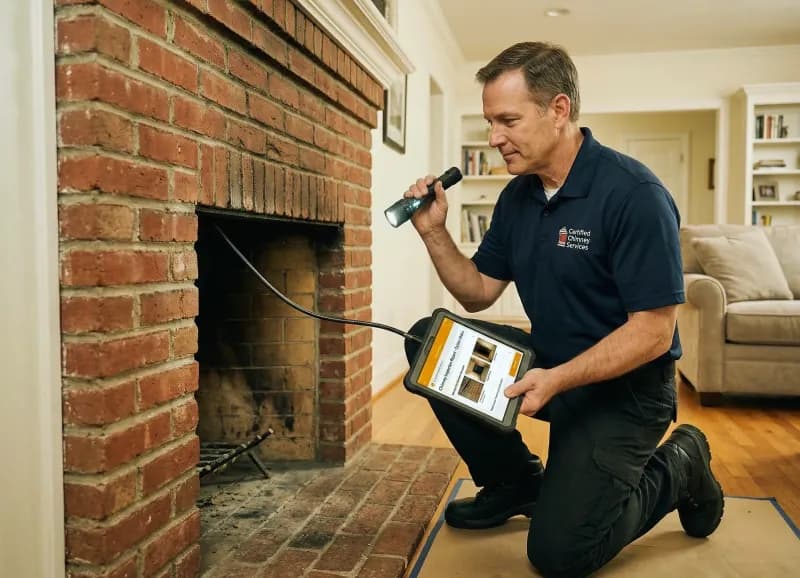
Alex produced a written Level 2 inspection report with timestamped camera footage of the flue, exterior damage photos, and a direct narrative linking every identified failure to wind event mechanics rather than gradual deterioration. Marcus submitted the report with NWS wind speed data for Beacon Hill on the storm date and 20+ photos he'd taken the morning of discovery.
His insurer approved the claim two weeks later. Total payout: $6,400, covering cap replacement, flashing repair, crown repointing, and two courses of brick reset. Marcus paid his $1,000 deductible. 'I almost waited a week before calling anyone,' he told us. 'Alex said that could have cost me the whole claim. I had no idea timing mattered that much.'
What Does Washington Homeowner Insurance Actually Cover for Chimneys?
Standard HO-3 homeowner policies — which cover roughly 80% of owner-occupied homes in Washington — pay for chimney damage caused by sudden and accidental events from named perils. Here's what typically qualifies:
- Chimney fires: A covered peril, though insurers may scrutinize whether heavy creosote buildup (from years without sweeping) contributed to the fire.
- Lightning strikes: Direct strikes often cause bricks to explode or the crown to shatter — well-documented and routinely approved.
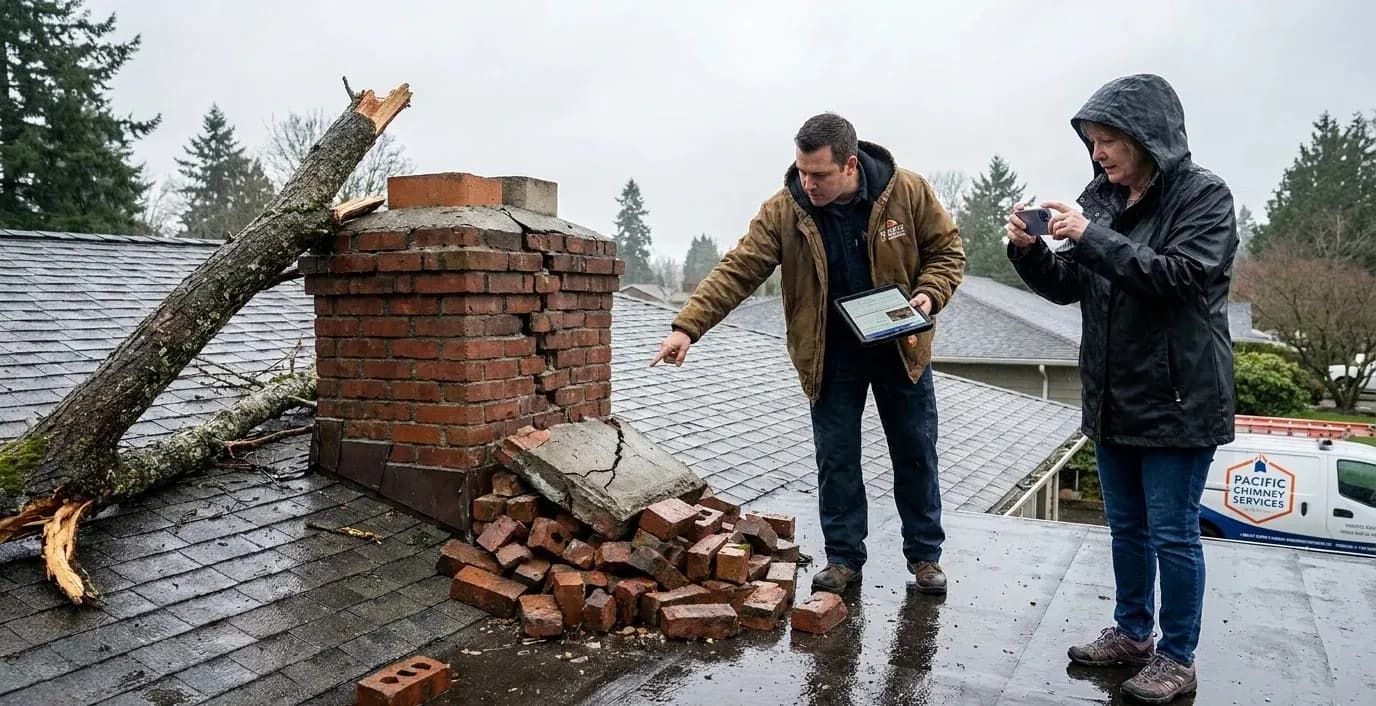
- Fallen trees and branches: Among the most common covered claims in the Pacific Northwest, given the density of mature conifers near Seattle-area homes.
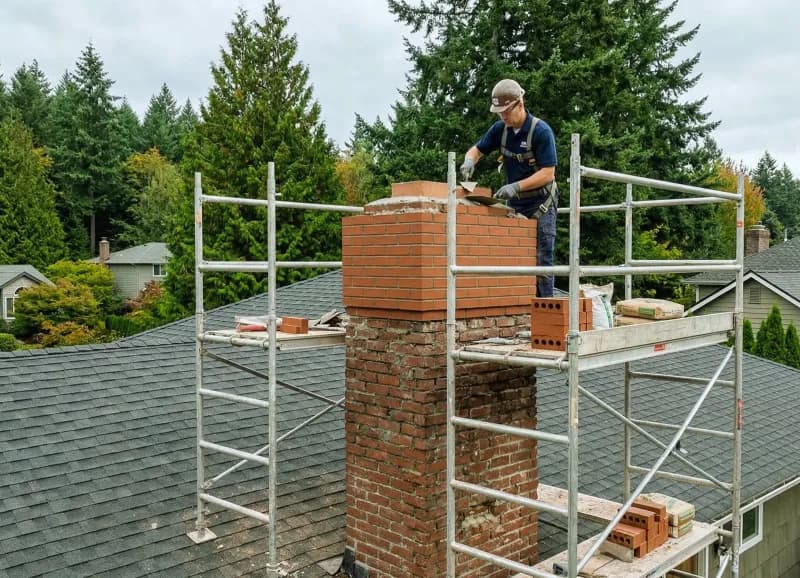
- Windstorm damage: Caps blown off, flashing lifted, loose bricks displaced — covered when tied to a documented wind event.
- Hail damage: Rare in Puget Sound, more common in eastern Washington; covers caps, crowns, and flashing impact damage.
- Vehicle impact and vandalism: Named perils, rare but straightforward to document.
The operative word is sudden. Damage must be traceable to a specific event on a specific date. The moment it can be tied to a storm, fire, or impact rather than to years of neglect, coverage becomes far more likely.
What's NOT Covered — and Why Washington Homeowners Get Caught Off Guard
Standard HO-3 policies exclude several categories that account for a large share of chimney damage in Washington:
- Normal wear and tear: Mortar joint erosion, brick spalling, crown cracks from aging, gradual liner decay — all maintenance issues, not insurable events.
- Earth movement: Earthquakes, landslides, soil settling — requires a separate endorsement.
- Gradual water damage: Long-term water intrusion from deferred waterproofing or a cracked crown that's been leaking for years.
- Neglected maintenance: If the insurer determines the damage was preventable with routine upkeep, the claim is denied.
- Flood: Requires FEMA/NFIP coverage — separate policy entirely.
- Animal and insect damage: Typically excluded, though policy language varies.
The two biggest traps in Washington are the earthquake exclusion (discussed below) and the wear-and-tear classification that adjusters apply to any damage that looks gradual rather than event-driven. Both have documented solutions.
What About Earthquake Damage to Chimneys in Washington?
Earthquake damage is explicitly excluded from standard HO-3 policies in Washington — and this exclusion matters more here than almost anywhere else in the country. The Cascadia Subduction Zone, capable of magnitude 8.0–9.0 megathrust earthquakes, runs offshore from northern California to British Columbia. The Seattle Fault runs directly beneath the city and is capable of 6.5–7.0 shallow events. Unreinforced masonry chimneys are among the most seismically vulnerable components of any home — and they're the first thing to fail in a moderate earthquake.
The only way to have earthquake chimney damage covered is to purchase an earthquake endorsement before an event occurs. Key facts:
- Endorsements typically cost $200–$800 per year in Washington, depending on home value, construction type, and location relative to fault zones.
- Earthquake deductibles are usually 10–20% of dwelling coverage — on a $700,000 home, that's $70,000–$140,000 before coverage applies.
- Despite the high deductible, endorsements can still be valuable for total or near-total losses in a major seismic event.
- Endorsements take 30–60 days to become effective after purchase — you cannot add coverage retroactively after an earthquake.
Our detailed guide on earthquake chimney damage in Seattle explains exactly how masonry chimneys fail in seismic events and what an inspection after a quake should document.
Covered Events Quick Reference
| Event | Covered by Standard HO-3? | Key Documentation |
|---|---|---|
| Lightning strike | Yes | NWS lightning data, photos, neighbor statements |
| Chimney fire | Yes | Fire department report, Level 2 inspection |
| Fallen tree or branch | Yes | Photos, storm weather report, arborist note if relevant |
| Windstorm (cap, flashing, bricks) | Yes | NWS wind speed data for your zip code, photos with timestamps |
| Hailstorm | Yes | NWS confirmation, photos of impact marks on cap/crown |
| Vehicle impact | Yes | Police report, driver insurance information |
| Earthquake | Only with endorsement | USGS seismic data, before/after photos |
| Gradual water damage | No | N/A — maintenance exclusion |
| Wear and tear / mortar erosion | No | N/A — maintenance exclusion |
| Settlement cracks | No | N/A |
How Do You File a Chimney Insurance Claim Step by Step?
Washington homeowners who file within 72 hours of the event with complete documentation have significantly better approval rates than those who wait weeks. Here's the sequence that consistently produces the best outcomes:
- Photograph everything within 24–48 hours. Take 20+ photos from multiple angles — wide context shots showing the chimney relative to the roofline, mid-range shots of the affected area, and tight close-ups of specific damage. Date-stamp everything. Video walkarounds are also useful.
- Do not make permanent repairs before the adjuster visits. Temporary tarping to prevent further water damage is acceptable — but document the original state thoroughly first and keep all receipts for emergency mitigation (typically reimbursable).
- Gather weather or event records. For windstorms, download the NWS hourly wind data for your zip code on the date in question. For lightning, use the NOAA lightning archive. For chimney fires, request the fire department incident report. This evidence ties your damage to a specific event.
- Pull your maintenance records. Past inspection reports and sweep receipts prove the damage is new — not pre-existing deterioration. This single step prevents the most common denial reason.
- File the claim promptly. Call your insurer's claims line, obtain a claim number, and get the assigned adjuster's name in writing.
- Schedule a Level 2 chimney inspection immediately. A written report from a CSIA or NFI certified technician — with video, photos, and language explicitly linking damage to the covered event — is often the most influential document in the claim. Our chimney inspection service includes a full written report formatted for insurance documentation.
- Meet the adjuster on-site and be present. Walk them through the damage, share your documentation, and have your contractor's report ready. Never sign anything on the spot.
- Review the adjuster's estimate against your contractor's. Insurance estimates frequently run 20–40% below actual repair costs. Submit a written counter if there's a significant gap, supported by your contractor's itemized estimate.
Why Do Chimney Insurance Claims Get Denied in Washington?
Based on conversations with homeowners we've helped after claim denials, the same reasons appear repeatedly:
- No inspection history: The insurer argues the damage was pre-existing because the chimney hadn't been inspected in years — so there's no baseline to prove it's new.
- Wear-and-tear classification: The adjuster concludes mortar failure, crown cracking, or liner deterioration happened gradually rather than from a sudden event.
- Missing earthquake endorsement: The damage pattern looks seismic, but the policy doesn't include earth movement coverage.
- Delayed reporting: The homeowner waited weeks or months, giving the insurer grounds to question whether the damage came from the claimed event at all.
- Insufficient documentation: Vague description of the event, no professional assessment, only a handful of photos.
- Maintenance neglect finding: The adjuster determines the damage was preventable — heavy creosote that enabled a chimney fire, a cracked crown left unrepaired for multiple seasons, etc.
Annual chimney sweeps and Level 1 inspections, prompt post-event documentation, and a professional written assessment tied to a specific event address every one of these denial reasons.
How Does a Professional Chimney Inspection Report Help Your Claim?
A Level 2 chimney inspection report from a CSIA or NFI certified technician is often the single most powerful document in a Washington chimney insurance claim. It provides:
- A date-stamped, professional assessment of current damage written by a credentialed expert
- High-definition photos and video documentation of the flue interior, crown, cap, firebox, and exterior masonry
- Explicit language attributing damage to a specific event mechanism — not gradual wear
- An itemized repair scope and cost estimate the adjuster must formally address
- Third-party credibility that carries significantly more weight than a homeowner's own account
In our experience with post-event inspections, homeowners who present a Level 2 report alongside their NWS weather data have claims approved at a substantially higher rate than those who submit only photos. Our guide on chimney inspection levels explained describes what each inspection level documents and when a Level 2 is required.
When Should You Hire a Public Adjuster for a Chimney Claim?
A public adjuster is a licensed professional who represents the homeowner — not the insurer — in claim negotiations. They work on contingency, typically taking 10–15% of the final settlement. Hiring one makes financial sense when:
- The claim is large — generally $10,000 or more in estimated damage
- The claim has been denied and you believe it should be covered
- The insurer's estimate is significantly below your contractor's documented repair costs
- The damage is complex — for example, a chimney fire combined with water infiltration and possible seismic cracking
- You lack the time or confidence to navigate the claims process yourself
For smaller claims in the $2,000–$5,000 range, the public adjuster's fee often equals or exceeds the additional settlement they can recover. For large claims — especially those involving chimney fires that spread to structural framing — they frequently recover multiples of their fee. Washington requires public adjusters to be licensed; verify credentials through the Washington State Office of the Insurance Commissioner before engaging one.
How to Protect Future Claims Through Proactive Documentation
The best time to prepare for a chimney insurance claim is years before you need one. Homeowners who maintain annual inspection and sweep records are almost never denied on documentation grounds — because they have a clear baseline proving any new damage is event-driven, not the result of neglect. Practical steps that pay off when a claim arises:
- Schedule annual Level 1 chimney inspections and retain the written reports
- Get a Level 2 inspection every 3–5 years, or after any significant weather event
- Photograph your chimney exterior from the same angle each fall — a visual baseline is powerful evidence
- Keep all receipts for chimney repairs, waterproofing, and sweep visits
- Add an earthquake endorsement to your policy if you have a masonry chimney — especially in Seattle, Bellevue, or anywhere near mapped fault zones
- Review your policy's dwelling coverage annually to ensure it reflects current rebuild costs
In 14 years of serving the Seattle metro area, the homeowners who get their chimney claims approved consistently share these habits. The ones who don't are almost always dealing with an insurer's argument that the damage was ongoing and unaddressed.
Ready to Document Your Chimney Damage for a Washington Insurance Claim?
If you've experienced chimney damage from a windstorm, chimney fire, lightning strike, or other covered event, the next 48–72 hours are critical. A professional Level 2 inspection report produced by our CSIA-certified team is formatted to meet the documentation standards Washington insurance adjusters expect — and it gives your claim the third-party credibility that homeowner photos alone cannot provide.
Call us at (206) 278-2924 or contact Seattle Chimney Pros online to schedule a post-event inspection. We serve homeowners across Seattle, Beacon Hill, and 43 additional communities throughout the metro area. Don't wait — the timing of your documentation matters as much as the quality of it.
Need professional help?
Our professionally trained team is ready. $99 inspection credited toward repairs, 30-minute response.