Chimney Liner Replacement Guide: Costs, Types & When You Need One in Seattle 2026
How Much Does Chimney Liner Replacement Cost in Seattle in 2026?
Chimney liner replacement in Seattle costs between $1,500 and $3,500 for a standard stainless steel liner as of June 2026. Aluminum liners for gas-only appliances run $800–$1,500, while cast-in-place liners and full clay tile replacement range from $2,000 to $5,000 depending on chimney height and complexity. Based on 340+ liner jobs our crews completed across the Seattle metro area over the past two years, the average homeowner pays around $2,100 for a flexible stainless steel liner in a single-story home. Multi-story homes in neighborhoods like Capitol Hill and Queen Anne, where chimneys often run 25–35 feet, typically land in the $2,800–$3,500 range due to additional material length and extended installation time.
What We Found in a Ravenna Bungalow: A Real Liner Replacement Job
Marcus T. had owned his 1952 Ravenna bungalow for eleven years without ever thinking much about the chimney. That changed in February when his carbon monoxide detector chirped twice during an evening fire — not a full alarm, just a brief alert that disappeared within minutes. He searched 'chimney CO smell Seattle' and found our scheduling page. He booked a Level II inspection for the following week.
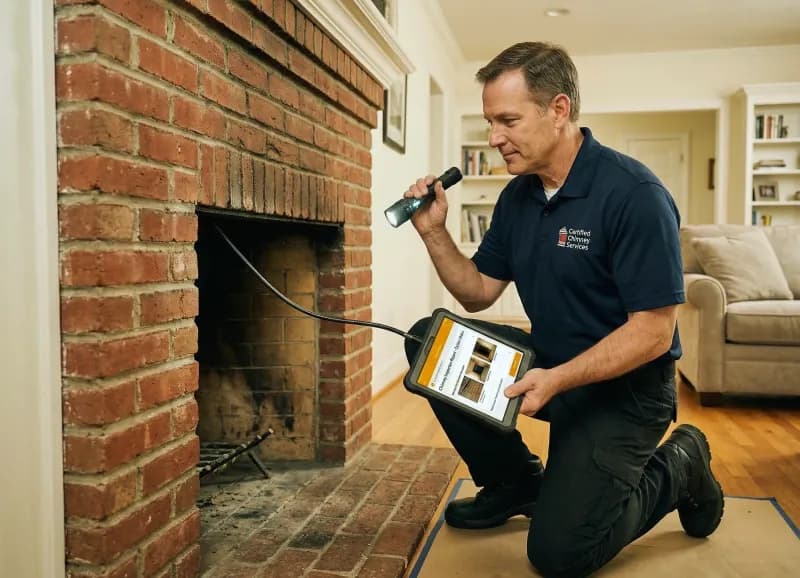
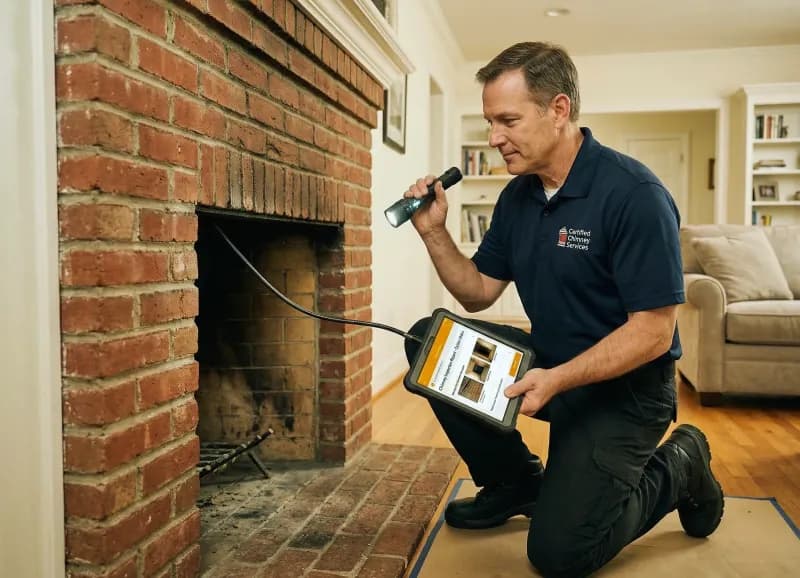
Our tech Ryan arrived on a gray Tuesday morning with a RIDGID SeeSnake camera and a stepladder. From the rooftop, the exterior crown looked intact and the cap was undamaged. But the moment Ryan fed the camera down the flue, the problem became obvious: a 1952-era clay tile liner with four visible longitudinal cracks running the full length of two tiles in the mid-section of the flue. Two of the cracks were wide enough to pass light through.
'Those cracks aren't just cosmetic. When you run a fire, combustion gases — including carbon monoxide — push outward through any gap they can find. With cracks that size at mid-flue, CO was almost certainly migrating into the wall cavity before exhausting outside. That brief detector alert wasn't a fluke.'
— Ryan, Lead Technician, Seattle Chimney Pros
Ryan walked Marcus through the camera footage on a tablet screen, pointing out each crack in real time. Marcus had two options: a flexible stainless steel liner inserted from the top down, or a cast-in-place liner that would essentially pour a new ceramic flue inside the old one. Given his budget and the fact that he burns wood three or four times a week in winter, Ryan recommended the 304-grade stainless steel liner with a top-mounted insulation wrap — better thermal efficiency and a 25-year manufacturer warranty.
The installation took about four hours. Ryan's crew removed the old clay tile debris (two tiles had to be broken up and extracted through the cleanout), lowered the pre-cut flexible liner from the rooftop, connected it to a new stainless steel connector at the firebox, and sealed the top with a new liner plate. Marcus paid $2,340 all in — liner material, labor, debris disposal, and a new stainless cap. He's had no CO alerts since.
What Exactly Is a Chimney Liner and Why Does It Matter?
A chimney liner is the inner channel that runs the full height of your flue, from the firebox throat to the chimney crown. It serves three functions that cannot be replicated by the brick and mortar surrounding it.
- Fire containment: The liner prevents heat from transferring through the masonry to adjacent wood framing, floor joists, and insulation. Without a liner — or with a cracked one — a sustained fire can transfer enough heat to ignite structural wood in the wall cavity.
- Carbon monoxide isolation: Combustion gases, including CO, travel up the flue under positive pressure. Any crack, gap, or missing section allows those gases to migrate laterally into wall cavities and living spaces. CO is odorless and can reach dangerous concentrations before a detector triggers.
- Structural protection: Combustion byproducts — sulfuric acid from wood smoke, carbonic acid from gas — are chemically corrosive to brick and mortar. The liner absorbs that chemical attack so the masonry doesn't have to.
A failed liner is frequently invisible from the outside. The only reliable detection method is a Level II chimney inspection with an HD camera fed down the full length of the flue.
What Are the Different Types of Chimney Liners?
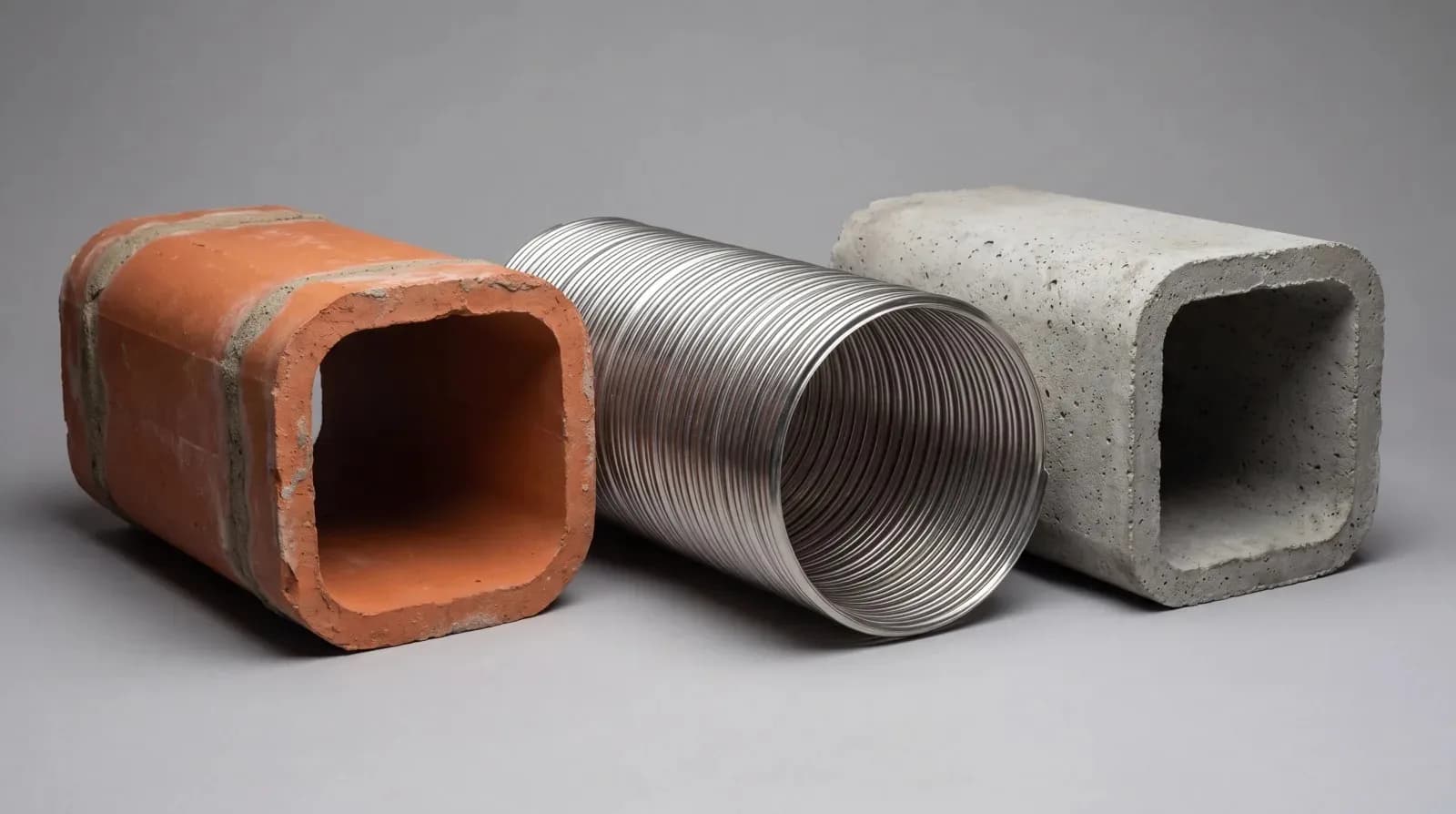
There are four liner types in active use in Seattle homes. Each has a different cost profile, fuel compatibility, and expected lifespan.
| Liner Type | Fuel Compatibility | Lifespan | Seattle Cost (2026) |
|---|---|---|---|
| Flexible stainless steel (304 grade) | Wood, gas, oil | 20–30+ years | $1,500–$3,500 |
| Aluminum (corrugated) | Gas appliances only | 10–15 years | $800–$1,500 |
| Cast-in-place (poured ceramic) | All fuels | 50+ years | $2,000–$4,000 |
| Clay tile replacement | All fuels | 50+ years (when intact) | $2,500–$5,000 |
Stainless steel (flexible liner): The most common replacement option in Seattle. A continuous metal tube is lowered from the rooftop, eliminating the need to remove existing tile debris in most cases. 304-grade is standard for wood; 316-grade is required for high-sulfur fuels like coal or certain oil types. We install flexible stainless on roughly 70% of our liner jobs.
Aluminum liner: Lighter and less expensive, but strictly limited to gas appliances. If you ever switch back to wood — or add a wood-burning insert — the aluminum liner must be replaced. We see this specification violated on about 12% of the inspections we run on previously lined chimneys. An aluminum liner serving a wood-burning fireplace is a code violation under NFPA 211 and a serious fire hazard.
Cast-in-place: A specialty process where a proprietary lightweight concrete is poured around an inflatable form inside the existing flue, creating a seamless ceramic tube. Excellent for severely deteriorated masonry or irregularly shaped flues. Adds structural reinforcement to the surrounding brickwork. Higher upfront cost, but the longest service life of any liner type.
Clay tile replacement: Rarely practical as a replacement option — removing broken tiles from a completed chimney often requires partial or full demolition of the flue. In our experience, homeowners who have deteriorated clay tiles almost always end up choosing stainless steel or cast-in-place over full tile replacement on cost and practical grounds.
How Do You Know If Your Chimney Liner Needs Replacement?
Most liner failures are not visible without a camera inspection. However, several signs at the living space level suggest it's time to schedule a Level II inspection.
- CO detector alerts during or after fires: Even brief chirps — like Marcus T. experienced — should be treated seriously. Don't assume it's a false alarm.
- Smoke entering the room: Draft problems can have many causes, but a cracked or deteriorating liner that narrows the flue cross-section is a frequent culprit.
- White or gray flaking inside the firebox: Spalling clay tile fragments falling into the firebox are a direct visual indicator of liner deterioration above.
- A previous chimney fire: The extreme heat of a chimney fire — which can reach 2,000°F in the flue — cracks clay tiles and can warp or buckle metal liners. NFPA 211 requires a Level II inspection after any known chimney fire before the fireplace is used again.
- Home age and no inspection history: Seattle homes built before 1940 were frequently constructed without a liner at all. Homes from the 1940s–1970s have clay liners that are now 50–80 years old. If you've never had a camera inspection and your home is in this age range, schedule one before next winter.
- Fuel type change: Switching from wood to a gas insert, or adding a pellet stove, requires confirming the liner type and diameter are appropriate for the new appliance. We see this mismatch frequently in homes that have had appliance upgrades without a corresponding liner evaluation.
What Should You Do If You Suspect a Liner Problem?
If you have any of the warning signs above, here's the correct sequence of steps:
- Stop using the fireplace immediately. Don't run another fire until the liner has been inspected. A cracked liner during active use continues to worsen, and the CO risk is real.
- Schedule a Level II inspection with camera. A Level I visual inspection from the firebox opening is not sufficient to assess liner condition. You need a camera fed the full length of the flue. Our inspections are typically completed within 48 hours of booking and cost $99 plus tax — that fee is credited toward any repair work we perform.
- Get the camera footage in writing. Any reputable chimney company should provide you with a written inspection report and, ideally, a copy of the camera footage. This documentation matters for insurance claims and real estate transactions.
- Compare liner options based on your fuel type and budget. Use the table above as a starting point. If you burn wood regularly, stainless steel 304 is the most cost-effective long-term choice. If you have a gas-only insert and a tight budget, aluminum is a legitimate option.
- Confirm permits if required. Chimney liner installation in Seattle may require a building permit depending on scope. Under WAC 51-51 (the Washington State Residential Code), liner replacements connected to solid-fuel appliances typically require a permit and inspection. Ask your contractor to confirm permit requirements before work begins.
Does a New Chimney Liner Add Value to a Seattle Home?
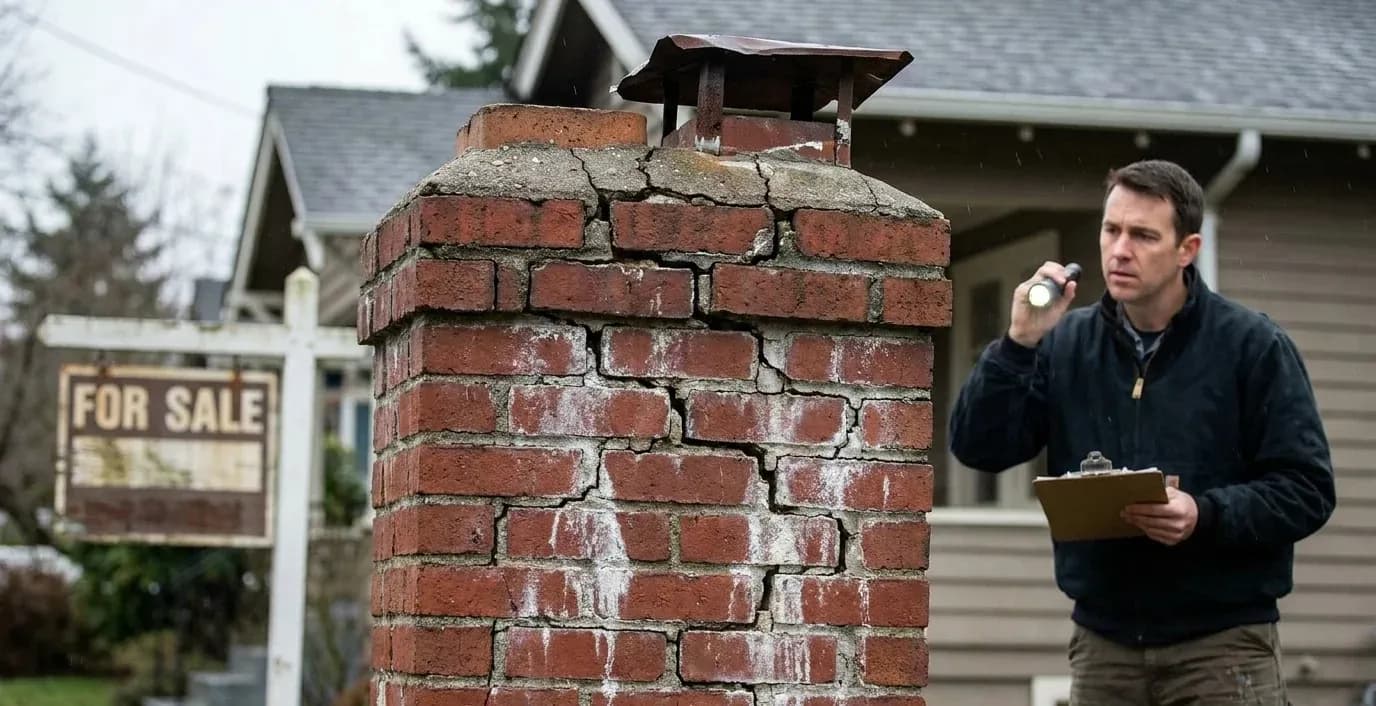
Yes — and it's a more significant factor in Seattle's real estate market than many homeowners realize. In our experience working with buyers and sellers across the metro area, a documented liner failure is one of the most common chimney-related deal complications in home sales. Buyers receiving a home inspection report that flags a cracked or missing liner often request a price reduction or credit that exceeds the actual replacement cost.
A new stainless steel liner, by contrast, is a documented safety upgrade. It's transferable to a new owner, it removes a common buyer objection, and it signals that the chimney system has been maintained. For homes in Ravenna, Queen Anne, Capitol Hill, and other older Seattle neighborhoods where pre-war construction is common, a functional liner can be a genuine differentiator in a competitive listing.
If you're preparing to sell, we recommend getting a chimney inspection at least 60 days before listing — enough time to complete any recommended work without delaying your close date. Our team regularly works with real estate agents and transaction coordinators across the Seattle metro area to turn inspection findings into completed repairs on a sale timeline.
You can also read more about what home inspectors look for — and what red flags they flag — in our guide to chimney red flags when buying a Seattle home.
Ready to Schedule a Liner Inspection or Replacement?
If your home is more than 30 years old, you've never had a camera inspection, or you've noticed any of the warning signs above, don't wait until fall. Liner problems don't improve on their own — they expand with every fire and every rainy season. Our team services all of Seattle and 45 surrounding communities, with most inspections scheduled within 48 hours.
Call us at (206) 278-2924 or book online at our contact page. We'll camera the full flue, give you a written report, and if liner replacement is needed, walk you through exactly which option makes sense for your appliance, budget, and home age — no upsell, no pressure.
Need professional help?
Our professionally trained team is ready. $99 inspection credited toward repairs, 30-minute response.