Chimney Inspection Levels 1, 2 & 3 Explained — Seattle 2026 Guide
What Are the 3 Levels of Chimney Inspection — and Which One Do You Need?
The National Fire Protection Association (NFPA 211) defines three levels of chimney inspection, each progressively more thorough. At Seattle market rates for 2026, a Level 1 inspection costs $149–$199, a Level 2 with HD camera runs $249–$399, and a Level 3 (invasive) is quoted by scope. Our own price is $99 plus tax at every level and credited toward any work you approve. Based on over 850 inspections our team completed across the Seattle metro area last year, roughly 60% of homeowners actually need a Level 2 — even when they call asking for a basic checkup. Seattle's wet climate, older housing stock, and seismic activity all push more chimneys into the Level 2 category than most other U.S. markets. Current as of June 2026.
A Real Inspection Story: Marcus T. in Kirkland
Marcus T. had just accepted an offer on his 1978 split-level in Kirkland and his real estate agent flagged the chimney as a due-diligence item. The buyers' inspector had noted some staining on the firebox wall and recommended a professional chimney evaluation before closing. Marcus called us hoping a quick Level 1 would clear it.
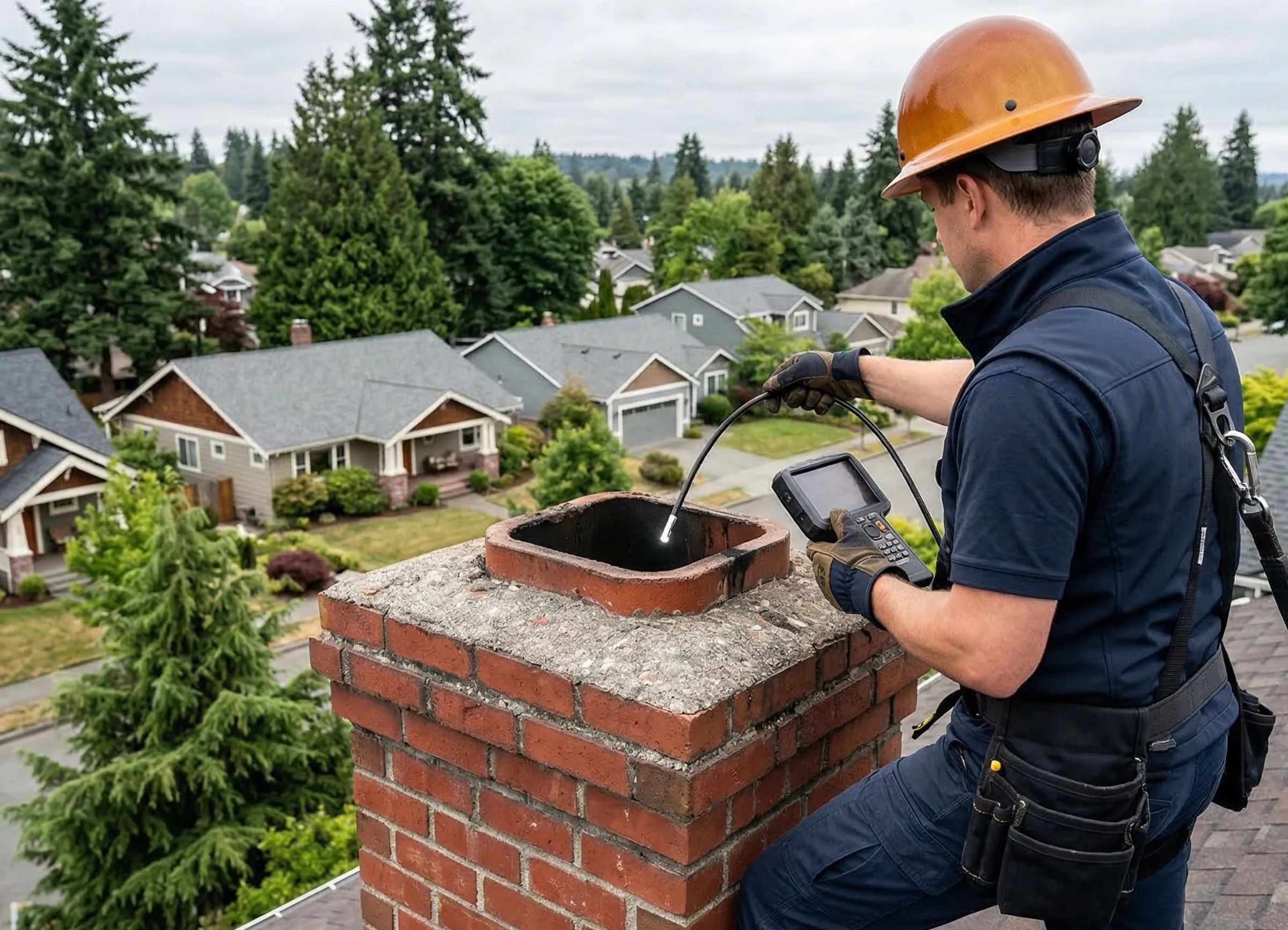
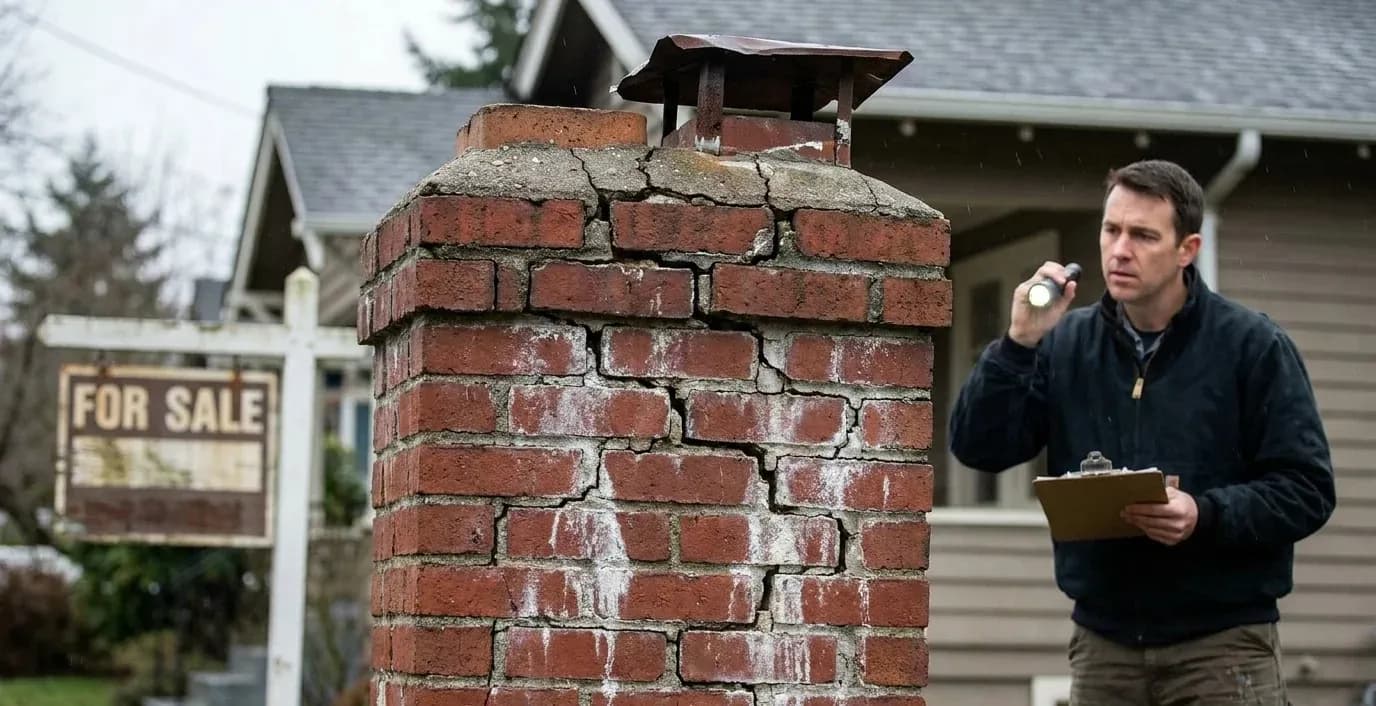
Derek arrived the following morning with his full inspection kit, including the Wohler VIS 700 camera system. The exterior looked reasonable — a few mortar joints showing wear and some minor efflorescence on the upper third of the brick — but nothing that screamed emergency. Then Derek sent the camera up the flue.
'The staining on the firebox wasn't cosmetic — it was tracking water that had been entering through a cracked liner tile about 8 feet up. You'd never catch that on a Level 1. The crack was letting combustion gases bleed into the surrounding masonry, which is a carbon monoxide pathway. That's exactly why Level 2 exists.'
— Derek, Certified Chimney Technician, Seattle Chimney Pros
The Level 2 inspection took about 75 minutes and came in at $299. Derek produced a written report with timestamped HD photos that Marcus forwarded directly to the buyers' agent. The repair — relining the flue with a stainless steel liner — was quoted at $1,850 and completed before closing. Marcus negotiated a credit rather than delaying the sale. 'Without that camera report I'd have been flying blind at the negotiating table,' he said.
What Does a Level 1 Chimney Inspection Include?
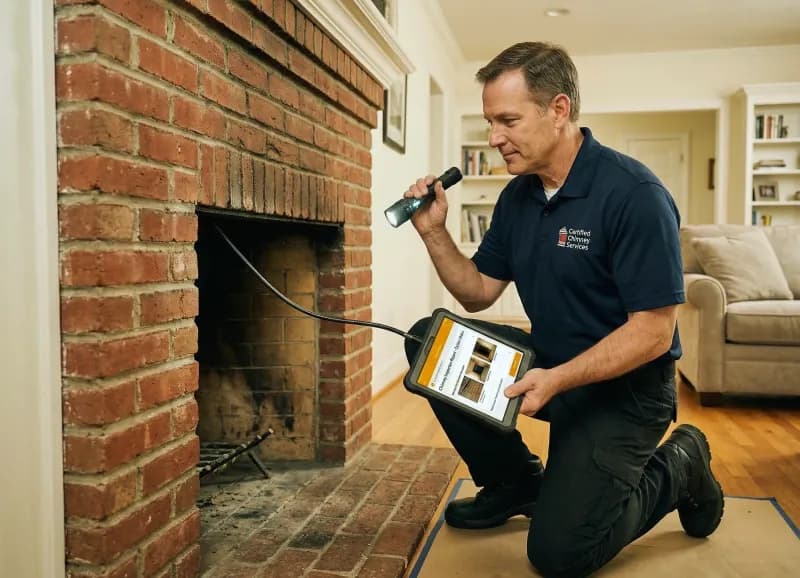
A Level 1 inspection is the standard annual safety check recommended for all chimneys in continuous, normal use. It covers every readily accessible surface of the chimney system — no special tools, no camera, no removal of components.
What's included in a Level 1:
- Visual examination of the chimney exterior — brick, mortar joints, crown, and cap
- Firebox inspection — looking for cracks, spalling, deteriorated refractory panels
- Damper operation check — opens fully, seals properly when closed
- Basic flue assessment from above (flashlight) and below
- Verification that the chimney is structurally sound and free of obstructions (birds, debris, leaves)
- Smoke chamber and smoke shelf inspection
Level 1 is appropriate when your chimney has been used normally, hasn't experienced any unusual events, and you're simply keeping up with annual maintenance. In Seattle, we recommend pairing a Level 1 with your annual chimney sweep — many homeowners book both together for a combined visit that runs 60–90 minutes total.
Seattle market rate: $149–$199. Ours: $99 plus tax, deducted from the quote if you approve the work. Our average Level 1 inspection takes 35–45 minutes.
What Does a Level 2 Chimney Inspection Include?
A Level 2 inspection includes everything in Level 1 plus a full HD video camera scan of the entire flue interior, inspection of accessible attic and crawl space areas around the chimney, and a comparison against current building codes. It's the most commonly requested inspection level we perform — and the one most likely to catch the problems that cause fires and carbon monoxide incidents.
Everything included in a Level 2:
- Complete Level 1 visual inspection
- HD video camera scan of the entire flue from top to bottom
- Inspection of accessible attic, crawl space, and basement areas adjacent to the chimney
- Evaluation of chimney clearances to combustible framing
- Assessment against current Washington State and Seattle building codes
- Detailed written report with timestamped HD photos or video clips
- Documentation suitable for real estate transactions, insurance claims, or permit applications
When a Level 2 is required or strongly recommended:
- Buying or selling a home — standard practice in Seattle real estate transactions
- After any chimney fire, even a small one
- Following an earthquake or significant seismic event (common enough in the Puget Sound region that we treat this as routine)
- Switching fuel types — wood to gas, gas to wood, or adding an insert
- After any severe storm, particularly wind or hail events
- When a Level 1 reveals something that needs further investigation
- When the chimney hasn't been used or inspected in over 3 years
Cost in Seattle: $249–$399 depending on chimney height, number of flues, and access complexity. Multi-story homes in neighborhoods like Capitol Hill and Queen Anne typically land in the $299–$399 range. Schedule a Level 2 inspection — we serve 45 areas across the Seattle metro.
What Does a Level 3 Chimney Inspection Include?
A Level 3 inspection includes everything in Levels 1 and 2 plus the removal of building components — drywall, siding, chimney crown material, or masonry — to access concealed areas that cannot be assessed any other way. It is invasive, disruptive, and relatively rare.
Level 3 inspections are appropriate when a serious structural hazard is suspected but can't be confirmed through camera inspection alone — typically after a major chimney fire, a significant earthquake, or when carbon monoxide is being detected in the home without a clear source. In 14 years of serving the Seattle area, our team performs Level 3 inspections on fewer than 2% of jobs. Most suspected concealed damage turns out to be visible on the Level 2 camera scan.
Cost in Seattle: Custom quote based on scope. The inspection cost itself is typically $400–$600, but the cost of reassembly and any required repairs is quoted separately. We always discuss the scope and estimated cost before any demolition begins.
Level 1 vs Level 2 vs Level 3 — Side-by-Side Comparison
| Feature | Level 1 | Level 2 | Level 3 |
|---|---|---|---|
| Visual exterior inspection | ✓ | ✓ | ✓ |
| Firebox and damper check | ✓ | ✓ | ✓ |
| HD camera flue scan | — | ✓ | ✓ |
| Attic / crawl space inspection | — | ✓ | ✓ |
| Written report with photos | — | ✓ | ✓ |
| Building code compliance check | — | ✓ | ✓ |
| Component removal for access | — | — | ✓ |
| Seattle market range (2026) | $149–$199 | $249–$399 | Custom |
| Typical duration | 35–45 min | 60–90 min | Varies |
Which Inspection Level Do You Actually Need?
Here's a quick decision guide based on the situations we see most often across Seattle, Bellevue, Kirkland, and the surrounding areas. Use the situation that best matches yours:
| Your Situation | Recommended Level |
|---|---|
| Annual routine checkup, chimney used normally | Level 1 |
| Buying a home in Seattle | Level 2 |
| Selling a home | Level 2 |
| After an earthquake or tremor | Level 2 |
| Switching from wood to gas (or adding insert) | Level 2 |
| After a chimney fire (any size) | Level 2 |
| Chimney unused for 3+ years | Level 2 |
| Noticing smoke backing up or CO detector alarm | Level 2 |
| Major structural concern, post-fire hazard | Level 3 |
What Should You Do If Your Chimney Inspection Reveals Problems?
Most Seattle homeowners aren't sure what happens after an inspection turns up issues. Here's the step-by-step process we follow — and what you should do on your end:
- Review the written report carefully. A proper Level 2 report includes HD photos, descriptions of each finding, and a priority classification (safety hazard vs. maintenance item vs. monitor). Ask your technician to walk you through it before they leave.
- Separate urgent from non-urgent repairs. Not everything that's flagged needs to be fixed immediately. A few spalled bricks or minor mortar erosion can usually wait a season. A cracked liner tile near the firebox cannot — that's a carbon monoxide pathway.
- Get a repair estimate in writing. Any reputable company will provide an itemized quote. Be cautious of verbal estimates or pressure to approve repairs on the same visit as the inspection.
- Check if your homeowner's insurance covers it. Sudden chimney damage from a storm or seismic event is often covered under Washington homeowner's policies. Gradual deterioration typically is not. Our written reports are formatted for insurance submission.
- Schedule repairs before the next burn season. If you're inspecting in spring or summer, you have time. If it's October and you've found a cracked liner, prioritize it — our chimney relining and chimney repair schedules fill up fast heading into November.
How Seattle's Climate and Housing Stock Affect Inspection Needs
Seattle chimneys face specific stressors that aren't as common in drier climates, and they show up in our inspection data year after year. Based on 850+ inspections we completed across the metro area last year, here's what we consistently find:
- Moisture-driven liner damage affects roughly 38% of pre-1980 homes we inspect. The freeze-thaw cycle in Seattle winters accelerates clay tile cracking, even in chimneys that are only used a few times a year.
- Moss and organic growth on the crown is present in about 55% of chimneys we inspect in heavily treed neighborhoods like Ravenna, Wedgwood, and Beacon Hill. Moss holds moisture against the masonry and accelerates deterioration.
- Flashing failure is the leading cause of water intrusion calls we receive — more common here than in almost any other market due to the sustained rainfall and freeze cycles between November and March.
- In the Capitol Hill and Queen Anne neighborhoods, we see a high concentration of pre-1930 homes with original clay tile liners that have never been relined. These almost always require at least a Level 2 to assess accurately.
- Post-earthquake inspections spiked by about 40% in the weeks following the 2001 Nisqually earthquake, and we still receive calls from homeowners who discover years later that their chimney sustained hidden mortar joint damage they never had assessed. If your home predates 2001 and you've never had a Level 2, it's worth scheduling one.
Is a Chimney Inspection Required by Washington State Law?
Washington State does not have a blanket law requiring annual chimney inspections for all homeowners, but several situations create a practical or legal requirement. Under WAC 51-54A (the Washington State Fire Code, which adopts NFPA 1), chimneys serving solid-fuel appliances must be inspected and cleaned at intervals sufficient to prevent dangerous accumulations of deposits. The NFPA 211 standard — which Washington follows — specifies annual inspections as the minimum recommended frequency.
For rental properties, landlords in Seattle have additional obligations under the Seattle Residential Code and Seattle's rental housing laws. Our guide on landlord chimney inspection requirements in Washington covers these in detail. For homebuyers and sellers, no law mandates a chimney inspection at closing — but lenders and real estate agents routinely require or strongly recommend one, particularly for homes with active wood-burning systems.
For wood stoves specifically, installation must comply with WAC 51-51 (Washington State Building Code), which requires clearances, liner specifications, and hearth dimensions to meet NFPA 211 standards. Our wood stove chimney requirements guide covers what's required for legal installation in Washington.
Ready to Schedule Your Inspection? Here's What to Expect
Whether you need a routine Level 1 before the next burn season or a Level 2 camera inspection for a real estate transaction, our CSIA-certified technicians serve all 45 Seattle metro areas with same-week scheduling for most requests. We bring our own equipment, provide written reports with HD photos, and never recommend repairs we don't believe are necessary.
Call us at (206) 278-2924 or book online at our contact page — we'll confirm which inspection level fits your situation before you commit to anything.
Need professional help?
Our professionally trained team is ready. $99 inspection credited toward repairs, 30-minute response.