Chimney Mold Removal in Seattle: Causes, Cost, and What to Do in 2026
What Does Chimney Mold Removal Cost in Seattle in 2026?
Chimney mold removal in Seattle costs between $350 and $1,800 in 2026, depending on how far the mold has spread, whether structural repairs are needed, and what's causing the moisture — which must be addressed or the mold returns. Based on 89 mold-related service calls our team completed across the Seattle metro area in the past year, the average homeowner pays $620 for mold remediation plus the moisture source repair — most commonly a failed chimney cap or cracked crown. Current as of June 2026.
Chimney mold is significantly more common in Seattle than in most U.S. cities. Our 152 annual rain days, sustained high humidity, and mild temperatures that rarely get cold enough to inhibit fungal growth create near-ideal conditions for mold to colonize the inside of a flue, smoke chamber, or firebox. Left untreated, it spreads — and it doesn't stay isolated to the chimney.
A Real Mold Job: Patricia W. in Beacon Hill
Patricia W. noticed something she couldn't quite name after this spring's rains: a faint, earthy smell near her fireplace that hadn't been there in winter. Her 1958 Beacon Hill split-level had a wood-burning fireplace she used occasionally, but she hadn't had the chimney serviced in at least four years. She found us by searching "chimney smell Seattle" and booked an inspection.
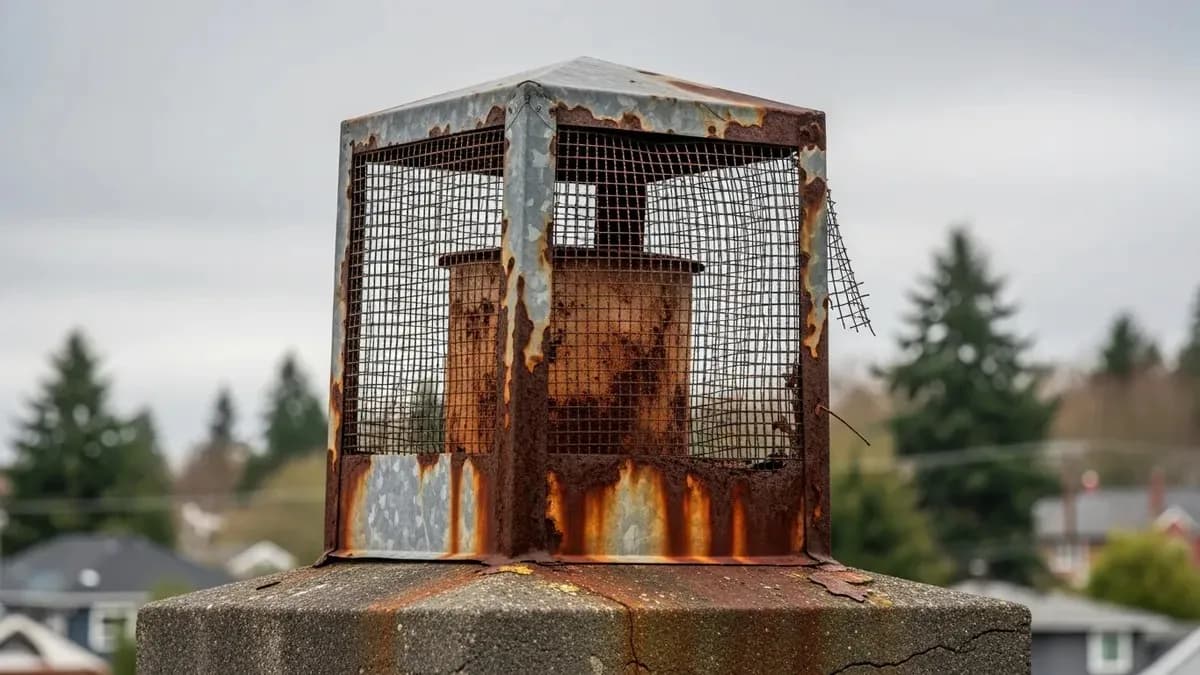
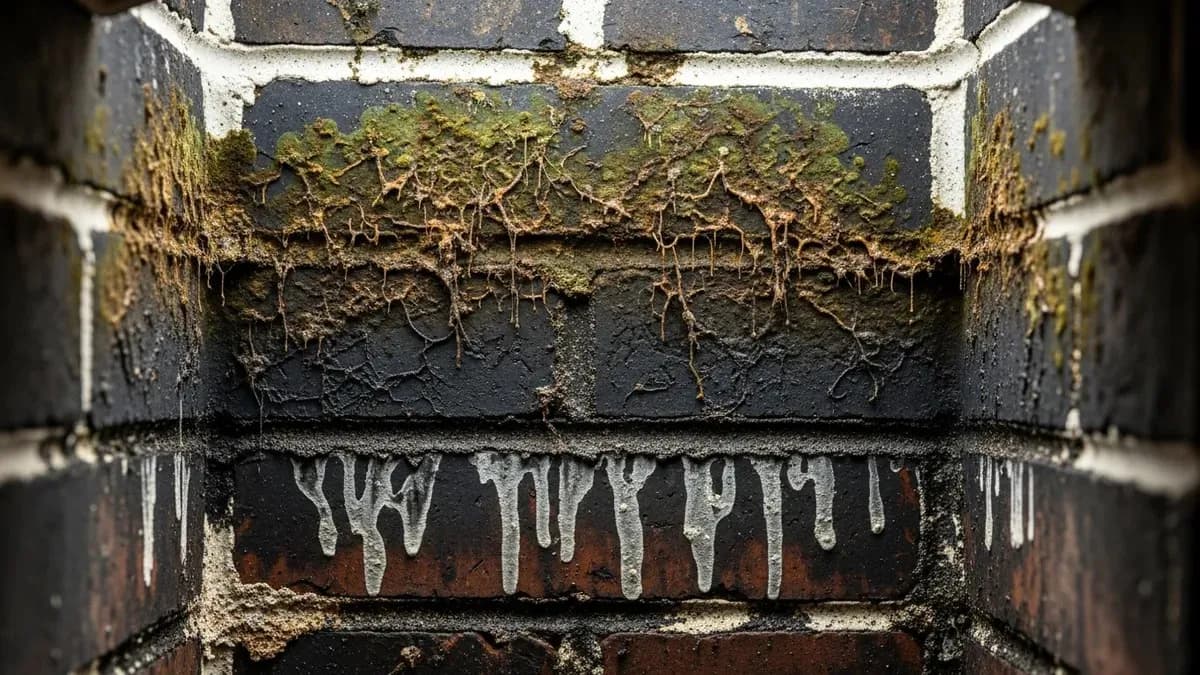
Carlos arrived on a cool morning in early May. He opened the damper and looked up the flue with a flashlight before even setting up the camera. What he saw — and smelled — confirmed his suspicion. The smoke chamber walls above the damper had black and dark green patches spreading across the masonry. The chimney cap had rusted through at the mesh, leaving a gap that allowed both rain and humid air to pool inside the flue all winter.
The camera confirmed mold was concentrated in the smoke chamber and lower three feet of the flue — accessible, not yet in the wall cavities. Carlos estimated it was 6–8 months old, consistent with the cap failing during the previous fall.
"That rusted cap was letting rain pool in the smoke chamber all winter. Combine that with Seattle's humidity and temperatures that barely get cold enough to slow mold growth, and you've got a perfect incubator. The fireplace itself was doing the mold a favor by keeping the interior just warm enough."
— Carlos, Chimney Technician, Seattle Chimney Pros
The remediation: HEPA vacuuming of the firebox and smoke chamber, antimicrobial treatment on all affected masonry surfaces, a full chimney sweep to clear debris and creosote, and a new stainless steel chimney cap to eliminate the moisture source. Total cost: $780. Patricia was back to using her fireplace within 48 hours. "I honestly didn't know that could happen in there," she said. "I'm glad I didn't just light a fire and hope the smell would go away."
What Causes Mold to Grow Inside a Chimney?
Mold needs three things: moisture, organic material, and moderate temperatures. Seattle chimneys supply all three with unusual consistency.
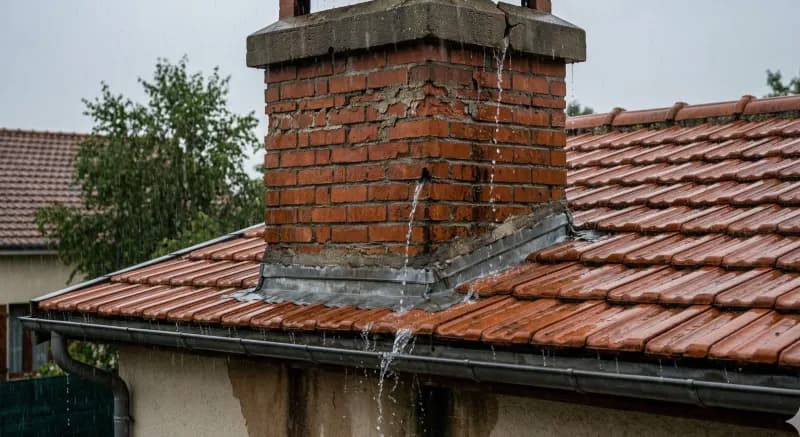
- Moisture: A missing or failed chimney cap allows rain to fall directly into the flue. A cracked crown lets water seep through masonry. Failed flashing introduces water at the roof junction. Any of these, operating through Seattle's 152 annual rain days, keeps the chimney interior wet for months at a stretch.
- Organic material: Creosote deposits, accumulated soot, leaves, animal debris, and nesting material all provide food sources for mold. Even without these, masonry materials contain trace organics sufficient to support colony growth under sustained wet conditions.
- Temperature: Most mold species grow readily at 40°F–100°F. Seattle winters rarely get cold enough to inhibit fungal growth, and the chimney interior stays thermally protected from hard freezes even when outdoor temps briefly dip below 32°F.
In our experience across Seattle-area mold service calls, the four most common triggers are:
- Missing or failed chimney cap — identified in 54% of mold cases we handle
- Cracked or deteriorated chimney crown — 31% of cases
- Failed flashing creating water pooling around the flue — 22% of cases
- Long non-use with no cap — a fireplace unused for 2+ years accumulates moisture and debris without the drying effect of occasional fires (18% of cases)
Multiple causes are common in the same chimney — a failed cap plus a cracked crown is a typical Seattle combination that we see repeatedly in older Beacon Hill and Columbia City homes.
How Dangerous Is Chimney Mold — and What Are the Health Risks?
Yes, chimney mold can affect indoor air quality — and the risk level depends on the mold species present and how far it has spread beyond the chimney structure.
The most common species in Seattle chimney environments are Cladosporium and Aspergillus — both common household molds that cause allergic reactions, especially in sensitive individuals, but are not the highest-risk species. However, Stachybotrys — the notorious "black mold" associated with serious respiratory health effects — can colonize chimney environments when sustained moisture has been present for 6+ months with direct contact with organic materials.
- Musty or earthy smell when the fireplace is unused is often the first symptom
- Allergy-like symptoms (sneezing, eye irritation, congestion) that improve when you leave the house
- Visible dark staining inside the firebox or on masonry near the fireplace
- Discoloration on walls or ceilings adjacent to the chimney — a sign mold has spread beyond the flue
Critical warning: Do not light a fire in a mold-affected chimney. Burning in a contaminated flue can volatilize mold spores and distribute them throughout your home's air. This converts a contained remediation into a whole-house air quality issue. If you've detected mold, schedule an inspection before any fire use. Our chimney inspection identifies the extent of spread and determines whether the mold is contained to the chimney or has reached adjacent wall cavities.
What Does Chimney Mold Removal Include — and What Does It Cost?
Effective chimney mold remediation addresses both the visible mold and the moisture source that caused it. Removing mold without fixing the water entry point results in regrowth within one rainy season — almost guaranteed in Seattle's climate.
| Service | What It Addresses | Seattle Cost (2026) |
|---|---|---|
| Chimney inspection + mold assessment | Camera scan, mold extent, moisture source identification | $149–$249 |
| Chimney sweep (required before treatment) | Removes creosote, debris, and organic mold food sources | $169–$279 |
| Antimicrobial treatment | HEPA vacuum + EPA-registered antimicrobial spray on affected masonry | $200–$450 |
| Moisture source repair (cap, crown, or flashing) | Eliminates water entry point to prevent recurrence | $195–$900 |
| Typical complete job (cap or crown) | Remediation + moisture source addressed, ready to use | $580–$1,100 |
| Extended remediation (smoke chamber + multi-zone) | Widespread mold, may include relining evaluation | $900–$1,800 |
A sweep is always required before antimicrobial treatment — mold grows on organic debris, and treating mold that's sitting on creosote and soot is treating symptoms without removing the substrate. Every chimney mold job our team completes includes identifying and repairing the moisture source, whether that's a new chimney cap, crown repair, or flashing work.
How Do You Prevent Chimney Mold in Seattle's Rainy Climate?
Mold prevention comes down to moisture control. Here are the five most effective steps, ranked by impact:
- Install a quality chimney cap. A properly fitted stainless steel cap is the single most effective mold prevention measure. It blocks rain from entering the flue directly and reduces interior humidity year-round. Cost: $195–$420 installed. In Seattle's climate, this investment pays for itself in avoided remediation within 2–3 rainy seasons for homes without one. See our chimney cap installation service.
- Keep the crown sealed and crack-free. Annual inspection catches crown cracks before they become water channels. Minor cracks are sealed for $200–$400; full crown replacement runs $600–$1,200.
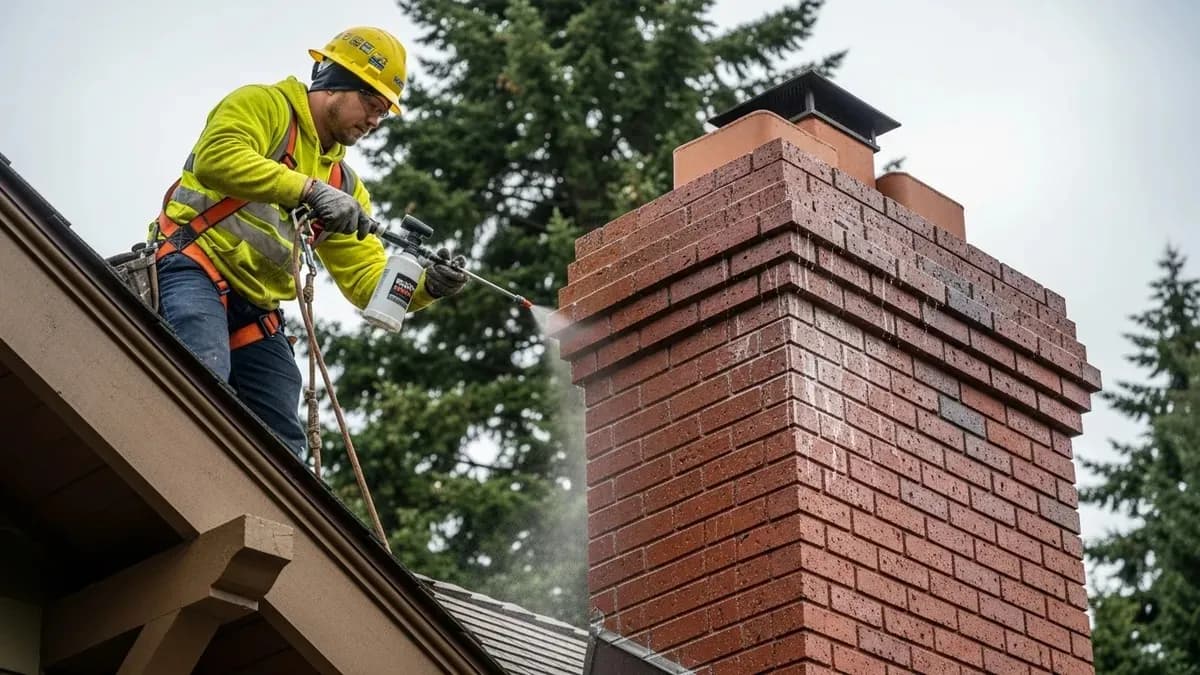
- Schedule annual chimney sweeps. Regular sweeping removes the organic material — creosote, soot, leaves, animal debris — that mold feeds on. It also gives our technicians an annual look at interior moisture evidence before a small mold colony becomes a large one.
- Apply chimney waterproofing every 5–7 years. A breathable silane/siloxane treatment to exterior masonry reduces moisture penetration significantly, lowering the interior humidity that supports mold growth. Learn more at our chimney waterproofing service page.
- Address flashing promptly after any sign of water near the fireplace. Failed flashing is among the most overlooked moisture sources. Water staining near the fireplace after heavy rain is almost always a flashing issue until proven otherwise.
For Seattle homes in neighborhoods like Beacon Hill and Columbia City with older or historic chimneys, combining annual sweeps, a functioning cap, and periodic waterproofing effectively prevents mold under normal Seattle conditions. Read our related guide on chimney leaks and water intrusion in Seattle for more on moisture sources.
What to Do If You Find Mold in Your Chimney
If you're detecting a musty smell from your fireplace, seeing dark staining inside the firebox, or noticing discoloration on chimney-adjacent walls after a wet season, don't light a fire — schedule an inspection first. Burning in a mold-affected chimney spreads spores through your home's air and doesn't address the underlying moisture problem.
Our team is scheduling chimney mold assessments across the Seattle metro area within 3–5 business days. Call (206) 278-2924 or book an inspection online. We identify the mold extent, the moisture source, and give you a complete remediation quote on the same visit — Seattle Chimney Pros, family-owned since 2011, 2,500+ homes served across the metro area.
Need professional help?
Our professionally trained team is ready. $99 inspection credited toward repairs, 30-minute response.