Chimney Cap Inspection Seattle 2026: Damage Signs, Costs & When to Replace
What Does a Chimney Cap Inspection Cost in Seattle in 2026?
A chimney cap inspection in Seattle is typically included within a standard Level 1 chimney inspection, which runs $150–$250 for most residential chimneys across the metro area. Standalone rooftop cap assessments — where a technician climbs to check fit, mesh integrity, and corrosion status — run $75–$150. If replacement is needed, installed cap prices range from $100 for a basic galvanized single-flue cap to $900 or more for a custom multi-flue stainless steel unit. Based on more than 600 cap inspections our team completed across King, Pierce, and Snohomish counties in the past year, roughly 30% of Seattle chimneys we inspect have a cap that is either missing, damaged, or past its effective service life — a higher rate than most homeowners expect. Current as of July 2026.
A Real Cap Inspection: Marcus T. in Greenwood
Marcus T. called us this past May after his neighbor — who had just had her chimney swept — mentioned she had seen our truck on the block and overheard the technician talking about a displaced cap. Marcus hadn't thought about his chimney cap in years. He lit his fireplace only occasionally through the winter, and nothing had seemed obviously wrong. But his Greenwood craftsman was built in 1937, and the galvanized cap on the single-flue brick chimney was original to a 1990s renovation — meaning it was pushing 35 years old.
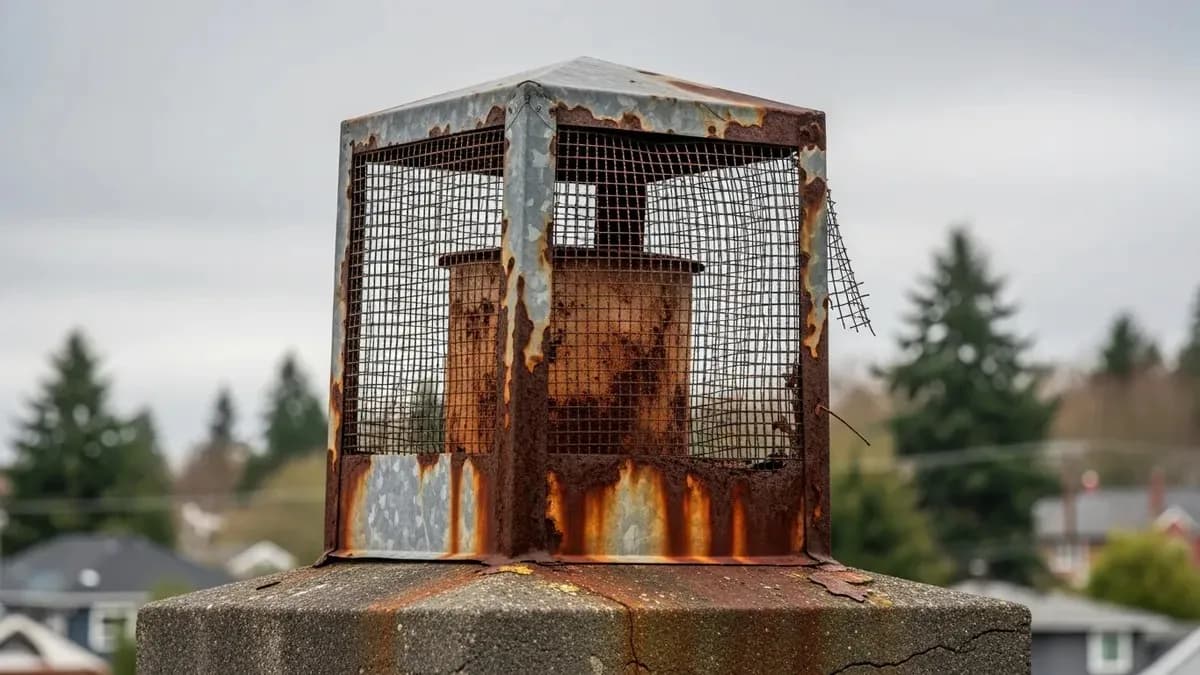
Ryan arrived on a Tuesday morning with a camera inspection kit and a full set of cap materials in the van. He climbed to the rooftop and called down within two minutes. The cap was still physically present, but the galvanized steel had rusted completely through on the windward side — there was a gap roughly the size of a fist where the mesh had corroded away. Leaves and debris had accumulated on the damper plate below, and Ryan spotted what appeared to be an old starling nest on top of the throat damper.
'The cap looked fine from the ground — it was still sitting up there, still roughly the right shape. But when you're on the roof you can see the rust has eaten completely through the mesh on the north face. Starlings found that gap by March at the latest. The nest on the damper is dry and compressed — that's a fire hazard the moment Marcus lights his first fall fire.'
— Ryan, Lead Technician, Seattle Chimney Pros
Ryan removed the old nest material using a shop vac and long-handled brush — a 20-minute process — then installed a new 18-gauge stainless steel cap sized precisely to Marcus's 8x8 clay flue liner collar. The entire visit took just under an hour. Total cost: $189 for the nest removal and inspection, plus $310 for the new stainless cap installed. Marcus watched from the backyard as the new cap went on. 'I honestly couldn't believe that thing lasted this long in Seattle rain,' he said. 'And I had no idea there was a nest in there.' He's now on our annual fall reminder list — a quick rooftop check each September before the first fire of the season.
Why Do Chimney Caps Fail Faster in Seattle Than in Other Climates?
Seattle receives approximately 37 inches of rain annually across 152 rain days, with the heaviest rainfall concentrated October through March — exactly when fireplaces are in active use. That sustained wet exposure degrades chimney cap materials faster than in drier regions, and the combination of acidic precipitation, conifer pollen, and Pacific Northwest humidity accelerates metal corrosion in ways galvanized steel in particular cannot withstand long-term.
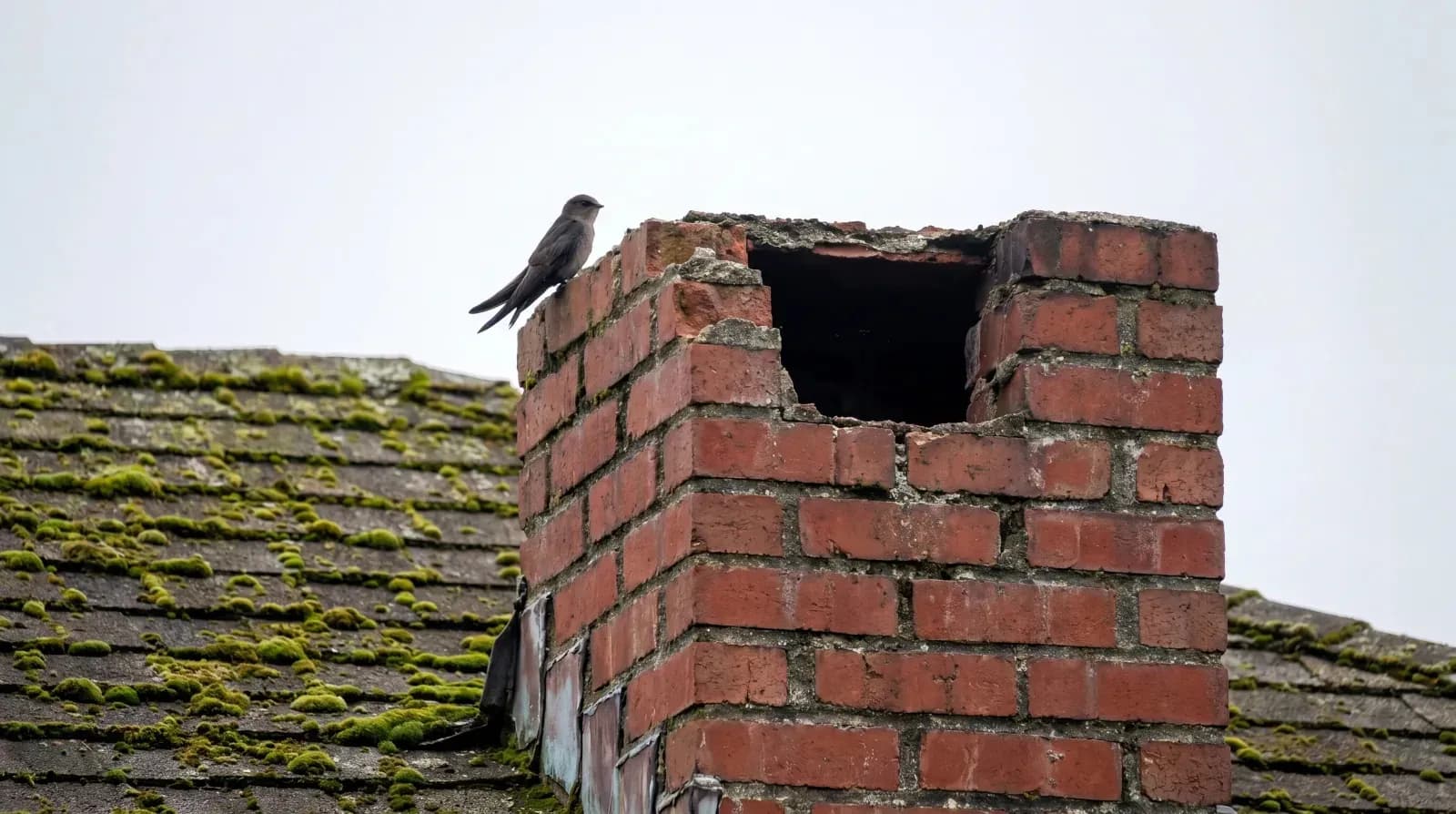
Beyond rain, Seattle's urban wildlife density makes cap mesh integrity a genuine safety issue rather than a cosmetic concern. Gray squirrels, European starlings, house sparrows, raccoons, and chimney swifts all actively seek uncapped or damaged chimneys as nesting sites from March through August. A gap in a corroded mesh screen that looks minor from the ground is more than large enough for a starling or squirrel to enter. Once nesting material is established in the smoke chamber, it creates a direct fire hazard — dry, compressed nest material in proximity to combustion heat.
In our experience inspecting more than 2,000 Seattle-area chimneys since 2011, galvanized caps in the Pacific Northwest routinely fail within 5–8 years — a fraction of their rated service life in drier climates. Choosing the right cap material at installation is one of the highest-leverage decisions a Seattle homeowner can make for chimney longevity. Our chimney cap installation service covers all materials and includes custom sizing for the non-standard flue dimensions common in older Seattle homes.
What Are the Warning Signs That Your Chimney Cap Needs Replacement?
After inspecting chimney caps on thousands of Seattle-area homes, our technicians recognize a consistent set of indicators that separate caps needing immediate attention from those with remaining service life. Here are the seven most reliable warning signs we look for from both the ground and the rooftop:
- Rust staining on the crown or upper brick face. Surface rust on the cap itself is a warning. Rust streaks running down onto the chimney crown or masonry below the cap level indicate the metal has corroded through — replacement is overdue, not approaching.
- Animal sounds or visible nesting material near the flue opening. Scratching, chirping, or nesting debris visible through binoculars means the cap mesh is compromised. This requires professional assessment before cap work proceeds — active nests may have legal removal restrictions depending on species.
- Water appearing in the firebox after heavy rain. When flashing and crown have been ruled out, water reaching the firebox points directly to an inadequate or missing cap. An intact, correctly sized cap eliminates nearly all direct rainwater entry into the flue.
- Visible mesh tears or crushed sections observed through binoculars. Damaged mesh allows wildlife and debris entry even when the cap body above is still structurally present. Mesh damage on an older cap generally warrants full replacement rather than spot repair.
- Cap visibly tilted, shifted, or sitting off-center on the flue. A displaced cap may rest in place but is no longer sealing the flue collar. The next significant wind event can displace it entirely.
- Leaves, twigs, or debris accumulating on the damper plate. Debris on the damper typically enters through a compromised cap mesh. Seattle's maple and alder canopy produces significant seasonal leaf fall that exploits any mesh opening.
- Cap age exceeds material lifespan for Seattle climate. Galvanized caps past 10 years, aluminum caps past 20 years — even without obvious visible damage, internal corrosion may have compromised structural integrity and sealing fit in ways that are only apparent from the rooftop.
If your chimney shows any of these signs, schedule a professional inspection before the fall heating season begins. Delaying a $250–$400 cap replacement contributes to crown and liner repairs that cost $1,500–$3,000 over two to three Seattle winters. Our related guide on animals in Seattle chimneys explains what happens when wildlife gains access through a damaged cap and what removal involves.
Which Chimney Cap Material Lasts Longest in Seattle's Wet Climate?
Material selection determines how long a cap remains serviceable in Pacific Northwest conditions. The following table reflects real-world performance in Seattle's wet, corrosive environment — not rated service life in dry climates:
| Material | Seattle Lifespan | Installed Cost (Single Flue) | Notes |
|---|---|---|---|
| Galvanized steel | 5–10 years | $100–$200 | Budget option only. Rusts through within 5–8 years in PNW conditions. Not recommended as a long-term investment. |
| Aluminum | 15–20 years | $150–$300 | Corrosion-resistant and lightweight. Prone to denting from branch impacts. Good mid-range choice for single-flue chimneys. |
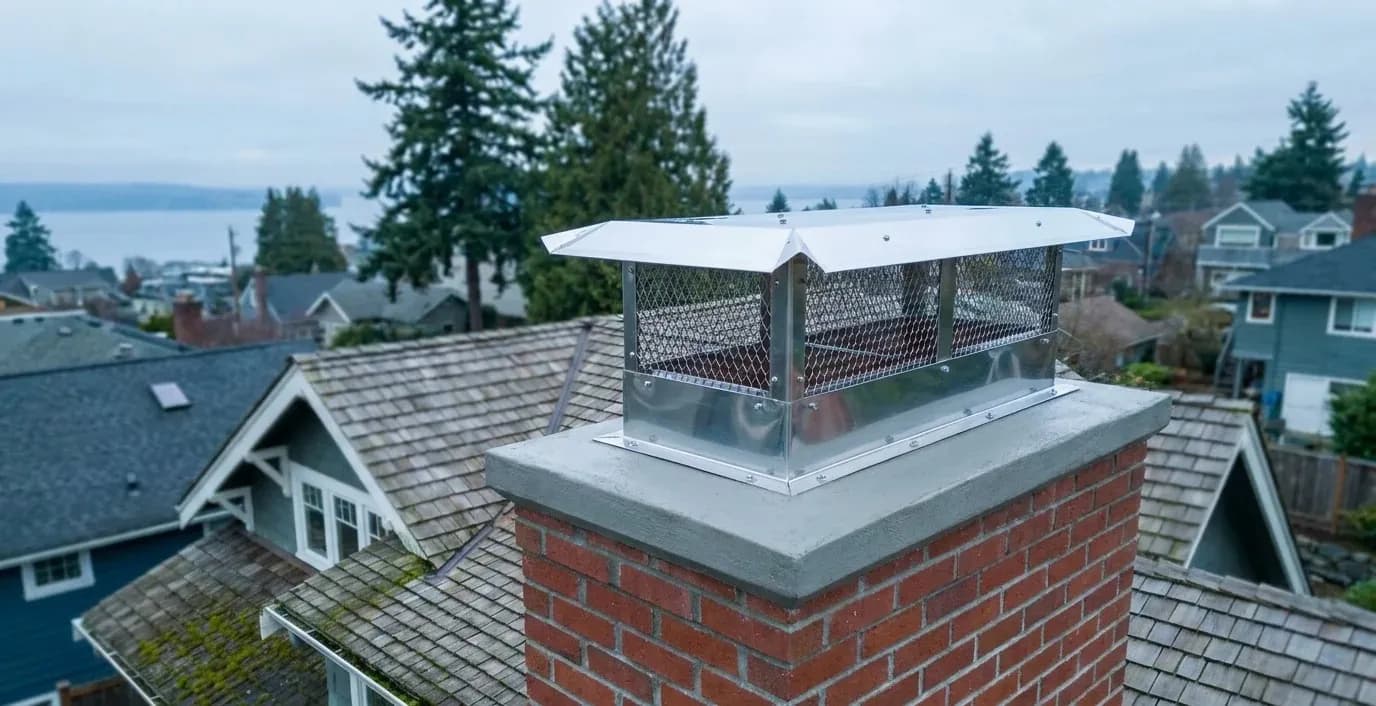
| Stainless steel (18-gauge) | 25–30+ years | $250–$500 | Best long-term value for Seattle. Lifetime manufacturer warranties standard. Most commonly recommended by our techs. |
| Multi-flue stainless cap | 25–30+ years | $450–$900 | One cap covering all flues on the crown. Popular on Seattle's Victorian and mid-century multi-flue chimneys. |
| Copper | 50+ years | $600–$1,200 | Premium longevity and architectural match for historic Seattle homes with existing copper details. Develops patina over time. |
For most Seattle homeowners, 18-gauge stainless steel is the right answer — it outlasts galvanized by a factor of three or more in Pacific Northwest conditions and carries lifetime warranties that galvanized cannot match. For the historic Craftsman bungalows of Greenwood, Wallingford, and Columbia City, or the Victorians of Capitol Hill, copper is worth considering if the home already features copper gutters or architectural elements — the 50-year service life justifies the premium over the ownership timeline of most Seattle homes.
Should You Repair or Replace a Damaged Chimney Cap?
Not every damaged cap requires full replacement. Some failures are genuinely repairable at lower cost — but knowing where that line falls saves money without compromising protection.
When repair makes sense:
- A stainless steel cap under 10 years old that has slid off center but whose metal and mesh are structurally intact can be re-seated and re-secured with new hardware — typically a $75–$150 service call.
- A single mesh section pushed inward by a small branch on an otherwise sound, younger cap may allow spot re-tensioning without full replacement.
- Minor cosmetic denting on aluminum or stainless with no compromise to fit or mesh integrity — cosmetic damage alone does not require replacement.
When replacement is the right call:
- Any galvanized cap showing active rust through the metal surface. Rust inhibitor products cannot reliably arrest through-metal corrosion on a cap in ongoing Seattle exposure.
- A galvanized cap over 10 years old or aluminum over 20 years old with any significant damage — repair cost approaches or exceeds remaining service value.
- Mesh torn or missing across more than 20–30% of its area. Reliable mesh-only repairs are difficult to achieve on a cap already subject to years of wet exposure.
- A cap struck by a branch or impact with structural deformation of the cap body — impact may have compromised the fit to the flue collar in ways not visible from below.
At $250–$500 installed for a stainless steel replacement on most single-flue Seattle chimneys, the downstream protection — rain exclusion, wildlife exclusion, damper preservation, liner moisture protection — makes replacement the better financial decision in most significant-damage scenarios. See our full chimney cap installation cost guide for a complete breakdown of installed prices across the Seattle metro.
How to Inspect Your Chimney Cap From the Ground: A Step-by-Step Checklist
A professional rooftop inspection is the only way to fully assess cap condition — but a ground-level check with binoculars identifies obvious problems and helps you decide whether to schedule an immediate visit or include it in your next annual inspection.
- Confirm the cap is present on every flue opening. On multi-flue chimneys, check each opening separately. Missing caps on secondary flues after wind events are common and easy to miss from the roofline.
- Look for rust staining below the cap level. Use binoculars to scan the chimney crown and upper masonry for reddish-brown streaks running down from the cap. Staining indicates active metal corrosion and likely replacement is needed.
- Check for visible deformation or displacement. A cap that is visibly tilted, bent, or askew is no longer seated correctly and may not be sealing the flue opening — even if it is still physically present on the chimney.
- Examine the mesh screen for gaps or tears. The mesh sides of the cap should be intact with no obvious holes, torn sections, or sections pushed inward. Damaged mesh allows wildlife access even when the cap body above is intact.
- Listen for animal sounds in early morning. Scratching, chirping, or tapping near the chimney in the morning hours is a reliable indicator of active wildlife presence — most likely starlings, sparrows, or squirrels that have found access through a damaged cap.
If any of these checks reveals a concern, schedule a professional rooftop inspection before lighting the fireplace again. Combining a cap inspection with your annual chimney inspection is the most cost-efficient approach — rooftop access labor covers the cap check and all other flue, crown, flashing, and firebox assessments in a single visit. Our spring chimney maintenance checklist covers the full set of seasonal assessments beyond just the cap.
Schedule Your Chimney Cap Inspection With Seattle Chimney Pros
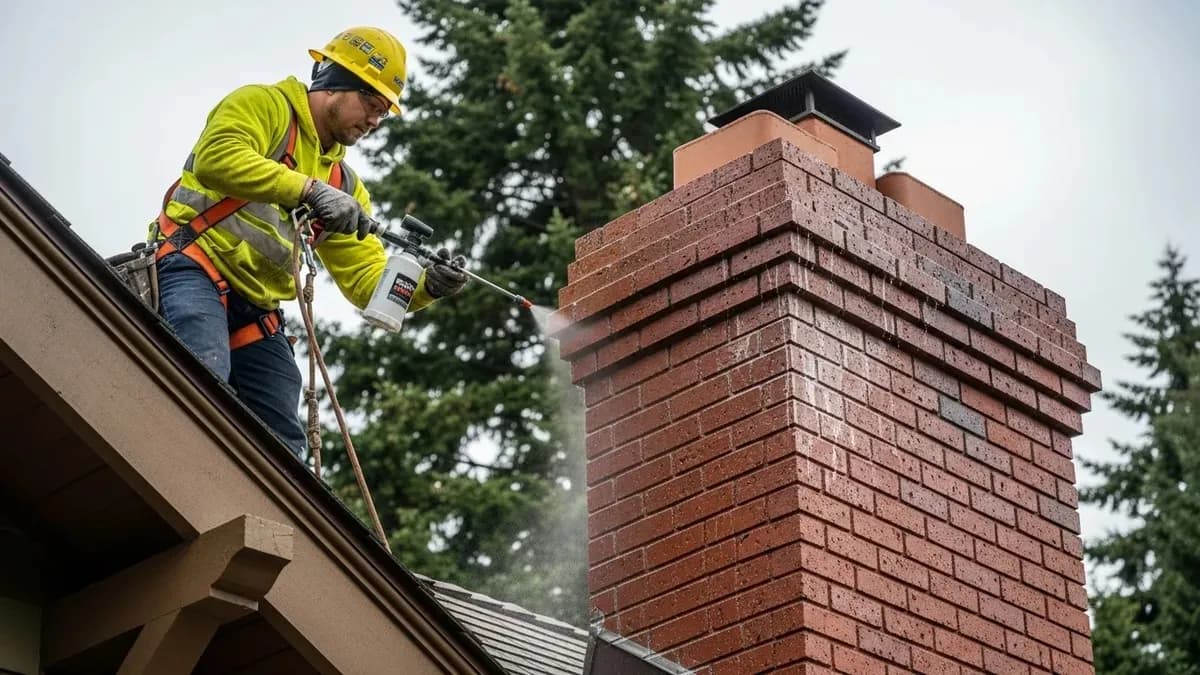
Seattle Chimney Pros performs chimney cap inspections and replacements across 45 communities in the Seattle metro — from Greenwood and Ballard to Bellevue, Renton, and Tacoma. Every cap inspection is performed from the rooftop by a CSIA-certified technician, with written documentation of findings and a clear itemized estimate before any replacement work begins. We've served more than 2,500 Seattle-area homeowners since 2011 — we don't recommend replacement when repair is sufficient, and we tell you in writing when your cap is in good condition for its age and material.
Summer is an ideal time to address chimney caps in Seattle: the wet season has ended, wildlife nesting cycles are winding down, and scheduling availability is better than in the fall rush when every chimney company in the metro fills up ahead of heating season. Most cap inspection and replacement appointments are available within 3–5 business days. If your cap inspection reveals additional issues — a cracked crown, deteriorating flashing, or moisture damage to the upper masonry — we can address those in the same visit rather than requiring a return trip. Our chimney waterproofing service pairs well with any cap replacement to protect the full chimney exterior from Seattle's ongoing moisture exposure.
Call (206) 278-2924 or request an appointment online to schedule your cap inspection today.
Need professional help?
Our professionally trained team is ready. $99 inspection credited toward repairs, 30-minute response.