Chimney Removal Cost in Seattle 2026: Partial vs. Full Guide
What Does Chimney Removal Cost in Seattle in 2026?
Chimney removal in Seattle costs between $2,000 and $4,500 for a partial removal (above the roofline only) and $5,000 to $10,000 or more for a full top-to-foundation removal in 2026. Based on the chimney removal projects our team has completed across the Seattle metro area over the past three years, the average homeowner pays around $3,100 for a partial removal on a two-story craftsman, including roof patching and an SDCI permit. Full removals on two-story homes — where we tear out everything from crown to foundation and finish the interior walls — average $8,400 when structural engineering and permits are included. Homes built before 1978 should budget an additional $200–$500 for required asbestos testing, plus up to $5,000 if abatement is needed. Current as of July 2026.
A Real Chimney Removal: Marcus T. in Greenwood
Last April, Marcus T. called us from his 1938 Greenwood bungalow after his home inspector flagged the chimney during a refinance appraisal. The inspector had noted visible leaning at the roofline, crumbling mortar joints on the upper courses, and a crown that had fractured in three places. Marcus hadn't used the fireplace in seven years — the previous owners had sealed the firebox when they converted to a gas furnace — and he had no plans to ever use it again.
Our lead technician Alex arrived on a Tuesday morning. The chimney was a single-flue, double-wythe brick structure rising about four feet above the roofline, sitting on a foundation pad in the basement. Alex walked the perimeter of the house, then climbed to the roof with a camera to assess the upper courses from above.
'The top eighteen inches are completely detached from the courses below — there's a visible crack running all the way around the chimney at the roofline. One decent windstorm and those bricks are coming down onto the cedar shingles, or worse, onto someone standing below. This one needs to come out.'
— Alex, Lead Technician, Seattle Chimney Pros
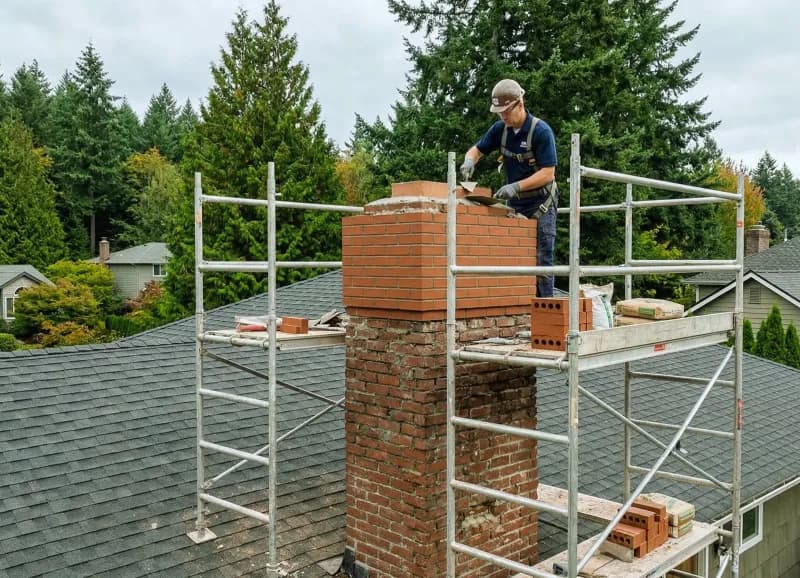
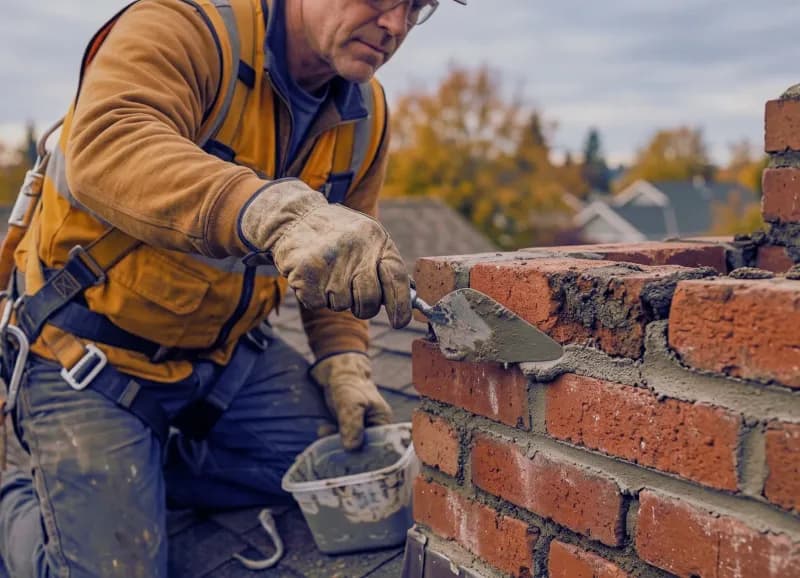
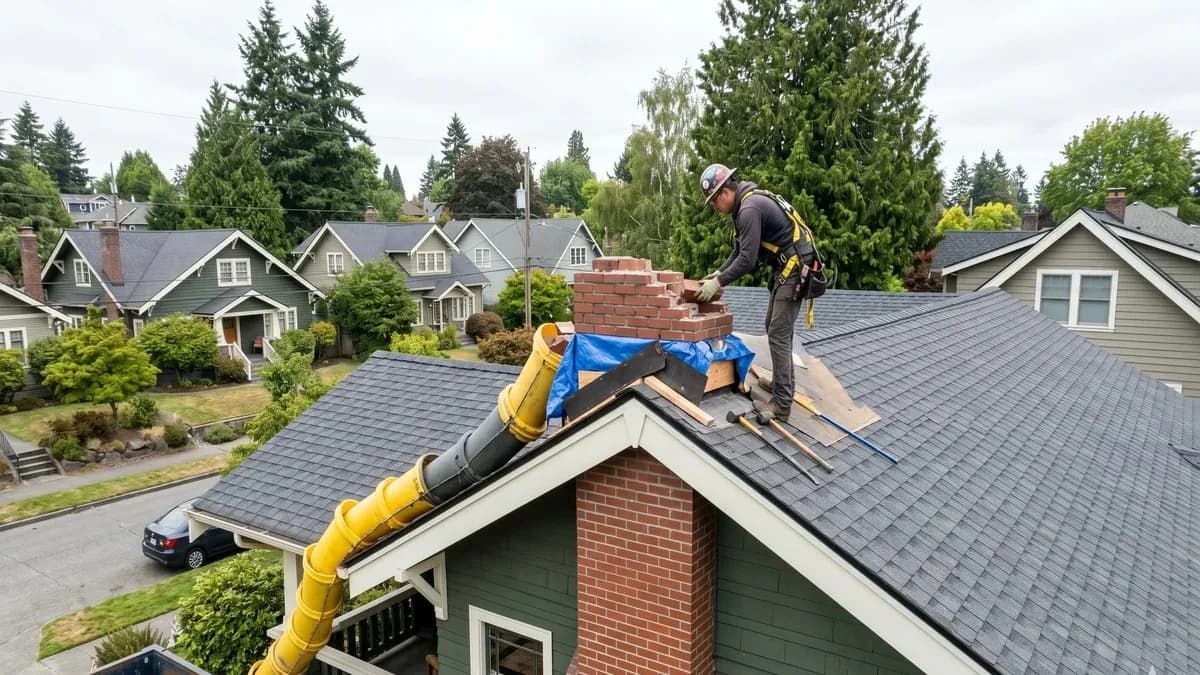
Marcus opted for a partial removal — down to the roofline — since the interior structure was solid and the basement fireplace was already sealed. Alex's crew pulled the permit from SDCI, which took about three weeks to process. On removal day, two techs spent the morning carefully dismantling the chimney course by course, lowering bricks by hand to avoid damaging the cedar shingles. By early afternoon the opening was closed: new plywood sheathing, ice-and-water shield, and architectural shingles woven into the existing roof to match. Total cost: $3,250, including the permit and all debris hauling. Marcus told us afterward the roof patch was nearly invisible. 'You'd never know there was a chimney there,' he said.
Partial vs. Full Chimney Removal: Which One Do You Need?
The most important decision in any chimney removal project is how much of the chimney comes out. This single choice drives the cost, timeline, and complexity of the entire project.
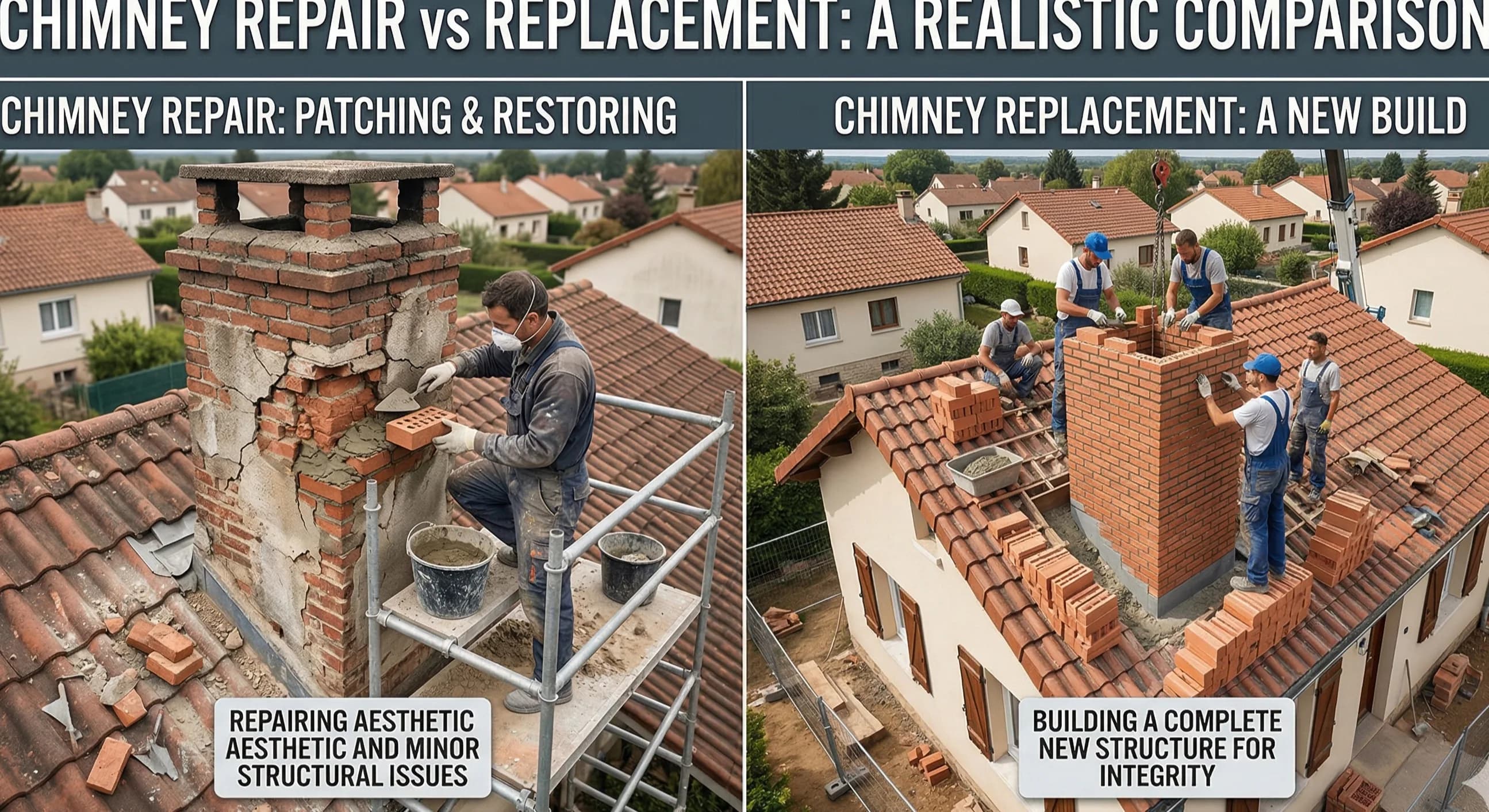
Partial removal takes the chimney down from the roofline up. The interior portion — running through the attic, interior walls, and down to the firebox — stays in place. The roof penetration is patched and shingled. This is the most common type of removal we perform in Seattle because it eliminates the high-maintenance, weather-exposed portion of the chimney at roughly half the cost of a full removal. It's ideal when the interior structure is sound, the firebox is already sealed, and the homeowner simply wants to eliminate a crumbling exterior liability.
Full removal takes out everything: crown to foundation. This means opening up the roof, removing the chimney through the attic, framing out the floor penetrations on each level, sealing the firebox opening, and finishing the interior walls and floors where the chimney used to be. Full removal frees up real square footage — sometimes an entire closet-width of space on two or three floors — and eliminates every chimney maintenance issue permanently. It's the right choice for major renovations, homes where the interior structure is also damaged, or owners who want to reclaim the floor plan.
| Factor | Partial Removal | Full Removal |
|---|---|---|
| Typical cost (Seattle 2026) | $2,000–$4,500 | $5,000–$10,000+ |
| On-site time | 1–2 days | 5–12 days |
| Interior disruption | Minimal (roof + attic) | Significant (all floors) |
| Structural engineering | Usually not required | Typically required |
| Space reclaimed | None (interior stays) | Yes — per floor |
| Best for | Maintenance liability, damaged crown/upper courses | Major renovation, full interior damage, space reclaim |
What Does Chimney Removal Cost in Seattle? Full 2026 Breakdown
Here is a line-by-line cost breakdown for chimney removal projects in the Seattle metro area, based on jobs our team completed in 2025 and 2026:
| Line Item | Cost Range (Seattle 2026) | Notes |
|---|---|---|
| Partial removal (above roofline) | $2,000–$4,500 | Demo, debris hauling, roof patch, flashing, shingles |
| Full removal — single-story | $5,000–$8,000 | Top to foundation, roof repair, wall framing, basic finish |
| Full removal — two-story | $7,000–$10,000+ | Multiple floor penetrations, more interior structure |
| Structural engineering assessment | $500–$1,500 | Required for most full removals; evaluates load bearing |
| SDCI building permit (Seattle) | $200–$800 | Required for both partial and full removal |
| Asbestos testing (pre-1978 homes) | $200–$500 | WAC 296-65 requires accredited survey before demolition |
| Asbestos abatement (if found) | $1,500–$5,000+ | Licensed abatement contractor; scope-dependent |
| Interior finish (drywall, paint, floor) | $1,000–$3,500 | Full removal only; sometimes handled as part of broader reno |
For a broader view of chimney project pricing across Seattle, see our complete chimney repair cost guide. For homes where removal might not be necessary, our chimney repair vs. replacement guide walks through the decision in detail.
Why Are Seattle Homeowners Removing Their Chimneys in 2026?
Chimney removal is one of the most common structural requests we handle across the Seattle metro, and the reasons have been consistent over the 14 years we've been in business:
- Earthquake damage from the 2001 Nisqually event — an estimated 10,000+ chimneys across the Puget Sound region were damaged. Many were braced or patched but never fully restored. In 2026, those chimneys are still sitting on compromised foundations, and homeowners are finally making the call to remove them ahead of the next seismic event. Read our full breakdown of earthquake chimney damage in Seattle.
- The chimney is completely unused — the fireplace was sealed, the home converted to gas forced-air, and the chimney now serves no purpose except as a maintenance liability: flashing that leaks, a crown that cracks, mortar that needs repointing every decade.
- Renovation or addition — the chimney sits exactly where a kitchen island, bathroom, or closet needs to go. Full removal opens up real floor space on every level it passes through.
- Structural risk — the chimney is leaning, separating from the house, or has deteriorated to the point where chimney repair costs approach or exceed removal costs.
- Persistent, unresolvable leaks — some chimneys have chronic water intrusion that repeated waterproofing and flashing repairs haven't fixed. At some point, removal is the only permanent solution.
- Weight concerns on aging framing — a full masonry chimney can weigh 5,000–15,000 pounds. On homes with undersized or deteriorating framing, removing that load can actually improve structural integrity.
Do You Need a Permit to Remove a Chimney in Seattle?
Yes — both partial and full chimney removal require a building permit from the Seattle Department of Construction and Inspections (SDCI). This is not optional, and any contractor who tells you otherwise is cutting corners that will cost you later.
The permit process covers structural integrity of the remaining building after chimney weight is removed, proper roof weatherproofing, fire-stopping at floor and ceiling penetrations, and seismic compliance under the Seattle Building Code. For full removals, a structural engineer's letter is typically required as part of the permit application. Permit turnaround is currently 2–6 weeks depending on SDCI workload.
Unpermitted chimney removal creates serious downstream problems: complications with home sales, insurance claim denials, and blocks on future building permits. Our license number is #SEATTCP7840L and we pull every permit required for every job — it's included in our quotes.
What Happens Structurally When You Remove a Chimney?
A masonry chimney is one of the heaviest components in a residential building. Removing it has real structural implications that must be assessed before demolition begins.
A standard single-flue masonry chimney weighs roughly 80–120 pounds per linear foot. A chimney rising 25 feet from foundation to crown can weigh 2,000–3,000 pounds. Large multi-flue chimneys can reach 10,000–15,000 pounds. Removing that mass changes load distribution on the foundation pad, floor joists, and roof framing.
Most chimneys are self-supporting — they carry their own weight on an independent foundation and don't bear other building loads. However, in many older Seattle craftsman and colonial-revival homes, floor joists, roof rafters, or partition walls have been framed directly against the chimney over the decades. Removing the chimney without addressing those connections can cause sagging or worse.
A structural engineer should evaluate any full chimney removal. For partial removal limited to above the roofline, engineering may not be required if the remaining structure is stable. Budget $500–$1,500 for the engineering assessment on a full removal — it's money well spent and usually required for your SDCI permit anyway.
Asbestos and Lead Paint: What Seattle Homeowners in Pre-1978 Homes Must Know
If your home was built before 1978, Washington State law (WAC 296-65) requires an accredited asbestos survey before any demolition of building components — including chimneys. This is not a technicality; asbestos-related illness is a serious, documented risk, and the regulatory framework exists for good reason.
Common locations where asbestos hides in older Seattle chimneys include flue liner insulation and cement wrapping around clay tiles, fireplace surround and firebox refractory panels, mortar and grout in high-heat applications, flashing caulk and sealants, and transite (asbestos-cement) pipe used as a flue liner in some mid-century homes. Lead paint is also common on painted chimney breasts, mantels, and fireplace surrounds from this era.
Testing costs $200–$500 for multiple samples sent to an accredited lab. If asbestos is confirmed, a licensed abatement contractor must remove and dispose of the contaminated materials under containment before the demolition crew arrives. Abatement adds $1,500–$5,000 depending on the type, location, and quantity of material involved. In our experience, roughly 35% of pre-1978 Seattle homes we test do return at least one positive asbestos sample from chimney-related materials. Budget for the possibility.
What to Do If You're Considering Chimney Removal: A Step-by-Step Plan
If you think your chimney may need to come out, here is the exact sequence we recommend to every Seattle homeowner:
- Get a professional chimney inspection first. Before committing to removal, have a CSIA-certified inspector assess the full condition of the chimney — from the crown to the firebox. In about 30% of cases, what looks like a removal situation turns out to be a repair situation once the real scope of damage is understood. A Level 2 chimney inspection costs $175–$295 and gives you the full picture.
- Get both a repair estimate and a removal quote. Ask for numbers on both options side by side. If the repair restores 20+ years of service life for less than 40% of the removal cost, repair usually wins. If repairs have been recurring and the chimney is unused, removal often makes better long-term financial sense.
- Decide on scope: partial or full. If the interior structure is sound and you don't need the floor space, partial removal is faster, cheaper, and less disruptive. If you're renovating or the interior is also compromised, full removal may be worth the added investment.
- Test for asbestos before signing any contract. If your home predates 1978, this step is legally required and practically important. Schedule testing as soon as possible — lab results take 5–10 business days and the timeline affects your permit application.
- Permit first, demo second. Your contractor submits plans to SDCI and waits for permit approval. Budget 2–6 weeks. Do not let a contractor start demolition without a posted permit — it exposes you to fines and insurance complications.
When Does Repair Make More Sense Than Removal?
Removal is the right answer in specific situations, but it is not always the right answer. In a significant portion of the cases we evaluate, targeted repair is less expensive, less disruptive, and preserves a feature that has both functional and aesthetic value.
Repair makes more sense than removal when the chimney is still in active use for a fireplace, wood stove, or gas insert; when the damage is limited to mortar joints, crown, or flashing and does not affect the structural integrity of the chimney body; when the chimney is architecturally significant to the home's character — particularly in Ballard, Queen Anne, Capitol Hill, and other craftsman-dense neighborhoods where a chimney removal can visibly change curb appeal; or when the home is in a historic preservation district with design review requirements that make removal difficult to permit.
For crumbling mortar and a cracked crown, tuckpointing and crown repair typically cost $1,200–$3,500 and can add 20–30 years of service life. For chronic leaks, professional chimney waterproofing combined with new flashing costs $800–$2,500 and permanently addresses moisture intrusion in the majority of cases. For a full comparison, see our guide on chimney repair vs. replacement in Seattle.
Ready to Get a Chimney Removal Quote in Seattle?
Whether you're dealing with earthquake damage, a crumbling unused chimney, or a renovation that requires the chimney to go, Seattle Chimney Pros has been handling chimney removal across the metro area since 2011. We pull our own permits, coordinate structural engineering, and handle the roof repair in-house — so you're not managing three separate contractors. We'll inspect your chimney, give you an honest assessment of repair vs. removal, and provide a transparent line-item quote before any work begins.
Call us at (206) 278-2924 or request an estimate online. We serve Greenwood, Ballard, Queen Anne, Capitol Hill, and 40+ other Seattle-area communities. Most removal jobs can be scheduled within 2–3 weeks of permit approval.
Need professional help?
Our professionally trained team is ready. $99 inspection credited toward repairs, 30-minute response.