Chimney Repair vs. Replacement in Seattle: How to Decide in 2026
Chimney Repair vs. Replacement: The Direct Answer for Seattle Homeowners in 2026
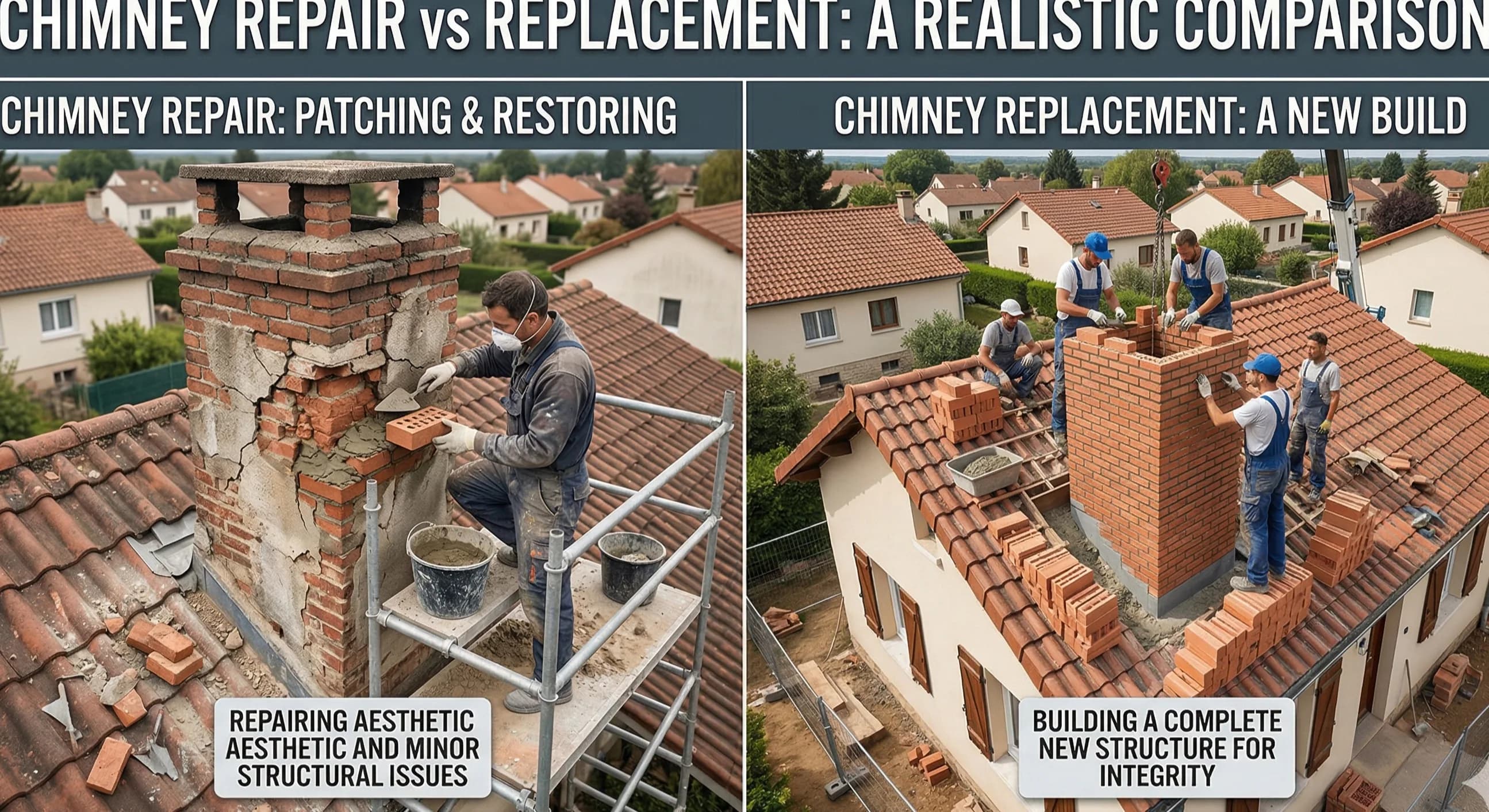
In Seattle, chimney repairs typically cost between $300 and $3,500 depending on scope, while a full rebuild runs $5,000 to $15,000. Based on over 850 chimney assessments our team completed across the Seattle metro area in the past year, roughly 70% of chimneys flagged as 'needing work' can be effectively repaired — only about 30% genuinely require a full or partial rebuild. The deciding factors are structural integrity (is the chimney leaning or shifting?), extent of masonry failure (spalling on multiple faces?), and whether previous repairs have already failed. Current as of June 2026.
A Real Decision: Marcus T. in Beacon Hill Had to Choose
Last February, Marcus T. called us from his 1952 brick home in Beacon Hill after noticing a fist-sized chunk of mortar sitting in his firebox. He'd had a neighbor's contractor do a patch repair two years earlier, and now it looked like the problem had spread. When he searched 'chimney repair or replace Seattle,' he found our site and booked an inspection the same day.
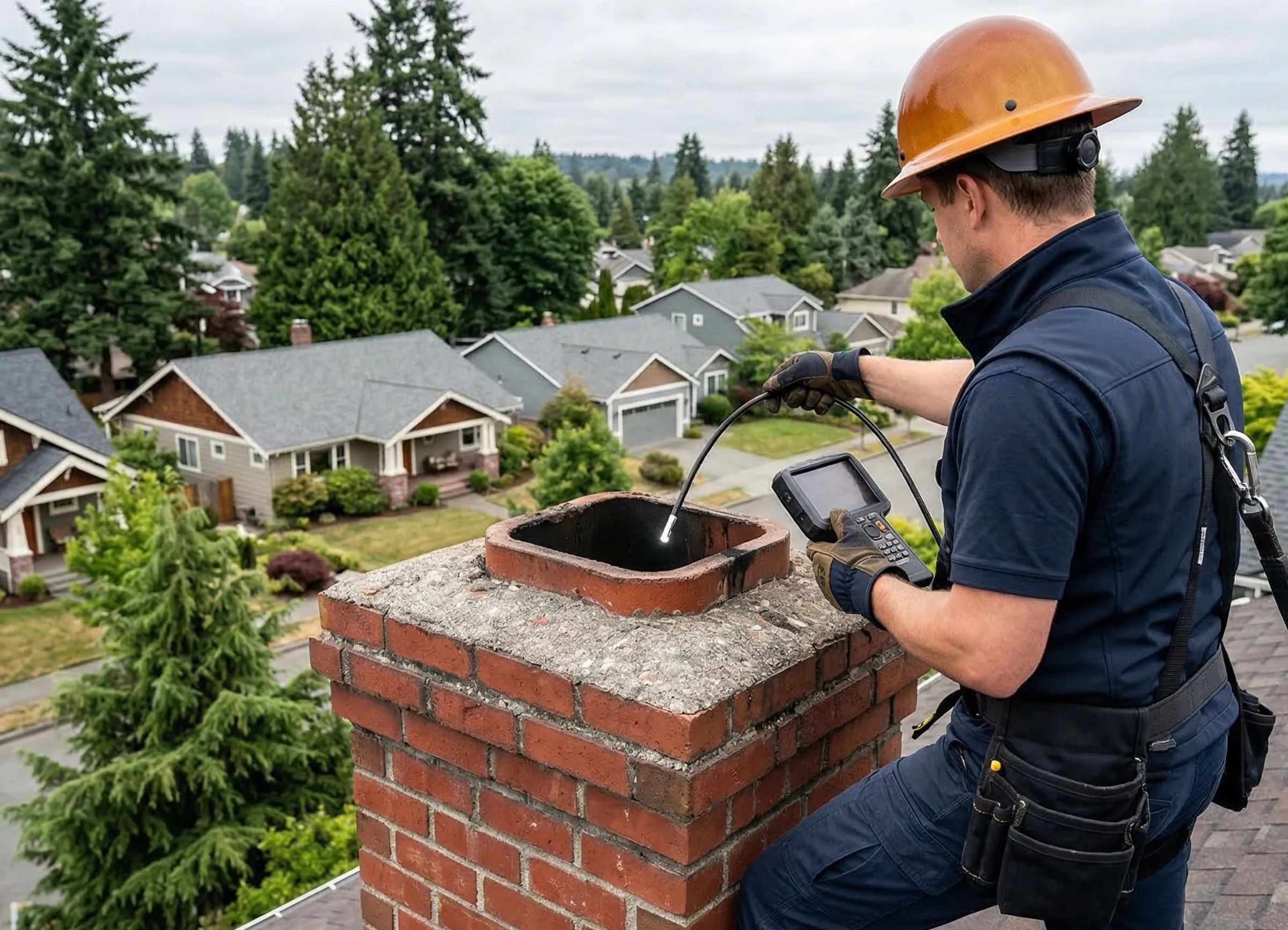
Alex, our lead technician, arrived on a cold Tuesday morning with the wind off the Puget Sound cutting across the roof. The chimney exterior already told part of the story — the top four courses of brick showed heavy spalling on two faces, with that familiar powdery white efflorescence tracking down toward the crown. Alex ran the HD camera up the flue and found a clay liner with a hairline crack running nearly three feet along the inner wall.
'The previous patch held the surface together but it didn't address the water infiltration. Once moisture gets behind the brick in Seattle's freeze-thaw cycles, spalling on two faces like this means the brick matrix itself is failing — not just the mortar. Tuckpointing alone won't save it at this stage.'
— Alex, Lead Technician, Seattle Chimney Pros
Alex walked Marcus through the camera footage on a tablet, pointing out the liner crack and showing him exactly where the water was entering at the crown. The verdict: a partial rebuild of the top six courses above the roofline, a new stainless steel liner insert, and a rebuilt crown with drip edge. Total cost: $4,200 — far less than a full rebuild from the foundation, but the right scope to actually fix the problem rather than patch it again. Marcus had the work done over two dry days in March. 'I kept bracing for someone to tell me I needed a whole new chimney,' he said afterward. 'It was a relief to get a straight answer.'
What Does Chimney Repair vs. Replacement Actually Cost in Seattle?
The cost gap between repair and full replacement is significant, but the right choice depends on what the damage actually is — not just the price tag. Here's a complete breakdown of what Seattle homeowners pay in 2026:
| Service | Cost Range (Seattle 2026) |
|---|---|
| Minor mortar repair (spot) | $300 – $600 |
| Tuckpointing (one face) | $500 – $2,500 |
| Crown repair or rebuild | $500 – $1,500 |
| Flashing repair | $300 – $800 |
| Stainless steel liner installation | $1,500 – $3,500 |
| Partial rebuild (above roofline) | $2,000 – $5,500 |
| Full chimney rebuild (masonry) | $6,000 – $15,000 |
| Prefabricated chimney system | $4,000 – $10,000 |
The critical insight from our field data: when a homeowner needs both a new liner ($1,500–$3,500) and extensive masonry work ($2,500+), combined repair costs often reach $5,000–$6,000 — at which point a full rebuild delivering a warranted, code-compliant chimney frequently makes more financial sense.
What Are the Signs That Repair Is the Right Choice?
In roughly 70% of the assessments we complete, targeted repair is the smarter investment. Here are the five indicators our techs look for:
- Damage is localized to one area — A cracked crown, failed flashing on one side, or a short section of deteriorated mortar are all isolated problems with isolated solutions. There's no reason to rebuild a structurally sound chimney because the cap cracked.
- 80% or more of mortar joints are still firm — Mortar deteriorates faster than brick. If the majority of joints are sound and only a section needs tuckpointing, the underlying masonry has decades of life left.
- The chimney stands plumb and straight — A vertical chimney with no lean means the foundation is intact. Surface deterioration on a structurally sound base is almost always repairable.
- Brick faces are solid with no spalling — Spalling on a single face, especially just near the crown, often indicates a localized water entry point rather than systemic brick failure.
- The chimney is less than 50 years old — Post-1975 construction generally used higher-quality materials and better construction practices. Chimneys in this range are strong candidates for repair over replacement.
What Are the Signs That Full Replacement Is Necessary?
About 30% of chimneys we assess have crossed the threshold where repair becomes a financial trap. Here's what pushes a chimney into rebuild territory:
- Visible lean or structural shift — Any deviation from plumb signals foundation or structural failure. We see this most often on hillside properties in Queen Anne and West Seattle. Patching a leaning chimney is a safety liability, not a repair.
- Spalling on two or more faces — When brick faces are popping off on multiple sides, moisture has penetrated the full masonry matrix. The bricks themselves are failing — not just the mortar — and repair won't restore structural integrity.
- Multiple previous repairs have failed within five years — If the same chimney has been patched twice and problems persist, the underlying structure has degraded past the point of effective repair. You're compounding costs without fixing the root issue.
- Earthquake damage with structural shifting — Seattle sits in an active seismic zone. Chimneys that shifted or separated from the house during seismic events need a rebuild with modern seismic reinforcement, not cosmetic patching. Read more in our guide to earthquake chimney damage in Seattle.
- Failed liner AND failing masonry simultaneously — When both the flue liner and the exterior masonry need major work, the combined repair quote frequently approaches full-rebuild cost. A rebuild at that point delivers a warranted, new chimney instead of a heavily patched old one.
How Does Seattle's Climate Factor Into the Repair vs. Rebuild Decision?
Seattle's environment creates several considerations that don't apply in drier climates. With approximately 152 rain days per year and freeze-thaw temperature swings each winter, moisture is the primary enemy of chimney masonry here. Our data shows that chimneys in Seattle neighborhoods with significant tree canopy — Ravenna, Greenwood, and Maple Leaf — deteriorate roughly 15–20% faster due to sustained moisture retention and moss growth trapping water against the brick.
Three Seattle-specific factors to weigh:
- Earthquake history — The 2001 Nisqually earthquake damaged over 1,500 chimneys across the region. Many were patched rather than properly rebuilt. If your chimney was repaired after that event and is now showing new problems, a proper seismic rebuild may be the right permanent solution.
- Historic district rules — Homes in the Capitol Hill and Queen Anne historic districts may have preservation requirements that govern chimney appearance. Check with the Seattle Department of Neighborhoods before committing to a full rebuild that changes the chimney's profile.
- Salt air corrosion in waterfront neighborhoods — Properties in Ballard, Magnolia, and West Seattle experience accelerated metal corrosion. A rebuild gives you the opportunity to install marine-grade stainless steel flashing and liner components that outlast standard materials by 15–20 years in that environment.
What Should You Do If You Suspect Your Chimney Needs Major Work?
Before you get any quotes, here are four concrete steps to take right now:
- Do not light any fires until a professional has assessed the chimney. If there's a structural crack, spalling, or liner damage, using the fireplace can allow carbon monoxide to enter the home or accelerate structural failure.
- Photograph the damage from the ground — document any visible spalling, efflorescence (white streaks), mortar gaps, or leaning. These photos help your inspector understand the timeline of deterioration and support any insurance documentation.
- Check for interior water signs — look inside the firebox for rust on the damper, water staining, or efflorescence on the firebox walls. These indicate active moisture intrusion that needs to be addressed regardless of whether you repair or rebuild.
- Schedule a Level II chimney inspection — a Level II inspection includes an HD camera examination of the flue and a full structural assessment. This is the only reliable way to determine which option is appropriate for your chimney's specific condition. Based on our experience across 850+ Seattle-area assessments last year, inspections identify damage that's not visible from the ground in about 60% of cases.
Does Chimney Repair or Replacement Affect Home Value in Seattle?
Yes — and the impact is larger than most homeowners expect. In our experience working with Seattle real estate clients through pre-listing inspections, a deteriorating chimney flagged by a buyer's home inspector typically triggers $5,000–$15,000 in price reduction requests or repair credits. A proactive repair or rebuild before listing eliminates that negotiation point entirely.
The ROI math is straightforward: a $3,000 repair that prevents a $12,000 buyer credit delivers $9,000 in net value. A $10,000 rebuild that adds $4,000 in perceived value and prevents a $13,000 credit nets $7,000 in value preservation. In Seattle's competitive market, buyers want homes without a deferred-maintenance to-do list — a new or freshly repaired chimney signals overall home care quality. See our full guide on chimney inspections when buying a home in Washington for what buyers and agents look for.
Ready to Find Out Which Option Your Chimney Needs?
The repair-vs-rebuild question has a clear answer for every chimney — you just need the right inspection to find it. Our CSIA-certified technicians have assessed over 850 Seattle-area chimneys in the past year alone, and we'll give you a straight answer with camera footage and written documentation to back it up. Call us at (206) 278-2924 or schedule your inspection online — we serve all 45 Seattle metro areas and can typically get to you within 2–3 business days.
Need professional help?
Our professionally trained team is ready. $99 inspection credited toward repairs, 30-minute response.