How to Hire a Chimney Repair Contractor in Seattle (2026 Guide)
How to Hire a Chimney Repair Contractor in Seattle: The Short Answer
Hiring a trustworthy chimney repair contractor in Seattle in 2026 means verifying three things before signing anything: a current Washington State contractor license (required for any repair over $500 under RCW 18.27), active CSIA certification for the technician performing the work, and a certificate of liability insurance with at least $1 million per occurrence. Based on more than 2,500 jobs our team has completed across the Seattle metro, the most costly homeowner mistakes come not from choosing the wrong repair — but from hiring the wrong contractor. Washington State imposes almost no chimney-specific licensing requirements, meaning anyone with a truck and a business card can legally advertise as a chimney specialist. This guide gives you the exact verification steps, red flags, and pricing benchmarks to protect yourself. Current as of July 2026.
What Happened When Marcus T. in Ballard Hired the Wrong Contractor First
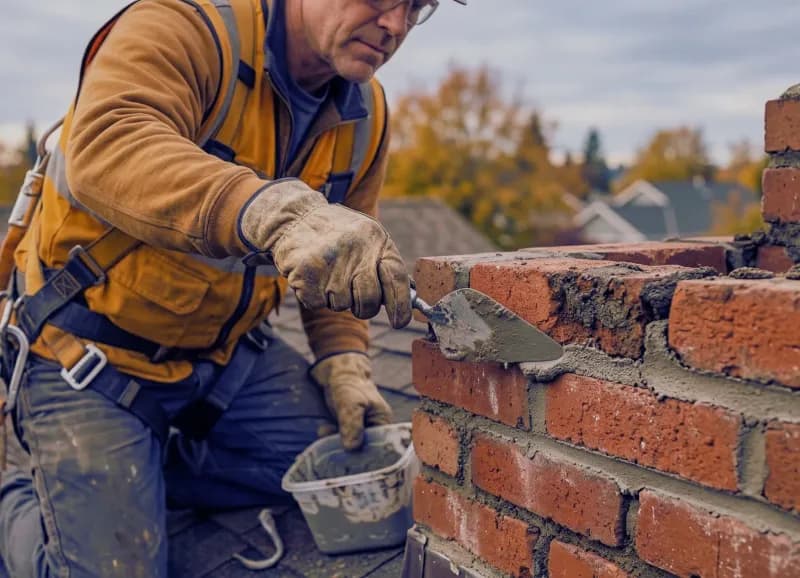
Marcus T. had owned his 1942 Craftsman in Ballard for three years before he noticed mortar crumbling from the chimney's upper courses last spring. He found a contractor through a Nextdoor recommendation — someone who had done gutter work for a neighbor — and accepted a handshake quote of $600 for the repointing job. No written estimate, no license number offered, no discussion of materials.
Six weeks later, Marcus noticed the new mortar was already cracking and pulling away from the brick. He called us for a second opinion. When Alex arrived and climbed to the roof, the problem was immediately apparent.
'Whoever did this used standard Portland cement mortar over 80-year-old soft brick. Portland is too rigid — it doesn't flex with seasonal temperature swings the way historic lime mortar does. Within one freeze-thaw cycle, it pops off and takes pieces of the original brick face with it. Now we're not just repointing — we're dealing with spalled brick that didn't need to be damaged in the first place.'
— Alex, Lead Technician, Seattle Chimney Pros
The remediation — removing the improper Portland cement, treating the spalled brick faces, and repointing correctly with a Type N lime-based mortar — cost Marcus $1,850. The original incorrect job cost $600. The total came to $2,450 for work that should have been $900 done right the first time. Marcus is now on our annual maintenance schedule; we completed the correct tuckpointing and a Level 1 inspection for $890 total, and his chimney is documented and stable heading into fall 2026.
What Credentials Actually Protect Seattle Homeowners?
Not all chimney certifications are equal, and some that sound authoritative are essentially self-administered. Here is what matters and how to verify each one independently.
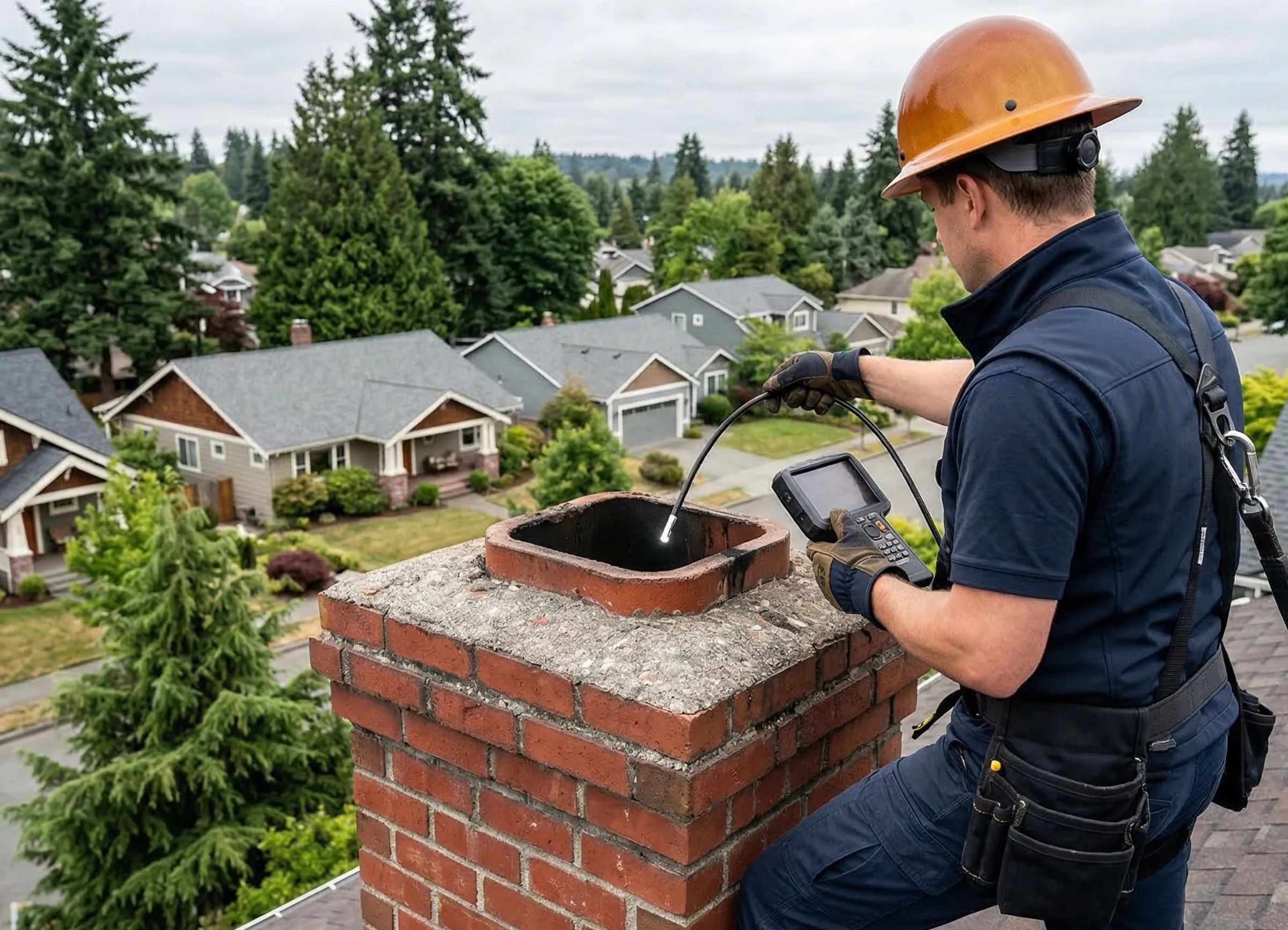
CSIA Certification (Chimney Safety Institute of America) is the gold standard for chimney sweeps and inspectors in North America. Technicians must pass a written exam covering NFPA 211 and chimney codes, and must complete continuing education to renew. Every certified sweep is listed in the public CSIA directory at csia.org — search the technician's name to confirm the certification is current. Certificates can be forged; the online directory cannot.
NFI Certification (National Fireplace Institute) covers gas, wood, and pellet appliances as distinct specialties. If you have a gas fireplace or stove, the technician should hold an NFI Gas Specialist credential — a different knowledge base from CSIA that specifically covers combustion, venting, and appliance safety for gas systems.
Washington State Contractor License is required for any repair work exceeding $500 (RCW 18.27). Verify any contractor's license, bond amount, and insurance at the Washington State Labor and Industries verify tool (lni.wa.gov/verify) in under 60 seconds. An unlicensed contractor doing repair work has no required bonding — meaning no financial recourse if they damage your property and disappear.
Liability Insurance and Workers Compensation matter because roof work carries real physical risk. Request a certificate of insurance directly from the contractor's insurer; a legitimate company provides it the same day. If a worker is injured on your roof without workers comp coverage, your homeowners insurance may become the first line of defense. Minimum $1 million per occurrence for chimney repair work is standard.
Our technicians at Seattle Chimney Pros hold CSIA certification and NFI Gas Specialist credentials, are fully licensed in Washington State, and carry $2 million in general liability coverage with full workers compensation for all field staff.
Why Does Washington State Have Almost No Chimney Licensing Rules?
The uncomfortable truth: Washington does not require any chimney-specific license, certification, training, or testing to advertise and perform chimney sweeping and inspection services. Any individual can buy a brush, a shop vac, and a City of Seattle business license for $30 and legally market themselves as a licensed chimney professional.
Unlike electricians, plumbers, and general contractors — who must complete documented apprenticeship hours, pass state exams, and maintain bonding — chimney sweeps face essentially no occupational requirements. The only meaningful legal threshold applies at the repair level: any chimney work constituting construction and exceeding $500 requires a Washington State contractor license under RCW 18.27.
What this means practically for homeowners:
- A company doing sweeping and inspection only is not required to hold a contractor license — verify CSIA and NFI credentials instead
- A company performing repairs — masonry, liner replacement, crown rebuilds, flashing, cap installation — must hold a valid Washington State contractor license
- The L&I verify tool (lni.wa.gov/verify) shows current license status, bond amount, expiration date, and insurance in real time
- An unlicensed contractor doing repair work has no required bonding, leaving you with no financial recourse if they damage your property and disappear
This regulatory gap is exactly why CSIA and NFI certification matters so much in Washington State. These organizations impose the training standards and code of ethics that state law does not. For a full breakdown of what state codes actually require for chimney work, our article on Washington State chimney safety codes covers the relevant WAC and NFPA requirements in plain language.
What Are the Red Flags That Identify a Problem Chimney Contractor?
These seven warning patterns reliably predict poor work, scam pricing, or outright fraud — regardless of how professional the initial pitch sounds.
- Door-to-door solicitation after a storm or seismic event. Legitimate chimney companies do not canvass neighborhoods after windstorms, heavy rain, or earthquakes looking for quick repair jobs. Storm-chasing contractor fraud is one of the most documented scam patterns in the Pacific Northwest. If someone knocks on your door offering inspection services immediately after a storm, decline and contact a company you have researched independently.
- Every inspection finds a catastrophe requiring immediate expensive repairs. Fear-based upselling is the most documented chimney scam nationwide. The pattern: an inspector finds urgent damage requiring thousands of dollars of immediate work — often with photos from a different property, or real damage presented with exaggerated severity. Reputable inspectors explain findings clearly, provide photographs of your actual chimney, and give you time to get a second opinion.
- No written estimate before work begins. Any contractor who begins work without a written, itemized estimate has positioned you for a price dispute you cannot win. Washington State consumer protection guidelines strongly recommend written estimates for any work above $500. Your estimate should include scope of work, specific materials, labor, timeline, payment schedule, and warranty terms.
- Demands for large upfront cash payment. Standard industry practice is a deposit of 10–30% at contract signing, with the balance due upon satisfactory completion. Any contractor demanding 50% or more upfront — especially in cash only — has removed their financial incentive to finish or do the job correctly.
- Cannot immediately provide license, bond, and insurance documentation. A licensed, insured contractor has these documents in their system and can produce them within minutes. Any hesitation, excuse, or inability to produce a license number or certificate of insurance is disqualifying.
- Extreme pricing urgency or today-only discounts. Artificial scarcity and prices 40–60% below other bids are reliable markers of bait-and-switch tactics. The low bid gets you to authorize work, then the price escalates once tools are on your roof. If a price sounds too good to be true and comes with urgency pressure, get two more bids first.
- No verifiable physical address or local history. A business search, Google Maps listing, and the L&I verify tool should show a company with a real local address and an established review history. If a dispute arises with a contractor who has no verifiable Washington State address, there may be no entity to pursue a claim against.
What Questions Should You Ask Every Seattle Chimney Contractor Before Signing?
Use this list verbatim. A reputable company answers all ten without hesitation. Vague answers, pressure to skip questions, or inability to produce requested documentation are each independent red flags.
- Can I have your CSIA certification number so I can verify it at csia.org? If a technician claims CSIA certification but cannot provide a verifiable number, they are not certified.
- What is your Washington State contractor license number? Required for any repair work exceeding $500. Verify independently at lni.wa.gov/verify before signing anything.
- Are you bonded and carrying liability insurance? Can you email me the certificate of insurance today? This should arrive the same day from the contractor's insurer. Verify the coverage amount is adequate for roof work — minimum $1M per occurrence.
- Will you provide a written, itemized estimate before any work begins? Non-negotiable. If a contractor resists, treat it as disqualifying.
- What specific materials will you use, and can I see the product specifications? For crown repairs: what is the concrete mix design? For liner work: what gauge stainless steel? For masonry: Portland cement or lime mortar, and why? Vague answers suggest the contractor will use whatever is cheapest.
- Do you have before-and-after photos from similar Seattle-area jobs? A company with genuine local experience has a portfolio of documented work. No photos or only stock images is a warning sign.
- What warranty do you provide on labor and materials? Industry standard is one year on labor; quality contractors extend to two years or more. Stainless steel liner manufacturer warranties typically run 15–25 years when installed per specification.
- Will the work be performed by your own employees or by subcontractors? The hiring company remains fully responsible for the sub's work quality, safety practices, and licensing compliance regardless.
- What is the payment schedule, and do you accept credit cards? Credit card acceptance is itself a signal of legitimacy — it requires merchant account approval and creates a dispute mechanism. Insistence on cash only removes your ability to contest charges.
- Can you provide contact references from Seattle homeowners with similar chimney types? Online testimonials are curated by the contractor. Independent references you can contact directly are verifiable. A company with nothing to hide provides them without delay.
How Do You Compare Chimney Repair Bids Without Getting Misled?
Three bids is standard advice, but three bids only help when you are comparing equivalent scopes. Two contractors bidding on different materials, different warranty terms, or different amounts of included work are not meaningfully comparable even if you look only at the bottom-line price.
Start with a documented inspection report — ideally from a company that does not do the repair work — so every contractor is bidding on the same defined scope. Require itemized bids that break out materials (with product names and specifications), labor hours, access and setup costs, any applicable permit fees, and cleanup. A lump-sum bid with no detail cannot be properly evaluated or enforced if scope disputes arise.
| Repair Type | Low End | Typical Range | High End |
|---|---|---|---|
| Tuckpointing (mortar repointing) | $500 | $800–$2,500 | $4,000+ |
| Chimney crown repair or rebuild | $250 | $500–$2,000 | $4,500 |
| Flashing repair or replacement | $400 | $600–$1,500 | $3,000 |
| Chimney cap replacement | $150 | $200–$600 | $1,200 |
| Stainless steel liner replacement | $2,000 | $2,500–$5,500 | $8,000+ |
| Firebox rebuild (refractory) | $1,000 | $1,500–$4,000 | $8,000 |
| Full chimney restoration (historic masonry) | $3,000 | $5,000–$15,000 | $30,000+ |
In our experience across more than 600 repair jobs completed in the Seattle metro in 2025, bids that come in more than 30% below these ranges almost always indicate inferior materials, underpaid labor, or a planned shortcut on scope. A bid significantly above the high end without a clear documented explanation deserves the same scrutiny. For a full repair-type breakdown, see our complete Seattle chimney repair cost guide. If you are still assessing whether your chimney actually needs repair, our article on signs your chimney needs repair walks through the diagnostic indicators.
What Does Good Chimney Repair Work Look Like — and How Can You Verify It?
Once work is complete, you can assess quality without being a chimney expert. Here is what to look for during and after any chimney repair project.
Before-and-after documentation. You should receive photos showing the specific repair area — not just a general shot of the chimney. This documentation gives you a baseline for future inspection findings and a record if warranty work becomes necessary.
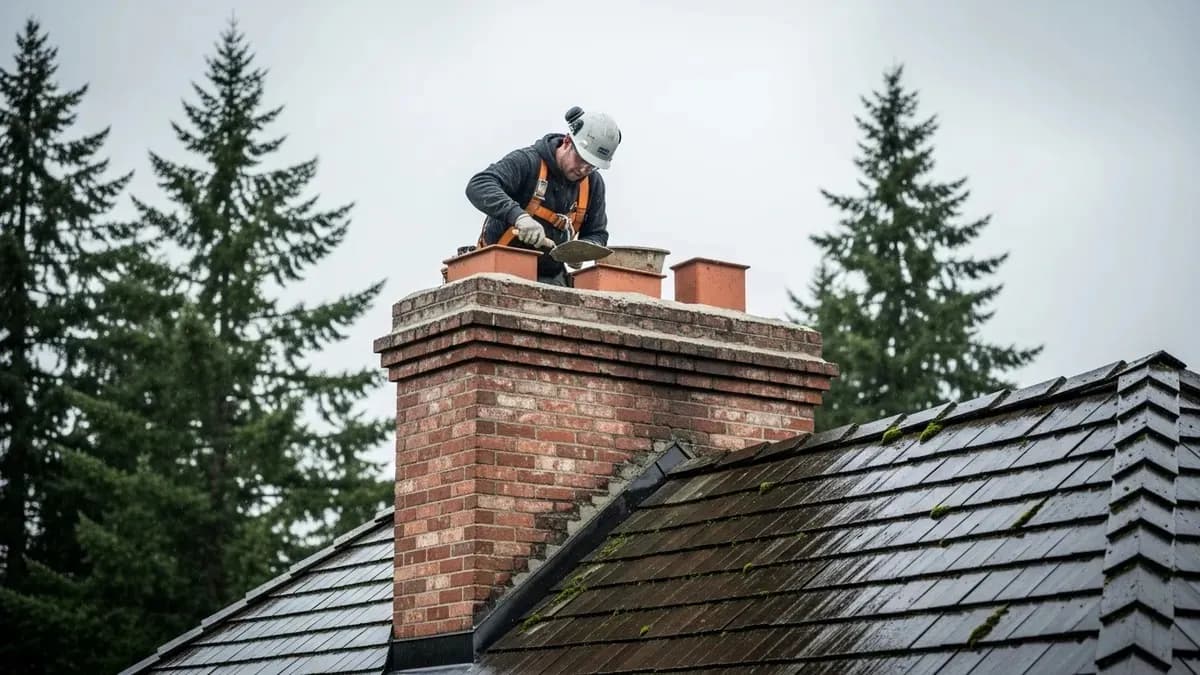
Clean, consistent mortar work. Tuckpointing and crown repairs should show clean, consistent mortar joints with no excess material smeared on adjacent brick faces. Rushed work leaves mortar smears and irregular joint profiles that are obvious to anyone looking closely.
Correct material matching. For historic Craftsman and Victorian homes in Seattle — a significant share of our service area — mismatched Portland cement mortar applied over original lime mortar joints is both visually wrong and structurally damaging. Portland cement is harder than historic soft brick; it does not flex with thermal expansion and eventually spalls the surrounding masonry. Insist on lime mortar for pre-1940 homes. About 40% of the chimneys we service in Ballard, Fremont, and Capitol Hill are pre-1940 construction where this distinction is critical.
Functional test before the technician leaves. After any repair affecting the firebox, liner, or damper, a test fire should be lit — or a gas fireplace startup run — with the technician present. Smoke should draw cleanly up the flue with no backdraft. A contractor who finishes and leaves without a functional test has not verified their work is actually working.
Written warranty in hand before final payment. Get the warranty in writing with the specific scope covered, duration, what conditions void it, and who to contact for warranty claims. Our chimney repair service includes a written two-year labor warranty on all repair work — get that in writing from any contractor you hire, regardless of who it is.
Ready to Get an Honest Estimate? Here Is How We Work
Seattle Chimney Pros has been repairing chimneys across the Seattle metro since 2011. Our technicians are CSIA-certified and NFI Gas Specialist certified, fully licensed in Washington State, and carry $2 million in general liability coverage with full workers compensation for all field staff. We have served more than 2,500 homes across Seattle, Ballard, Bellevue, Kirkland, Renton, Tacoma, and 40+ communities across King, Pierce, and Snohomish counties.
Every estimate we provide is written, itemized, and delivered before any work is discussed or authorized. We inspect from the roof every time, photograph all findings, and walk through them with you in plain language. We do not begin work until you have reviewed and approved the written scope and price — and we accept all major credit cards. If we find nothing wrong, we tell you and charge only for the inspection.
If you want a second opinion or additional bids before deciding, we encourage it. Our confidence in our pricing and workmanship means we are not threatened by competition. To schedule a chimney inspection or an estimate on any chimney repair project, call (206) 278-2924 or submit a request online. Most appointments are available within 3–5 business days, with priority availability for urgent situations.
Need professional help?
Our professionally trained team is ready. $99 inspection credited toward repairs, 30-minute response.