Chimney Sweep Cost in Seattle 2026: What Homeowners Pay
Chimney Sweep Cost in Seattle: 2026 Price Ranges
The most common question we get from Seattle homeowners is simple: how much does a chimney sweep cost? In 2026, a standard chimney sweep in Seattle runs $149–$250 for a wood-burning fireplace in good condition. Homes with heavy creosote buildup, gas fireplaces, or multiple flues will see higher costs. Here's the complete breakdown:
| Service Type | Seattle Cost Range | Time Required |
|---|---|---|
| Standard wood fireplace sweep | $149–$250 | 45–90 min |
| Heavy creosote (Stage 2–3) sweep | $250–$500 | 2–4 hours |
| Gas fireplace cleaning | $99–$175 | 30–60 min |
| Wood stove/insert sweep | $175–$299 | 60–120 min |
| Sweep + Level 1 inspection combo | $199–$349 | 60–120 min |
| Second flue (same visit) | +$75–$150 | +30–45 min |
In our 14+ years serving Seattle, we've found that booking a sweep and inspection together is the best value — you get a complete picture of your chimney's condition while the technician is already there.
What Factors Drive Chimney Sweep Costs Higher in Seattle
Not every chimney sweep job is a flat $175 in and out. Several factors push Seattle costs higher, and understanding them helps you budget accurately and avoid surprise invoices.
- Creosote buildup level: Stage 1 (light flaky deposits) sweeps quickly. Stage 2 (tar-like glaze) requires specialized rotary tools and additional time. Stage 3 (hardened, thick) may require chemical treatment before mechanical removal.
- Chimney height: A two-story craftsman in Capitol Hill with a tall chimney requires more equipment setup time than a single-story rancher.
- Last sweep date: Seattle homes that haven't been swept in 3–5+ years accumulate significantly more debris, moss, and creosote.
- Access difficulty: Steep roofs, limited attic access for inspection, or tight firebox dimensions all add time.
- Appliance type: Wood stoves and inserts require removal or extension of the insert to access the full flue — this adds cost compared to an open-face fireplace.
Our technicians quote accurately after a brief visual assessment at the start of the job — if scope changes, we communicate before proceeding.
What a Proper Seattle Chimney Sweep Includes
A professional chimney sweep in Seattle should be more than a brush run through the flue. Here's what you should expect from a certified technician following NFPA 211 standards:
- Drop cloth and HEPA vacuum setup before any work begins (no soot in your living room)
- Rotary brush cleaning of the entire flue from firebox to crown
- Firebox cleaning and inspection for cracks or joint failure
- Smoke shelf and damper cleaning
- Basic visual inspection of accessible flue sections
- Post-sweep report noting any findings that warrant follow-up
What a sweep does NOT automatically include: a Level 2 inspection (requires camera), creosote chemical treatment, liner repair, or structural assessment. If a company quotes $69 for a sweep and then upsells aggressively on repairs you can't verify, that's a red flag. Our chimney sweep service includes a written post-service report so you always know what we found.
Chimney Sweep Cost vs. Inspection Cost: Understanding the Difference
Many Seattle homeowners confuse chimney sweeping with chimney inspection — they're related but not the same service. A sweep removes deposits and debris. An inspection assesses structural integrity and code compliance. You need both, but they're priced separately.
A Level 1 inspection (visual, no camera) costs $75–$150 as a standalone service — most companies discount it heavily when bundled with a sweep. A Level 2 inspection (video camera scan of the full flue) runs $200–$400 and is required by Washington State when buying or selling a home, or after any chimney fire or earthquake event.
Our recommendation for Seattle homeowners: book a sweep + Level 1 inspection annually. If your home is pre-1980, you've had any unusual events (chimney fire, earthquake, flooding), or you're buying/selling, add a Level 2. The chimney inspection cost is almost always recovered in peace of mind and problems caught early.
How Seattle's Climate Affects How Often You Need a Sweep
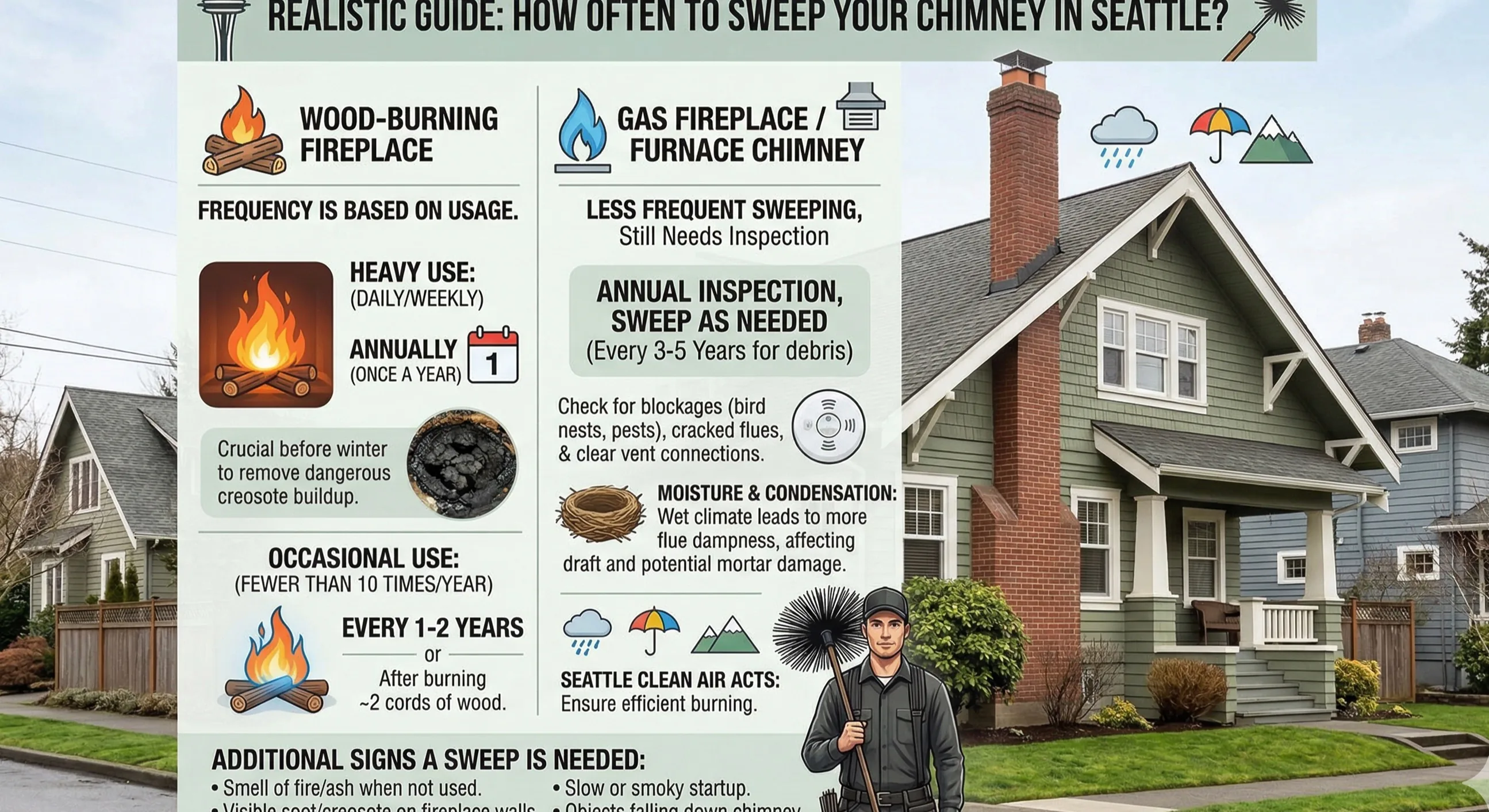
National guidance (NFPA 211) recommends annual chimney sweeping for regularly used fireplaces. In Seattle's climate, that recommendation deserves more nuance. Our 152 annual rain days mean chimneys that sit unused over summer accumulate not just creosote but also moisture-related debris: moss seeds from overhanging trees, animal nesting materials, and mineral deposits from condensation cycling.
Seattle-specific sweep frequency guidelines based on our service data:
- Active wood-burning fireplace (3+ fires/week in winter): Annual sweep, ideally in September before heating season
- Occasional use (1–2 fires/week): Every 1–2 years, or when creosote depth exceeds 1/8 inch
- Gas fireplace: Every 2–3 years for cleaning; annual inspection still recommended
- Seasonal rental or vacation home: Inspect and sweep before each heating season regardless of use
Seattle homes near heavy tree canopy — Seward Park, Ravenna, Maple Leaf — need more frequent cap and flue checks for debris accumulation. A quick chimney cap installation significantly reduces debris ingress between sweeps.
Red Flags When Hiring a Chimney Sweep in Seattle
The chimney service industry in Washington State has a low barrier to entry — anyone can call themselves a chimney sweep. Protecting yourself means knowing the warning signs of an unqualified or predatory operator.
- Unsolicited door-to-door offers: Legitimate chimney companies don't cold-knock Seattle neighborhoods offering $49 sweeps. These are typically bait-and-switch operations that manufacture repair needs.
- No CSIA or NFI certification: Ask for the technician's Chimney Safety Institute of America (CSIA) certification number. It's verifiable online.
- No written estimate before work begins: Any company that starts work without a written scope and price is setting up for unauthorized charges.
- High-pressure upselling with photos you can't verify: Some bad actors show homeowners stock photos of chimney damage and claim it's from your chimney. Always ask to see the camera footage in real time.
- No business address or licensing: Washington State requires contractor registration (L&I). Verify at verify.lni.wa.gov before booking.
Is a Chimney Sweep Tax Deductible in Washington State?
For most Seattle homeowners using a fireplace for primary heating supplementation, chimney sweeping is a home maintenance expense — not directly tax deductible on federal returns for a primary residence. However, there are exceptions worth knowing:
- Rental properties: Chimney sweep and inspection costs for a rental home or investment property are deductible as a maintenance expense on Schedule E.
- Home office deduction: If you claim a home office, a proportional share of home maintenance costs may be deductible — consult your tax advisor.
- Energy efficiency credits: Conversion from wood to a qualifying gas fireplace insert may trigger federal tax credits under the Inflation Reduction Act. Ask us about gas fireplace upgrade options.
We're chimney experts, not tax advisors — always consult a CPA for specific tax questions. But it's worth knowing your options before assuming maintenance costs offer no financial benefit.
Book a Chimney Sweep in Seattle with Seattle Chimney Pros
Our certified technicians serve all 45 Seattle metro neighborhoods, from Bellevue to Renton to North Seattle. Every sweep includes a post-service written report, HEPA vacuum containment so your home stays clean, and honest findings — no manufactured repair recommendations.
May is an excellent time to book: post-heating-season sweeps remove the full winter's accumulation, and scheduling is easier than the fall rush. Waiting until September means 6–8 week backlogs as every Seattle homeowner tries to book before first fire.
Call (253) 429-8006 or schedule online for a same-week appointment. We offer transparent flat-rate pricing — you'll know the cost before we start.
Need professional help?
Our professionally trained team is ready. Free estimate, 30-minute response.