How Often Should You Get Your Chimney Swept in Seattle? (2026 Guide)
How Often Should You Get Your Chimney Swept in Seattle?
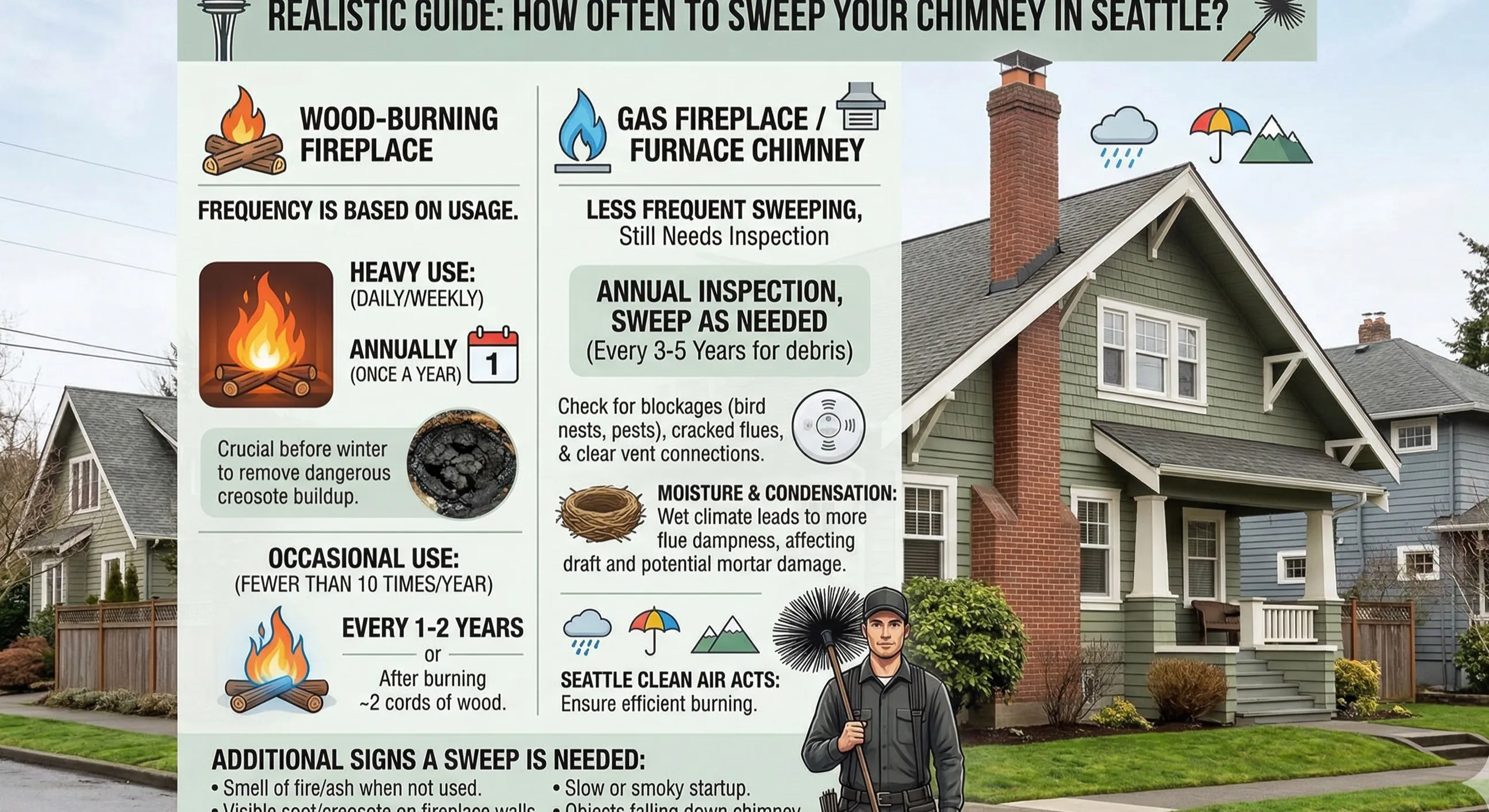
In Seattle, wood-burning chimneys should be swept at least once per year — and twice per year if you burn more than three fires per week or use wood with moisture content above 20%. Current as of June 2026, NFPA 211 sets the national baseline at annual inspection and cleaning when deposits exceed 1/8 inch of creosote. Based on over 850 chimney sweeps our team completed across the Seattle metro last year, roughly 38% of homes we serviced had buildup heavy enough to warrant a second cleaning mid-season. Seattle's 152 annual rain days, seven-month heating season, and widespread use of damp firewood push creosote accumulation rates well above national averages. Gas fireplaces don't produce creosote but still require annual professional service for venting and CO safety checks.
What Happened When Marcus T. Skipped Two Sweeping Seasons in Greenwood
Marcus T. bought his 1952 craftsman in Greenwood in late 2022 and used the wood-burning fireplace every weekend from October through March. He assumed the previous owners had kept up on maintenance. By spring 2025, a neighbor mentioned seeing our truck on the block and suggested Marcus get an inspection before another heating season rolled around.
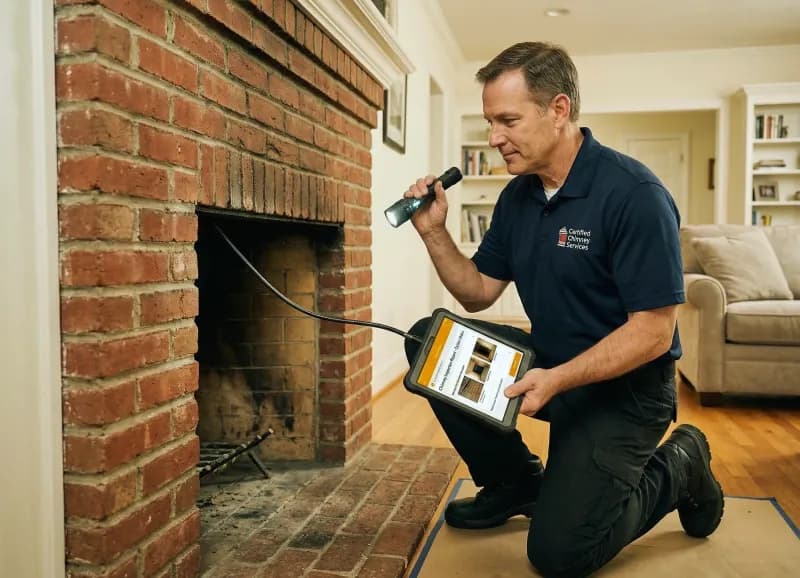
When our tech Ryan arrived, the visit started like dozens of others that month — a charming older home, a well-used firebox, and an owner who genuinely didn't know what to expect. Ryan ran a camera up the flue and called Marcus over to the monitor.
'Stage 2 creosote, going on Stage 3 in the upper third,' Ryan told him. 'See that shiny, almost glazed-looking layer? That's two full seasons of buildup from burning damp wood. It's sitting at about a quarter inch in some spots — double the threshold where we'd say clean it now.'
The sweep took nearly two hours instead of the typical 75 minutes because of the volume of material. Ryan also found a cracked clay tile at the 8-foot mark — hidden under the creosote layer and invisible until cleaned. Marcus paid $289 for the sweep and $340 for a partial chimney relining repair on the cracked tile section. Total: $629. Had he swept annually, the sweep would have cost $219 and the liner crack likely caught before it widened.
'Two missed sweeps turned a $219 job into a $629 job. The creosote was hiding a liner crack that could have seeded a chimney fire this fall. That's exactly the scenario annual sweeping is designed to prevent.'
— Ryan, Technician, Seattle Chimney Pros
Marcus is now scheduled for an annual sweep every August — before the fall rush and while dry weather allows for any follow-up masonry work if needed.
What Does NFPA 211 Actually Require for Chimney Sweeping?
NFPA 211 is the authoritative national standard for chimneys and venting systems. It requires that chimneys be inspected at least once per year and cleaned whenever deposits reach 1/8 inch (3mm) in thickness. The Chimney Safety Institute of America (CSIA) — the certification body for professional sweeps — aligns with this standard and adds that any glazed or Stage 2 creosote warrants immediate cleaning regardless of thickness.
Key points Seattle homeowners often misunderstand:
- Annual inspection is required even if you never use the fireplace. Animal nests, moisture intrusion, and structural settling create hazards year-round.
- 'Clean when necessary' is not a loophole to skip cleaning. In Seattle, 'necessary' almost always means annually given our burning habits and climate.
- CSIA-certified sweeps are trained to assess creosote stage, not just thickness. Stage 2 (shiny, tar-like) and Stage 3 (puffed, honeycombed) creosote require specialized removal — standard brushing alone won't do it.
- Washington State does not have a separate chimney code beyond the adopted International Residential Code (IRC) and NFPA 211, but some Seattle permits for new gas appliances require a documented sweep and inspection before sign-off.
Why Does Seattle's Climate Make Sweeping More Urgent Than the National Average?
Seattle's combination of a long heating season, persistently damp firewood, and cool flue temperatures creates a perfect environment for accelerated creosote buildup. Here's what our 14 years of service across 45 Seattle-area communities has shown us:
Seven-Month Heating Season
Seattle homeowners run fires from October through April — nearly double the three-to-four month season in milder climates. More fires mean more combustion byproducts deposited on the flue walls. A home in Phoenix burning 20 fires per year produces a fraction of the creosote of a Seattle home burning 90 fires per year.
Damp Firewood Is Everywhere
Seattle averages 152 rain days per year. Firewood stored outdoors without a covered rack routinely reaches 35-45% moisture content — well above the 20% threshold for clean burning. Burning high-moisture wood produces two to three times more creosote per fire because the energy that should go into clean combustion is wasted evaporating water. Based on our inspection data, approximately 55% of Seattle homes we visit are burning wood with moisture content above the recommended threshold.
Cool Flues, Faster Condensation
Seattle's mild-but-cool temperatures mean chimney flues stay relatively cool, especially during the shoulder months of October and April. Cooler flue surfaces cause smoke to condense faster into creosote before it can exit. Strong draft from extreme cold — which would carry more particulates out — simply doesn't develop here the way it does in colder climates.
Rain Amplifies the Problem
Seattle's rain doesn't just affect firewood. It enters the chimney through cracked crowns, worn flashing, and porous brick, mixing with soot and creosote inside the flue. This wet creosote is stickier, denser, and harder to remove than dry deposits. It also carries acids that accelerate liner degradation — turning what would be a routine sweep into a potential chimney relining conversation.
How Often Should You Sweep Based on Your Fireplace Type and Usage?
Not all chimneys need the same sweeping schedule. Use this breakdown to find your situation:
| Fireplace Type / Usage | Recommended Frequency | Best Time to Schedule |
|---|---|---|
| Wood-burning, 1-2 fires per week | Once per year | May–August |
| Wood-burning, 3+ fires per week | Twice per year | August + January |
| Wood-burning with damp/unseasoned wood | Twice per year (minimum) | September + January |
| Wood stove insert | Once per year; twice if heavy use | August–September |
| Gas fireplace (any usage) | Annual service (no creosote sweep) | Spring or early fall |
| Fireplace not used at all | Annual inspection (no sweep needed if clean) | Any time |
If you're unsure about your firewood moisture content, a wood moisture meter (available at hardware stores for under $20) takes the guesswork out. Insert the probes into a freshly split face of the wood — readings above 20% mean you need drier wood and likely more frequent sweeping.
What Are the Warning Signs That Your Chimney Is Overdue for a Sweep?
Don't wait for your scheduled annual cleaning if you notice any of the following. These are signals that buildup has reached a level requiring immediate attention — stop using the fireplace until a professional can assess it.
- Smoke entering the living room during a fire. The flue may be partially blocked by creosote, a collapsed tile, or an animal nest. This is also a carbon monoxide risk — extinguish the fire and ventilate the room immediately.
- A strong tar or acrid odor, especially on humid days. Seattle's moisture amplifies creosote smell. If your living room smells like a campfire even when the fireplace hasn't been used, buildup is off-gassing through the masonry.
- Black flakes or chunks falling into the firebox. Creosote that has built up thick enough to detach from the flue walls is a sign of Stage 2 or Stage 3 buildup — the most dangerous and hardest-to-remove category. Learn more about the stages of creosote and their dangers.
- Fires that are hard to light or won't draw properly. Restricted airflow caused by creosote narrowing the flue diameter makes it hard to establish and maintain a good fire. Poor draft is also a smoke backdraft risk.
- Visible dark, shiny, or puffed coating when you look up the flue. Use a flashlight and look past the open damper. A clean flue shows the terra cotta or steel liner surface clearly. If you see a dark, irregular coating, it's time to call.
What Does a Professional Chimney Sweep Include — and What Does It Cost in Seattle?
When you schedule a professional chimney sweep with a CSIA-certified company, here's what the service covers and what you can expect to pay in the Seattle metro in 2026:
- Pre-sweep visual inspection of the firebox, damper, smoke shelf, and flue opening
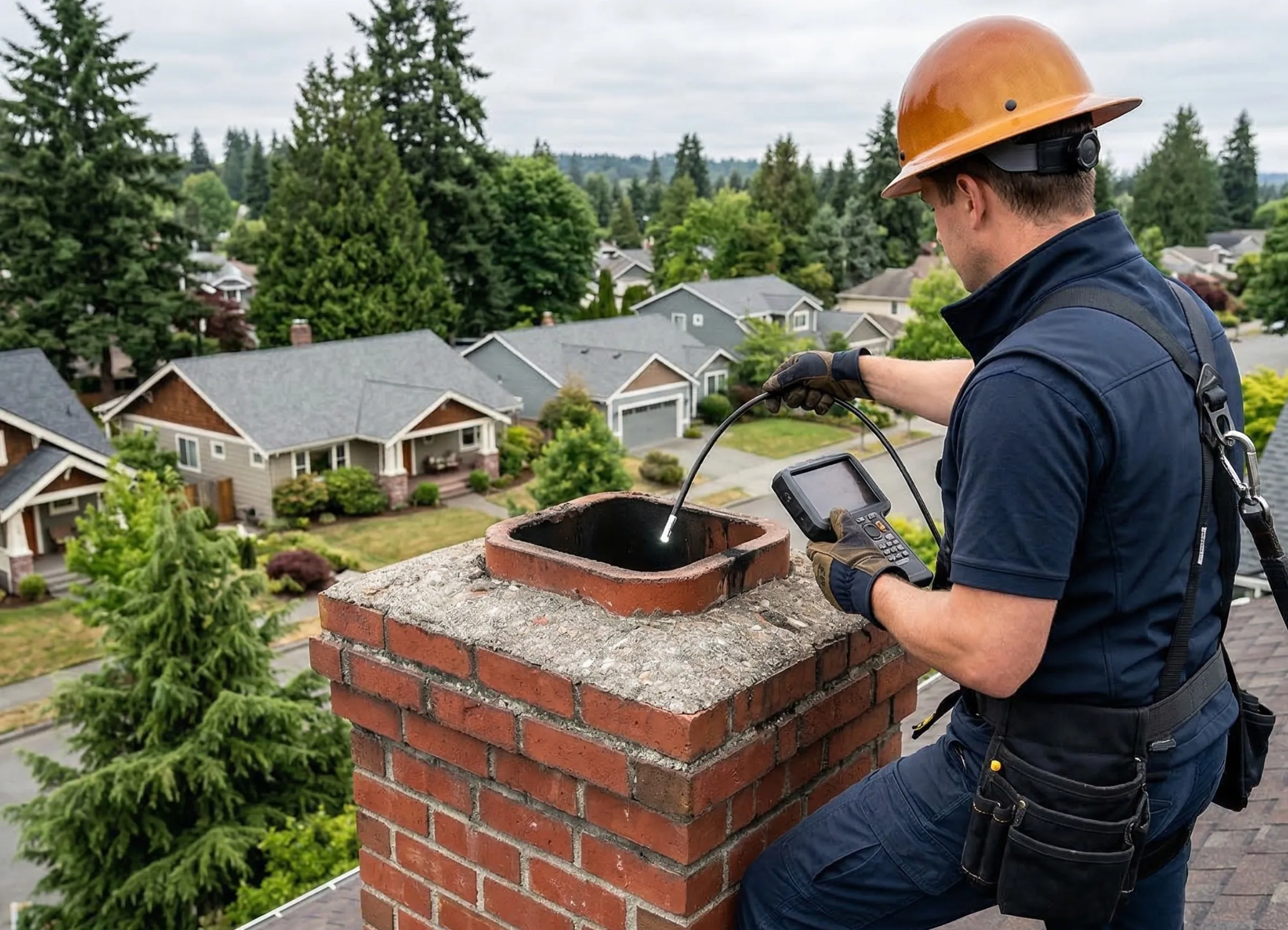
- Rooftop inspection of the chimney crown, cap, flashing, and visible masonry
- Full flue brushing with rotary brushes sized to your specific flue diameter, worked from the top down
- Smoke shelf cleaning — the ledge behind the damper that collects fallen debris and is a common neglect point for budget services
- HEPA vacuum cleanup at the firebox to contain all dislodged material inside the home
- Damper operation and seal check
- Post-sweep flue camera assessment (included with most Level 1 inspections — ask if it's part of the quote)
- Written condition report with photos
In Seattle, a standard single-flue sweep costs between $179 and $329. Based on our pricing structure in 2026, the average job we complete runs $219 for a single flue with standard buildup. Homes in neighborhoods like Queen Anne or Capitol Hill with three-story or taller chimneys often fall in the $269-$329 range due to extended ladder setups. Combined sweep-plus-inspection packages run $299-$450 and represent the best value if you haven't had a documented inspection recently. See our full chimney inspection services for what each level covers.
When Is the Best Time of Year to Schedule a Chimney Sweep in Seattle?
Timing your sweep correctly saves you money, ensures better availability, and gives you time to address any issues before they become urgent. Here's how the Seattle scheduling calendar breaks down:
- May–August (best): Slowest period for chimney companies — shortest wait times, most flexible scheduling. Dry weather is ideal for any masonry repairs the sweep reveals. You'll have the full summer to address liner issues, repoint mortar, or install a new cap before October.
- September (good): Still decent availability. Last reliable month for masonry work before Seattle's rains return. A September sweep gives you a clean flue heading into the heating season.
- October–November (busy — book 2-3 weeks ahead): Everyone schedules at once. Wait times stretch to two to three weeks. If any repairs are needed, you may be starting the heating season with an unresolved issue.
- December–February (emergency and reactive only): We're at full capacity with inspections and repairs. Scheduling a routine sweep during this window is difficult. If you find yourself calling in January, it's because something went wrong — exactly what annual sweeping prevents.
Our standing recommendation: book your sweep in June, July, or August. You'll get a faster appointment, we'll have time to complete any needed repairs before the rains return, and you'll enter the October heating season with full confidence. Review our fall chimney maintenance checklist to pair with your sweep for complete season prep.
Schedule Your Seattle Chimney Sweep Before the Fall Rush
For most Seattle homeowners burning wood regularly, annual sweeping in late summer is the right call — and the most cost-effective one. Skipping even one season, as Marcus found in Greenwood, can turn a $219 routine job into a multi-hundred-dollar repair plus a liner crack you didn't know existed. If you're burning three or more fires per week or suspect your firewood moisture is high, a second mid-season sweep in January or February is money well spent compared to a chimney fire or carbon monoxide incident.
Our CSIA-certified team serves 45 neighborhoods across the Seattle metro area. Call us at (206) 278-2924 or book your sweep online — appointments in June and July are going fast as early-bird homeowners beat the fall surge.
Need professional help?
Our professionally trained team is ready. $99 inspection credited toward repairs, 30-minute response.