Creosote in Your Chimney: The 3 Stages, Dangers & Removal in 2026
What Is Creosote and How Dangerous Is It in 2026?
Creosote is a black, tar-like byproduct that forms when wood smoke condenses on the cool inner walls of your chimney flue — and it is the single leading cause of chimney fires in the United States according to the Chimney Safety Institute of America (CSIA). In Seattle, creosote builds up faster than in drier climates: based on over 850 chimney sweeps and inspections our team completed across the Seattle metro area in the past 12 months, roughly 34% of chimneys we inspect show Stage 2 or Stage 3 deposits — compared to an industry average closer to 20%. A flue with just 1/8 inch of Stage 3 glazed creosote can ignite at temperatures above 451°F, triggering a chimney fire that can reach 2,000°F and crack your liner, char your framing, and spread to the rest of your home. Professional creosote removal in Seattle ranges from $199 for a standard Stage 1 sweep to $500+ for Stage 3 chemical treatment, current as of June 2026.
What We Found in Marcus T.'s Ravenna Chimney Last Spring
Marcus T. had been burning wood in his 1952 Ravenna bungalow every winter weekend for four years without a single chimney cleaning. He reached out in early April after noticing a sharp, acrid smell lingering in the living room even on nights the fireplace wasn't lit. A neighbor had spotted our truck on the next block over and passed along our number.
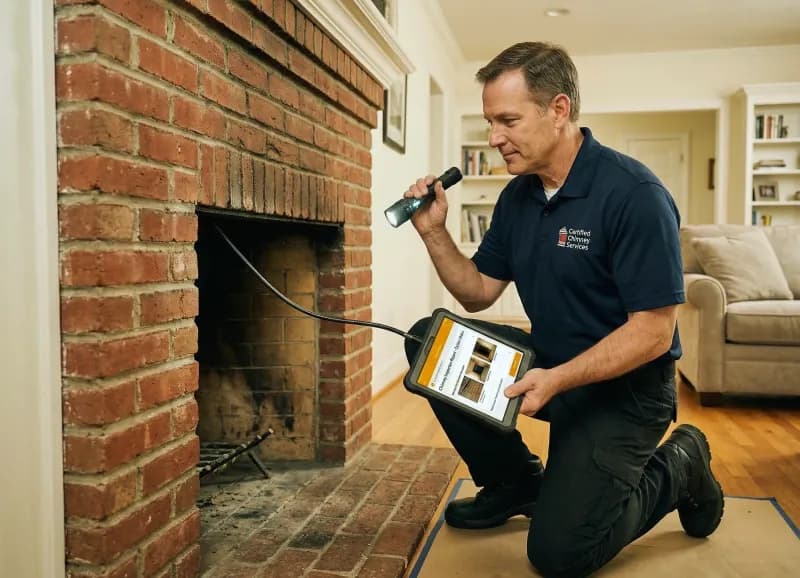
Ryan, one of our CSIA-certified technicians, arrived on a gray Tuesday morning with a camera scope and full sweep kit. Before he even sent the camera up, he noticed the telltale signs at the firebox: a glossy black residue coating the damper frame and a faint crackling sound when he tapped the lower flue tiles. The camera confirmed his suspicion within seconds.
'The lower third of the flue was coated in Stage 3 glazed creosote — that hard, black-glass look. It had narrowed the effective flue diameter by nearly 30%. One hot fire on a cold night and that flue would have been a torch. Marcus had no idea how close he was to a chimney fire.'
— Ryan, CSIA-Certified Technician, Seattle Chimney Pros
Ryan walked Marcus through the scope footage on his tablet, pointing out the shiny, hardened glaze versus the flaky soot higher up the flue. The job required a two-step process: a chemical treatment applied the prior evening visit to begin breaking down the Stage 3 glaze, followed by a full rotary mechanical cleaning the next morning. Total time on-site across both visits: about 3.5 hours. Total cost: $465, which included a Level 2 inspection with the camera scope and a new stainless damper seal.
'I genuinely thought a cleaning log once a year was enough,' Marcus said afterward. 'Seeing it on the camera changed my whole perspective.' He is now scheduled for an annual sweep every September before the burn season begins.
What Are the 3 Stages of Creosote Buildup?
Creosote progresses through three distinct stages, each more dangerous and more expensive to remove than the last. Understanding which stage you have determines the cleaning method and cost.
| Stage | Appearance | Danger Level | Removal Method | Seattle Cost (2026) |
|---|---|---|---|---|
| Stage 1 | Flaky, dusty gray-black soot | Low | Standard brush sweep | $199–$299 |
| Stage 2 | Shiny, tar-like dense deposits | Moderate–High | Rotary power cleaning | $299–$399 |
| Stage 3 | Hardened black glaze, like obsidian | Severe | Chemical treatment + mechanical cleaning | $400–$550+ |
Stage 1 creosote is the easily-removed flaky soot you see in a well-maintained chimney. Annual sweeps prevent Stage 1 from ever advancing further. Stage 2 has that characteristic shiny, tar-like look — it forms when combustion temperatures run low, which happens frequently in Seattle because of damp firewood and smoldering fires. Standard brushes won't cut through it; rotary chain whips or power cleaning heads are required. Stage 3 is the most dangerous form: a hardened, glassy coating that is essentially concentrated fuel. It requires a chemical depolymerizer to soften the glaze before mechanical removal can occur, and in severe cases the only safe remedy is full chimney relining because the liner itself may be compromised.
Why Does Seattle's Climate Accelerate Creosote Buildup?
Seattle's weather creates a perfect storm for creosote accumulation. In our experience across hundreds of Seattle-area homes, we consistently see heavier buildup here than in drier inland cities — and there are four clear reasons why.
- Damp firewood. Wood stored outdoors in the Pacific Northwest absorbs moisture from rain and fog. Burning wood with moisture content above 20% produces thick, cool smoke that condenses into creosote two to three times faster than dry wood. A moisture meter is a worthwhile $20 investment before every burn season.
- Long burn season. Seattle homeowners typically burn wood from October through April — seven months of continuous accumulation versus four or five months in most of the country.
- Smoldering, low-air fires. Many Seattle residents burn slow, low fires for ambiance rather than hot, efficient fires for heat. Restricted airflow and low combustion temperatures are the fastest path to Stage 2 buildup.
- Cool flue temperatures. Seattle's mild but persistently cool ambient air means flue walls stay cooler on average, lowering the point at which smoke condenses into creosote. This is especially pronounced in older brick chimneys with no insulation around the flue.
- Infrequent cleaning. Last year, 41% of first-time customers we serviced in neighborhoods like Ravenna, Lake City, and Greenwood had not had a professional sweep in three or more years.
How Can You Tell Which Creosote Stage You Have?
A professional camera inspection is the only way to accurately stage creosote throughout the entire flue — but there are warning signs you can observe from the firebox level.
- Stage 1 signs: Light gray or black dusty deposits visible on the damper frame. No shine, no odor except mild wood smoke.
- Stage 2 signs: Shiny or sticky-looking black deposits on the damper. Stronger acrid smell even when fireplace is cold. Smoke may take longer to draft upward when you first light a fire.
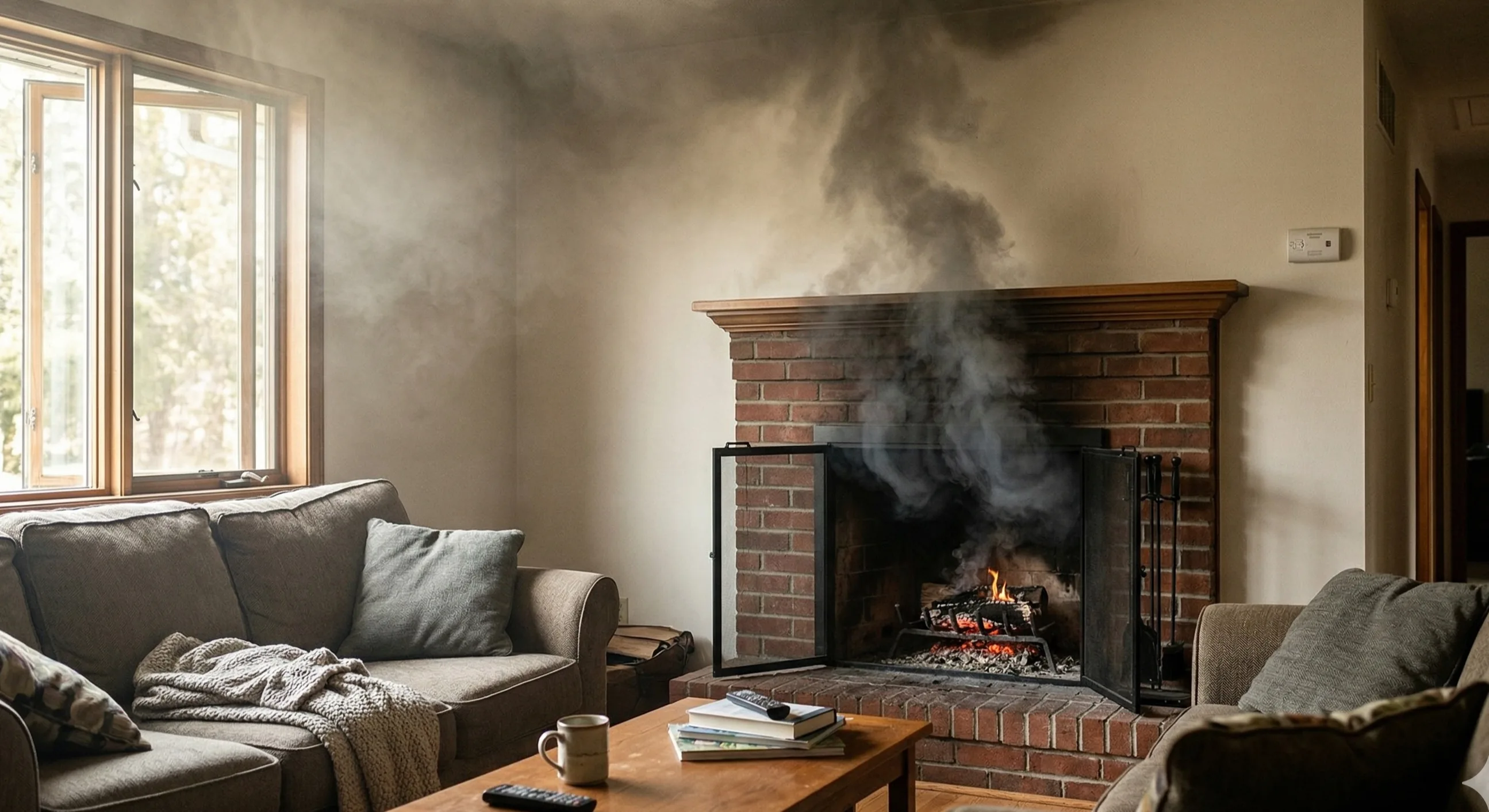
- Stage 3 signs: Hard, glassy black coating. Persistent chemical or oily smell in the room regardless of fireplace use. Smoke may back-draft into the room during startup. Visible tar drips or runs on the firebox walls.
If you are seeing Stage 2 or Stage 3 indicators, do not light another fire. Schedule a professional chimney inspection before the next use. A chimney fire that starts in your flue can reach temperatures high enough to crack clay tile liners, melt mortar joints, and ignite the wood framing behind your firebox wall — all without producing visible flames outside the chimney.
What Should You Do Right Now If You Suspect Creosote Buildup?
If it has been more than a year since your last professional cleaning, or if you are seeing any of the Stage 2 or Stage 3 warning signs above, take these steps immediately.
- Stop using the fireplace. Do not light another fire until the chimney has been inspected and cleaned. The risk of a chimney fire is not worth the warmth.
- Inspect the firebox from below. Open the damper and look up with a flashlight. If you see shiny black deposits rather than dull gray soot, that is a Stage 2 or 3 indicator.
- Check for smoke or draft problems. If your fireplace has been backing up smoke into the room, a narrowed flue from creosote buildup is a primary suspect. Read our guide on smoke backing up into the house for more causes.
- Schedule a Level 1 or Level 2 inspection. A Level 1 inspection covers accessible areas and is sufficient for annually-maintained chimneys. If you suspect Stage 3 buildup or have not had an inspection in three or more years, request a Level 2 with camera scope. Learn more about inspection levels explained.
- Ask about liner condition during the sweep. Stage 3 creosote removal often reveals cracked or spalled flue tiles underneath. If your liner is compromised, our team will walk you through chimney relining options and costs before any further work proceeds.
How Can You Prevent Creosote From Reaching Stage 2 or 3?
Prevention is far less expensive than remediation. The following practices, applied consistently, keep most Seattle chimneys at Stage 1 buildup or below — meaning a standard annual sweep is all you ever need.
- Burn only seasoned hardwood. Alder, Douglas fir, and big-leaf maple are common Pacific Northwest choices. Season wood for at least 6–12 months and store it off the ground under a cover that allows airflow on the sides. Target moisture content below 20%.
- Build hot fires, not smoldering ones. Use adequate kindling to establish a hot initial burn, keep the damper fully open, and add logs before the fire dies down rather than letting it smolder. A fire burning at 300°F produces far more creosote than one burning at 600°F.
- Keep the damper fully open while burning. Partially closing the damper to slow a fire is one of the fastest ways to accumulate Stage 2 deposits.
- Schedule annual professional cleaning. The NFPA 211 standard recommends inspection and cleaning at least once per year for regularly-used wood-burning appliances. In Seattle, where the burn season is long and firewood is often damp, we recommend scheduling your sweep in September before the season begins — not after.
- Avoid treated or painted wood, garbage, or cardboard. These materials release compounds that accelerate Stage 2 and Stage 3 deposit formation and can release toxic gases.
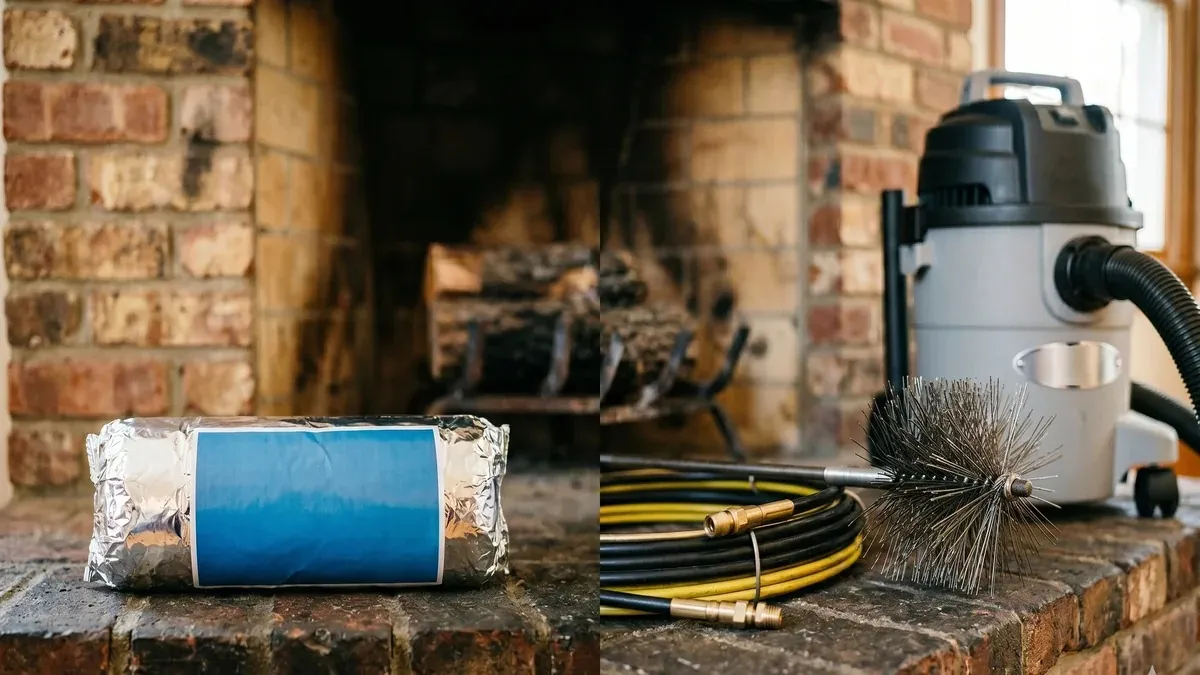
Chimney cleaning logs (like Creosote Sweeping Log) can marginally reduce Stage 1 deposits between professional cleanings, but they do not remove Stage 2 or Stage 3 buildup and should never replace a professional sweep. For a full breakdown, see our article on whether chimney cleaning logs actually work.
Ready to Find Out What Stage Your Flue Is At?
If your chimney hasn't been swept in the past 12 months — or if you've noticed any of the Stage 2 or Stage 3 warning signs — the safest next step is a professional inspection before you burn again this fall. Our CSIA-certified team serves Seattle and 45 surrounding communities, and we will tell you honestly what stage your creosote is at and what it will cost to address it before recommending any work. Call us at (206) 278-2924 or request a sweep online — most appointments are available within the week.
Need professional help?
Our professionally trained team is ready. $99 inspection credited toward repairs, 30-minute response.