Fireplace Insert vs. New Fireplace in Seattle: 2026 Guide
Fireplace Insert vs. New Fireplace: The Short Answer for Seattle Homeowners
A fireplace insert — a self-contained gas, wood, or pellet unit that slides into your existing firebox — costs between $3,000 and $8,500 installed and can be completed in 1–2 days. A full fireplace replacement, which removes the old system entirely and installs a new appliance with fresh venting, runs $8,000 to $20,000 or more and typically takes 1–3 weeks including permits. Based on over 340 fireplace upgrade consultations our team has completed across the Seattle metro area since 2022, roughly 70% of homeowners are better served by an insert — it's lower cost, faster, and preserves the original masonry that gives older Seattle homes their character. The remaining 30% genuinely need a replacement, usually because the existing chimney is structurally compromised or the homeowner wants a design that simply can't be achieved with an insert. Current as of June 2026.
A Real Decision: Marcus T. in Magnolia
Marcus T. had been putting off dealing with his fireplace for two winters running. The 1952 brick fireplace in his Magnolia split-level looked fine from the living room, but every time he lit a fire the house barely got warmer — and his heating bill stayed high. His neighbor had recently gotten a gas insert installed by our crew, so Marcus called and booked a consultation.
Alex arrived on a Tuesday morning in late February with a camera scope and a moisture meter. The existing masonry was in solid shape — no cracks in the firebox, no signs of water intrusion in the liner, damper operating smoothly. The flue measured 13 inches by 13 inches, comfortably within spec for a mid-sized gas insert. Alex walked Marcus through both options at the fireplace itself, pointing out exactly what would change with each approach.
'The masonry here is genuinely good — someone took care of this chimney. Tearing it out would be throwing away a real asset. An insert drops in, we line the flue, and you're done in a day and a half. You'll go from a fireplace that's maybe 12% efficient to one that's pushing 78%. That's the smart move for this house.'
— Alex, Lead Technician, Seattle Chimney Pros
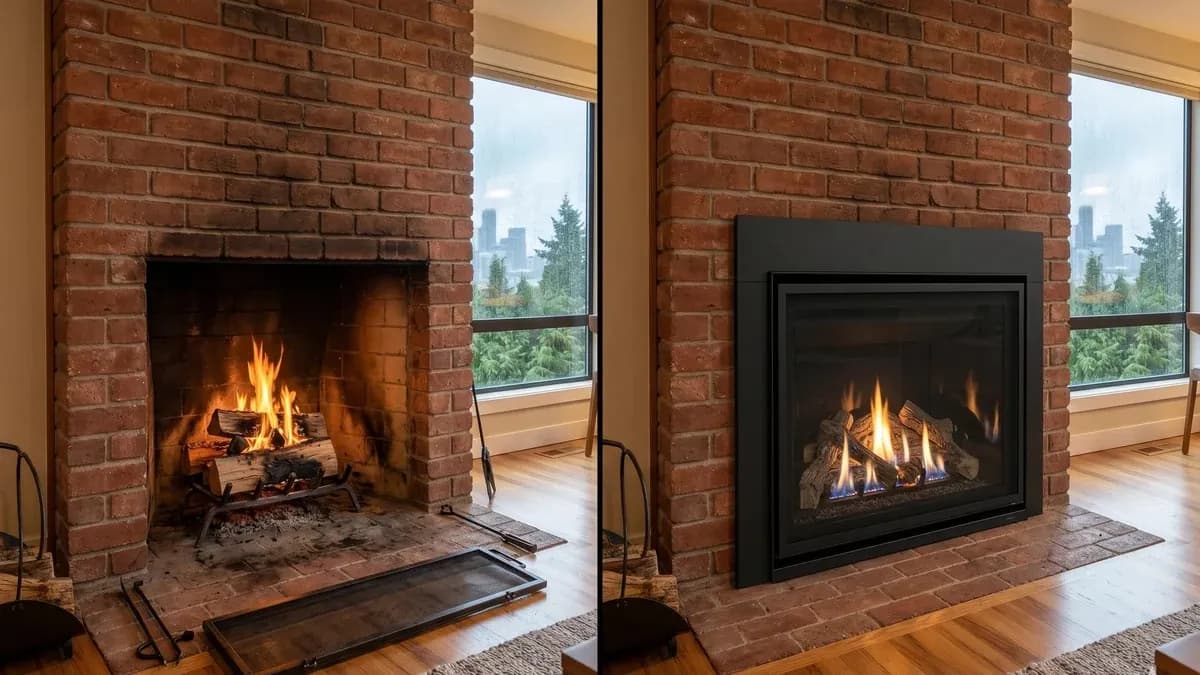
Marcus opted for a mid-range direct-vent gas insert with a standing pilot and a realistic log set. The install — including a new stainless steel liner — took about 9 hours across two mornings. Total cost: $6,200. By the following weekend, Marcus had the first truly warm fire he'd had in that living room. 'It's like a completely different house,' he said. 'I kept turning the thermostat down because I didn't need it anymore.'
What Exactly Is a Fireplace Insert?
A fireplace insert is a closed-combustion appliance — gas, wood-burning, or pellet — built to slide directly into an existing masonry or factory-built firebox. It seals the opening with a surround or faceplate, vents through a new liner running inside the existing chimney, and converts an open-hearth fireplace (10–15% efficient) into a sealed heating appliance (65–85% efficient depending on fuel type).
Inserts work because they contain the combustion process. An open fireplace draws conditioned room air up the flue even when a fire isn't burning — a gas insert eliminates that draft entirely when off, and captures almost all combustion heat when on. For Seattle's long burning season (October through April), that efficiency difference is significant.
- Gas inserts: Most popular in Seattle; natural gas is widely available, PSE rebates apply, no wood storage required, unrestricted burn days
- Wood-burning inserts: High heat output, lower fuel cost if you have a wood source, subject to Seattle/Puget Sound Clean Air Agency burn restrictions on Spare the Air days
- Pellet inserts: Automated fuel feed, consistent heat, EPA-certified clean burn, requires electricity for auger and controls
What Does a Full Fireplace Replacement Actually Involve?
A full replacement means removing the existing firebox and potentially the chimney above it, then installing a new appliance — most commonly a direct-vent gas fireplace — with its own dedicated venting that terminates through an exterior wall or a new chase. This approach isn't just a bigger insert job; it's closer to a small construction project.
The process typically includes demolition of the existing firebox and surround, structural assessment of the floor and wall framing, installation of the new appliance, new venting (either through the existing chimney shell or through a new exterior penetration), drywall repair, surround and mantel finishing, and permit inspection. Seattle DPD requires permits for any new venting penetration or structural modification — factor 2–4 weeks for permit processing before work can begin.
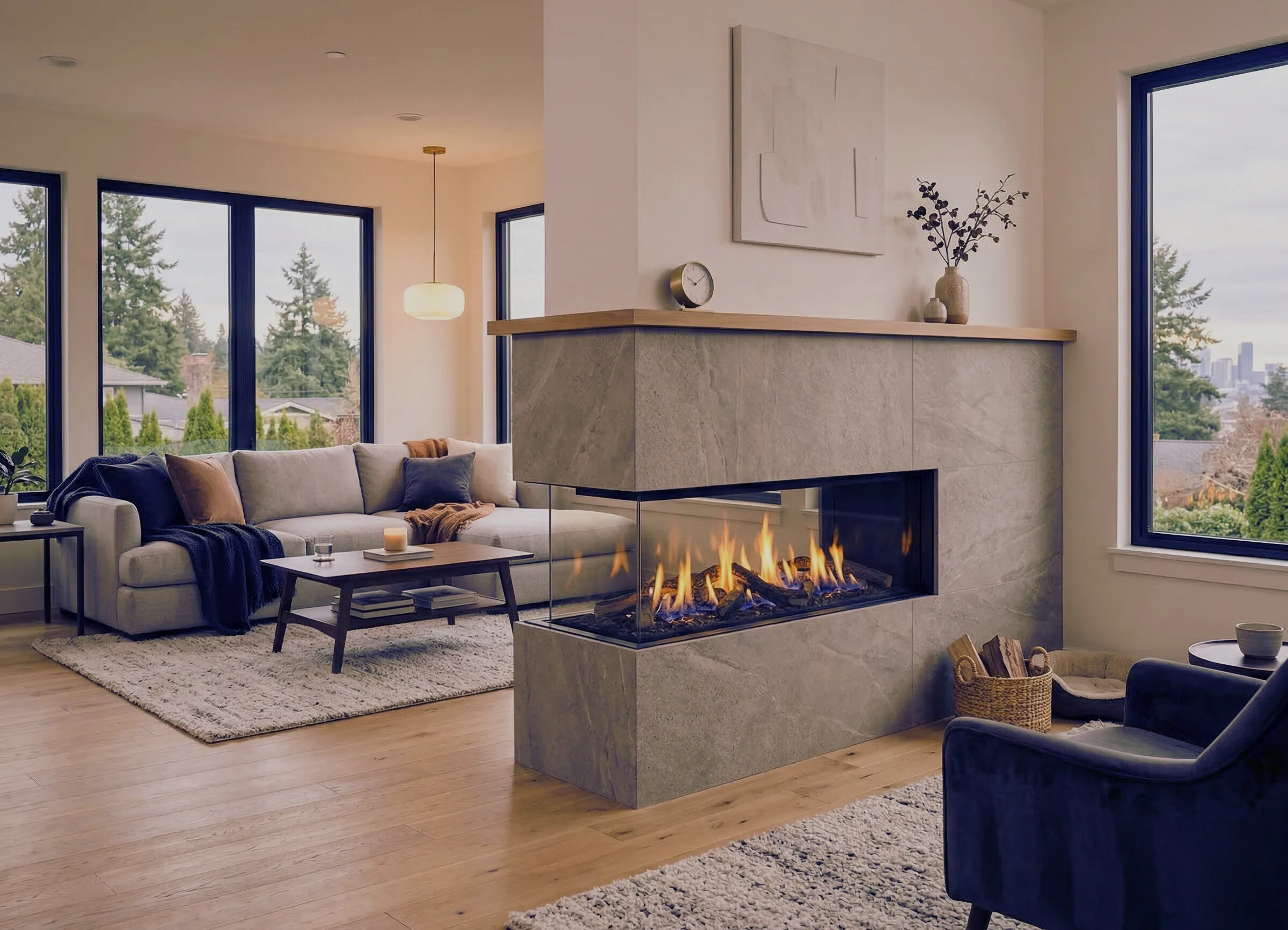
Full replacements make sense in three main scenarios: the existing chimney is structurally compromised beyond cost-effective repair; the homeowner wants a design (linear, see-through, hidden) that can't be achieved with a standard firebox opening; or the home is a newer build with no existing masonry chimney and the plan is to add a fireplace from scratch.
How Do the Costs Compare in Seattle in 2026?
Here is a full breakdown based on jobs our team has completed and quoted in the Seattle metro area this year. All figures include labor, materials, liner (where required), and standard permit fees where applicable.
| Option | Installed Cost | Typical Timeline | Permit Required? |
|---|---|---|---|
| Gas insert (basic, no liner needed) | $3,000 – $5,200 | 1 day | Usually no |
| Gas insert (with new stainless liner) | $5,200 – $8,500 | 1–2 days | Usually no |
| Wood-burning insert | $3,500 – $6,500 | 1–2 days | Usually no |
| Pellet insert | $4,000 – $6,200 | 1–2 days | Usually no |
| New direct-vent gas fireplace | $8,000 – $13,000 | 1–2 weeks | Yes |
| New linear gas fireplace | $12,000 – $19,000 | 2–3 weeks | Yes |
| Full masonry rebuild + new appliance | $15,000 – $28,000+ | 3–5 weeks | Yes |
The liner cost is the most commonly missed variable when homeowners shop for inserts online. If your existing clay tile liner has cracks or is undersized for the insert's BTU output, a new stainless steel liner is required by NFPA 211 and Washington State code. In our experience, about 55% of Seattle homes older than 30 years need a new liner when installing a gas insert — it adds $1,500–$2,800 to the project but is not optional.
Which Option Is Right for Your Seattle Home?
The right answer depends on four factors: the condition of your existing chimney, your design goals, your budget, and your timeline. Here is a straightforward decision framework based on what we see in the field.
- Get a Level II inspection first. Before committing to either path, have the existing chimney scoped with a camera. If the liner is sound and the masonry is intact, an insert is almost always the better value. If the inspection reveals structural damage, spalling brick inside the flue, or a failed liner, the calculus shifts.
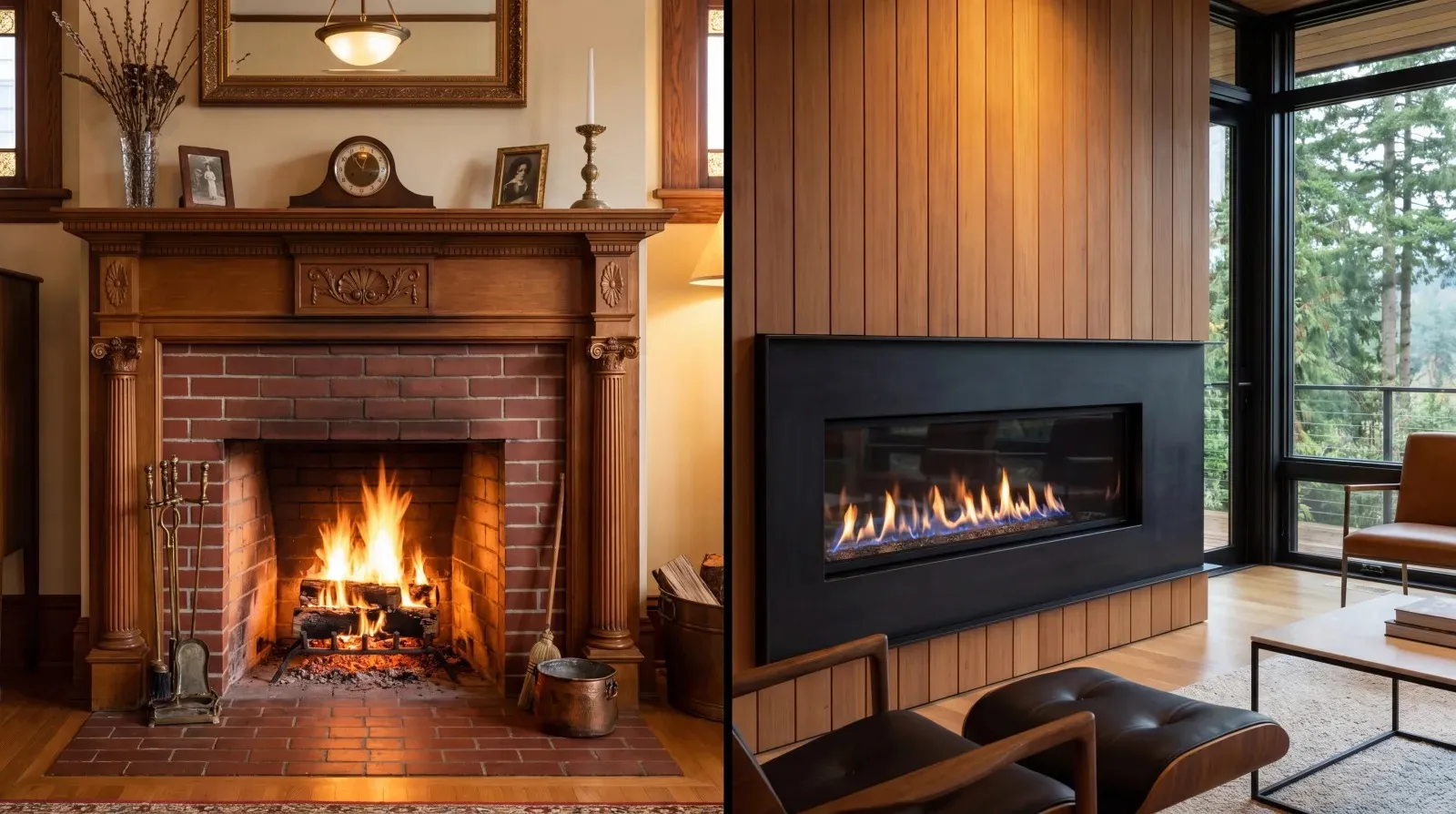
- Define your design goal. If you want to keep the traditional look of a brick surround and mantel, an insert preserves that perfectly. If you're remodeling and want a floor-to-ceiling stone surround with a linear flame, only a full replacement gets you there.
- Set a realistic budget range. If $4,000–$8,000 is your ceiling, an insert is your only option. If you have $10,000–$20,000 and a specific vision, a replacement becomes viable.
- Consider your timeline. Inserts can often be installed within a week of your consultation. Full replacements with permits realistically take 4–8 weeks from consultation to first fire.
- Check historic district rules. If your home is in a Seattle landmark district or a neighborhood with design review requirements — Volunteer Park, Harvard-Belmont, parts of Capitol Hill — exterior changes to a chimney chase or new wall penetrations may require additional approval. Inserts, which use the existing chimney, almost never trigger these requirements.
What Seattle-Specific Factors Should You Know?
A few local realities that don't show up in national comparison guides:
- Puget Sound Energy rebates: PSE currently offers $300–$800 rebates for qualifying high-efficiency gas insert installations. Our team handles the rebate paperwork as part of every gas insert job — it's included in our process, not an afterthought.
- Wood-burning restrictions: The Puget Sound Clean Air Agency issues burn bans on days when air quality is poor, typically 10–20 days per winter. Gas inserts operate on all days with no restrictions. If you burn frequently and want maximum flexibility, gas is the practical choice in the Seattle market.
- Seismic considerations: Seattle sits in a significant seismic zone. Unreinforced masonry chimneys — common in pre-1960 homes in Magnolia, Queen Anne, and Capitol Hill — are a known vulnerability. An insert does not address the structural seismic risk of the chimney itself; if earthquake resilience is a concern, a full replacement with a metal chase and direct-vent appliance eliminates that vulnerability entirely.
- Federal biomass tax credit: EPA-certified wood and pellet stoves and inserts qualify for a 30% federal tax credit through 2032 under the Inflation Reduction Act. On a $5,000 pellet insert, that's $1,500 back. We provide the documentation needed to claim it.
For homes in Queen Anne and Capitol Hill where we do a significant share of our work, inserts are the dominant choice — the original brick fireplaces in those craftsman and Tudor homes are genuinely worth preserving, and the existing chimneys are usually in better shape than homeowners expect. Our chimney inspection will tell you exactly what you're working with before you commit to anything.
What Does the Installation Process Look Like?
Understanding what each process actually involves helps set expectations before you schedule.
For a gas insert with liner replacement, here is what a typical two-day install looks like on our end: Day one, Alex or one of our other techs arrives with the insert unit, liner kit, and faceplate. The existing damper is removed or locked open, the old clay tile liner is bypassed with a continuous stainless flexible liner run from the firebox to the chimney crown, and the insert unit is slid into place and secured. Gas line connection and appliance testing take place on day one. Day two is finishing work — surround and faceplate installation, final combustion testing, and a walkthrough with the homeowner covering controls, maintenance, and the PSE rebate paperwork.
For a full replacement, the sequence is longer: consultation and design finalization (week 1), permit submission (weeks 1–2), permit approval wait (weeks 2–4 depending on DPD workload), demolition and rough-in (days 1–3 of actual work), framing and venting (days 2–4), appliance installation (day 3–4), drywall and finish work (days 4–7), permit inspection (scheduled after finish), final walkthrough. Total elapsed time from consultation to first fire is typically 5–9 weeks. Our gas fireplace installation team coordinates all phases including the permit process.
Ready to Decide? Here's Your Next Step
For most Seattle homeowners with an existing brick fireplace, a gas or wood insert is the faster, more affordable, and often smarter long-term choice — especially if the existing chimney is sound. A full replacement earns its higher cost when the existing structure is compromised or when a specific modern design is the goal. The only way to know which camp you're in is to have the chimney scoped by someone who can give you an honest read on what you're working with.
Seattle Chimney Pros offers in-home consultations — a flat $99 visit, credited toward your project if you move forward — that include a visual inspection of your existing firebox and liner, a straight comparison of both options for your specific home, and detailed written estimates for each path. Our CSIA-certified technicians have completed over 340 fireplace upgrade projects across the Seattle metro and have no stake in steering you toward the more expensive option — we do far more inserts than replacements because that's genuinely what most homes need. Call us at (206) 278-2924 or schedule your consultation online and we'll help you make the right call for your home.
Need professional help?
Our professionally trained team is ready. $99 inspection credited toward repairs, 30-minute response.