Gas vs. Wood Fireplace in Seattle: Which Is Right for You in 2026?
Gas vs. Wood Fireplace in Seattle: The Direct Answer for 2026
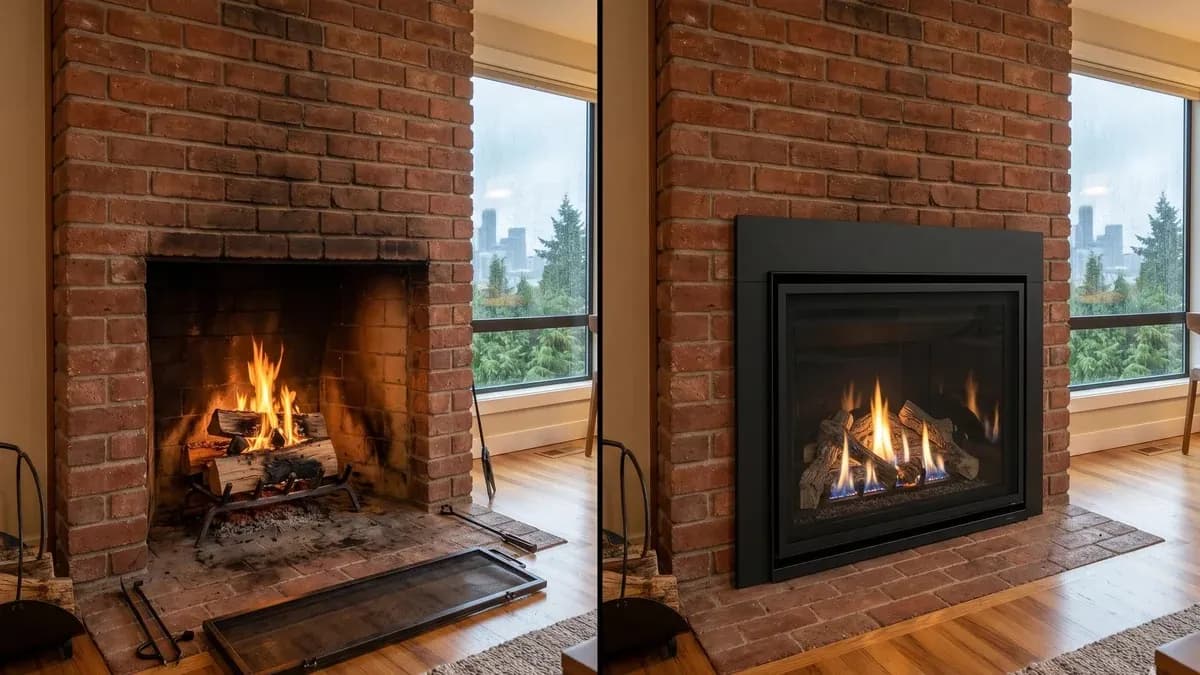
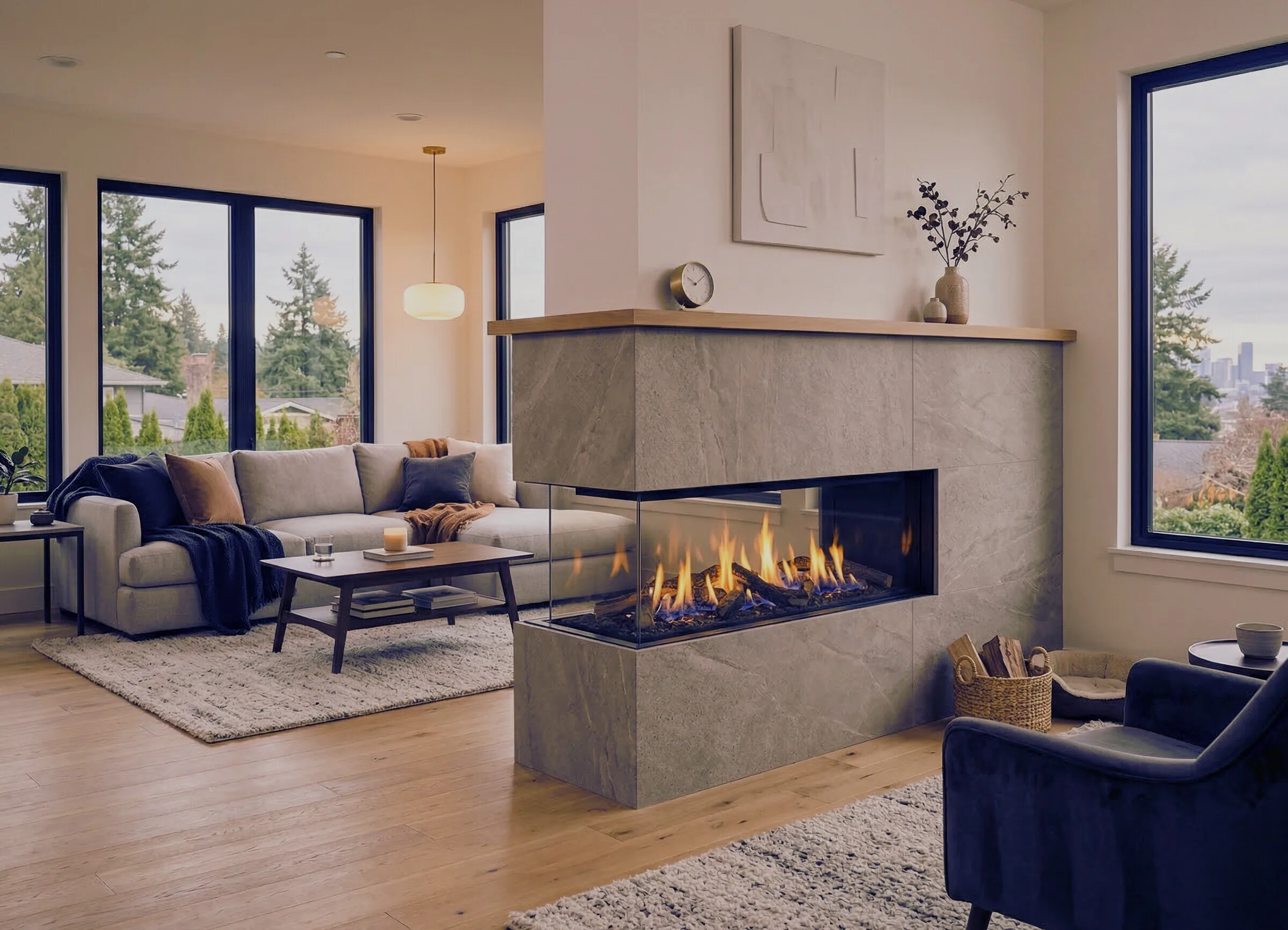
For most Seattle homeowners in 2026, a gas fireplace is the lower-maintenance, lower-cost-to-operate choice — but wood still wins on authentic ambiance and emergency heating. Gas inserts run $149–$249 per year to maintain; wood-burning systems cost $199–$500 or more annually once you factor in sweeping, repairs, and firewood. Based on over 600 fireplace service calls our team completed across the Seattle metro last year, roughly 58% of clients with a choice are converting to or staying with gas — primarily because of Puget Sound Clean Air Agency burn restrictions and Seattle's damp firewood storage problem. If convenience and air quality compliance matter most, choose gas. If authentic ambiance and power-outage resilience matter most, keep wood. Current as of June 2026.
How Marcus T. in Fremont Finally Made the Decision
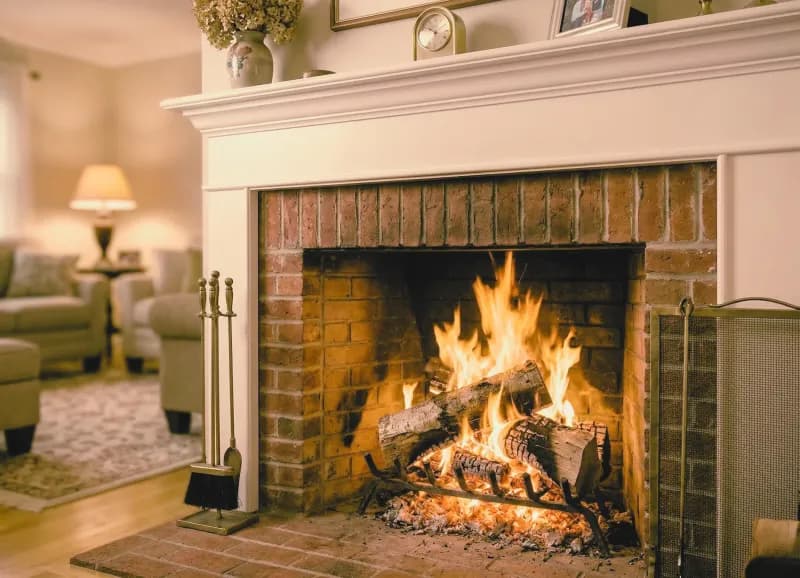
Marcus T. had been on the fence for three winters. His 1952 Fremont bungalow came with a classic masonry fireplace — the kind with a wide brick surround and a damper that groaned every time he opened it. He loved the idea of wood fires but admitted he'd only lit maybe four in the past two years. The firewood he'd stacked under the deck had turned green with moss. The chimney smelled faintly of old ash whenever it rained.
A neighbor mentioned she'd just had a gas insert installed and referenced our truck parked on her street. Marcus called the next week. Alex arrived on a Tuesday morning and did a full Level 1 inspection before any conversation about conversion. What he found in the flue set the tone for everything that followed: Stage 2 creosote — the shiny, tar-like variety — coating the lower third of the liner, and a hairline crack in the clay tile near the smoke chamber that had been slowly admitting moisture into the surrounding masonry.
'This chimney hasn't been swept in at least three years, maybe more. The creosote is manageable, but that liner crack is the bigger story — water's been sitting in that joint every time it rains, and you can see the staining on the interior bricks. If you were planning to keep burning wood heavily, we'd be talking about a full relining. Since you're leaning toward gas anyway, a stainless steel liner sized for a gas insert actually solves the crack problem at the same time.'
— Alex, Lead Technician, Seattle Chimney Pros
Marcus opted for a mid-range gas insert with a 5-inch stainless liner. The job took one full day. Total cost came to $4,100 — insert, liner, and installation. He lit it for the first time that same evening. 'I've used it more in the last six weeks than I used the wood fireplace in two years,' he told us at his annual check-in. He's already off our reminder list for creosote sweeps — and on the shorter gas maintenance schedule instead.
How Do Gas and Wood Fireplaces Actually Compare Side by Side?
The honest answer depends on which factor matters most to you. Here's how they stack up across every dimension Seattle homeowners ask about:
| Factor | Gas Fireplace | Wood Fireplace |
|---|---|---|
| Convenience | ★★★★★ (remote or switch) | ★★☆☆☆ (build, tend, clean) |
| Ambiance | ★★★☆☆ | ★★★★★ |
| Heating efficiency | 70–90% | 10–30% |
| Annual maintenance cost | $149–$249 | $199–$500+ |
| Creosote risk | None | Yes — annual sweep required |
| Burn ban compliance | Always exempt | Restricted on bad air days |
| Power outage use | Most models need electricity | Fully functional |
| Operating cost per hour | $0.50–$1.50 | $1.00–$3.00 |
| Carbon monoxide risk | Low (with annual service) | Moderate |
Why Does Seattle's Climate Favor Gas More Than Other Cities?
Seattle's combination of rain, mild temperatures, and air quality regulations tilts the scales toward gas in ways that don't apply in drier climates. In our experience across the Seattle metro, three local factors come up repeatedly when homeowners are weighing the decision.
Firewood storage is genuinely difficult here. Properly seasoned firewood needs 6–12 months of dry storage — a real challenge when annual rainfall in Seattle averages 37 inches and most lots have limited covered storage. We've inspected dozens of wood-burning systems where the homeowner was unknowingly burning wet wood, accelerating creosote buildup and reducing heat output. Last year alone, we responded to 14 chimney fire calls in the Seattle metro, and in 9 of those cases the contributing factor was unseasoned firewood.
Burn bans are increasingly common. The Puget Sound Clean Air Agency issued 23 burn restriction days during the 2024–2025 heating season — the highest number in seven years. On Stage 1 days, only EPA-certified wood stoves can legally burn. On Stage 2 days, all wood burning is prohibited. Gas fireplaces are permanently exempt from every restriction level. For homeowners who want to use their fireplace reliably through fall and winter, gas eliminates the frustration of checking the PSCA website every morning.
Our damp climate accelerates chimney wear on wood systems. Seattle's humidity means masonry chimneys serving wood fireplaces absorb more moisture between burns, speeding up mortar erosion and freeze-thaw spalling. Based on 400+ wood-burning chimney inspections we completed in 2025, 34% showed moderate to significant mortar deterioration — compared to 18% for gas-vented systems. If you're already facing repair costs on a wood chimney, the math on conversion often gets more attractive quickly.
What Are the Real Pros and Cons of Each System?
Here's the unvarnished version from a team that services both every week.
Gas Fireplace — What We Actually Like (and Don't)
- Instant ignition with a remote or wall switch — no kindling, no waiting
- Zero creosote buildup, which eliminates the most dangerous chimney fire risk
- Consistent, thermostat-controlled heat output between 20,000 and 40,000 BTUs on most inserts
- Lower annual gas fireplace maintenance costs — typically $149–$249 for an annual inspection and cleaning
- Clean air — no particulate matter, no smoke odor on clothing or furniture
- The downside: most models require 120V power for ignition, so a power outage takes the fireplace offline too
- The other downside: it's not a wood fire. The crackling, the aroma, the ritual of building the fire — gas approximates it but doesn't replicate it
Wood Fireplace — What We Actually Like (and Don't)
- The ambiance is genuinely unmatched — real flames, real sound, real smell
- Works during power outages, which matters in Seattle's windstorm season
- Higher peak heat output when burning quality seasoned hardwood
- No gas line infrastructure required
- The downside: annual chimney sweep and inspection is not optional — NFPA 211 requires it, and skipping it creates real fire risk
- Firewood management in Seattle's climate adds time, cost, and storage challenges
- Burn ban days mean your fireplace sits idle exactly when the weather makes you want it most
How Much Does a Wood-to-Gas Conversion Cost in Seattle?
The total cost of converting a wood-burning fireplace to gas in Seattle ranges from $2,500 to $7,000 in 2026, depending on the insert you choose, whether your chimney needs relining, and whether a new gas line must be run. Here's the full breakdown of what's involved and what each component costs:
- Chimney inspection ($99 plus tax): Before any conversion, we assess the existing flue dimensions, liner condition, and clearances. This determines whether relining is required and what insert size will work. This step is non-negotiable — it's what prevents installing a $3,000 insert in a flue that's undersized or damaged.
- Flue relining ($1,500–$2,800): Most gas inserts require a continuous flexible stainless steel liner — typically 4- or 5-inch diameter — running from the insert collar to the top of the chimney. This also addresses any existing liner cracks or deterioration simultaneously. Learn more about chimney relining options and costs.
- Gas line installation ($500–$1,500): If no gas line currently serves the fireplace, a licensed plumber runs one from the nearest supply point. This is the most variable cost — a 10-foot extension from an adjacent room is far cheaper than a full basement run.
- Gas insert or log set ($1,500–$4,500): Gas log sets (the budget option — open-faced, no glass door) start around $800–$1,200 for the unit itself. A quality direct-vent gas insert with realistic ember bed and tempered glass runs $2,000–$3,500 for the unit. Premium models with remote thermostats and variable flame reach $4,500+.
- Installation labor ($300–$600): Setting the insert, connecting the liner, testing for leaks, and commissioning the unit. Usually 4–6 hours of work.
Our team handles steps 1, 2, and 5 and coordinates with licensed plumbers for step 3. Contact us for a conversion estimate — we can usually quote the chimney portion after a single site visit.
What Should You Do If You're Ready to Decide?
If you're still weighing the options, here's the practical sequence we recommend to Seattle homeowners:
- Get a Level 1 chimney inspection first. Before deciding anything, know what condition your current chimney is in. A system that needs $800 in masonry repairs and a $1,400 liner replacement is a much stronger case for conversion than one in perfect condition. Inspection cost: $99 plus tax — and it applies toward any repair or conversion work we do.
- Check your gas service. Call Puget Sound Energy or your gas provider and confirm whether a gas line currently reaches your fireplace location, and what capacity your meter can support. This is free and takes five minutes — it clarifies your conversion cost range before you spend anything.
- Calculate your actual wood use. If you're burning fewer than 10 fires per season (like Marcus), the economics of maintaining a wood system rarely make sense. If you're burning 40–60 fires and actively enjoy the ritual, wood is still a legitimate choice — just budget for proper annual maintenance.
- Check PSCA burn restriction history. Review how many restriction days were issued in your zip code over the past two winters. If it's 15 or more, consider how often those days fell on weekends when you'd most want a fire.
- Request conversion quotes from at least two contractors. Make sure each quote breaks out the chimney work, gas line work, and insert cost separately — bundled quotes make it hard to compare fairly.
Our team serves Fremont, Wallingford, and 43 other Seattle metro neighborhoods. We're happy to walk through the decision with you on-site at no pressure.
Ready to Make the Switch — or Just Get an Honest Assessment?
Whether you've decided gas is the right move or you still want to keep your wood-burning system running safely, the first step is the same: a professional inspection that tells you exactly what you're working with. Our CSIA-certified technicians inspect both gas and wood systems across the full Seattle metro area. Call us at (206) 278-2924 or schedule online — most inspections happen within 3–5 business days, and we'll give you a straight answer on conversion costs before you commit to anything.
Need professional help?
Our professionally trained team is ready. $99 inspection credited toward repairs, 30-minute response.