Gas Fireplace Cleaning Cost in Seattle 2026: What You Actually Pay
What Does Gas Fireplace Cleaning Cost in Seattle in 2026?
Professional gas fireplace cleaning in Seattle costs between $150 and $350 in 2026, depending on unit type, time since last service, and whether any components need replacement. Based on over 340 gas fireplace service calls our team completed across the Seattle metro last year, the average homeowner pays $219 for a standard single-unit cleaning and inspection. Gas inserts — which require partial removal for full rear access — run $225–$375. If the technician finds a failing thermocouple or thermopile during the visit, parts and same-visit replacement add $25–$120 to the total. Current as of July 2026.
Despite the common belief that gas fireplaces are maintenance-free, NFPA 54 (the National Fuel Gas Code, adopted in Washington State under WAC 51-52) recommends annual inspection and service of all gas appliances by a qualified technician. In Seattle's climate — 152 average rain days, freeze-thaw cycling from October through March, and late-summer wildfire particulate — annual service isn't just code-recommended, it's the difference between a fireplace that runs reliably and one that quietly produces carbon monoxide or fails mid-January.
Real Case: Marcus T. in Fremont and the Pilot That Wouldn't Stay Lit
Last October, Marcus T. called us from his 1968 Fremont split-level after his gas fireplace pilot extinguished for the third time in two weeks. He'd been relighting it himself, assuming it was a fluke. By the time he searched 'gas fireplace pilot keeps going out Seattle' and found our scheduling page, he hadn't had a working fireplace for 10 days — and a classic Pacific Northwest cold front had just moved in off the Sound.
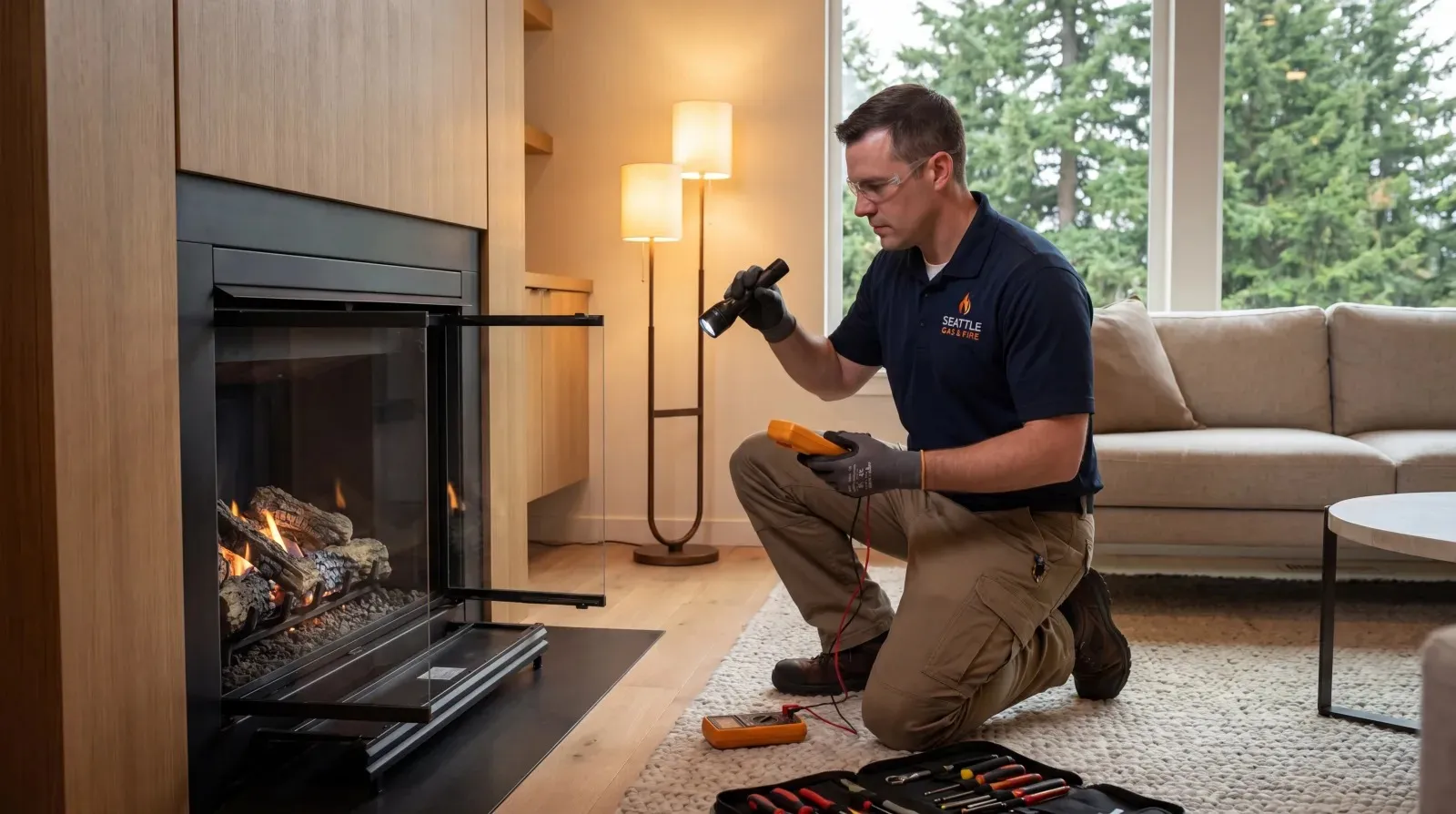
Our lead technician Alex arrived the next morning with a full service kit. The fireplace, a Heat & Glo built-in installed around 2009, showed no obvious external damage. But the moment Alex pulled out the multimeter and tested the thermocouple output, the problem was clear.
'The thermocouple was putting out 9 millivolts — most gas valves need at least 15 to stay reliably open. It wasn't dead yet, which is why the pilot would light and hold for a few days before dropping out again. Another week or two and it would have stopped holding at all.'
— Alex, Lead Technician, Seattle Chimney Pros
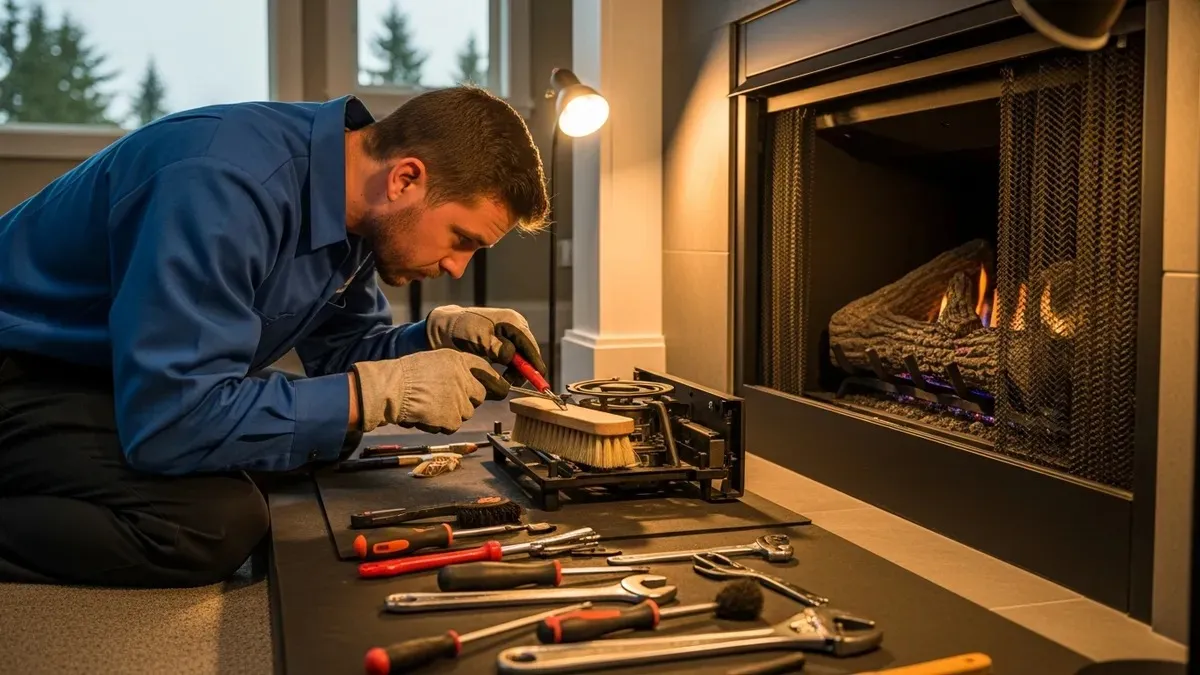
Alex replaced the thermocouple on the spot — it was stocked on the service vehicle — then moved through the full cleaning checklist. The burner ports had a significant dust and pet hair accumulation that was causing the outer flame edges to burn orange instead of the expected blue-tipped pattern. He cleaned each port with a soft brush and compressed air, repositioned the ceramic logs (Marcus had shifted them to 'look better,' which was directing flame impingement onto the glass), and cleaned both glass surfaces with fireplace-specific cleaner. The vent termination cap on the exterior wall had a partial spiderweb obstruction — common on Fremont homes with dense plantings near the foundation.
Total visit time: 75 minutes. Total cost: $267, which included the thermocouple replacement. Marcus had paid nothing for gas fireplace service in the seven years he'd owned the home. 'I honestly didn't know this was something you were supposed to do every year,' he said. 'I thought gas fireplaces just kind of maintained themselves.' He's now on our annual service reminder list — his next appointment is scheduled for September 2026, before the heating season kicks in.
What's Included in a Gas Fireplace Cleaning?
A proper annual gas fireplace service covers five distinct systems inside and around the unit. Understanding what each involves helps you recognize the difference between a comprehensive service and a stripped-down one when comparing quotes.
Pilot and ignition system: The technician inspects pilot flame shape, color, and stability, then tests thermocouple or thermopile output voltage with a multimeter. A thermocouple reading below minimum threshold — typically 15–25 millivolts depending on valve type — will not reliably hold the gas valve open. The pilot orifice is inspected and cleaned. On electronic ignition systems, the igniter and flame sensor are tested for correct function and gap.
Burner assembly: Burner ports are checked for blockage by dust, pet hair, spiderwebs, and debris. Partially blocked ports cause uneven or yellow-orange flame and incomplete combustion — a direct carbon monoxide risk. Our technicians clean ports with specialized brushes and compressed air, then verify uniform flame pattern at test light-off. Gas pressure at the burner manifold is confirmed against manufacturer specifications.
Ceramic logs, rocks, and embers: Decorative media are removed, vacuumed with a soft-bristle attachment, and repositioned per manufacturer specs. Log positioning is not cosmetic — it controls how combustion gases travel through the burner and up the flue. Incorrectly positioned logs cause flame impingement, soot generation, and elevated CO production.
Glass assembly: Combustion water vapor deposits a mineral and carbon residue on the interior glass over time. Technicians use fireplace-specific glass cleaner (never ammonia-based products, which degrade gasket seals) to clean both interior and exterior surfaces, then inspect the glass seal and perimeter gasket for deterioration.
Venting system: On direct-vent units, both the inner combustion air intake and outer exhaust are checked at the termination cap. B-vent and natural-draft units venting through a chimney flue require rooftop access. Termination cap screens are cleared of spider webs and debris — a particularly common finding on Seattle homes with mature landscaping near vent penetrations. Our guide on carbon monoxide warning signs explains what to watch for between annual visits.
Gas Fireplace Cleaning Prices in Seattle: 2026 Breakdown
The table below reflects what Seattle homeowners actually pay for professional gas fireplace service in 2026, based on our current pricing and market research across King, Pierce, and Snohomish counties.
| Service | Typical Price Range | Notes |
|---|---|---|
| Standard gas fireplace service (single unit) | $150–$250 | Basic 45–75 min cleaning, inspection, minor adjustments. Most Seattle residential units. |
| Full service and tune-up | $200–$350 | Includes gas pressure test, thermocouple output measurement, written findings report. |
| Service + Level 1 chimney inspection (vented units) | $250–$400 | Recommended for pre-sale, post-storm, or first service on a newly purchased home. |
| Gas fireplace insert service | $225–$375 | Insert must be partially pulled for rear component access; adds 20–30 min. |
| Second unit — same service visit | $100–$175 | Multi-unit homes in Queen Anne, Bellevue, and Madrona often qualify. |
| Emergency or priority service call | $275–$450 | Rush or weekend/after-hours scheduling; surcharge above standard rates. |
| Thermocouple replacement (parts + labor) | $25–$75 | Most common repair finding. Typically resolved same visit. |
| Thermopile replacement (parts + labor) | $40–$120 | Required for remote and wall-switch units when output voltage is below spec. |
The national average for gas fireplace service runs $75–$200, but Seattle's labor market consistently places us at the higher end of regional ranges. Budget $175–$300 for a single-unit annual service in typical condition. Units that haven't been serviced in three or more years should budget toward the top of each range — more debris accumulation means significantly more time on-site.
What Factors Push Gas Fireplace Service Costs Higher in Seattle?
Several variables determine where your actual cost falls within those ranges. Here are the factors our technicians see most often across 45 Seattle-area communities:
- Unit type: Built-in fireplaces are the fastest to service. Freestanding gas stoves are straightforward but require pulling from the wall. Gas inserts are the most time-intensive — partial or full removal is needed for proper rear access. Expect insert service to run $50–$100 more than a comparable built-in.
- Time since last service: A unit on annual service takes 45–60 minutes. A unit untouched for 3–5 years (like Marcus's in Fremont) runs 90–120 minutes — dust accumulation in ports and on media is proportional to neglect time.
- Vent configuration: Direct-vent units terminate at an exterior wall cap — easy access. B-vent and natural-draft units that route through a roof-mounted flue require the same rooftop setup as a chimney inspection, adding access time and equipment to the service cost.
- Component condition: Thermocouple or thermopile failure found during service adds $25–$120 in parts and labor. Blocked pilot orifices, damaged glass gaskets, or corroded burner inserts add variable time. Major component failures (gas valve, blower motor) typically require a return visit with ordered parts.
- Wildfire particulate load: During late-summer wildfire events, fine ash deposits on gas logs and burner ports add to the cleaning burden for units serviced after August. Units serviced in spring face lower particulate loads and typically clean faster.
The most cost-efficient approach for homes with both a wood-burning chimney and a gas fireplace is a combined service visit — the chimney sweep and gas fireplace service share rooftop access labor rather than billing it twice. We schedule these routinely for homeowners in Kirkland, Bellevue, and the Eastside who have both system types.
How Often Should a Gas Fireplace Be Serviced in Seattle?
Annually. NFPA 54, adopted in Washington State under WAC 51-52, recommends annual inspection and service of gas appliances by a qualified technician. That standard exists because gas appliances develop safety-relevant conditions — degraded thermocouples, blocked vents, minor gas seeps at fittings — that are not visible or detectable without professional inspection and testing equipment.
Seattle's climate adds specific urgency beyond the code recommendation. Freeze-thaw cycling from October through March creates thermal stress on gas connections and fittings. Our 152 average annual rain days mean any vent imperfection allows moisture intrusion that accelerates internal corrosion. And each late-summer wildfire season deposits particulate on burner components that accumulates year over year in untended units.
Based on 340+ gas fireplace service calls we completed in the Seattle metro in 2025, approximately 62% of units inspected on their first professional service in 3 or more years had at least one condition requiring correction — most commonly blocked burner ports, a thermocouple below minimum output threshold, or a vent termination cap with partial obstruction. Annual service catches each of these at the routine-maintenance stage rather than the failure-or-hazard stage.
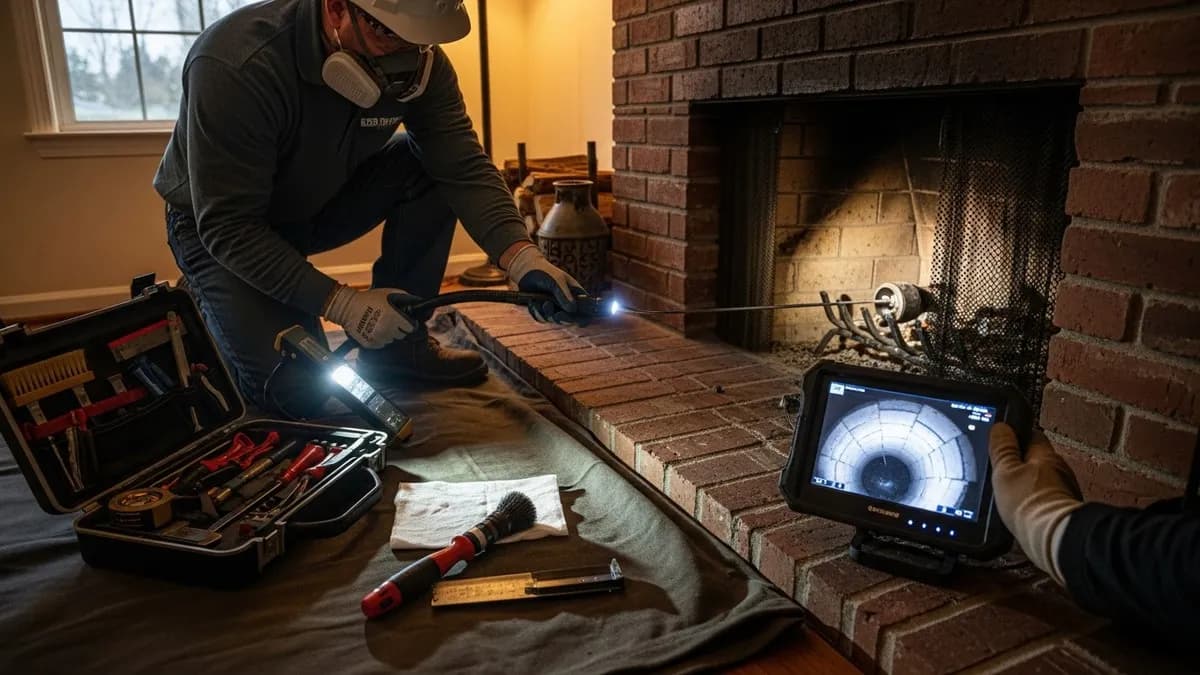
If you're unsure whether your gas fireplace has ever been professionally serviced, particularly if you're a new homeowner or recently purchased a home, a chimney inspection combined with gas fireplace service is the right starting point. Our Seattle chimney inspection cost guide explains what Level 1 and Level 2 inspections include for homes with gas-fueled inserts in existing masonry fireplaces.
6 Signs Your Gas Fireplace Needs Service Right Now
Annual service is the right baseline, but some conditions warrant a call before your scheduled appointment. Here are the six we see most often — and what each one signals:
- Pilot light won't stay lit after relighting. If you relight the pilot and it extinguishes when you release the valve button, or it holds for a few days then drops out again (as in Marcus's case), the thermocouple output is likely below minimum threshold. This is a same-visit repair but requires a technician and a multimeter — relighting it again won't fix the underlying issue.
- Flames are yellow or orange across the burner. Gas burners should produce a blue flame with yellow tips only at the outermost flame edges. Sustained yellow-orange flames indicate incomplete combustion from blocked ports, incorrect gas pressure, or mispositioned logs. Incomplete combustion produces carbon monoxide. Call for service before next use.
- Dark soot deposits on the glass between annual visits. Some light haze is normal. Dark carbon soot appearing between service appointments indicates a combustion problem — blocked ports or logs out of position directing flame onto glass. Don't just clean the glass; get the combustion issue corrected.
- Any sulfur or rotten-egg smell during operation. Natural gas is odorized with mercaptan specifically so leaks are detectable. Any sulfur smell from the fireplace means: turn the unit off at the gas shutoff valve, ventilate the room, exit the area, and call your gas utility or 911 before calling us. Do not attempt to relight or diagnose yourself.
- Remote or wall switch is intermittent or unreliable. Intermittent response from a remote or wall switch typically indicates a thermopile with declining voltage output. This is distinct from thermocouple failure and is also a same-visit repair when caught early.
- Unit hasn't been serviced in more than 2 years. Even a fireplace that appears to run normally can have blocked ports producing unmeasured CO, a vent cap partially blocked by spiderwebs, or a gas fitting with minor seepage below the smell threshold. Annual service is the only way to confirm these conditions are absent.
What Can You Safely Do Yourself Between Service Visits?
Some gas fireplace maintenance is genuinely appropriate for homeowners between professional appointments. Other tasks require tools, training, and certification that aren't available to the general public. Here's the practical line:
Safe for homeowners:
- Glass cleaning: Use a fireplace-specific glass cleaner on a cool glass panel. Never use ammonia-based products (like standard window cleaner) — ammonia degrades the rubber gasket seals around the glass frame. Use a soft cloth or newspaper, not abrasive pads.
- Light dusting of logs and embers: Gently dust ceramic media with a soft paintbrush between service visits. Do not reposition logs — manufacturer log placement is critical to combustion quality and is set by your technician during service.
- Checking the exterior vent termination cap: If the exterior cap is safely accessible, clearing visible debris or spiderwebs from the outside face is a reasonable homeowner task. Do not disassemble the cap or reach into the vent opening.
Requires a professional:
- Gas pressure testing (requires a manometer and manufacturer-spec knowledge)
- Thermocouple and thermopile testing and replacement (requires millivolt-range multimeter and gas valve component knowledge)
- Any work on gas connections or fittings (Washington State requires qualified technician certification for gas connection work)
- Vent system inspection and repair inside walls, ceilings, or at rooftop terminations
The practical rule: handle surface cleaning between visits, leave anything involving gas, ignition, or venting to a licensed service technician. Visit our Seattle service area page to confirm scheduling availability in your neighborhood.
Ready to Schedule Gas Fireplace Service in Seattle?
July is an ideal time to book gas fireplace service — the heating season is over, scheduling flexibility is at its best (typically 3–5 business days to first available appointment versus 2–3 week waits in October), and any issues found during service can be resolved well before you need the fireplace in September. A unit serviced now is inspected, cleaned, and confirmed safe before sitting through the rest of summer and being called back into full use this fall.
Seattle Chimney Pros has been servicing gas fireplaces across King, Pierce, and Snohomish counties since 2011. Our technicians hold NFI Gas Specialist credentials and stock the most common replacement parts — thermocouples, thermopiles, pilot assemblies — on service vehicles for same-visit resolution. We service all major brands including Heat & Glo, Napoleon, Regency, Valor, Heatilator, and Mendota, and provide a written service summary with photos after every appointment. For homes with both a wood-burning chimney and a gas fireplace, ask about combined service visits — one trip, one rooftop setup, both systems covered. If the inspection reveals anything that needs repair, we provide a written estimate before any work proceeds. See our full gas fireplace repair cost guide for what common repairs run in Seattle.
Call (206) 278-2924 or request an appointment online. Most summer appointments are available within one week of scheduling.
Need professional help?
Our professionally trained team is ready. $99 inspection credited toward repairs, 30-minute response.