Carbon Monoxide & Chimney Warning Signs: Seattle Homeowner Guide 2026
What Are the Warning Signs of Carbon Monoxide from a Chimney?
Carbon monoxide from a chimney-related failure typically presents as unexplained headaches, dizziness, or nausea that improves when you leave the house — symptoms that appear in multiple family members or pets simultaneously. In Seattle, CO-related chimney calls spike between October and March, when homes are sealed tight and fireplaces run daily. Based on over 850 chimney inspections our team completed across the Seattle metro area last heating season, the three most common CO-risk conditions we find are blocked flues (38% of flagged inspections), cracked clay tile liners (31%), and deteriorated gas vent connectors (22%). A blocked or damaged flue prevents combustion gases from exiting safely, forcing carbon monoxide back into your living space. Current as of June 2026.
A Real CO Scare: Marcus T. in Greenwood
Last January, Marcus T. contacted us from his 1952 Greenwood rambler after his family had spent three weekends in a row with what they assumed were winter colds — headaches, fatigue, mild nausea. His wife noticed that everyone felt fine at her mother's house over the holidays but the symptoms returned within hours of coming home. A neighbor whose chimney we'd serviced the previous fall suggested Marcus call us before calling a doctor.
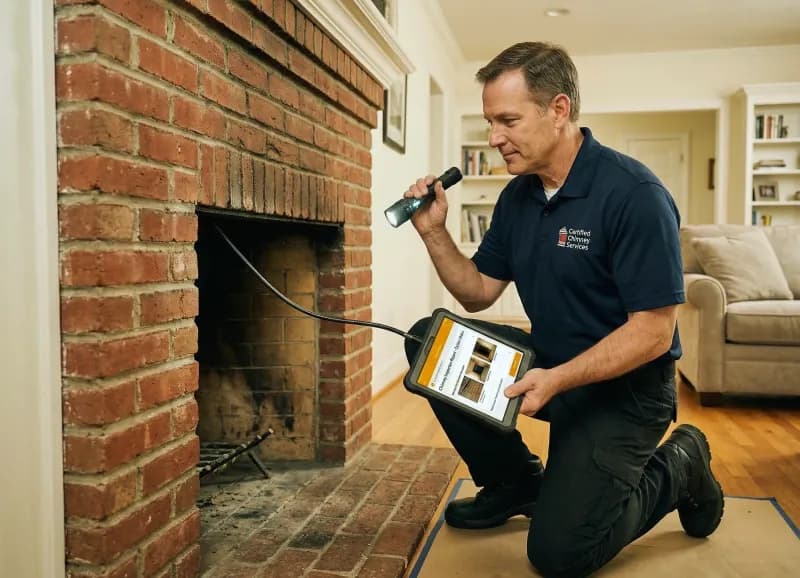
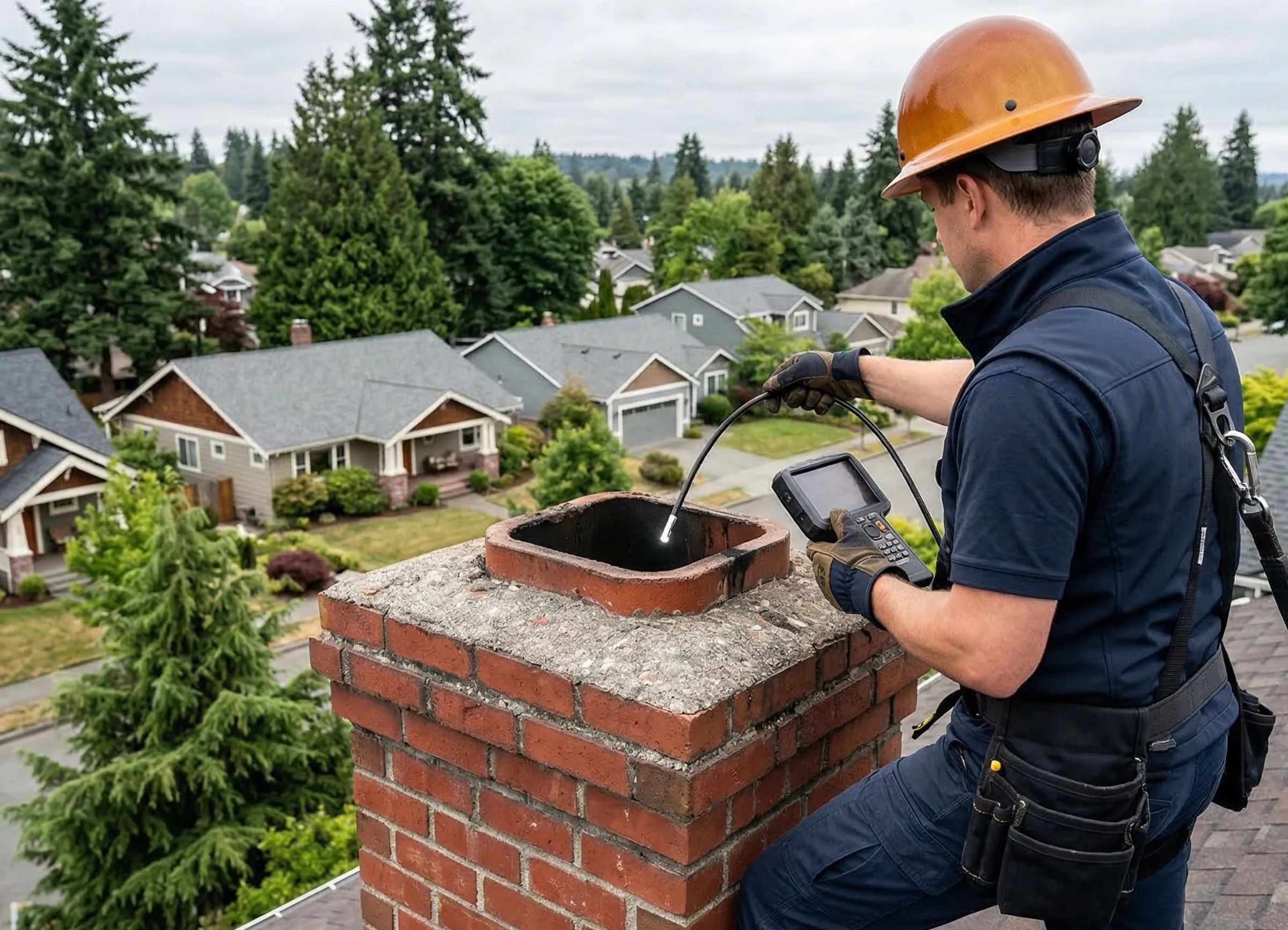
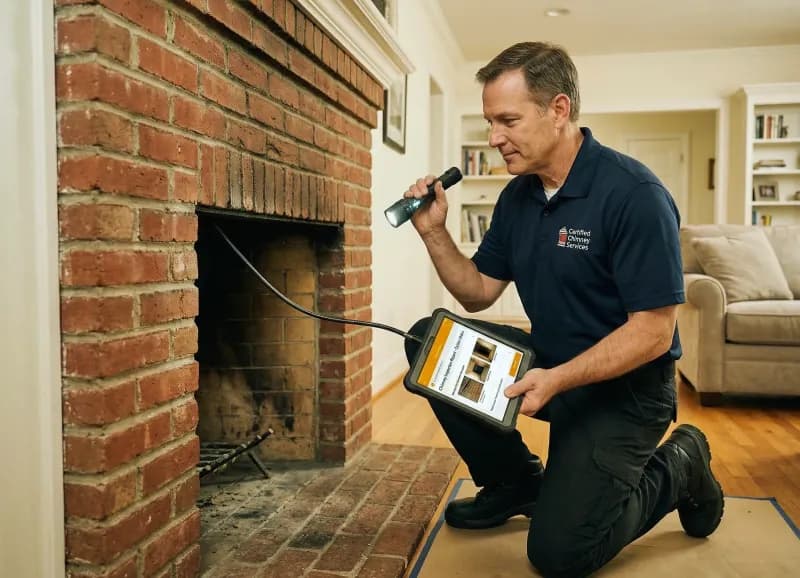
Our technician Ryan arrived on a Tuesday morning. The home had a gas furnace and a gas fireplace insert, both venting through the same masonry chimney — a common setup in mid-century Greenwood homes. Ryan began with a draft test and immediately got a backdraft reading. The flue camera confirmed the problem: a collapsed clay tile section about 8 feet up the liner had partially blocked the flue and redirected exhaust gases into the wall cavity adjacent to the living room.
'That collapsed tile was acting like a dam. The furnace exhaust had nowhere to go but sideways through the mortar joints and into the wall. With the house sealed up for winter, CO was accumulating slowly every time the furnace cycled. This family was incredibly lucky they called when they did.'
— Ryan, Lead Technician, Seattle Chimney Pros
Ryan shut down both appliances immediately and tagged the chimney out of service. We returned two days later to install a stainless steel liner — a full reline from firebox to cap — at a cost of $2,100. Marcus also added three new CO detectors based on Ryan's placement recommendations. 'I keep thinking about how many nights we slept in that house,' Marcus told us. 'We had no idea.' His family has been on our annual inspection schedule ever since.
What Causes a Chimney to Leak Carbon Monoxide?
CO enters the living space when the chimney's venting system fails at any of four points: the flue is blocked, the liner is cracked, the draft reverses direction, or appliance connections are compromised. Understanding each failure mode helps you recognize risk before symptoms appear.
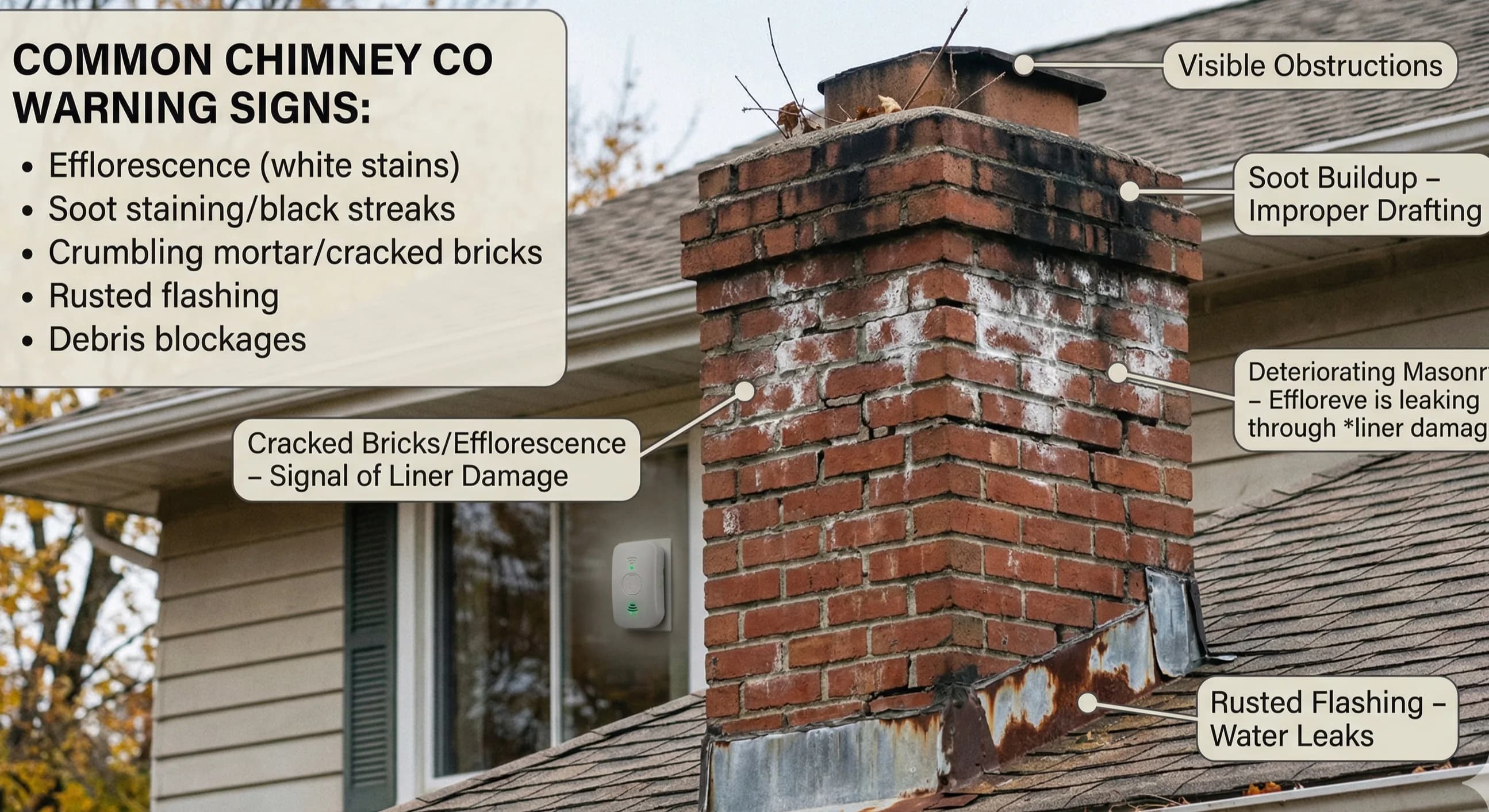
Blocked or obstructed flues are the most dramatic failure. Bird and animal nests are the leading cause in Seattle's tree-heavy neighborhoods — Fremont, Wallingford, and Ravenna see the highest nest-related blockage rates we track. Stage 2 and Stage 3 creosote can narrow a flue by 40% or more, and collapsed masonry from aging mortar joints can partially dam the passage entirely. A chimney without a cap is essentially an open invitation for debris accumulation.
Cracked flue liners are more insidious because they're invisible without a camera. Clay tile liners crack from decades of thermal cycling, from chimney fire damage, and — especially relevant in Seattle — from seismic activity. Washington sits in an active seismic zone, and even minor tremors can fracture already-stressed tile joints. Corroded metal liners develop pinhole gaps that allow CO to seep through the chimney wall into adjacent rooms, attics, or wall cavities. In our inspections, cracked liners are the second-most-common CO risk we document.
Backdraft and downdraft occur when chimney draft reverses direction. Seattle's hillside neighborhoods are particularly susceptible due to wind patterns created by terrain and dense tree canopy. Tightly weatherized homes — especially those renovated after 2010 with high-efficiency windows and air sealing — can develop negative indoor pressure that literally pulls air down the chimney instead of up. Exhaust fans, clothes dryers, and HVAC systems all contribute to negative pressure. When backdraft occurs in a gas system, there's no smoke to warn you — CO simply accumulates silently.
Deteriorated vent connections are common in older Seattle homes where heating systems have been modified multiple times. A furnace added in the 1980s, a gas fireplace insert installed in the 2000s, and a water heater added later may all share the same flue — each change altering the venting dynamics without proper engineering review. Corroded vent connectors, improperly sized flue transitions, and disconnected joints are all CO pathways we find regularly in Capitol Hill, Queen Anne, and Ballard homes.
What Are the Symptoms of Carbon Monoxide Exposure from a Chimney?
CO poisoning symptoms are frequently mistaken for flu, food poisoning, or general winter fatigue. The key distinction: flu comes with fever; CO poisoning does not. The progression of symptoms by exposure level is well-documented, and recognizing it early is the difference between a medical visit and a fatality.
| Exposure Level | CO Concentration (ppm) | Symptoms | Time to Onset |
|---|---|---|---|
| Mild | 35–70 ppm | Mild headache, slight dizziness, nausea, fatigue | 2–3 hours |
| Moderate | 70–150 ppm | Severe headache, confusion, vomiting, rapid heartbeat, blurred vision | 1–2 hours |
| Severe | 150–400 ppm | Disorientation, loss of consciousness, seizures | Under 1 hour |
| Fatal | 400+ ppm | Loss of consciousness, heart failure, death | Minutes to 3 hours |
The most important diagnostic clue is pattern recognition: if multiple family members or pets develop similar symptoms at the same time, or if symptoms consistently improve when you leave the home and return when you come back, treat it as a CO emergency. Sleeping residents face the greatest risk because CO can reach lethal concentrations while everyone is unconscious and unable to recognize symptoms or evacuate.
If you suspect CO exposure right now: get everyone out of the house immediately, call 911 from outside, and do not re-enter until the fire department clears the building.
What Should You Do If You Suspect Chimney CO in Your Seattle Home?
Act in this order — every minute matters when CO levels are elevated.
- Evacuate immediately. Get everyone — including pets — out of the house right now. Don't stop to gather belongings. CO can incapacitate you faster than you expect.
- Call 911 from outside. Seattle Fire Department has CO detection equipment and will clear your home before allowing re-entry. This is not an overreaction — it is the correct protocol.
- Do not re-enter until cleared. Even if symptoms improve outside, do not go back in for any reason until firefighters confirm CO levels are safe.
- Shut down appliances if it's safe to do so on your way out. If the fireplace or furnace is running and you can turn it off in seconds without delay, do so — but never risk staying inside to find controls.
- Call a CSIA-certified chimney professional before relighting anything. After the fire department clears your home, the appliance and chimney system must be professionally inspected before use. Our team provides same-day emergency inspections at (206) 278-2924.
How Do Seattle's Unique Conditions Increase Chimney CO Risk?
Several factors specific to the Seattle metro area create elevated chimney CO risk compared to drier, less seismically active regions.
Tightly sealed, energy-efficient homes are increasingly common across Seattle as homeowners pursue energy rebates and weatherization programs. Double- and triple-pane windows, spray foam insulation, and aggressive air sealing dramatically reduce natural air infiltration — which is great for energy bills but problematic for chimney draft. A fuel-burning appliance requires a supply of fresh combustion air. In a sealed home without a dedicated air intake, the appliance competes with exhaust fans, dryers, and HVAC for available air, often losing — and reversing the chimney draft in the process. Homes renovated after 2010 with high-efficiency ratings should have their combustion air supply professionally evaluated.
Seattle's seismic activity is a chimney-specific risk factor that gets far too little attention. Washington State is one of the most seismically active regions in the lower 48. Even minor earthquakes — the kind that rattle dishes and go largely unreported — can fracture already-stressed clay tile liner joints. We typically see a measurable increase in cracked liner calls in the weeks following any seismic event above 3.0 magnitude. If you felt an earthquake and haven't had your liner inspected since, that inspection is overdue.
Persistent moisture and corrosion accelerate liner and connector degradation faster than in drier climates. Seattle averages 37 inches of rain annually, and the humidity rarely drops below 70% even in summer. Gas appliance exhaust already contains water vapor and acidic combustion byproducts that attack metal liners from the inside; combine that with exterior moisture penetrating mortar joints from the outside, and metal components corrode years faster than manufacturer specifications assume.
A seven-month heating season — October through April in most Seattle zip codes — means longer cumulative CO exposure risk compared to regions with shorter winters. A small liner crack that produces a minor CO leak in a two-month season becomes a serious health risk across seven months of daily use. This is the core reason NFPA 211 recommends annual inspection regardless of how the system appeared to perform last year.
How Should Carbon Monoxide Detectors Be Placed in a Seattle Home?
Washington State law requires CO detectors in all homes with fuel-burning appliances or attached garages (RCW 19.27.530). Placement matters as much as presence — a detector in the wrong location can fail to alert you in time.
- Outside every sleeping area — Within 10 feet of each bedroom door. This is the most critical placement because sleeping residents cannot self-rescue.
- On every level of the home — Including basement and attic if they contain fuel-burning appliances or ductwork.
- Within 15 feet of fuel-burning appliances — Fireplace, furnace, gas water heater, gas dryer, and any gas range.
- At breathing height (5 feet) or ceiling-mounted — CO mixes evenly with air, so height matters less than it does for smoke detectors, but breathing-height placement provides the fastest alert.
- Away from steam sources — Keep 10+ feet from bathrooms, kitchens, and humidifiers to prevent false alarms that train residents to ignore alerts.
Replace the entire detector unit every 5–7 years — the electrochemical sensor degrades over time even if the unit still passes the test-button check. A standard Seattle home (3 bedrooms, 2 levels, gas appliances) typically needs 4–5 detectors. At $25–$50 per unit, that's $100–$250 for protection that could save your family's lives. Combination smoke/CO units are acceptable for the sleeping-area requirement but should be supplemented with dedicated CO units near appliances.
Why Is Annual Chimney Inspection the Most Important CO Prevention Step?
A CO detector tells you there's a problem. An annual professional chimney inspection tells you why — and prevents the problem from occurring in the first place. NFPA 211 mandates annual inspection of all chimney systems, and Washington State building codes align with that standard.
A CSIA-certified Level 1 inspection covers flue blockage assessment, liner integrity via HD camera, draft performance, firebox and damper condition, and vent connection security. For gas fireplace systems, our technicians also use a digital combustion analyzer to measure actual CO concentration in the exhaust stream — confirming safe operation with a number, not just a visual assessment. If liner damage is found, chimney relining with a stainless steel liner restores the sealed venting pathway that keeps CO out of your home. Our annual inspection fee of $149–$229 covers the full Level 1 assessment across all 45 Seattle metro areas we serve.
If you're in Greenwood, Capitol Hill, or anywhere in the Seattle metro and haven't had a chimney inspection this season, now is the right time — before fall firing-up begins. Call us at (206) 278-2924 or schedule online for a same-week appointment.
Need professional help?
Our professionally trained team is ready. $99 inspection credited toward repairs, 30-minute response.