Chimney Inspection Cost in Seattle: 2026 Pricing Guide
What Does a Chimney Inspection Cost in Seattle?
A chimney inspection in Seattle costs $100 to $250 for a Level 1, $250 to $600 for a Level 2, and $500 to $5,000 for a Level 3. The NFPA 211 standard defines three inspection levels, each progressively more invasive, and the level you need depends on how your chimney has been used, whether anything has changed in the system, and what a previous inspection may have flagged.
In our 14+ years serving Seattle homeowners, the most common scenario is a Level 1 inspection bundled with a chimney sweep during a routine annual maintenance visit. Level 2 inspections come up most often during real estate transactions and after chimney fires. Level 3 is reserved for situations where a suspected concealed defect cannot be reached any other way.
| Inspection Level | Typical Seattle Cost (2026) | When It Applies | Time on Site |
|---|---|---|---|
| Level 1 (basic visual) | $100 - $250 | Annual maintenance, no changes to system | 45-90 min |
| Level 2 (video scan) | $250 - $600 | Home sale, chimney fire, appliance change | 1.5-3 hours |
| Level 3 (structural access) | $500 - $5,000+ | Concealed hazard suspected | Multiple visits |
| Gas fireplace inspection | $75 - $200 | Annual service for gas appliances | 45-60 min |
Seattle-area pricing typically runs 15-25% above national averages. Steep roofs, hillside properties, older housing stock, and multiple-flue chimneys — all common in neighborhoods like Queen Anne, Ballard, and Capitol Hill — add labor time and complexity to every visit. The sections below break down each level in detail.
Level 1 Chimney Inspection: What Is Included and What It Costs
A Level 1 chimney inspection costs $100 to $250 in the Seattle area and is the annual baseline checkup recommended by NFPA 211. It is appropriate for any chimney used the same way it was designed, with no changes to the fuel type or connected appliance, and no specific reason to suspect a defect.
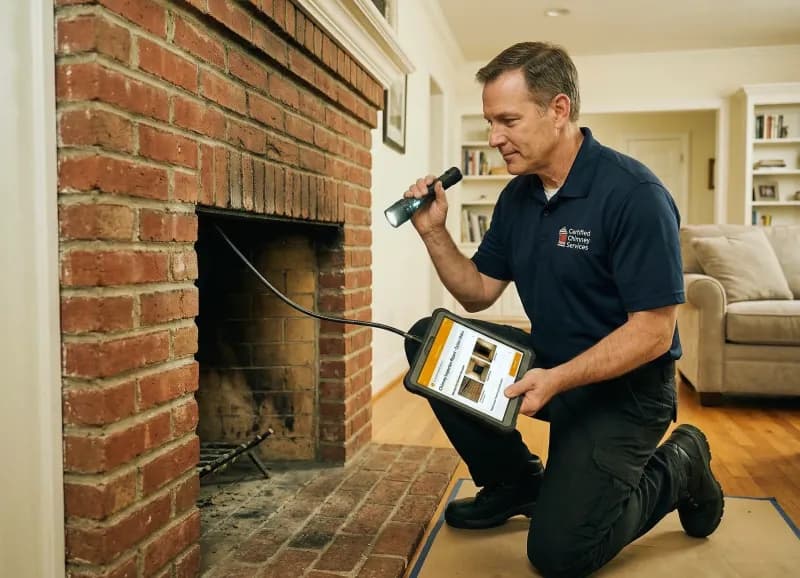
Our technicians perform Level 1 inspections by examining the readily accessible portions of the chimney — the firebox interior, the visible flue from below, and the exterior from the roofline — without special tools or structural access. A typical Level 1 covers:
- Firebox condition: mortar joints, firebrick, smoke chamber walls, and damper plate operation
- Visible flue interior: creosote buildup level, obstructions, and visible liner condition as far as standard lighting allows
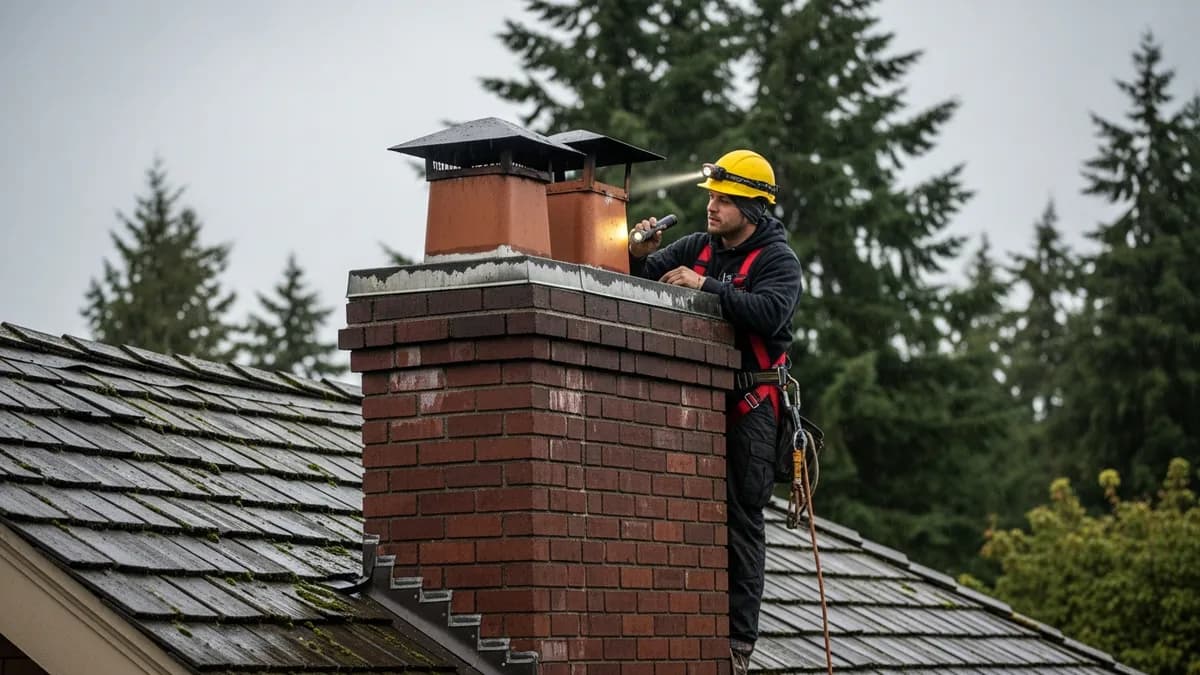
- Chimney exterior: crown condition, chimney cap, spark arrester, flashing, and upper masonry
- Basic draft check to confirm adequate draw and no backdraft issues
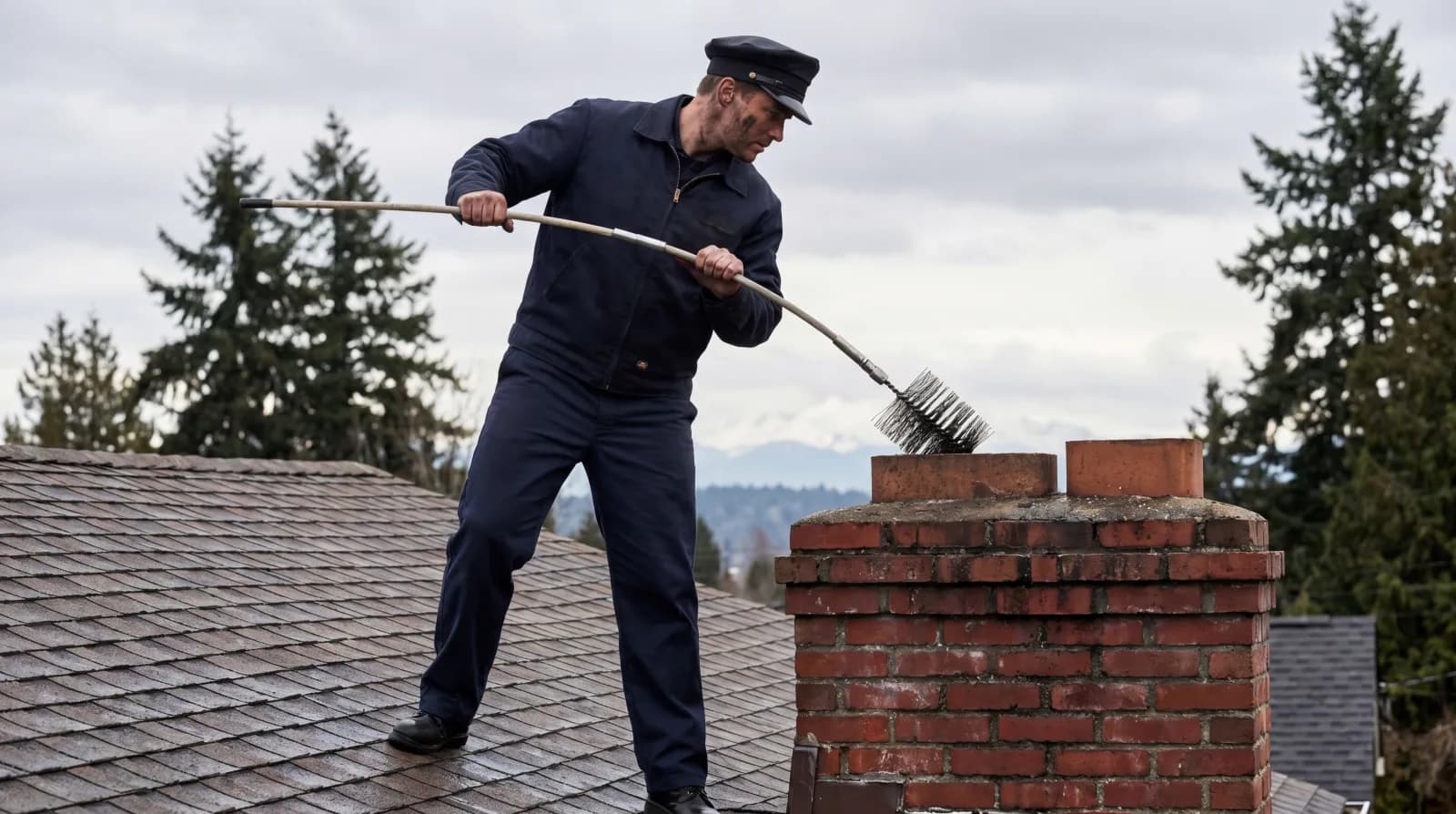
At the end of a Level 1, you receive a written condition report noting any defects and recommended next steps. In Seattle, a Level 1 is almost always bundled with a chimney sweep — cleaning and inspection in the same visit — keeping total annual maintenance cost in the $199-$349 range. A standalone Level 1 without a sweep runs $100-$150 at most reputable companies.
Spring is an underrated time for this inspection. If your chimney ran all winter, a May Level 1 catches creosote buildup, crown deterioration from freeze-thaw cycles, and any storm debris that entered the flue — before it worsens through a summer of sitting unused. We have found cracked crowns, collapsed dampers, and active bird nesting on spring inspections that would have created dangerous conditions the following heating season. For a full spring maintenance approach, see our spring chimney maintenance checklist for Seattle.
Level 2 Chimney Inspection: Video Scan, Cost, and When You Need One
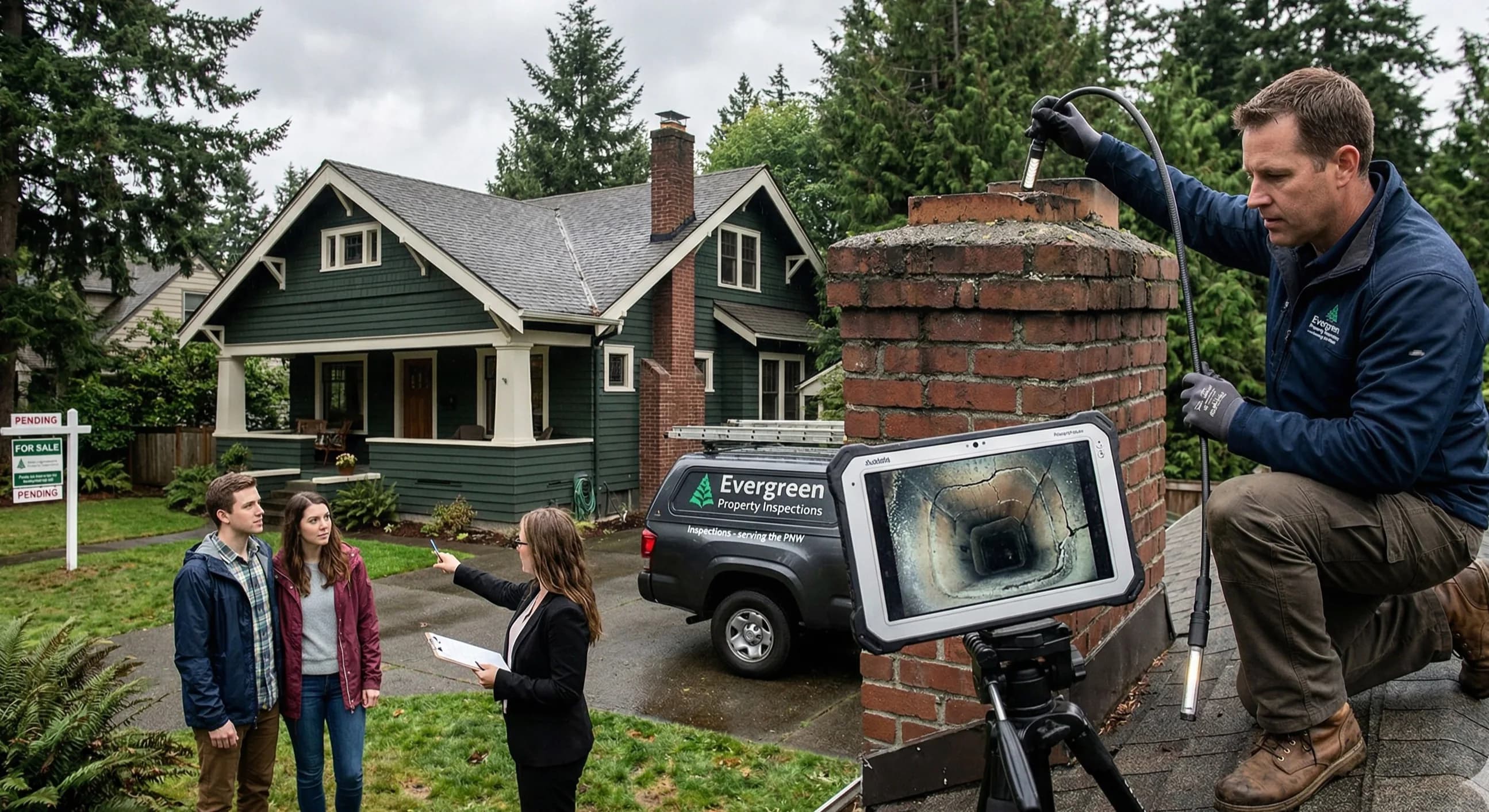
A Level 2 chimney inspection costs $250 to $600 in Seattle. It includes everything in a Level 1 plus a video scan of the flue interior — a camera mounted on a flexible rod that travels the full length of the liner — plus inspection of accessible adjacent spaces such as attic areas and crawl spaces bordering the chimney structure.
NFPA 211 requires a Level 2 in four specific situations:
- Selling or buying a home — Level 2 is the standard for real estate transactions in Washington State. Most home inspection reports flag the chimney as requiring a specialist Level 2 evaluation before closing. See our detailed guide to chimney inspections when buying a home in Washington.
- After any chimney fire — even a small flue fire can crack the liner without visible exterior signs. Video scan is the only reliable way to confirm the liner is still intact.
- When changing the fuel type or appliance — converting from wood to gas, adding a fireplace insert, or installing a new stove requires verifying liner compatibility with the new appliance output.
- After a seismic event — Seattle sits on active fault systems. Our Level 2 protocol after any tremor above Magnitude 4.0 includes video scan for hairline liner cracks invisible to the naked eye.
The video scan is what separates Level 2 from Level 1. The camera reveals deteriorated liner sections, offset clay tile joints, Stage 2 and 3 creosote glazing, and cracks that a visual inspection from below cannot detect. In our experience, video scans on homes 30 years and older in Seattle neighborhoods like Madrona, Montlake, and the Central District frequently reveal clay tile damage that turns a $350 inspection visit into a $2,500-$5,500 relining decision. That is not a surprise you want mid-winter. Our guide to chimney inspection levels covers the full NFPA 211 framework if you want the technical detail.
Level 3 Chimney Inspection: The Most Invasive Option and When It Applies
A Level 3 chimney inspection costs $500 to $5,000 and can run higher when significant demolition is required. It includes everything in Levels 1 and 2, plus physical removal of chimney or building components — potentially including drywall, siding, masonry sections, or access panels — to reach concealed areas of the flue or chase.
Level 3 is uncommon. Our technicians have recommended it in three specific scenarios:
- A Level 2 video scan revealed damage but could not determine its extent or cause — a significant liner crack with no visible exterior explanation, for example. The inspector needs to open the structure to identify the source and full scope of the problem.
- Evidence of an unrecorded chimney fire in a system with no maintenance history — older Seattle homes sometimes change hands multiple times without documented service records. When video reveals patterns consistent with a past flue fire, Level 3 access is needed to assess the liner and surrounding structure thoroughly.
- Structural concerns beyond the chimney itself — if an inspector suspects the chimney's settling or movement has affected adjacent home framing, structural access is needed to assess the full scope.
When Level 3 is necessary, it typically transitions directly into repair work. The cost of accessing the chimney and the cost of repairing what is found tend to overlap — inspectors and repair contractors are usually the same team at this stage. If a company recommends Level 3 for a routine annual inspection without a clear documented reason, treat that as a significant red flag. Level 3 should never be a default upsell on a healthy chimney with a normal service history.
Gas Fireplace Inspection Cost: What Is Different From a Wood-Burning Inspection
A gas fireplace inspection in Seattle costs $75 to $200, making it the most affordable chimney service type. Gas appliances do not produce creosote, so the concern is not flue buildup — it is burner performance, venting integrity, and combustion safety. The components checked are fundamentally different from a wood-burning chimney inspection.
A standard gas fireplace inspection includes:
- Burner ignition and flame pattern check — irregular or yellow-tipped flames can indicate incomplete combustion, gas flow restrictions, or burner fouling from dust and lint
- Pilot light and thermocouple inspection — the most common mechanical failure point in gas fireplaces, especially those over 10 years old
- Vent pipe and termination cap condition — checking for rust, obstructions, separation at joints, and proper clearances from combustibles
- Gas valve and flex connector inspection — leak check with appropriate instrumentation at all accessible connection points
- Firebox glass, gaskets, and refractory panels — cracked panels or failed gaskets can allow combustion gases to escape into the living space
- Blower, controls, and remote systems — operational check of all user-facing systems
Gas fireplaces are routinely overlooked because they feel cleaner and lower-maintenance than wood burners. That impression is dangerous. Our technicians regularly find cracked refractory panels, corroded flex connectors, and pilot assemblies operating out of specification on gas fireplaces that have not been serviced in 3-5 years. Seattle's damp climate accelerates corrosion of burner assemblies and vent terminations specifically. Annual service is the equivalent of a furnace tune-up — it keeps the appliance safe and efficient. For larger gas fireplace issues, our gas fireplace repair service covers the full range of component replacement and restoration.
Why Chimney Inspection Costs More in Seattle Than National Averages
National cost guides quote chimney inspections at $80-$500. Seattle homeowners regularly find their actual quotes run above these figures. Here is why:
Roof Access Complexity
Seattle's steep-pitch roofs — 8:12 and steeper is extremely common on Craftsman bungalows and Victorian-era homes — require roof jacks, harnesses, and significantly more setup time than low-slope suburban roofing. Cedar shake roofs common in older neighborhoods cannot be walked without risking damage, requiring specialized standoff equipment. Hillside properties in Magnolia, Leschi, and the Renton Highlands can have 30-40 foot effective heights on the downhill face, requiring more extensive rigging or lift equipment.
Multiple-Flue Chimneys
Many Seattle homes built before 1960 have masonry chimneys serving multiple appliances — a fireplace, a furnace, and sometimes a water heater — each with its own flue under one chimney crown. A Level 2 video scan of a three-flue chimney costs proportionally more than a single-flue inspection, and the additional flues add time to every level of inspection.
Historic Housing Stock
Pre-1940 homes in Queen Anne, Ballard, and the Central District require inspectors with specific knowledge of historical construction methods, lime mortar specifications, and older clay tile liner profiles. Not all chimney companies have this expertise, and those that do charge a premium for the additional skill set.
Moss and Biological Growth
Seattle's year-round moisture produces persistent moss, lichen, and algae on chimney exteriors. Clearing biological growth to properly inspect the crown and upper masonry adds time to every visit. Our inspectors also check for root intrusion into mortar joints — a problem essentially unique to the Pacific Northwest's consistently wet climate.
Seasonal Demand Timing
Inspection demand peaks in September and October as homeowners prepare for heating season. Scheduling a spring inspection — like the one you may be planning right now — typically gets you a faster appointment at standard pricing, without the fall rush premium some companies apply during peak demand periods.
What Seattle Chimney Inspectors Commonly Find — and What Repairs Cost
We have inspected more than 2,500 homes in the Seattle metro since 2011. These are the defects our technicians find most frequently, along with typical 2026 repair costs:
| Common Finding | Frequency | Typical Repair Cost (Seattle 2026) |
|---|---|---|
| Cracked or deteriorated chimney crown | Very common (60%+ of visits) | $250 - $3,500 depending on severity |
| Damaged or missing chimney cap | Common (40% of visits) | $150 - $600 |
| Deteriorated mortar joints (tuckpointing needed) | Common (35% of visits) | $500 - $3,000 |
| Flashing failure or separation | Moderate (25% of visits) | $400 - $2,000 |
| Cracked clay flue tiles (video scan) | Moderate (20% of visits) | $1,500 - $7,000+ (relining) |
| Creosote Stage 2 or 3 buildup | Less common (15% of visits) | $250 - $800 (treatment + sweep) |
| Wildlife nesting evidence | Occasional (10% of visits) | $150 - $600 (removal + cap install) |
The most Seattle-specific finding is freeze-thaw crown damage. Our wet winters followed by sub-freezing overnight temperatures — especially at elevation in Queen Anne, the Renton Highlands, and Bellevue hillsides — accelerate crown cracking faster than in most US cities. A crown that looks fine from the street may have significant cracking visible only from rooftop level. This is why every inspection we perform includes roof-top photos of the crown — ground-level views miss roughly 80% of the deterioration we find up top.
Efflorescence — the white staining visible on the upper chimney face of many Seattle homes — is another consistent finding. It signals water penetrating the masonry and depositing mineral salts as it evaporates. By itself it is cosmetic, but it always indicates a water entry problem in the crown, cap, or flashing that requires addressing before it causes structural damage. Our article on white stuff on chimney bricks explains the full diagnosis and repair path.
How Often Should Seattle Homeowners Schedule a Chimney Inspection?
NFPA 211 recommends annual chimney inspections for any chimney in active use. Washington State building code (WAC 51-54A) aligns with this for wood-burning appliances, and most homeowners insurance policies reference the NFPA standard when evaluating fire-related claims. A documented annual inspection is your best protection in the event of a claim.
For Seattle specifically, our technicians recommend:
- Wood-burning fireplaces and stoves: every year, no exceptions. Seattle's rain and freeze-thaw pattern creates crown and liner damage faster than drier climates. An annual Level 1 catches problems before they become expensive structural repairs — or fire hazards.
- Gas fireplaces: every 1-2 years. Gas appliances develop different issues than wood burners — combustion byproducts, corrosion, and burner fouling — but deteriorate more slowly. Annual is ideal; biennial is the practical minimum for low-use appliances.
- Seldom-used fireplaces: before any use after 12+ months of inactivity. Dormant chimneys accumulate nesting material, moisture-related liner deterioration, and animal obstructions. Never light a fire in a chimney that has not been inspected within the past 12 months.
- After any seismic event above M4.0: Seattle sits above active fault systems. Even tremors that cause no visible surface damage can crack clay flue tiles along the full length of the liner — a hazard only video scan reveals.
Spring scheduling has specific advantages for Seattle homeowners. Booking in April or May means you avoid the September-October inspection rush, catch any winter damage before it progresses through summer, and give masonry repairs the ideal curing conditions — warm, dry weather with minimal rain. By the time October arrives, your chimney is fully repaired and ready for the first fire of the season without scrambling for a last-minute appointment.
Schedule Your Seattle Chimney Inspection: What to Expect From Us
Seattle Chimney Pros has been inspecting chimneys across the Seattle metro since 2011. We are CSIA-certified, fully licensed and insured in Washington State (license #SEATTCP7840L), and have completed chimney inspections on more than 2,500 homes from Ballard to Bellevue, Queen Anne to Tacoma.
Every inspection we perform includes:
- A roof-top visual of the crown, cap, and upper masonry — not a street-level assessment
- Photographs of all findings, delivered with your written condition report the same day
- Clear, plain-language explanation of what we found, why it matters, and what your options are — no pressure upselling
- Written estimates for any recommended repairs, provided before any work begins
Level 1 inspections bundled with a sweep start at $199. Level 2 video scans start at $299. We also offer a spring maintenance package in May that bundles the Level 1 inspection, chimney sweep, and written condition report at a discounted rate for homeowners scheduling their annual service before the fall rush.
We serve Seattle, Bellevue, Kirkland, Redmond, Renton, Tacoma, and 40+ additional communities across King, Pierce, and Snohomish counties. Most appointments are available within 3-5 business days, with priority scheduling available for urgent situations. To book your inspection or request a free estimate on any repair findings, call (253) 429-8006 or request an appointment online. For a complete overview of what an inspection covers at each level, see our guide to the difference between a chimney sweep and a chimney inspection.
Need professional help?
Our professionally trained team is ready. Free estimate, 30-minute response.