Why Is Smoke Coming Back Into My House? Causes & Fixes (2026)
Why Is Smoke Coming Back Into Your House? The Short Answer
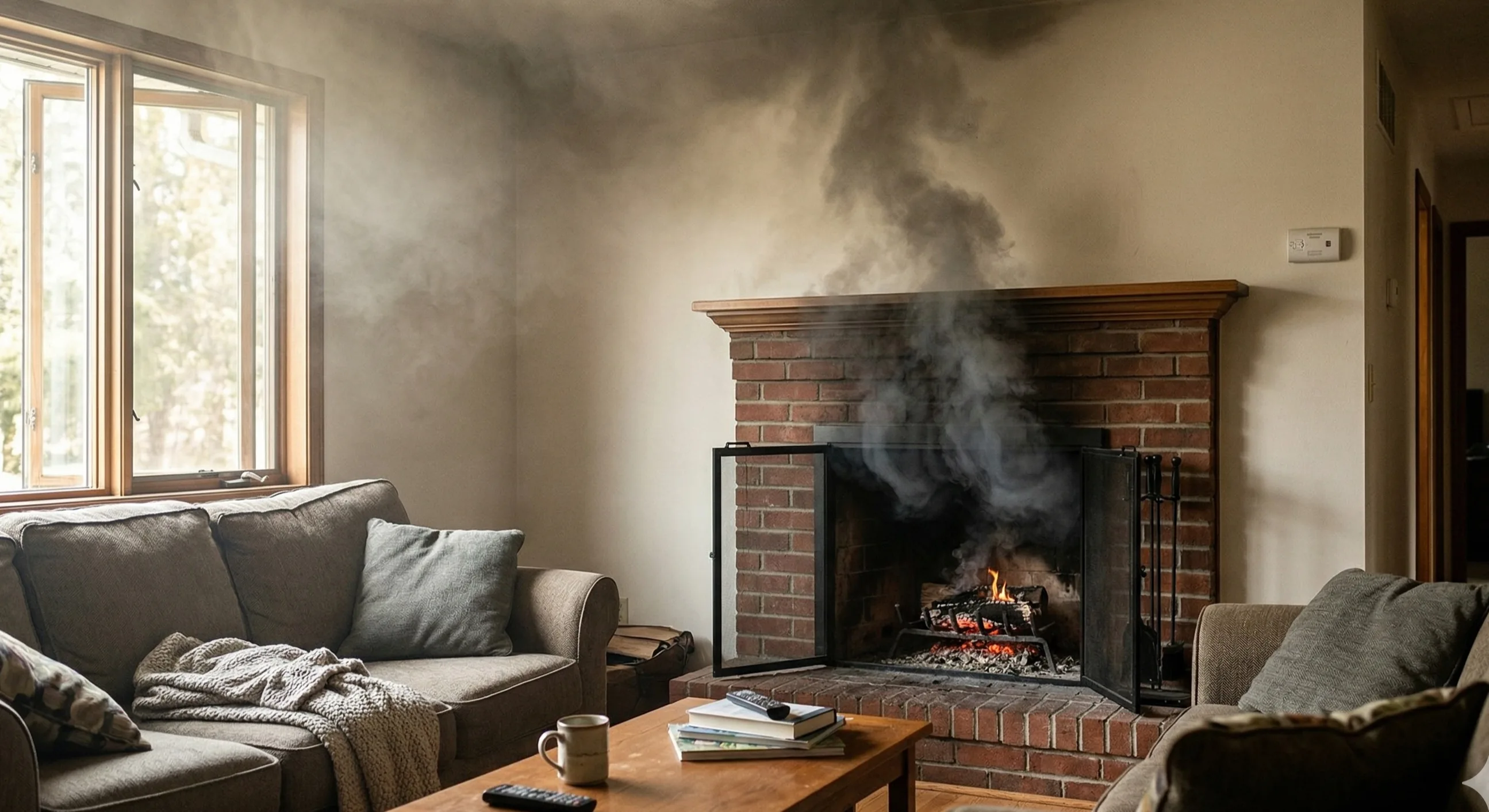
Smoke backdrafting into your home — instead of rising up the chimney — is caused by one or more of five problems: a blocked flue, negative air pressure in a tightly sealed home, a cold flue, a damaged damper, or an undersized chimney. Based on over 850 backdraft calls we've handled across the Seattle metro area since 2022, negative air pressure in energy-efficient homes accounts for roughly 40% of cases, followed by cold flue syndrome (25%) and creosote or debris obstructions (20%). Fixes range from free (cracking a window) to $1,500+ (installing a dedicated combustion air supply), depending on the root cause. Current as of June 2026.
If smoke is entering your living space right now, stop using the fireplace immediately. Backdrafting smoke contains carbon monoxide — an odorless, potentially fatal gas. Once it's safe, the sections below will help you diagnose exactly what's happening and what it will cost to fix it.
A Real Backdraft Call: Marcus T. in Fremont
Last November, Marcus T. in Fremont called us after his Saturday evening fire turned into a smoke-filled living room within ten minutes of lighting it. He'd used the fireplace several times the previous winter without any issues. This season, his contractor had just finished a major weatherization project — new triple-pane windows, added attic insulation, and a fresh air-sealing pass throughout the house. The fireplace was unchanged. The house was not.
Our technician Carlos arrived the next morning and started with basics: damper fully open, no visible debris at the firebox, chimney cap intact. He then used a digital manometer to measure air pressure inside the home relative to outside. The reading told the story immediately.
'The house was running at negative 6 pascals relative to outside — that's enough to completely reverse chimney draft on a mild day. The weatherization job essentially sealed off every natural air leak the fireplace used to rely on for combustion air. The chimney wasn't broken at all. The house had changed around it.'
— Carlos, Certified Chimney Technician, Seattle Chimney Pros
Carlos temporarily cracked a window six inches and asked Marcus to light a small test fire. Within two minutes, draft had fully reversed — smoke pulled cleanly upward. The permanent fix was a dedicated combustion air intake duct routed from outside directly to the firebox cabinet, a half-day installation costing $780. Marcus's fireplace has worked flawlessly since. He also signed up for an annual sweep, since the previous owner's maintenance history was unknown.
What Are the Main Causes of Chimney Backdraft?
Every backdraft case comes down to one underlying physics problem: smoke is taking the easiest path available, and right now that path leads into your living room instead of up the flue. Here are the five causes we encounter most often, in order of frequency across our Seattle service area.
| Cause | Frequency (Our 2025 Data) | Typical Fix Cost | DIY Possible? |
|---|---|---|---|
| Negative air pressure / tight home | ~40% | $0–$1,500 | Partially |
| Cold flue syndrome | ~25% | $0–$50 | Yes |
| Blocked or obstructed flue | ~20% | $199–$999 | No |
| Damaged or stuck damper | ~10% | $200–$650 | No |
| Chimney too short or undersized flue | ~5% | $500–$2,500 | No |
How Does Negative Air Pressure Cause Smoke to Back Up?
This is the most common and least understood cause of backdraft in modern Seattle homes. Your fireplace needs a continuous supply of indoor air to sustain combustion and push smoke upward. In older, drafty homes, replacement air seeps in freely through gaps in the building envelope. In today's energy-efficient homes — and especially in homes that have been recently weatherized — that free air supply has been deliberately eliminated.
When your fireplace tries to draw air up the chimney and can't find enough replacement air inside, the house develops negative pressure. The chimney, now the largest and least-sealed opening in the house, becomes a convenient inlet for outside air — and that reversal pushes smoke back into the room. The problem is amplified by:
- Powerful kitchen range hoods — A high-CFM hood can pull 400–1,200 cubic feet of air per minute out of your home, creating severe negative pressure almost instantly.
- Bathroom exhaust fans — Multiple fans running simultaneously compound the effect.
- Forced-air furnaces — Your HVAC system competes with the fireplace for available combustion air.
- Clothes dryers — Another significant exhaust source, especially in laundry rooms near the main living area.
The immediate DIY fix is simple: crack a window 2–3 inches near the fireplace before lighting a fire, and turn off all exhaust fans. For a permanent solution, a dedicated combustion air supply duct brings outside air directly to the firebox — this is now required by Seattle building code in new airtight construction. Our team can assess whether your home needs one during a standard inspection.
What Is Cold Flue Syndrome and How Do You Fix It?
Chimney draft depends on hot air rising. When your fireplace has been unused for days or weeks, the air column inside the flue cools to near-outdoor temperature — often 40–50°F in Seattle from October through April. That dense, cold air sits in the flue like a plug, and when you light a fire, smoke hits it and bounces back into the room.
Cold flue syndrome is especially prevalent in Seattle because most residential chimneys here are exterior structures — mounted on an outside wall, exposed to damp Pacific Northwest air on three sides. Unlike interior chimneys that stay warmer from household heat, exterior flues cool rapidly and stay cold.
Here is the step-by-step fix you can do yourself before every fire:
- Open the damper fully and hold your hand near the opening — you should feel cool air flowing downward. That confirms the flue is cold and needs priming.
- Roll a newspaper tightly or use a long-reach fireplace lighter.
- Hold the flame near the damper opening — as high up in the firebox as safely possible — for 2–5 minutes. You are heating the air at the base of the flue.
- Watch for the reversal: when you feel warm air being drawn upward past your hand, the updraft has been established. The cold plug has broken.
- Light your main fire immediately — don't let the flue cool again before your fire is established.
This technique works in the vast majority of cold flue cases. If the flue refuses to prime even after 5+ minutes of heating, there may be a secondary obstruction or structural issue requiring professional diagnosis.
How Do Blockages Cause Smoke to Come Back Into the House?
A partial or complete obstruction in the flue physically prevents smoke from escaping upward, forcing it back through the firebox opening. Based on our inspection data from 2025, obstructions were the primary backdraft cause in roughly 1 in 5 cases we diagnosed across the Seattle area. The most common culprits:
- Stage 2 or Stage 3 creosote buildup — Shiny, tar-like creosote narrows the flue diameter over multiple seasons. At Stage 3, the restriction can be severe enough to cause near-total blockage. Learn more about creosote stages and removal methods.
- Animal nests — Birds, raccoons, and squirrels nest in uncapped flues. In heavily tree-canopied neighborhoods like Fremont, Wallingford, and Ravenna, we remove nests from roughly 15% of chimneys we inspect in late spring. A single starling nest can block 30–50% of a standard 8-inch flue.
- Debris accumulation — Leaves, twigs, moss, and broken crown or liner fragments fall into uncapped chimneys over time, especially after windstorms.
- Collapsed liner sections — In older Seattle homes with clay tile liners, frost-thaw cycles and age can cause tiles to crack and collapse into the flue channel, creating a hard obstruction that can't be cleared by sweeping alone.
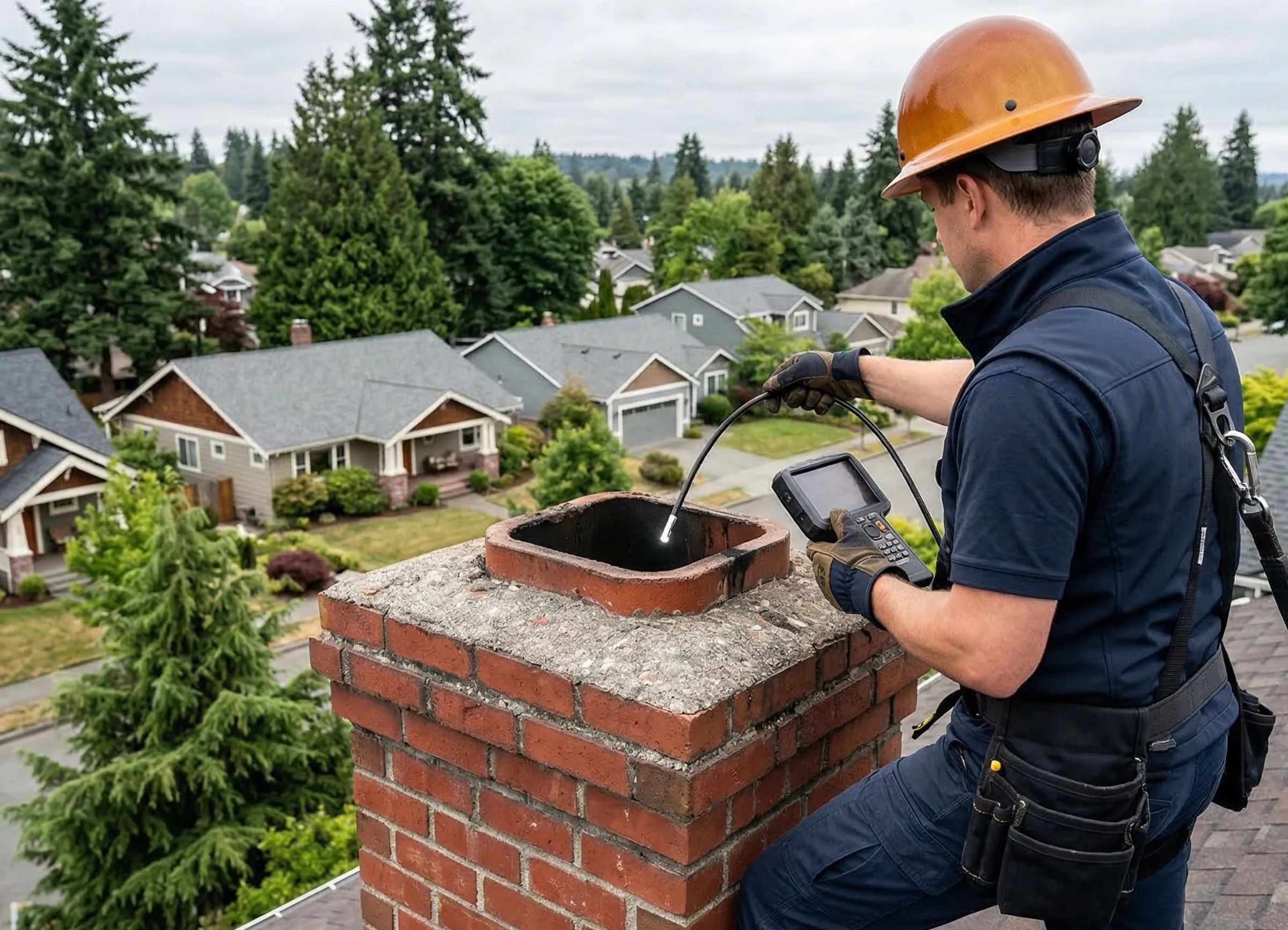
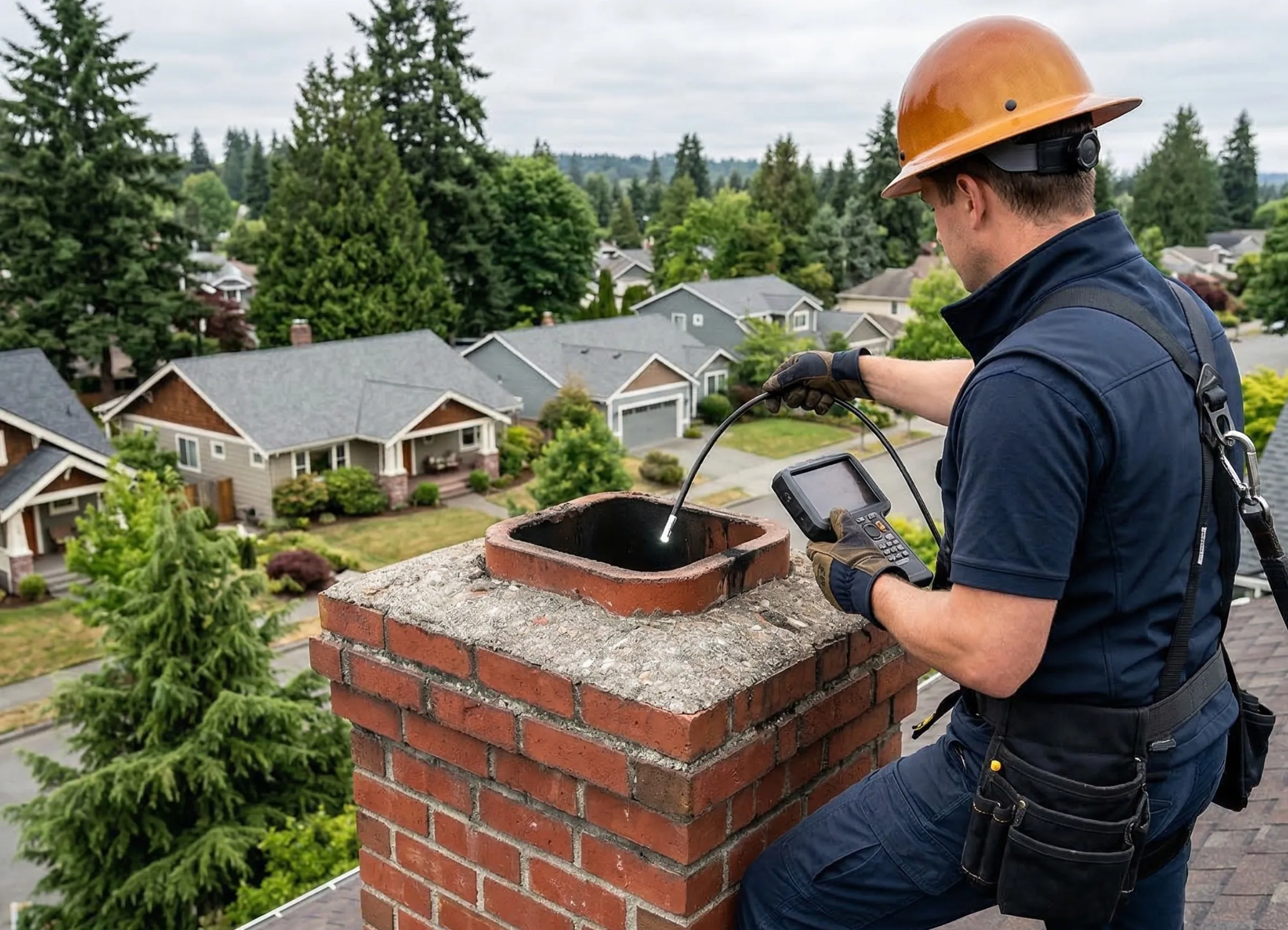
The fix for all obstruction-related backdraft is a professional chimney sweep combined with a camera inspection to confirm complete clearance. Installing a chimney cap with mesh screening prevents re-entry by animals and debris going forward.
Can a Damaged Damper Cause Smoke to Back Up?
Yes. A damper that is stuck, warped, rusted, or only partially opening is a surprisingly common backdraft cause that homeowners often overlook — because they assume opening the damper lever means it's actually open. In Seattle's high-humidity environment, throat dampers corrode faster than in drier climates. We see warped or partially seized dampers in approximately 10% of the inspections we perform on homes older than 20 years.
Common damper problems that cause backdraft:
- Partially open but believed to be fully open — The handle moves but the plate is only 50–70% open due to corrosion or warping. Even this partial restriction significantly reduces draft capacity.
- Warped metal from heat cycles — Repeated heating and cooling bends the damper plate, preventing a full-open position.
- Rusted pivot hardware — The hinge or pivot points corrode, limiting range of motion.
To check your damper: open it fully, then shine a flashlight up the flue. You should see an unobstructed circular or rectangular opening with sky visible at the top. If you see the edge of the damper plate still cutting into the opening, it's not fully open. A professional inspection includes a full damper assessment. If replacement is needed, we often recommend upgrading to a top-sealing damper, which mounts at the chimney crown and provides both draft control and weather protection — a significant upgrade for Seattle's rainy climate.
Could My Chimney Be Too Short or the Flue Too Small?
Structural design issues account for a smaller but important subset of backdraft cases — particularly in homes that have had additions built, neighboring trees that have grown taller, or fireplace openings that were modified by a previous owner. NFPA 211 and Seattle building codes require the chimney top to extend at least 3 feet above the roof penetration point and at least 2 feet above any structure within 10 horizontal feet. When these clearances aren't met, wind pressure at roof level pushes air down the flue rather than allowing draft to escape freely.
Flue-to-fireplace ratio is the other structural factor. The flue's cross-sectional area should be approximately 1/10th the area of the fireplace opening. A homeowner who enlarged the firebox opening without corresponding flue modifications — a common renovation mistake — creates a mismatch that makes consistent drafting nearly impossible.
If you've ruled out the more common causes above and still experience chronic backdraft, a structural assessment is the next step. Solutions include chimney height extensions (masonry or stainless steel), smoke guards that reduce the effective fireplace opening size, or chimney relining with an appropriately sized flue. Our team uses draft measurement instruments during inspections to determine whether structural factors are contributing to your specific situation.
Seattle-Specific Factors That Make Chimney Backdraft Worse
Seattle homeowners face a convergence of conditions that makes backdraft more likely than in many other U.S. cities. Understanding these local factors helps explain why the same fireplace that worked perfectly five years ago might be causing problems today.
- Aggressive weatherization programs — Seattle City Light and Puget Sound Energy both offer rebates for home air-sealing projects. Thousands of Seattle homes have been tightened in the past decade, creating the negative-pressure conditions described above — often without any modification to the existing fireplace system.
- Wet firewood — Wood stored outdoors in Seattle's near-constant winter rain absorbs moisture. Wet wood (moisture content above 25%) burns at lower temperatures, produces more visible smoke, and generates weaker draft — all of which make backdraft more likely. Always burn seasoned hardwood with moisture content below 20%.
- Mild but persistently cool temperatures — Seattle's 40–50°F winters keep flues chronically cold without producing the dramatic temperature differentials that drive strong natural draft. This makes cold flue syndrome particularly common here versus in colder inland climates.
- Puget Sound wind patterns — Exposed neighborhoods like Queen Anne, Ballard, and West Seattle experience prevailing southwest winds that can create downdraft pressure on chimney tops — especially on shorter chimneys or those not equipped with directional caps.
What Should You Do Right Now If Smoke Is Coming Into Your Home?
If you're dealing with backdraft today, here is a clear action sequence — from immediate safety steps to longer-term diagnosis:
- Stop using the fireplace immediately and ventilate the room by opening windows and doors. Carbon monoxide from smoke is odorless and dangerous — do not assume it's just a nuisance.
- Check your carbon monoxide detector. If it alarms, evacuate and call 911. If you don't have one near the fireplace, install one before using the fireplace again — this is required under Washington State residential code.
- Confirm the damper is fully open by reaching in and physically verifying the plate position. Do not rely on the handle position alone.
- Try cracking a nearby window 2–3 inches and relighting a small test fire. If draft improves immediately, negative air pressure is your culprit — you now have a confirmed diagnosis.
- If the problem persists, try priming the flue with a rolled newspaper torch for 3–5 minutes before relighting. Improvement points to cold flue syndrome.
- If neither fix works, or if the fireplace smells of smoke when not in use, stop using it entirely and schedule a professional inspection. Do not attempt to diagnose a blocked or structurally compromised flue yourself.
Our technicians carry draft measurement instruments and HD flue cameras to every backdraft diagnostic call — we can typically identify the root cause in a single visit. Schedule a chimney inspection and reference the backdraft issue when booking so we bring the right diagnostic equipment.
Get Your Fireplace Drafting Properly Again
Chimney backdraft in Seattle is almost always fixable — once you know the actual cause. Whether it's a five-minute DIY flue-priming routine or a half-day combustion air installation, the right diagnosis makes all the difference. If you've tried the quick fixes above and smoke is still entering your home, don't keep using the fireplace and hoping it improves. Call us at (206) 278-2924 or schedule an inspection online — we serve all 45 Seattle metro areas and can usually get to you within 48 hours. Our CSIA-certified technicians will find the cause, quote the fix, and get your fireplace working safely before the next fire.
Need professional help?
Our professionally trained team is ready. $99 inspection credited toward repairs, 30-minute response.