White Stuff on Chimney Bricks? Efflorescence Explained for Seattle Homes (2026)
What Is the White Stuff on Chimney Bricks — and Should You Worry?
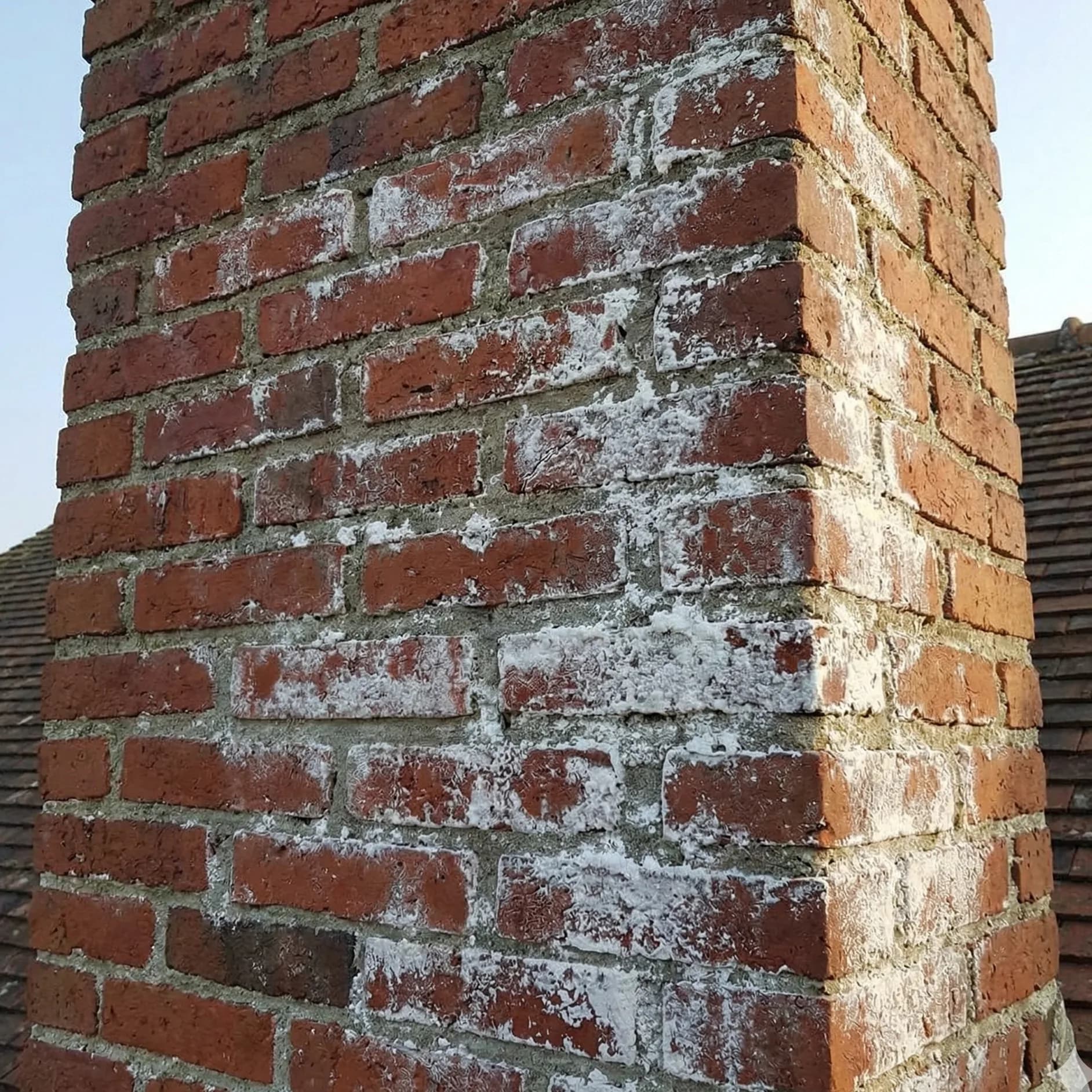
That white, chalky powder on your chimney bricks is called efflorescence — mineral salts left behind when water migrates through masonry and evaporates on the surface. In Seattle, it's the single most common chimney complaint we field from homeowners, and for good reason: our 152 annual rain days keep brick chimneys saturated for months at a time. Based on inspections our team completed across the Seattle metro area in 2025, efflorescence appears on roughly 6 in 10 brick chimneys we examine. Efflorescence itself is not structurally dangerous, but it is a reliable early warning sign that water is actively moving through your chimney. Left unaddressed, that moisture causes spalling, mortar failure, and — in serious cases — structural deterioration that can cost $3,000 to $12,000 to fix. Caught early, the solution is usually $300 to $700 in professional waterproofing. Current as of June 2026.
Case Study: Marcus T.'s Greenwood Chimney and the White Stripes That Wouldn't Go Away
Marcus T. had owned his 1952 Greenwood craftsman for three years before he noticed the white streaking running down the front face of his brick chimney. He assumed it was mineral buildup from the rain and scrubbed it off with a brush. Two months later it was back, thicker than before. A neighbor mentioned she'd used Seattle Chimney Pros after a similar issue, so Marcus gave us a call in early April 2026.
Ryan arrived on a drizzly Tuesday morning and walked the perimeter of the chimney before even touching a ladder. From the ground he could already see the problem extended beyond cosmetics. The efflorescence was concentrated along the mortar joints on the north face — classic of a wind-driven rain exposure — and there was a hairline crack running along the chimney crown that was funneling water directly into the masonry system.
Up on the roof, Ryan found a crown that had cracked in at least three places, likely from the mild freeze-thaw cycles Seattle had seen that January. Water was entering the crown, migrating down through the mortar, picking up mineral salts, and exiting on the brick face. The mortar itself was still structurally sound — no immediate tuckpointing needed — but without intervention the water would accelerate that deterioration within another two to three Seattle winters.
'The efflorescence on Marcus's chimney was actually doing its job — it was telling us exactly where the water was getting in. The crown crack at the top was the entry point, the north-face mortar joints were the highway, and the white staining was the exit sign. Fix the crown, seal the masonry, and the efflorescence stops.'
— Ryan, Field Technician, Seattle Chimney Pros
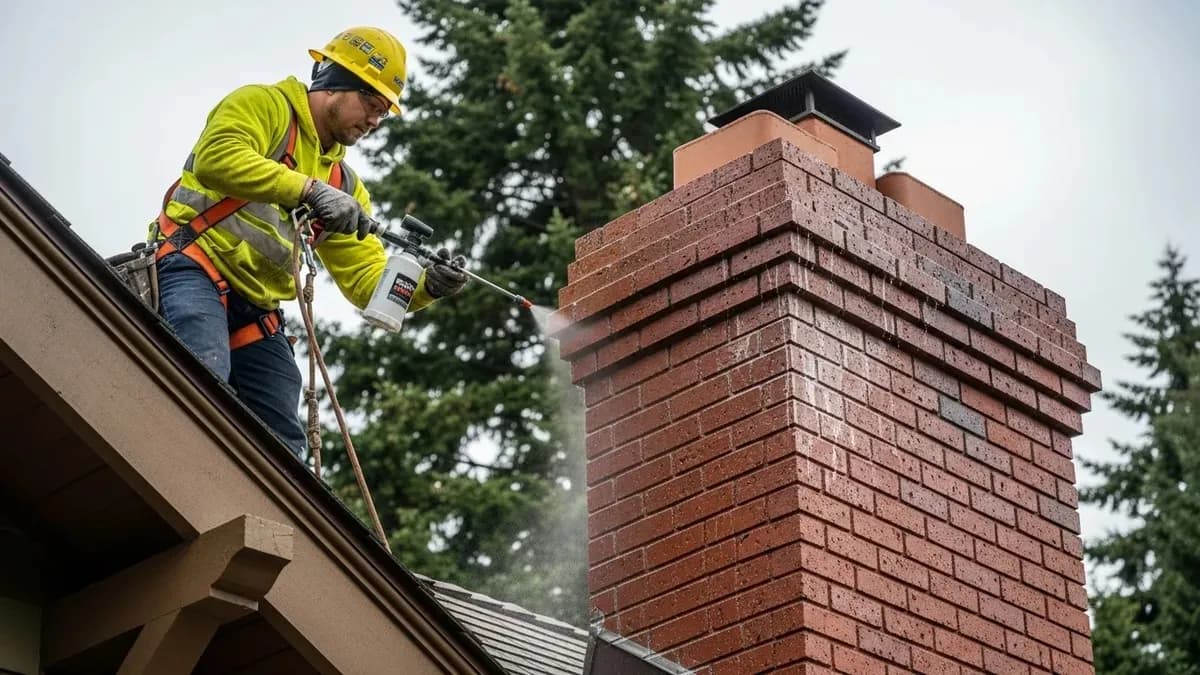
Ryan sealed the crown cracks with a flexible elastomeric crown coat and applied a breathable silane/siloxane waterproofing treatment to all four faces of the chimney. The total job took about three hours and cost Marcus $520. By late May, when Marcus checked after a stretch of rainy weather, the brick was clean. 'Honestly I just thought it was one of those things you lived with,' he told us. 'I had no idea it was telling me something.'
What Causes Efflorescence — and Why Is Seattle So Prone to It?
Efflorescence is a straightforward chemical process that requires two ingredients: water and soluble salts inside your masonry. Seattle's climate provides the water in abundance, and every brick chimney contains the salts naturally. Here's the sequence:
- Water enters the brick or mortar — Rain, condensation, or a cracked crown allows moisture to penetrate the porous masonry surface. Seattle bricks can stay continuously saturated from October through April.
- Water dissolves mineral salts — Moving through the masonry, water picks up naturally occurring salts — primarily calcium carbonate, sodium sulfate, and potassium sulfate — embedded in brick and mortar materials.
- Capillary action pulls the solution outward — The salt-laden water migrates toward the exterior surface of the chimney, driven by evaporation and capillary pressure.
- Water evaporates, salts crystallize — At the surface, the water evaporates and leaves behind white crystalline mineral deposits. That's efflorescence.
- Freeze-thaw cycles worsen the cycle — When temperatures hover near freezing (common in Seattle winters), water inside the brick expands as it freezes, enlarging micro-cracks and allowing even more water penetration the next rain cycle.
Seattle-specific factors that amplify the problem: 152 annual rain days, sustained ambient humidity above 70% even between storms, wind-driven rain that hits chimneys from all directions, and a large housing stock of 70- to 100-year-old brick that has become increasingly porous with age. Hilltop neighborhoods like Queen Anne and Capitol Hill see higher rates because their exposed positions catch more wind-driven rain on all four chimney faces.
Is Efflorescence Cosmetic or a Structural Warning?
Efflorescence exists on a spectrum. Knowing where your chimney falls determines whether you need a wire brush or a contractor.
| What You See | What It Means | Action |
|---|---|---|
| Light, powdery white film that brushes off easily | Minor moisture movement, likely seasonal | Clean and monitor; consider waterproofing |
| Deposits return within weeks of cleaning | Chronic water migration — source not sealed | Professional inspection + waterproofing |
| Thick, crusty buildup with brick face flaking or popping | Freeze-thaw spalling — structural damage underway | Inspection + brick replacement + waterproofing |
| Efflorescence + soft or missing mortar joints | Water has compromised mortar integrity | Tuckpointing + waterproofing |
| White staining outside + water stains inside near firebox | Water migrating completely through chimney | Urgent inspection — multiple repair points likely |
| Efflorescence with moss or dark biological growth | Masonry stays wet long enough to support growth | Inspection + biological treatment + waterproofing |
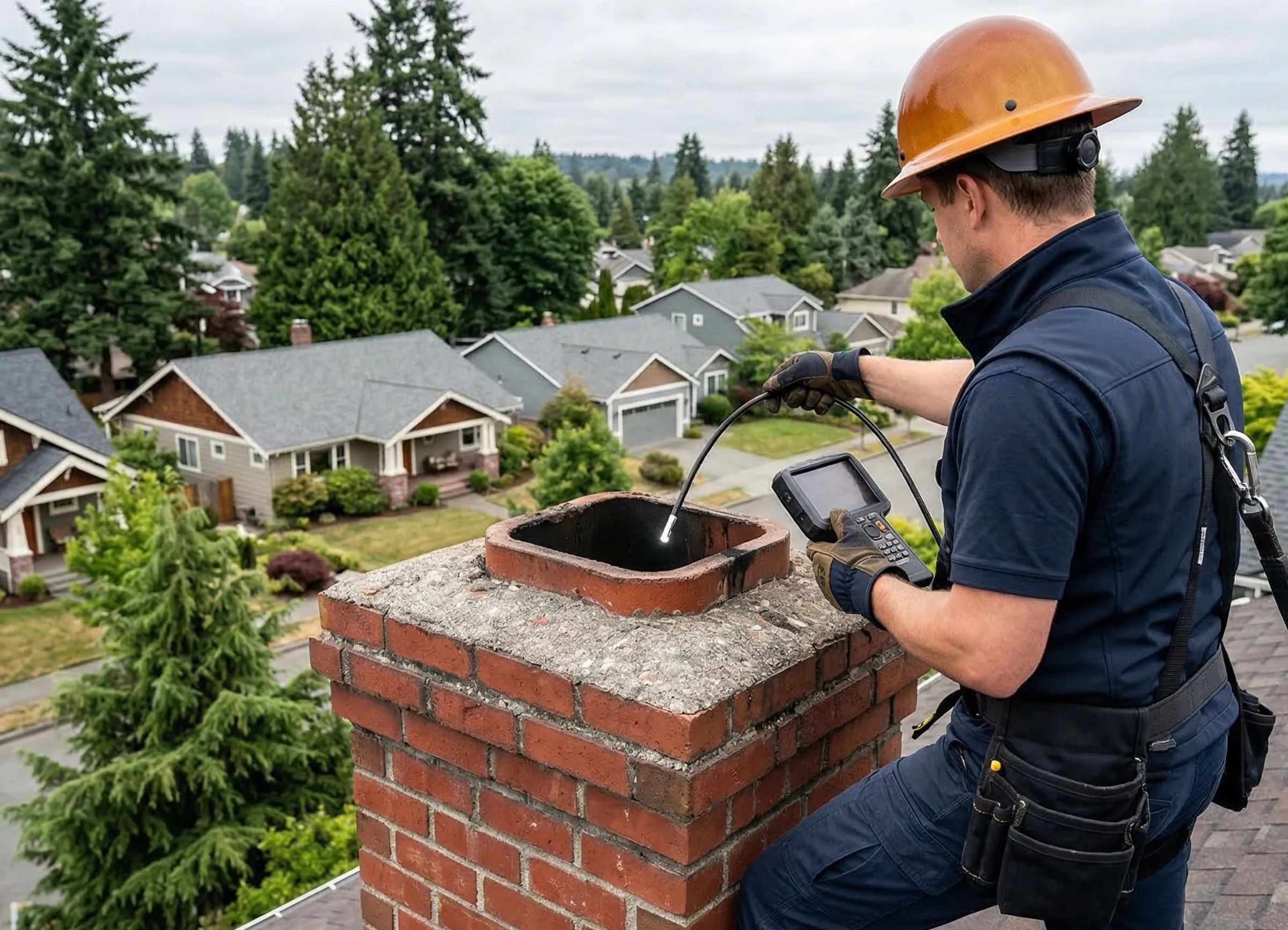
In our experience across Seattle-area homes, roughly 35% of the chimneys we inspect with visible efflorescence show at least one secondary condition — spalling, mortar deterioration, or a cracked crown — that requires repair beyond cleaning. That's why we recommend a professional chimney inspection ($149–$249) whenever efflorescence is recurring or heavy. The inspection pays for itself immediately if it catches early-stage damage before it compounds.
How Do You Clean White Efflorescence Off Chimney Bricks?
For light, cosmetic efflorescence without accompanying structural issues, cleaning is a reasonable first step. Here's the correct process:
- Choose a dry weather window — Wait for at least two or three consecutive dry days so the brick surface is as dry as possible. Cleaning saturated brick just redistributes the salts instead of removing them.
- Dry-brush the deposits — Use a stiff-bristle nylon brush to scrub off as much of the dry crystalline material as you can. Do not use a wire brush — it can scratch and damage the brick face, especially on older Seattle-area homes with softer hand-molded brick.
- Apply a mild acid solution — Mix one part white vinegar to three parts water, or use a commercial efflorescence remover. Apply to the affected area, allow it to dwell for five to ten minutes, then scrub with the nylon brush. For pre-1940 brick (common in Wallingford, Ballard, and Fremont), skip the acid — it can damage softer historic brick. Use plain water and the brush only.
- Rinse with low-pressure water — Do NOT use a pressure washer. High-pressure water drives moisture deeper into the masonry, worsening the underlying saturation problem. A standard garden hose is ideal.
- Allow the chimney to dry completely — Give it at least a week of dry weather before evaluating the result. If efflorescence returns within a month, the moisture source has not been addressed and professional evaluation is needed.
Cleaning removes the salt deposits but does nothing to stop future water migration. For lasting results, cleaning should always be followed by a waterproofing treatment that blocks water from re-entering the masonry.
What Is the Best Long-Term Fix for Chimney Efflorescence in Seattle?
Cleaning treats the symptom. Professional chimney waterproofing treats the cause. In Seattle's climate, waterproofing is the most cost-effective long-term investment you can make in chimney preservation — and we consistently recommend it to any homeowner whose chimney has shown efflorescence in the past two years.
- Breathable silane/siloxane sealant — This is the critical distinction: professional-grade masonry sealants block liquid water from entering the brick while still allowing water vapor to escape from inside. Non-breathable products like paint or standard waterproofing trap moisture inside the masonry and dramatically accelerate freeze-thaw damage. Always specify a vapor-permeable sealant.
- Crown repair or replacement — A cracked chimney crown is the most common water entry point we find in Seattle. Sealing cracks with elastomeric crown coat costs $150–$350. A full crown replacement runs $400–$900. In Marcus's case above, the cracked crown was the primary culprit.
- Chimney cap installation — A properly fitted cap prevents rain from falling directly into the flue opening. Chimney cap installation in Seattle typically costs $175–$375, depending on flue size and cap material.
- Flashing inspection and repair — The junction where the chimney meets the roof is a major vulnerability. Failed flashing allows water to run behind the chimney and saturate the masonry from the back side, sometimes creating efflorescence that appears to have no obvious cause.
A complete waterproofing service — sealant application plus crown sealing plus cap installation — typically costs $450–$850 at a Seattle home and lasts five to seven years. Based on 14 years of follow-up data from our customers, homes that receive professional waterproofing see a dramatic reduction in recurring efflorescence and avoid the $3,000–$8,000 structural repairs that unchecked moisture eventually causes.
When Does Efflorescence Mean You Need Chimney Repair?
Waterproofing is not enough when the damage has already progressed. If efflorescence is accompanied by any of the following, schedule a chimney inspection and budget for repair:
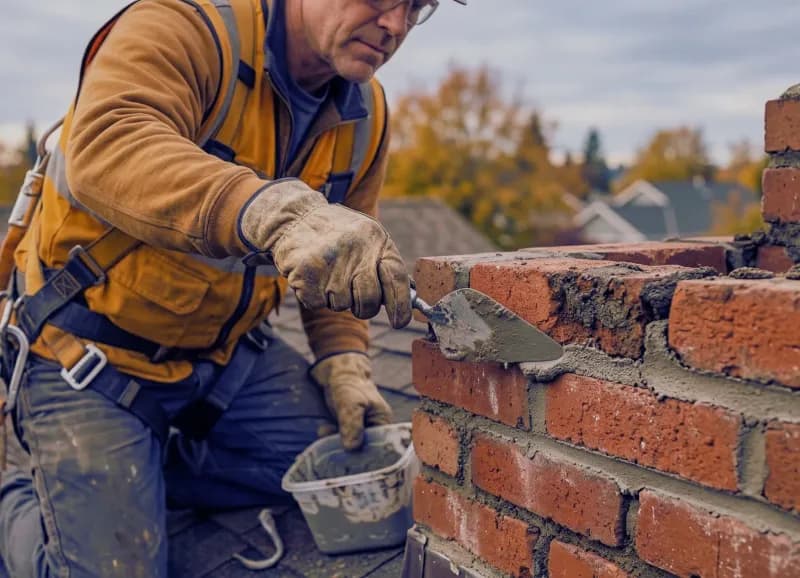
- Spalling bricks — Brick faces that are crumbling, flaking, or missing chunks have been structurally compromised by freeze-thaw cycles. Individual spalled bricks can be replaced by tuckpointing; widespread spalling may require a partial chimney rebuild. Learn more about chimney repair costs in Seattle.
- Soft or recessed mortar joints — If you can push a screwdriver more than a quarter inch into the mortar between bricks, those joints need professional tuckpointing. Deteriorated mortar is an open highway for water into the masonry core.
- Interior water stains — Dampness, water stains, or a musty smell near your firebox means moisture has migrated completely through the chimney structure. Multiple repair points are likely.
- Chimney leaning or separating from the house — Chronic water infiltration over years can undermine the chimney's structural base. Tilting or visible separation from the roofline is a serious safety issue requiring immediate professional assessment. See our guide on signs your chimney needs repair for a full checklist.
Seattle's wet climate means there is no such thing as a chimney problem that improves on its own. Every season of deferred maintenance expands the damage and the repair bill. Catching issues early — when efflorescence is the only symptom — is always the most affordable path.
Ready to Stop the White Staining for Good?
Efflorescence is your chimney's way of telling you water is winning. The good news: caught at the efflorescence stage, the fix is straightforward and affordable. Our CSIA-certified technicians inspect hundreds of Seattle chimneys every year, and we can tell you within a single visit whether your white staining is cosmetic or the beginning of something more serious. Call us at (206) 278-2924 or schedule an inspection online — most appointments are available within the week.
Need professional help?
Our professionally trained team is ready. $99 inspection credited toward repairs, 30-minute response.