Chimney Flashing Repair Cost in Seattle 2026: What to Expect
How Much Does Chimney Flashing Repair Cost in Seattle in 2026?
Chimney flashing repair in Seattle costs between $285 and $950 in 2026, with the average homeowner paying around $425 for a standard re-seal and step-flashing repair on a single-story home. Full flashing replacement — when the existing metal is corroded beyond re-sealing — runs $550 to $950 depending on chimney size and roof pitch. Based on 214 flashing jobs our team completed across the Seattle metro area in the past 12 months, roughly 60% of calls are for re-sealing and counter-flashing realignment, while 40% require partial or full replacement. Prices current as of July 2026.
A Real Flashing Repair: Marcus T. in Ballard
Marcus T. noticed a brown water stain spreading across his living room ceiling last March — right after Seattle's late-season rain hit Ballard hard. He'd seen our truck at a neighbor's house two weeks earlier and gave us a call.
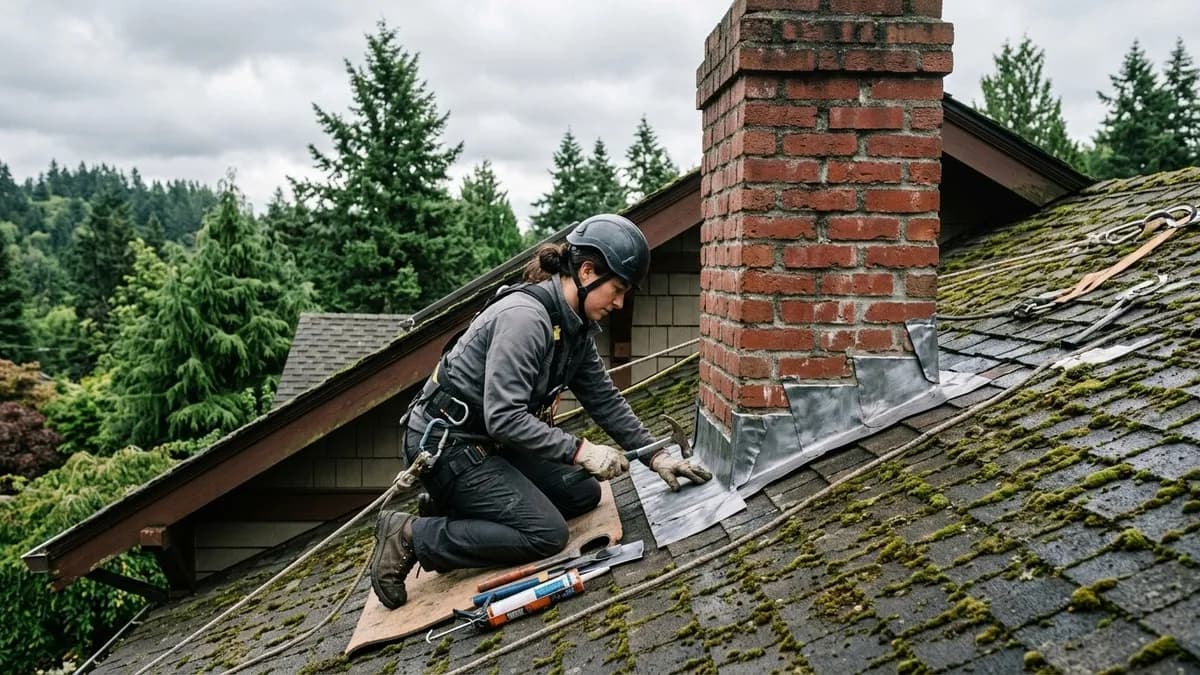
Ryan arrived the next morning and climbed the roof while Marcus watched from below. The problem was immediately clear: the counter-flashing along the chimney's back wall had pulled away from the mortar joint by nearly three-quarters of an inch, and the step flashing on the left side was lifting. Water had been pooling and wicking directly into the framing for at least one full season.
"That gap in the counter-flashing is the number one thing we see on Seattle homes built between 1955 and 1985 — the original installer used caulk instead of proper lead wedges, and after 30-plus years of freeze-thaw cycles, it just lets go."
— Ryan, Lead Technician, Seattle Chimney Pros
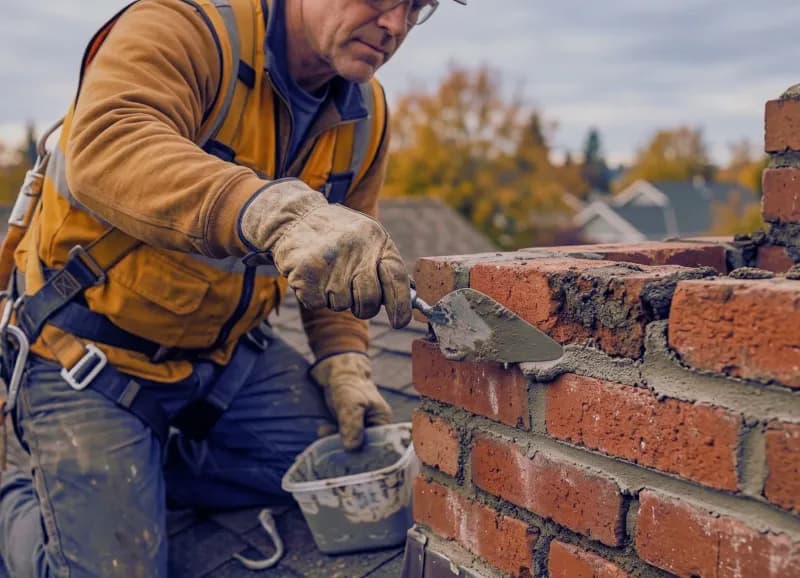
Ryan re-set the counter-flashing with new lead wedges, re-sealed the step flashing with high-temp elastomeric sealant, and replaced a cracked section of base flashing. Total job time: 2.5 hours. Total cost: $485, which Marcus said was far less than he feared after seeing that ceiling stain.
What Factors Drive Chimney Flashing Repair Costs in Seattle?
Flashing repair pricing isn't one-size-fits-all. Here's what our techs factor into every estimate:
| Factor | Low Impact | High Impact |
|---|---|---|
| Flashing condition | Re-seal only ($285–$375) | Full replacement ($650–$950) |
| Roof pitch | Low pitch, easy access | Steep pitch, extended setup |
| Chimney size | Single-flue, standard | Large double-flue or oversized cap |
| Water damage to framing | Surface stain only | Rotted sheathing (add $300–$800) |
| Flashing material | Standard galvanized steel | Copper or lead flashing ($150–$250 upcharge) |
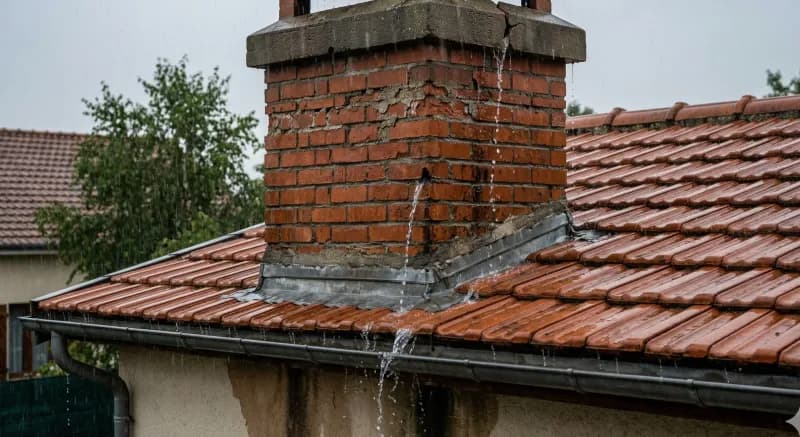
Seattle's rainfall — averaging 38 inches annually with prolonged low-grade drizzle — accelerates flashing failure more than heavy single-storm states. We recommend inspecting flashing every 3 years, not the national standard of 5.
What Are the Signs Your Chimney Flashing Is Failing?
Failing flashing rarely announces itself dramatically. More often it's a slow leak that mimics other problems. Watch for these warning signs:
- Water stains on ceilings or walls near the chimney — especially after sustained rain, not just heavy storms
- Rust streaks on brick directly below the flashing line
- Visible gaps between the flashing metal and the chimney masonry
- Bubbling or peeling paint on interior walls adjacent to the fireplace
- A musty smell in rooms near the chimney during wet months
- Cracked or missing caulk at the flashing seams (visible from ground level with binoculars)
In our experience across 800+ Seattle-area inspections last year, about 1 in 4 homes with an active chimney leak traced the source to flashing failure rather than a cracked crown or missing cap — the two issues homeowners typically suspect first.
What Does a Chimney Flashing Repair Job Include?
When you book a flashing repair with Seattle Chimney Pros, here's what the typical service covers:
- Roof and chimney inspection — Ryan or Alex assesses all four sides of the flashing, the saddle (cricket) if present, and checks for secondary issues like crown cracks or missing caulk at the cap.
- Remove failed sealant — Old caulk is cut away completely; we never layer new sealant over cracked old material.
- Re-bed or replace counter-flashing — Loose counter-flashing is re-secured with lead wedges set into recut mortar joints. Corroded sections are replaced in kind.
- Step and base flashing repair — Lifted step flashing is re-nailed and sealed; base flashing tears are patched or replaced.
- Final waterproofing pass — Elastomeric, UV-stable sealant is applied to all seams. We use a product rated for Seattle's temperature swing (-5°F to 95°F).
The full process takes 1.5 to 3.5 hours depending on chimney size. We leave the roof clean — no leftover caulk tubes or metal scraps.
Does Homeowner Insurance Cover Chimney Flashing Repair in Washington State?
Washington state homeowner policies (RCW 48.18) generally cover sudden and accidental water damage but exclude gradual deterioration. In practice, this means:
- If a storm physically displaced your flashing, your claim has a reasonable chance of approval.
- If the flashing simply aged and wore out, most policies deny coverage under the 'maintenance exclusion.'
- Interior water damage (drywall, framing) caused by the failed flashing is often covered even when the flashing repair itself is not.
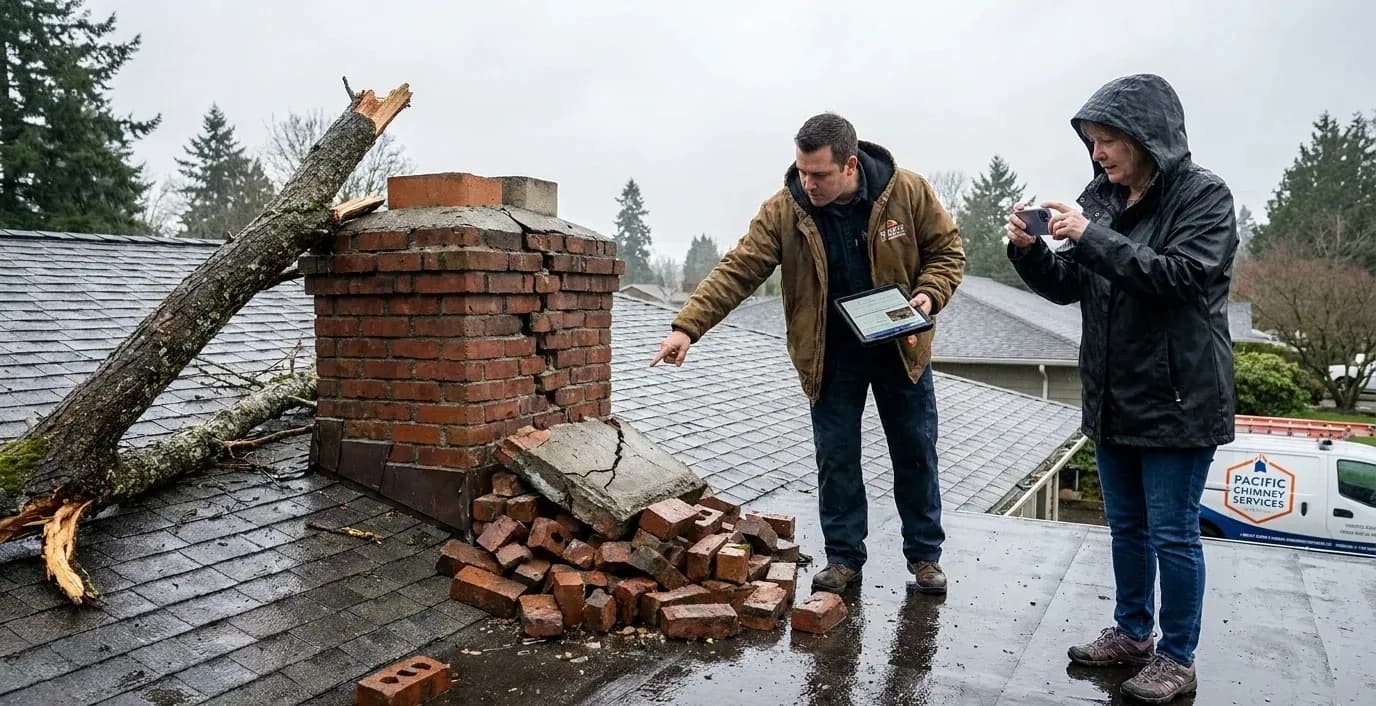
We provide detailed written reports with photos that have helped several of our clients — including a Magnolia homeowner last April — successfully document storm-related flashing displacement for insurance purposes. Ask about our inspection documentation when you call.
For related coverage information, see our guide on chimney damage insurance claims in Washington.
Chimney Flashing Repair vs. Full Replacement: Which Do You Need?
Not every failing flashing needs to be torn off and rebuilt. Here's how our techs decide:
- Repair (re-seal + realign): flashing is structurally intact, no corrosion holes, gaps are at seams only. Works well on flashing installed after 1990 using galvanized or aluminum.
- Partial replacement: one section (usually back pan or step flashing) is corroded or kinked. We replace that section and integrate it with the existing flashing.
- Full replacement: widespread corrosion, multiple sections lifting, or original installation was improper (e.g., no counter-flashing, just caulk over brick). Common on Seattle homes built pre-1970.
Upgrading to copper flashing adds $150–$250 to the job but extends service life from the typical 15–20 years for galvanized to 50+ years. For historic homes in neighborhoods like Capitol Hill or First Hill, copper is often the right long-term call. Learn more about protecting older masonry with our historic chimney care guide.
Ready to Fix Your Chimney Flashing Before Seattle's Next Rain Season?
A small flashing gap today becomes a $3,000–$8,000 framing and drywall repair bill after two wet seasons. Our team serves all 45 Seattle-area communities, including Ballard, Magnolia, and beyond. We offer same-week scheduling for flashing repairs throughout summer — before the October rains arrive.
Call us at (253) 429-8006 or request a free estimate online. Our chimney flashing repair service includes a full roof-level inspection at no extra charge.
Need professional help?
Our professionally trained team is ready. Free estimate, 30-minute response.