Chimney Flashing Repair Cost in Seattle 2026: A Homeowner's Story
What Does Chimney Flashing Repair Cost in Seattle in 2026?
Chimney flashing repair in Seattle costs between $350 and $950 in 2026, with the average homeowner paying around $520 based on 140+ flashing jobs our team completed across the Seattle metro area this past year. Simple re-sealing of separated step flashing runs $350–$475. Full flashing replacement — removing old counter-flashing, fabricating new aluminum or galvanized steel, and resealing every seam — lands in the $650–$950 range. Homes in Ballard, Queen Anne, and Magnolia with steeper roof pitches and older brick chimneys tend toward the higher end due to added safety rigging and custom metal fabrication. Current as of August 2026.
A Real Flashing Repair: Marcus T. in Ballard
Marcus T. noticed a small brown water stain spreading across the ceiling of his Ballard craftsman last February, right after a stretch of heavy rain. He assumed it was a roof issue and called a roofer first — but the roofer pointed at the chimney and suggested he call a chimney specialist instead.
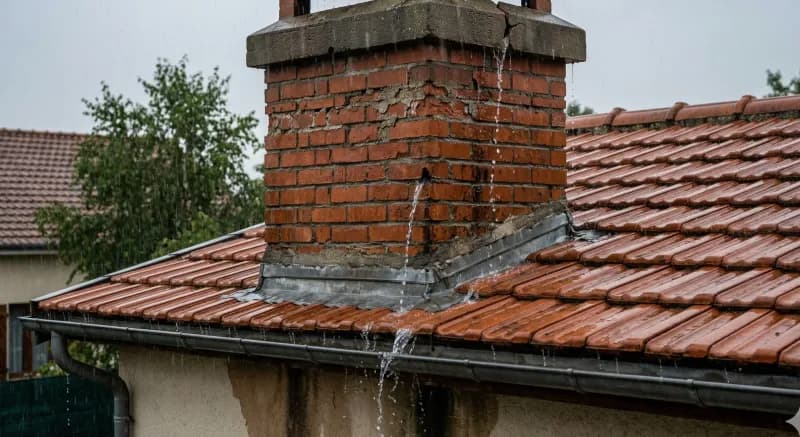
When our tech Ryan arrived, he climbed to the roofline with a flashlight and inspection mirror. What he found was classic Seattle flashing failure: the counter-flashing had separated from the mortar joint by nearly half an inch, and three sections of step flashing along the right side of the chimney were badly corroded — almost paper-thin in spots.
"That gap between the counter-flashing and the mortar joint is basically an open door for water. Every rain event for the past year or two, water was channeling straight into the wall cavity. The stain on Marcus's ceiling was actually the least of his problems — the framing behind the drywall was already showing early moisture damage."
— Ryan, Lead Technician, Seattle Chimney Pros
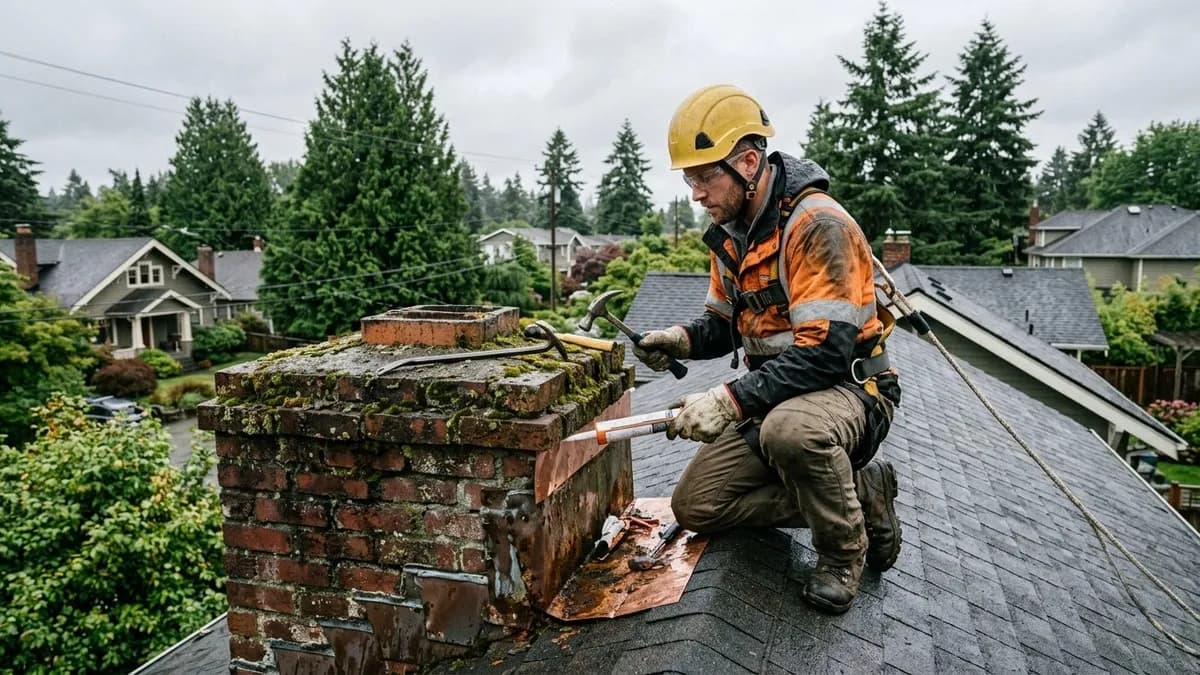
Ryan fabricated new step flashing sections on-site, reset the counter-flashing into fresh mortar, and sealed every seam with elastomeric flashing sealant rated for Pacific Northwest freeze-thaw cycles. Total job time: 3.5 hours. Marcus paid $720, which included full flashing replacement on two sides plus a Level 1 inspection of the flue. "I wish I'd called sooner," Marcus said afterward. "The roofer saved me a lot of money by not just patching over it."
What Causes Chimney Flashing to Fail in Seattle?
Seattle's climate is uniquely hard on chimney flashing. We average 37–39 inches of rain annually, but it's the constant wet-dry-wet cycling — not a single heavy storm — that degrades sealants and corrodes metal over time.
- Mortar joint separation: Brick expands and contracts with temperature. Over years, counter-flashing embedded in mortar joints works loose, especially on chimneys built before 1980.
- Galvanic corrosion: Older homes often have mismatched metals — aluminum flashing against steel fasteners — which accelerates rust in our moist climate.
- Inadequate original installation: Many pre-1990 Seattle homes have flashing that was simply caulked to the brick rather than embedded in mortar joints — a shortcut that lasts 5–10 years, not 30+.
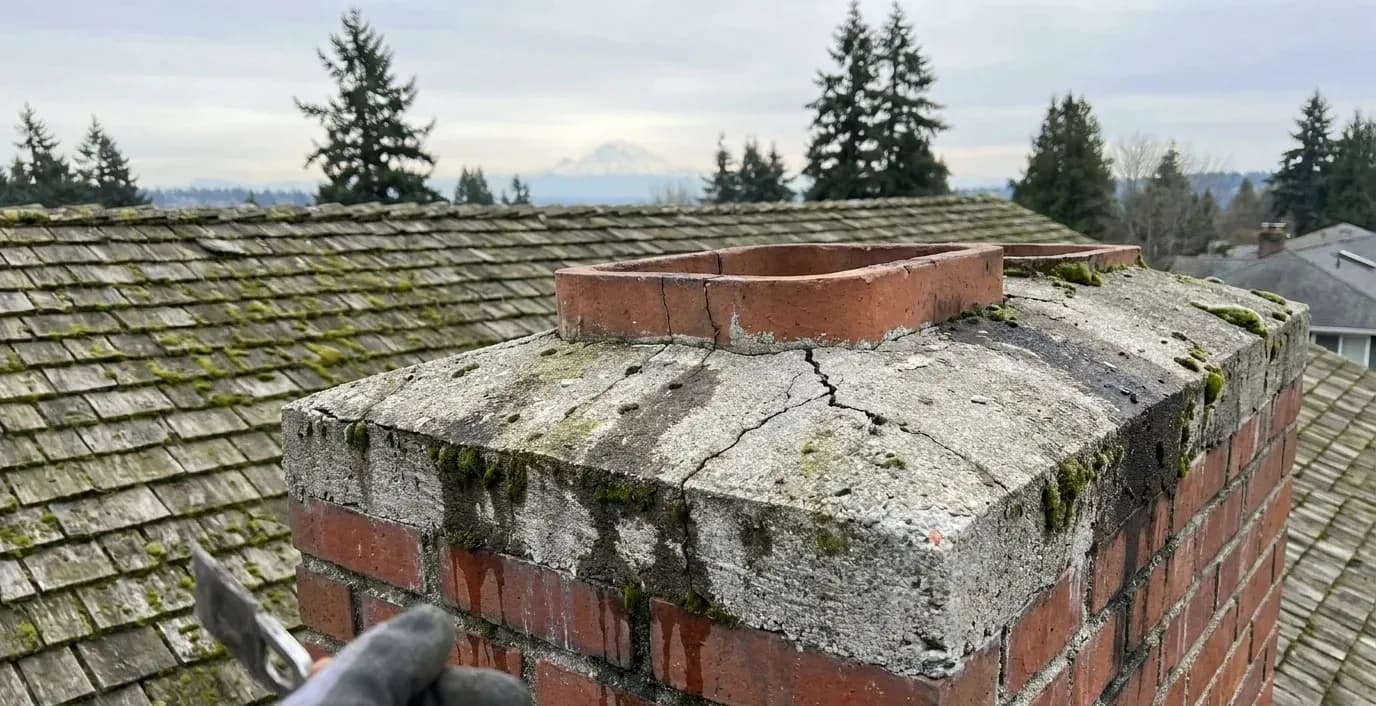
- Moss and debris buildup: Moss growing along the chimney base traps moisture against flashing seams year-round, accelerating deterioration.
- Settling and movement: Seattle's clay-heavy soils cause seasonal settling that stresses flashing connections at the roofline.
In our experience across 140+ flashing repairs last year, roughly 60% of Seattle flashing failures involve some combination of mortar joint separation AND sealant breakdown — rarely just one or the other.
How Do You Know If Your Chimney Flashing Needs Repair?
Flashing failure is one of the most misdiagnosed chimney problems in the Seattle area — it's frequently blamed on roof shingles or attic condensation. Here are the real warning signs:
- Water stains on the ceiling or wall near the fireplace: Especially after rain events — this is the most common first sign.
- Rust streaks on the exterior brick: A diagonal rust streak running from the roofline downward is almost always a flashing problem, not a brick problem.
- Visible daylight between flashing and chimney: If you can see a gap from the ground, water is getting in every time it rains.
- Efflorescence (white powder) on bricks near the roofline: Mineral deposits form where water is repeatedly wicking through masonry — often traced to flashing gaps.
- Musty smell in rooms adjacent to the chimney: Long-term moisture infiltration from failed flashing can cause mold inside wall cavities before any visible ceiling stain appears.
If you notice any of these, avoid lighting fires until the flashing is inspected — water pooling in the firebox or smoke chamber can create hidden structural damage that worsens with heat exposure. Schedule a chimney flashing repair inspection before fall.
Chimney Flashing Repair Cost Breakdown: What You're Actually Paying For
Here's how flashing repair costs break down in the Seattle metro area in 2026, based on our actual job data:
| Repair Type | Cost Range | Avg. Time |
|---|---|---|
| Sealant re-application only | $350–$475 | 1–1.5 hrs |
| Step flashing replacement (1 side) | $475–$625 | 2–3 hrs |
| Full flashing replacement (2 sides) | $650–$850 | 3–4 hrs |
| Full replacement + crown repair | $850–$1,350 | 4–6 hrs |
| Steep pitch surcharge | +$75–$150 | — |
Materials account for roughly 25–35% of total cost. Custom-fabricated aluminum or copper flashing costs more upfront but outlasts off-the-shelf galvanized by 15–20 years in Seattle's wet climate. We recommend aluminum or copper for any home within a mile of Puget Sound due to the salt-air corrosion factor.
For reference, a full chimney repair that combines flashing, crown work, and tuckpointing typically runs $1,200–$2,400 — still far less than the drywall, framing, and mold remediation costs that result from 2–3 years of unchecked water infiltration.
Does Homeowner's Insurance Cover Chimney Flashing Repair in Washington State?
In Washington State, homeowner's insurance typically covers sudden, accidental damage — like flashing torn off in a windstorm. Gradual deterioration and maintenance-related failures (which describe most flashing repairs we see) are almost always excluded under standard HO-3 policies.
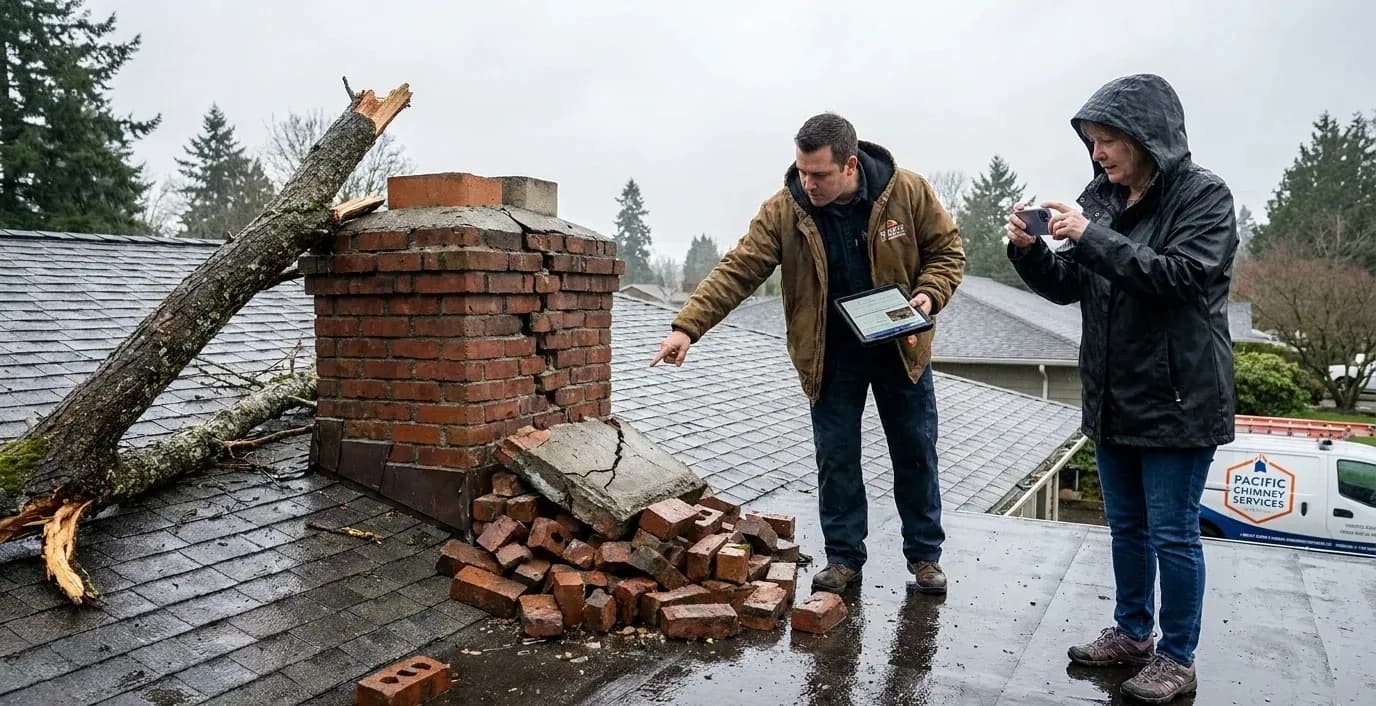
That said, if a documented storm event caused or accelerated the failure, insurers will often cover partial repairs. Key steps: document the damage with timestamped photos immediately after the storm, get a written inspection report from a CSIA-certified technician (we provide these), and file within 30 days of the event. We work with homeowners on insurance claims regularly — see our guide on chimney insurance claims in Washington State for the full process.
Serving Ballard, Magnolia, and all 45 Seattle-area communities, our techs carry documentation kits specifically for insurance work.
Ready to Get Your Chimney Flashing Inspected Before Fall Rains Hit?
August is the ideal time to catch flashing issues before Seattle's rainy season starts in October. A flashing inspection takes about 30 minutes and is included free with any sweep or repair booking. Don't wait until you see a ceiling stain — by then, the water has already been infiltrating for months.
Call us at (253) 429-8006 or schedule online — we're booking flashing inspections and repairs throughout August and September across all Seattle neighborhoods.
Need professional help?
Our professionally trained team is ready. Free estimate, 30-minute response.