Chimney Flashing Repair in Seattle 2026: What Homeowners Pay
How Much Does Chimney Flashing Repair Cost in Seattle in 2026?
Chimney flashing repair in Seattle costs between $350 and $1,200 in 2026, depending on the extent of the damage, the flashing material, and chimney accessibility. Based on 340+ flashing jobs our team completed across the Seattle metro last year, the average homeowner pays $520 for a standard re-seal and step-flashing repair on a single-story home. Larger chimneys on two-story homes in neighborhoods like Queen Anne or Capitol Hill typically run $750–$1,200 due to steeper pitches and more linear footage. Current as of August 2026.
| Repair Type | Typical Cost Range |
|---|---|
| Re-caulk / re-seal only | $350–$500 |
| Step flashing re-set (partial) | $450–$700 |
| Full flashing replacement (single-story) | $600–$900 |
| Full replacement (two-story / steep pitch) | $800–$1,200 |
| Flashing + crown repair combo | $950–$1,500 |
A Real Flashing Job: Marcus T. in Ballard
Marcus T. contacted us in late June after noticing a brownish water stain spreading across his living room ceiling — the kind that appears after three rainy days in a row. He'd assumed it was a roof issue and had already called a roofer, who told him the shingles looked fine and pointed to the chimney.
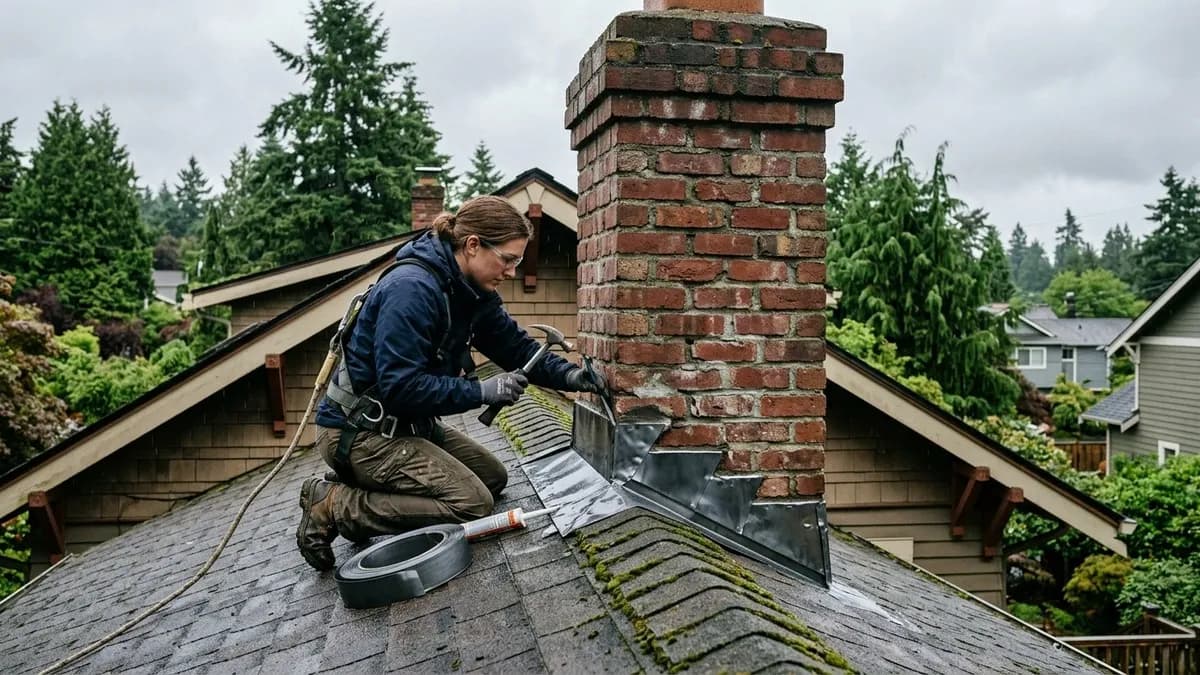
Ryan arrived on a Tuesday morning and climbed up within minutes of arrival. "The counter-flashing had separated from the mortar joint by about a quarter inch on the uphill side," Ryan explains. "That's a classic Seattle problem — the freeze-thaw cycles every winter work the mortar loose, and by summer you've got a gap that funnels every rain event straight into the framing."
"The counter-flashing had separated from the mortar joint by about a quarter inch on the uphill side. That's a classic Seattle problem — freeze-thaw cycles work the mortar loose over winter, and by summer you've got a gap that funnels every rain event straight into the framing."
— Ryan, Lead Technician, Seattle Chimney Pros
Ryan re-set the step flashing on the uphill side, repointed the mortar joint, and applied a masonry-grade sealant to the counter-flashing overlap. Total job time: 2.5 hours. Marcus paid $585 including a Level 1 inspection. The ceiling stain dried up within two weeks — he sent us a photo.
What Causes Chimney Flashing to Fail in the Pacific Northwest?
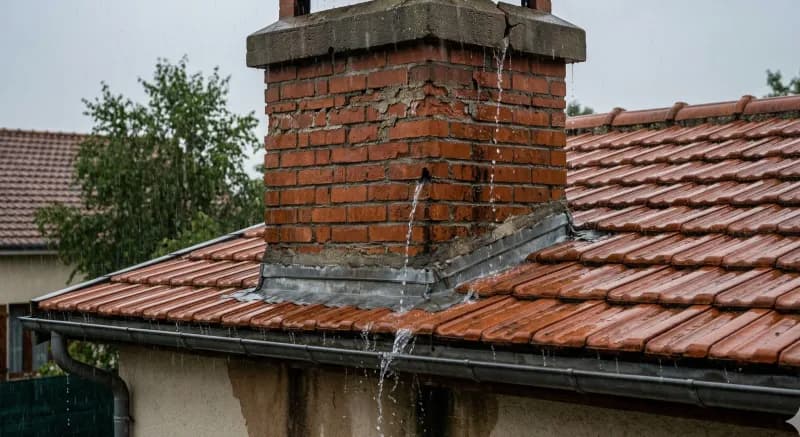
Seattle's climate is uniquely hard on flashing. We average 38 inches of rain per year, with most falling October through March. That sustained moisture exposure — combined with mild freeze-thaw cycles and roof moss — creates several failure modes our techs see repeatedly:
- Mortar joint separation: Counter-flashing embedded in mortar joints loosens as the mortar erodes — the #1 cause we see in homes built before 1980.
- Caulk cracking and shrinkage: Standard caulk fails within 5–8 years outdoors. Many DIY repairs use the wrong product, which fails even faster.
- Rust and corrosion: Galvanized steel flashing on homes from the 1990s–2000s corrodes in our wet climate. Copper and aluminum last far longer.
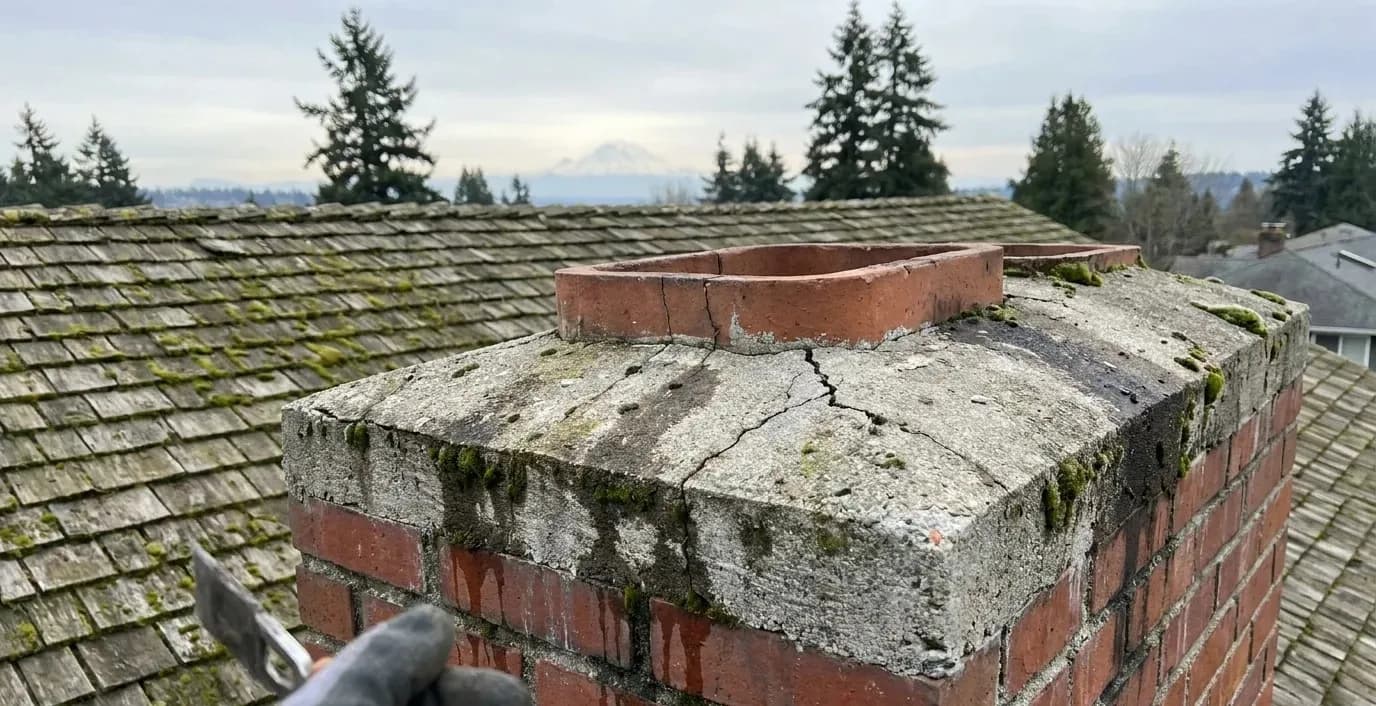
- Moss and debris buildup: Moss holds moisture against the flashing joint 24/7, accelerating both corrosion and mortar erosion.
- Roof re-deck without flashing replacement: We regularly find homes where roofers re-shingled without replacing 30-year-old flashing underneath.
In our experience across 1,400+ Seattle roof-adjacent chimney repairs, roughly 62% of chimney leaks trace back to flashing failure rather than cracked crowns or porous brick.
How Do You Know If Your Chimney Flashing Is Failing?
You don't need to climb on the roof to spot early warning signs. Here's what to look for from inside and outside your home:
- Water stains on the ceiling near the fireplace — especially after sustained rain, not just heavy storms.
- Rust streaks on the chimney exterior — diagonal brown lines running down the brick indicate water tracking from the flashing area.
- Efflorescence (white mineral deposits) on the brick above the roofline — a sign water is wicking through regularly.
- Peeling wallpaper or paint on interior walls adjacent to the fireplace.
- A musty smell near the fireplace during or after rain — moisture inside the firebox or smoke chamber.
If you see two or more of these signs together, schedule an inspection before fall rains arrive. Flashing leaks worsen dramatically through a Seattle winter. Our chimney inspection includes a full flashing and crown assessment.
What Is the Difference Between Step Flashing and Counter-Flashing?
Most Seattle homeowners hear "flashing" as one thing, but a properly flashed chimney has two interlocking layers — and failure in either one causes leaks.
Step flashing consists of small L-shaped metal pieces woven between each course of shingles along the chimney sides. It's installed by the roofer and directs water away from the chimney-to-roof joint. When it fails (usually from missing pieces or improper installation), water infiltrates behind the shingles.
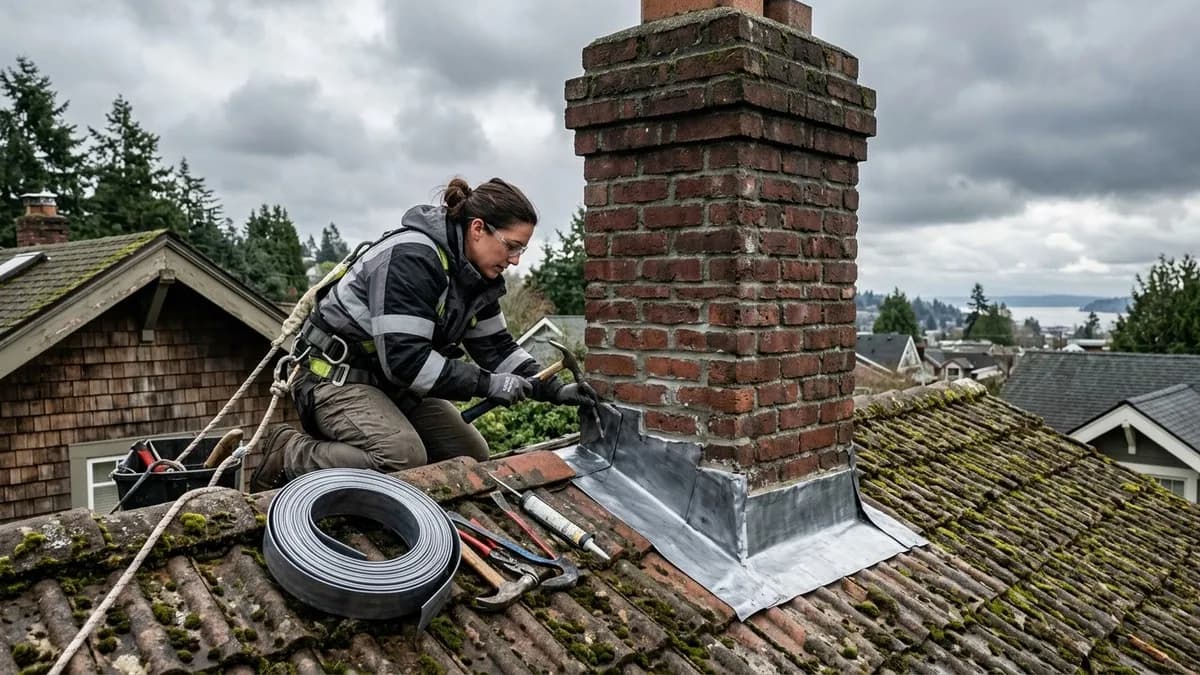
Counter-flashing overlaps the step flashing from above and is embedded into the chimney's mortar joints. It's the chimney contractor's responsibility. When the mortar joint erodes, the counter-flashing lifts and creates a gap. This is the type of failure Ryan found at Marcus's Ballard home.
Both layers must be intact and overlapping correctly to keep water out. Our chimney flashing repair service addresses both layers — we coordinate with roofers when step flashing replacement is also needed.
Should You Repair or Replace Chimney Flashing in Seattle?
Repair is sufficient in most cases — but full replacement makes more sense under these conditions:
- The existing flashing is galvanized steel more than 20 years old (corrosion is likely throughout)
- You're also replacing the roof — always replace flashing during a re-roof
- More than 50% of the flashing perimeter shows separation or damage
- The chimney has had multiple flashing repairs in the past 10 years
When we do recommend full replacement, we use aluminum or copper flashing — both hold up better in Seattle's wet climate than galvanized steel. Copper lasts 50+ years and is our preferred material for historic homes in neighborhoods like Montlake and Madrona. Aluminum is the cost-effective choice for most modern homes and typically runs $100–$200 less in material cost. Learn more about our full chimney repair services.
Does Homeowner's Insurance Cover Chimney Flashing Repair?
It depends on the cause. Washington homeowner's insurance policies generally cover sudden and accidental damage — like a windstorm tearing off flashing — but exclude gradual deterioration and deferred maintenance. In our experience, most flashing failures fall into the gradual category and are not covered.
That said, if a covered weather event (hail storm, windstorm) caused or contributed to the failure, document it carefully and file a claim. Our techs can provide a written diagnostic report for insurance purposes. We've helped homeowners in Shoreline, Kenmore, and Burien successfully document storm-related flashing damage for claims. Check our Shoreline service area page for local details.
Get Your Flashing Inspected Before Fall 2026
August is the best month to catch flashing problems before Seattle's rain season kicks back in. A repair done now costs a fraction of what water damage to framing, insulation, or drywall will run you in December. Call us at (253) 429-8006 or schedule online — we're booking inspections now for August and September across all 45 Seattle-area service zones.
Need professional help?
Our professionally trained team is ready. Free estimate, 30-minute response.