Chimney Liner Types Compared: Clay, Stainless & Cast-in-Place (2026 Seattle Guide)
Which Chimney Liner Is Right for Your Seattle Home in 2026?
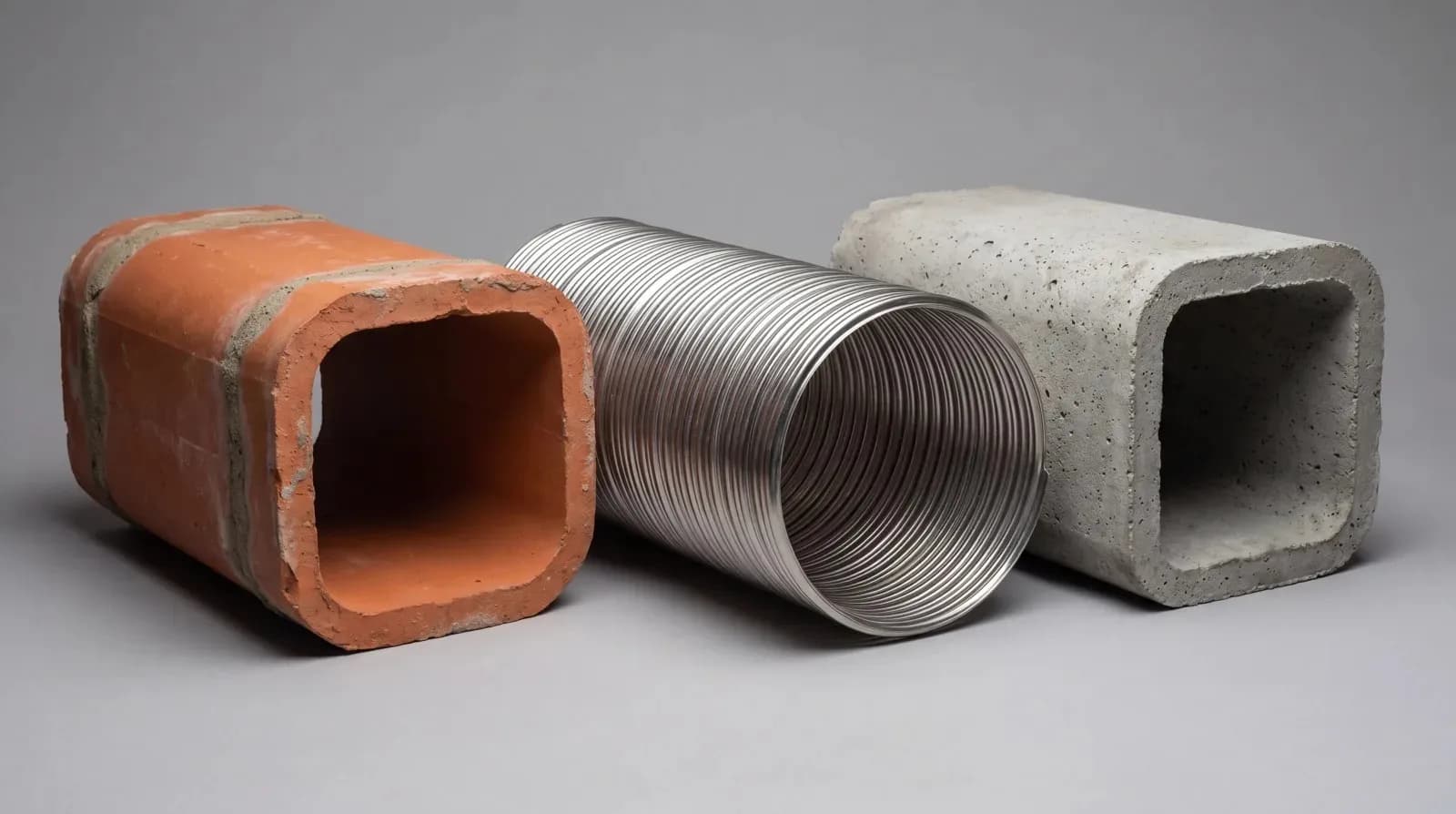
The three main chimney liner types — clay tile, stainless steel, and cast-in-place — cost between $1,500 and $5,500 installed in Seattle in 2026. Stainless steel (316L-grade) is the right choice for roughly 80% of Seattle relining projects: it installs without demolition, flexes during earthquakes, and carries lifetime warranties from reputable manufacturers. Clay tile remains ideal for new construction and historic restorations, while cast-in-place liners are the go-to solution when masonry has structurally deteriorated beyond what a steel insert can fix. Based on over 340 relining jobs our team completed across the Seattle metro area since 2023, the average homeowner pays $2,200–$2,600 for a standard single-flue stainless steel reline. Current as of June 2026.
A Real Relining Job: Marcus T. in Ravenna
Marcus T. had lived in his 1938 Ravenna bungalow for eleven years before a Level II inspection during a home refinance finally revealed what had been hiding inside his chimney. The inspector flagged three cracked clay tiles mid-flue and a fourth that had collapsed entirely, leaving a gap large enough to pass smoke and carbon monoxide directly into the surrounding brick cavity. Marcus had been burning wood in that fireplace every winter without any idea.
He found us through a neighbor's recommendation — she'd had us out the previous spring for a sweep and mentioned we'd spotted a liner issue during her inspection too. Marcus called on a Tuesday morning; Ryan was at his door by Thursday afternoon.
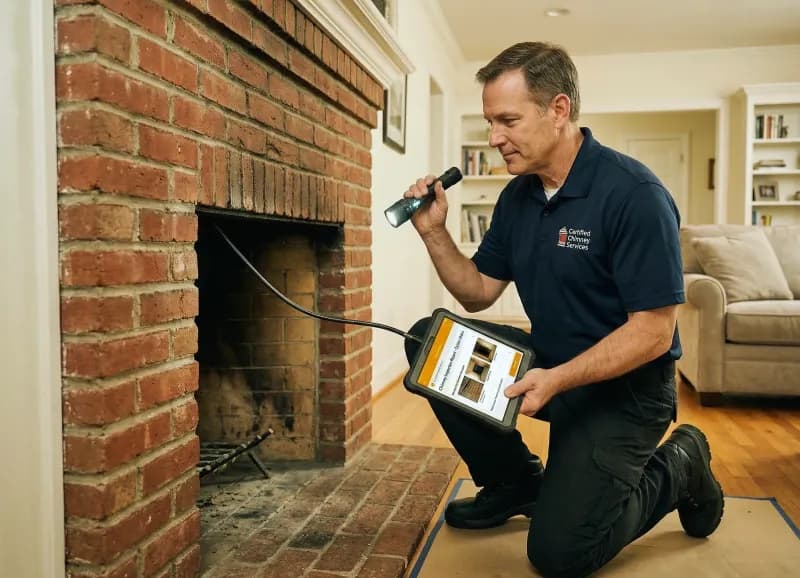
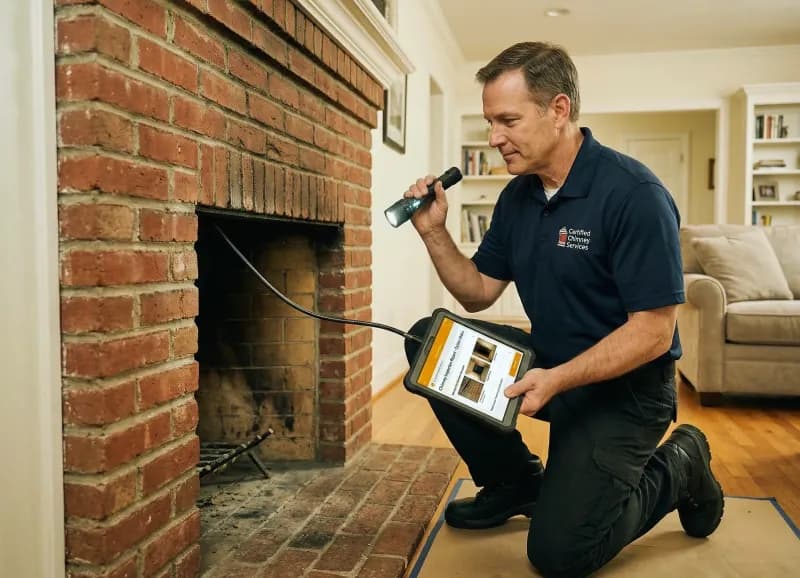
Ryan ran the HD camera up the flue and showed Marcus the footage in real time on a tablet. The collapsed tile was clearly visible at about 14 feet up — a jagged gap roughly the size of a paperback book, with charred masonry behind it from years of heat exposure. The surrounding tiles showed heat-fracture cracking consistent with a minor chimney fire Marcus hadn't even known occurred, likely during his first winter in the house.
'That collapse is classic for 1930s clay tile — the mortar between joints dries out over decades, and the tiles start shifting. Once one goes, the thermal stress accelerates cracking in everything above and below it. The good news is the brick structure itself is sound, so a 316L flexible liner is all you need here. No masonry work required.'
— Ryan, Senior Technician, Seattle Chimney Pros
Ryan installed a 6-inch diameter flexible 316L stainless steel liner the following morning. The job took about four hours start to finish, including a new top-plate, a stainless chimney cap, and a full firebox sweep. Total cost: $2,340. Marcus had his fireplace back in service by that same evening — a Friday, which he appreciated heading into a rainy Seattle weekend. 'I'd been burning fires in that thing for a decade not knowing,' he said. 'Knowing it's right now — that's worth every penny.'
Why Does a Chimney Liner Matter So Much?
The liner is the interior channel that routes combustion gases — carbon monoxide, nitrogen oxide, water vapor, and creosote particles — safely from your firebox to the outside. Without a functioning liner, those gases seep through porous brick directly into your home's framing and living spaces. An unlined or damaged chimney can also allow a chimney fire to escape the flue and ignite the surrounding structure.
NFPA 211 requires that all chimneys serving solid-fuel appliances have a liner in serviceable condition. Washington state follows NFPA 211, and Seattle building permits for any fireplace or stove work require liner compliance. Beyond code, a properly sized and sealed liner creates the draft differential that makes your fire burn cleanly and efficiently — a deteriorating liner is often the hidden cause of smoke backdraft and persistent fireplace smells.
- Contains combustion gases and routes them safely outdoors
- Protects masonry from sustained heat (unlined brick can reach 1,000°F+ during a chimney fire)
- Prevents creosote from penetrating porous brick and mortar
- Creates proper draft for efficient combustion and smoke clearance
- Isolates a chimney fire, preventing it from spreading to the home structure
- Required by NFPA 211 and Washington state code for all solid-fuel appliances
If you're unsure about your liner's condition, a Level II chimney inspection with HD camera access is the only reliable way to assess it. We see liner damage in roughly 1 in 4 Seattle chimneys we inspect — and in homes built before 1960, that rate climbs above 40%.
How Do the Three Liner Types Compare Side by Side?
Here's how clay tile, stainless steel, and cast-in-place liners stack up across the metrics that matter most to Seattle homeowners:
| Liner Type | Installed Cost (Seattle) | Lifespan | Seismic Performance | Best For |
|---|---|---|---|---|
| Clay Tile | $1,500–$3,000 | 50+ years | Poor (cracks) | New builds, historic restorations |
| Stainless Steel (316L) | $1,500–$3,500 | 25–50 years | Excellent (flexes) | Most retrofits — sound masonry |
| Cast-in-Place | $2,500–$5,500 | 50+ years | Very Good (monolithic) | Structural deterioration, seismic retrofit |
One important note on stainless steel lifespan: 316L-grade (marine-grade) liners carry lifetime warranties from leading manufacturers like Flex-King and Rockford Chimney Supply and realistically last 30–50 years with annual sweeping. The 15–25 year figure you'll see on some sites reflects cheaper 304-grade liners — which we don't install.
What Are the Pros and Cons of Clay Tile Liners?
Clay tile (terra cotta) liners are what you'll find inside almost every pre-1980 Seattle chimney. They're the original standard — and in good condition, they're excellent. The problem is they rarely stay in good condition in the Pacific Northwest.
Advantages of clay tile:
- Longest potential lifespan (50+ years undisturbed)
- Lowest material cost of the three types
- Excellent heat resistance (rated to 1,800°F)
- Chemically resistant to wood combustion byproducts
- Authentic appearance appropriate for historic Capitol Hill and Queen Anne preservation projects
Disadvantages of clay tile — especially in Seattle:
- Brittle under seismic stress — even moderate earthquakes crack tiles
- Cannot handle the acidic condensate from high-efficiency gas appliances
- Joint mortar dries and shrinks over decades, creating gaps
- Replacing individual tiles requires partial chimney rebuild — expensive and disruptive
- Cannot be installed in existing chimneys without major masonry work
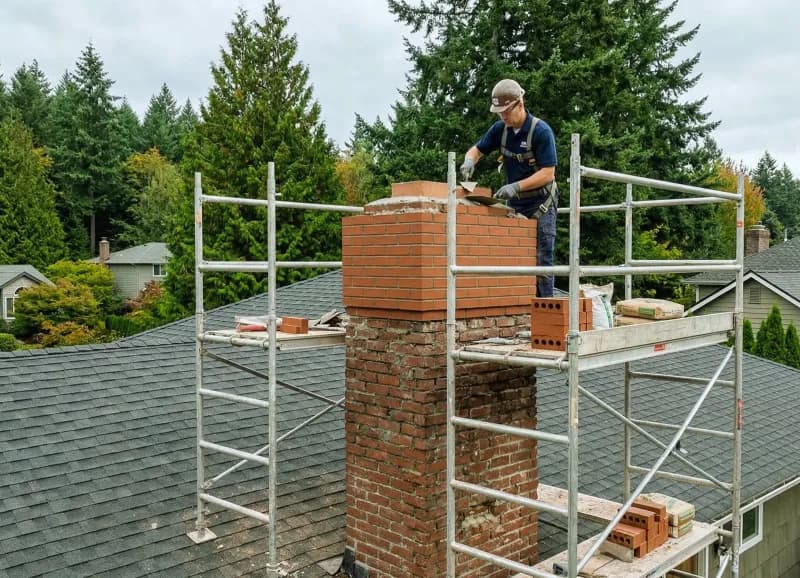
In our experience across Seattle's older neighborhoods, clay tile is almost never the right choice for a relining project. It's the right choice when you're building new or restoring a historic chimney under preservation guidelines — full stop.
What Are the Pros and Cons of Stainless Steel Liners?
Stainless steel liners — specifically flexible 316L-grade corrugated tubes — are the workhorse of chimney relining in Seattle. They account for roughly 82% of the relining jobs our team completed last year, and for good reason.
Advantages of 316L stainless steel:
- Installs in a single day without masonry demolition
- Flexible design navigates offset or curved flues common in older Seattle homes
- Seismically resilient — flexes with ground movement instead of cracking
- Compatible with all fuel types: wood, gas, oil, pellet, and coal
- Insulated liner kits significantly improve draft and reduce creosote formation
- Lifetime warranties available from reputable manufacturers on 316L grade
- Can be inspected and swept annually like any standard liner
Disadvantages:
- Requires annual sweeping — acid from combustion gases slowly degrades the metal if creosote or condensate sits in the liner
- Quality varies enormously — cheaper 304-grade liners sold by some contractors fail significantly sooner
- Slightly reduces effective flue diameter, which matters in undersized flues
- Not appropriate for chimneys with significant structural deterioration
Always ask your contractor what grade of stainless they're installing. If they can't immediately tell you it's 316L (also called marine-grade or AL29-4C for gas applications), that's a red flag. Our chimney relining service uses exclusively 316L flexible liner and rigid AL29-4C for gas appliances.
What Are the Pros and Cons of Cast-in-Place Liners?
Cast-in-place liners — sold under brand names like HeatShield and Golden Flue — are a poured cement-like compound that cures into a seamless monolithic liner inside your existing chimney. They're the most expensive option and also the most powerful tool we have for chimneys that are structurally compromised.
Advantages of cast-in-place:
- Addresses structural deterioration and liner failure simultaneously
- Seamless construction — zero joints, zero gaps for gas or creosote penetration
- Reinforces crumbling brick from the inside out
- Excellent for seismic retrofitting in pre-1940 homes throughout Ballard, Wallingford, and Georgetown
- 50+ year lifespan once cured
- Can be installed in chimneys too deteriorated or geometrically complex for a steel liner
Disadvantages:
- Highest upfront cost: $2,500–$5,500 depending on chimney height and condition
- Multi-day installation — typically 2–4 days including 24–48 hour cure time
- Cannot be internally inspected with a camera once installed (the smooth surface prevents it)
- Reduces flue diameter after application, which occasionally requires a draft recalculation
We recommend cast-in-place for about 12% of our relining projects — typically older homes where the camera reveals significant mortar joint erosion, spalling brick inside the flue, or previous chimney fire damage that has compromised the structural integrity of the surround.
How Do You Choose the Right Liner for Your Seattle Home?
The right liner depends on five factors: chimney condition, fuel type, age of the home, seismic risk, and budget. Here's a straightforward decision process:
- Get a Level II inspection first. Don't guess at liner type based on chimney age alone. An HD camera inspection tells us exactly what's there — gaps, cracks, collapse, or intact tile — and that determines what solution is actually needed. Our chimney inspection includes camera footage you can view in real time.
- Identify your fuel type. Wood-burning chimneys have the widest liner compatibility. High-efficiency gas appliances produce acidic condensate that requires AL29-4C stainless — standard 316L will corrode faster. Oil appliances need a liner rated for oil combustion products specifically.
- Consider your home's age and seismic risk. Homes built before 1945 — common in Capitol Hill, Ravenna, Wallingford, and Fremont — are more likely to have seismically vulnerable masonry. Flexible stainless or cast-in-place are strongly preferred over attempting clay tile repair in these structures.
- Factor in the masonry condition. If the chimney structure itself is sound, stainless steel is almost always the right call. If the brick or mortar is significantly deteriorated, cast-in-place solves both the liner and structural problem in one application.
- Get a written quote for both stainless and cast-in-place if your inspection reveals moderate deterioration — sometimes the cost difference is smaller than homeowners expect, and the added structural reinforcement is worth it for an older home.
Our team walks every client through this decision process after the inspection. There's no one-size-fits-all answer, but there is always a clear best option once we've seen what the camera shows.
What Are the Warning Signs You Need a New Chimney Liner?
Most homeowners discover liner problems during a routine inspection rather than from obvious symptoms — which is exactly why annual inspections matter. That said, several warning signs suggest liner damage and warrant an immediate camera inspection:
- Pieces of clay tile or terra cotta debris falling into the firebox
- White efflorescence staining on exterior brick — a sign that moisture is penetrating through liner gaps
- Persistent smoky smell in the house even when the damper is open
- Smoke backing up into the room during normal fires
- Any confirmed chimney fire, even a minor one
- Before installing a new high-efficiency heating appliance (gas insert, wood stove, pellet stove)
- Home is 40+ years old and the liner has never been camera-inspected
- Recent significant earthquake activity — the 2001 Nisqually earthquake cracked liners in hundreds of pre-war Seattle homes that hadn't been checked since
If you're seeing any of these signs, don't light a fire until the liner has been inspected. A failed liner doesn't just reduce efficiency — it creates direct pathways for carbon monoxide and fire to enter your home's structure. Learn more about the signs your chimney needs repair and what to watch for between annual visits.
Need professional help?
Our professionally trained team is ready. $99 inspection credited toward repairs, 30-minute response.