Why Does My Chimney Smell Bad? Causes & Solutions for Seattle Homes 2026
Why Does Your Chimney Smell Bad? The Direct Answer
A bad chimney smell in Seattle is almost always caused by one of six problems: creosote buildup, moisture and mold, animal intrusion, debris accumulation, summer reverse draft, or a cracked flue liner. Based on over 850 odor-related service calls our team completed across the Seattle metro area in 2025, the most common culprit is moisture-activated creosote — accounting for roughly 42% of cases. Professional chimney cleaning ($169–$329) resolves the majority of chimney odors. When combined with a chimney cap ($200–$500 installed) and a top-sealing damper ($250–$500 installed), most Seattle homeowners eliminate the problem permanently. Current as of June 2026.
Real Case: Marcus T. in Fremont Had a Smell He Couldn't Ignore
Marcus T. bought his 1952 Fremont bungalow three years ago and had always noticed a faint, stale odor near the fireplace in summer — but assumed it was just "old house smell." By June 2025, the smell had intensified to something sharper and almost smoky, drifting through the living room even with the damper shut. A neighbor whose chimney we'd serviced the previous fall gave Marcus our number.
Ryan arrived on a Tuesday morning with a inspection camera and immediately recognized the setup: an uncapped flue on a wood-burning fireplace that hadn't been cleaned in at least three years, based on the visible creosote layering. Fremont's dense tree canopy had also deposited a surprising amount of debris on the smoke shelf — decomposing leaves and a small cluster of nesting material that turned out to belong to a pair of European starlings who had long since vacated.
"The creosote here is Stage 2 — that shiny, tar-like coating — and it's activated by the summer heat. Your AC is making the indoor air cooler than the air outside the chimney, so the draft is literally running backward and pushing all those fumes into your living room. The nesting debris on the smoke shelf is composting on top of it. You've got three odor sources working together."
— Ryan, Senior Technician, Seattle Chimney Pros
Ryan completed a full flue brushing from the rooftop, vacuumed the smoke shelf clean, and installed a stainless steel chimney cap with raccoon-resistant mesh on the same visit. Total cost: $387, which covered the sweep, Level 1 inspection, and cap installation. The smell was gone within 24 hours as the residual creosote volatiles dissipated. Marcus scheduled his next annual sweep for May 2026 — before summer heat returns.
What Are the 6 Real Causes of Chimney Odor?
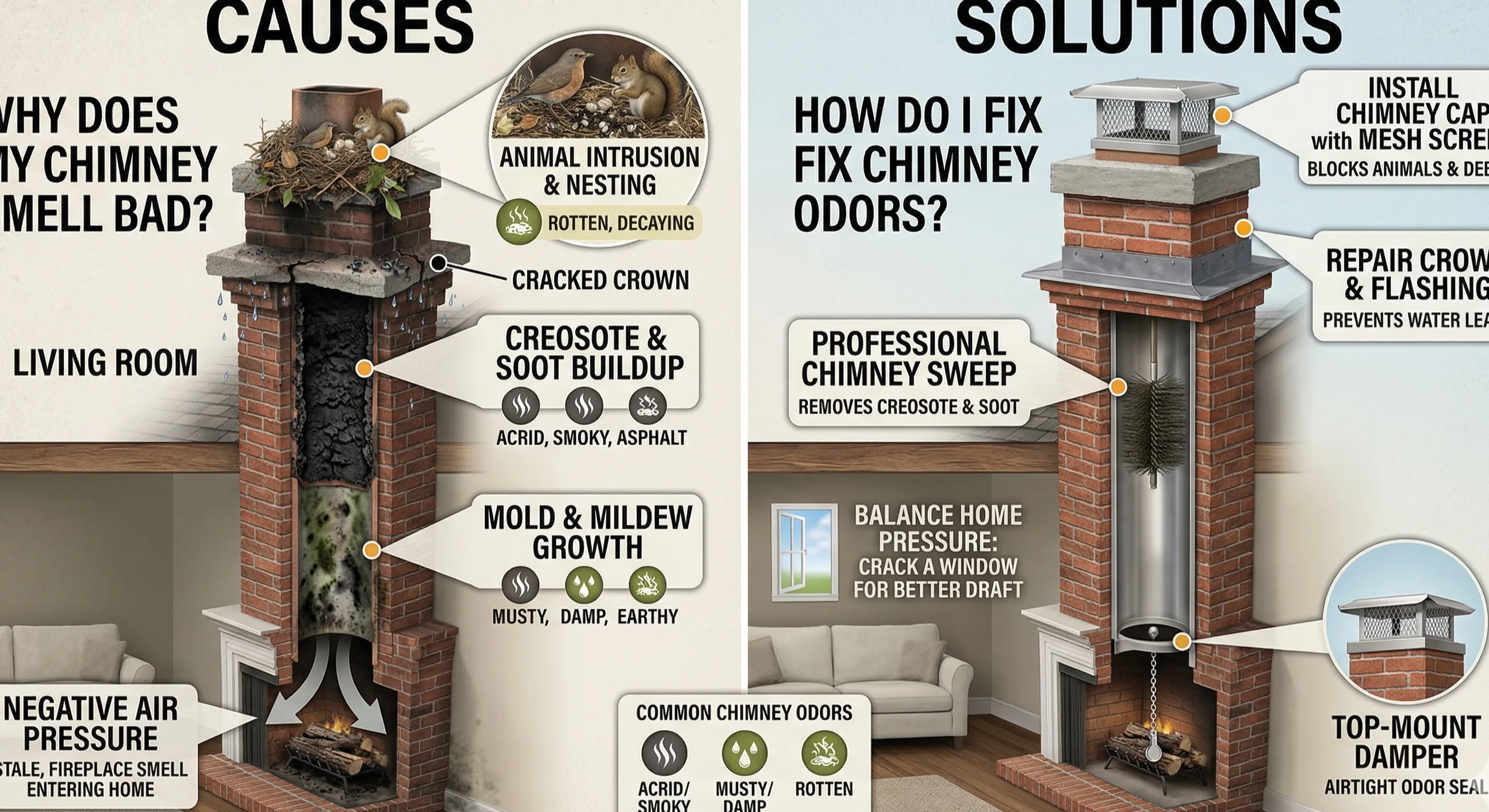
Each cause produces a distinct smell and demands a specific fix. The table below summarizes what to expect and what it costs to address in Seattle in 2026.
| Cause | Smell Profile | Season Peaks | Fix Cost Range |
|---|---|---|---|
| Creosote buildup | Smoky, acrid, stale campfire | Summer, spring | $169–$329 (sweep) |
| Moisture and mold | Musty, earthy, damp basement | Fall, winter | $300–$1,500+ (repair + clean) |
| Animal entry/decomposition | Intensely foul, rotting | Spring, summer | $250–$600 (removal + cap) |
| Leaf and debris accumulation | Earthy, composting vegetation | Fall, early winter | $169–$249 (sweep + cap) |
| Summer reverse draft | Whatever is in flue — amplified | June–September | $250–$500 (top-sealing damper) |
| Cracked flue liner | Smoke/musty from walls, not firebox | Year-round | $1,500–$3,500 (relining) |
How Do You Know If Creosote Is Causing the Smell?
Creosote odor is the most common chimney smell we diagnose — it accounts for roughly 4 in 10 odor calls in Seattle. The smell is sharp and smoky, somewhere between a stale campfire and a tar-based product. It's strongest on warm or humid days because heat activates volatile organic compounds in the creosote deposits.
Stage 2 creosote (shiny, tar-like) and Stage 3 creosote (glazed, hardened) are the worst offenders. A flue with even a quarter-inch of Stage 2 creosote coating the tiles can produce a noticeable smell in a tightly sealed modern home. Seattle's wet-to-dry seasonal transition from May through July is when creosote odors spike most sharply.
Professional creosote removal is the definitive fix. For Stage 1 buildup, a standard sweep ($169–$269) handles it. Stage 2 may require a rotary cleaning system ($229–$329). Stage 3 glazed creosote needs chemical treatment followed by mechanical cleaning — budget $350–$600 for that scenario. After cleaning, the smell resolves within 24–72 hours as residual volatiles dissipate.
Why Is Chimney Smell Worse in Summer When You're Not Even Using the Fireplace?
This is the question we get most often from May through September. Homeowners are baffled — the fireplace has been dormant for months, yet the smell is stronger than ever. The answer is reverse stack effect (also called summer backdraft).
During Seattle summers, the air outside the chimney top is warmer than the conditioned air inside your home. Physics pushes that warm exterior air downward through the flue, carrying whatever odors exist inside the chimney directly into your living room. The effect is amplified by air conditioning (which cools interior air further), exhaust fans in kitchens and bathrooms (which create negative indoor pressure), and modern tight construction that limits natural air infiltration.
A top-sealing damper is the single most effective solution. Unlike a throat damper that sits at the base of the flue and leaks air even when nominally closed, a top-sealing damper creates an airtight seal at the chimney opening. When the fireplace isn't in use, that seal prevents outdoor air — and chimney odors — from entering your home entirely. We install top-sealing dampers for $250–$500 including labor, and in our experience they eliminate summer odor complaints in over 90% of cases when combined with a clean flue.
Can Moisture and Mold Really Cause Chimney Smell in Seattle?
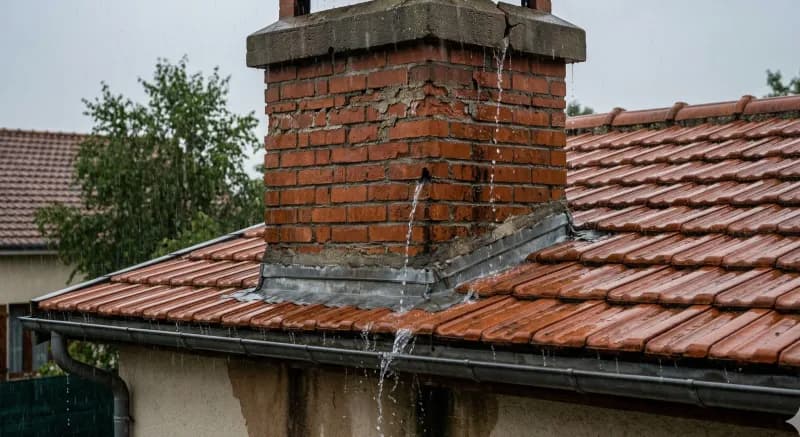
Yes — and in Seattle specifically, it's the second most common odor cause we find. With 37 inches of annual rainfall and over 150 rain days per year, water finds its way into chimneys through cracked crowns, failed flashing, deteriorated mortar joints, and missing chimney caps. Once moisture is inside the flue, mold and mildew colonize the interior surfaces within weeks.
The telltale signs of moisture-driven odor include:
- Smell is noticeably worse during or immediately after rainfall
- Musty or earthy quality — more basement than campfire
- White mineral staining (efflorescence) visible on brick near the fireplace
- Rust on the damper plate or firebox hardware
- Water stains on the ceiling or wall adjacent to the chimney
- Damp feeling inside the firebox
Mold inside a chimney isn't just a smell problem — it's a health concern. Spores circulate into your living space when the draft reverses in summer. If anyone in your household has allergies, asthma, or respiratory sensitivities, a mold-contaminated chimney can be a meaningful trigger. Our team addresses moisture odors with a two-step approach: thorough cleaning to remove mold and mildew from flue surfaces, followed by waterproofing treatment and repair of the water entry point (crown, flashing, or cap). See our related guide on why chimneys leak when it rains for a full diagnosis walkthrough.
What Should You Do Right Now If Your Chimney Smells Bad?
Here's the step-by-step approach we recommend to Seattle homeowners before calling us — it narrows down the cause and helps us serve you faster:
- Identify the smell type — Smoky/acrid points to creosote. Musty/earthy points to moisture or debris. Intensely foul and sudden points to animal decomposition. Smoke-from-walls points to a cracked liner. Write down your best description.
- Note when it's worst — During rain? On warm summer days? When you run the kitchen fan? The timing is one of the most useful diagnostic clues.
- Check the firebox visually — Open the damper and look up with a flashlight. Visible black shiny deposits = creosote. Standing water or rust = moisture intrusion. Feathers, droppings, or nesting material = animal entry. Do NOT light a fire until the issue is diagnosed.
- Temporarily seal the fireplace opening — If the smell is strong, tape a garbage bag or a piece of rigid foam board over the firebox opening. This interrupts the reverse draft pulling odors into your room and confirms (or rules out) the chimney as the source.
- Call for a professional inspection — A Level 1 or Level 2 chimney inspection with a camera identifies the exact cause. We combine the inspection with cleaning on the same visit whenever possible, so you're not paying for two separate trips.
Does a Chimney Cap Actually Fix Chimney Smell?
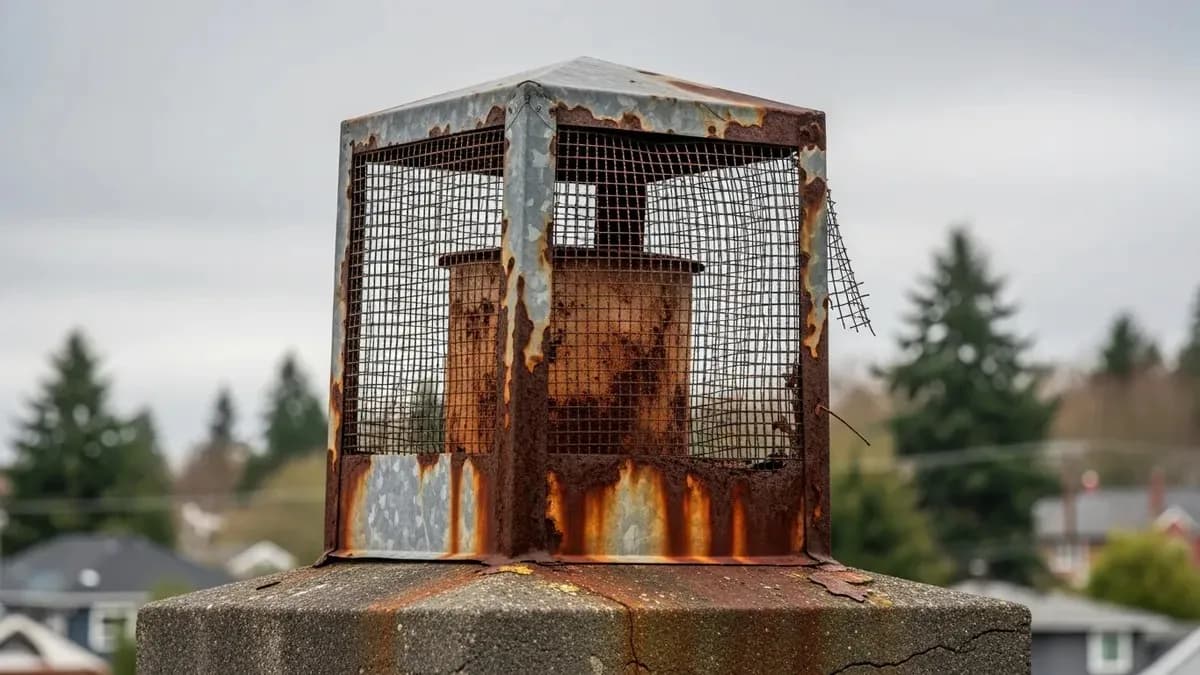
A properly installed chimney cap addresses three of the six most common odor causes — animal entry, debris accumulation, and moisture intrusion from rain. In our experience across Seattle-area homes, installing a cap on a previously uncapped chimney reduces odor complaints by roughly 60–70% on its own, even before cleaning.
For Seattle specifically, we recommend stainless steel caps with a full-coverage design (not a simple flat cap) and a welded wire mesh rated for raccoon resistance. Raccoons are strong enough to dislodge lightweight aluminum caps, and once they access a flue they frequently nest and cause significant damage. Stainless steel caps carry lifetime warranties and hold up to our marine climate without rusting. Chimney cap installation typically runs $200–$500 in Seattle depending on flue size and number of flues. For a two-flue fireplace, budget $350–$600.
A cap combined with a top-sealing damper gives you the most complete odor protection: the cap keeps water, animals, and debris out, while the damper seals off reverse draft in summer. Together they cost less than a single liner repair and prevent the majority of chimney smell scenarios. Learn more about your options in our chimney cap inspection guide for Seattle.
Ready to Eliminate Your Chimney Smell for Good?
Whether your chimney smells like stale smoke in July or wet basement after every rainstorm, the fix is almost always straightforward — and usually resolved in a single visit. Our CSIA-certified technicians serve all 45 Seattle metro neighborhoods and carry caps, dampers, and cleaning equipment on every truck so we can diagnose and fix on the same day. Call us at (206) 278-2924 or schedule online — most appointments are available within 48 hours.
Need professional help?
Our professionally trained team is ready. $99 inspection credited toward repairs, 30-minute response.