How Seattle Rain Affects Your Chimney Sweep Schedule (2026)
When Should Seattle Homeowners Schedule a Chimney Sweep in 2026?
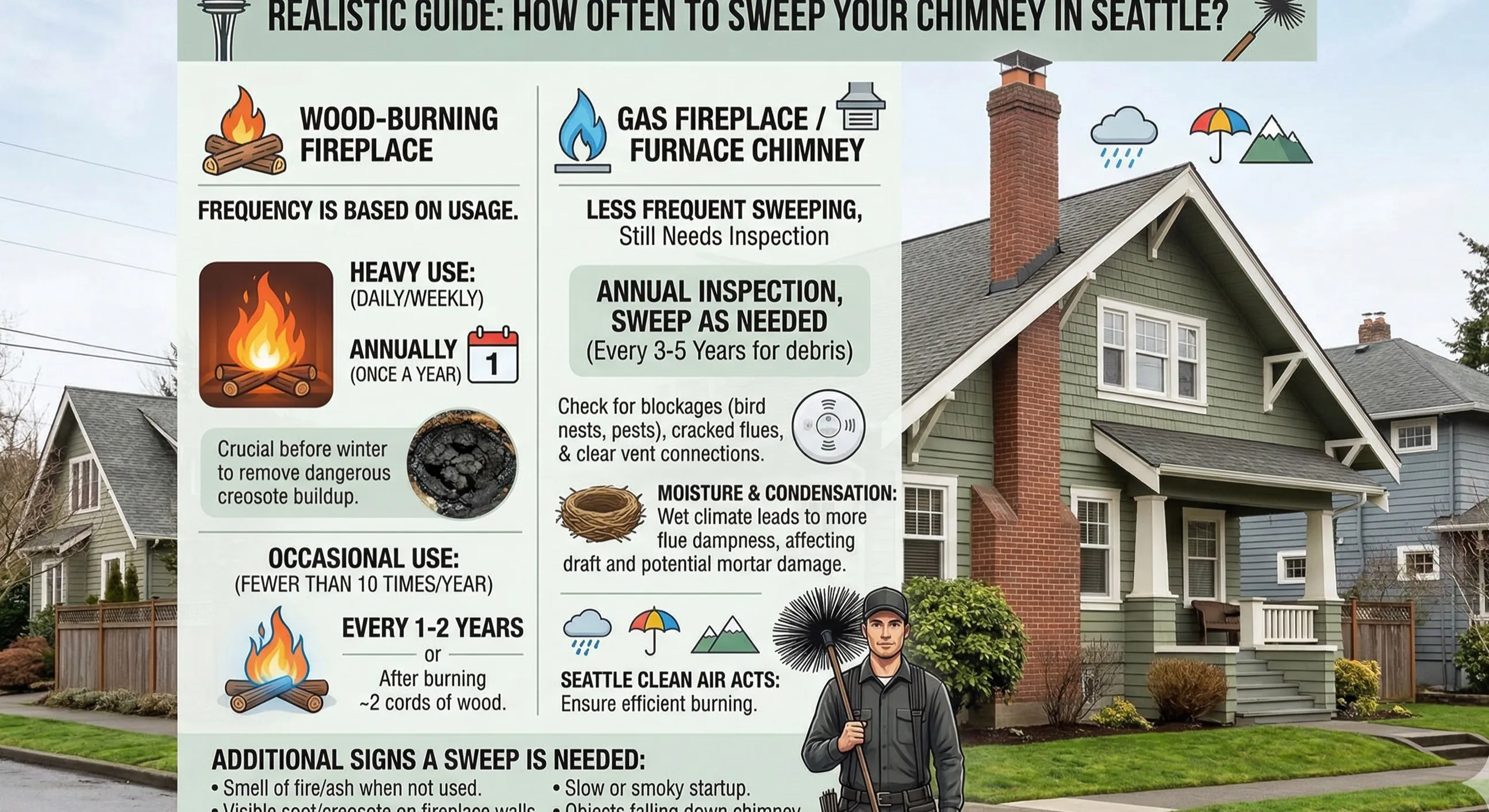
Seattle homeowners should schedule a chimney sweep once per year if they burn 2–4 cords of wood per season, and twice per year if they burn more than 4 cords or notice any smoke or odor issues. Based on 920 chimney sweeps our crew completed across the Seattle metro area in 2025, the single best time to book is late August through September — before the first sustained rains of fall arrive and while appointment slots are still available. The Seattle market average in 2026 runs $189–$299 for a standard single-flue cleaning; our own sweep is $165–$441, tax included, depending on flue count, chimney height, and creosote stage. Waiting until October or November means a 2–3 week wait and higher risk of burning on an uninspected flue. Current as of August 2026.
A Fremont Homeowner Who Almost Missed the Window: Carlos's Story
Elena V. in Fremont had been burning her 1952 brick fireplace every winter weekend for six years — but had never scheduled a professional sweep. She discovered the gap last October when a neighbor mentioned our truck parked outside a house on Evanston Ave N. 'I figured since I wasn't seeing smoke back up, everything was fine,' she told our tech Carlos when he arrived.
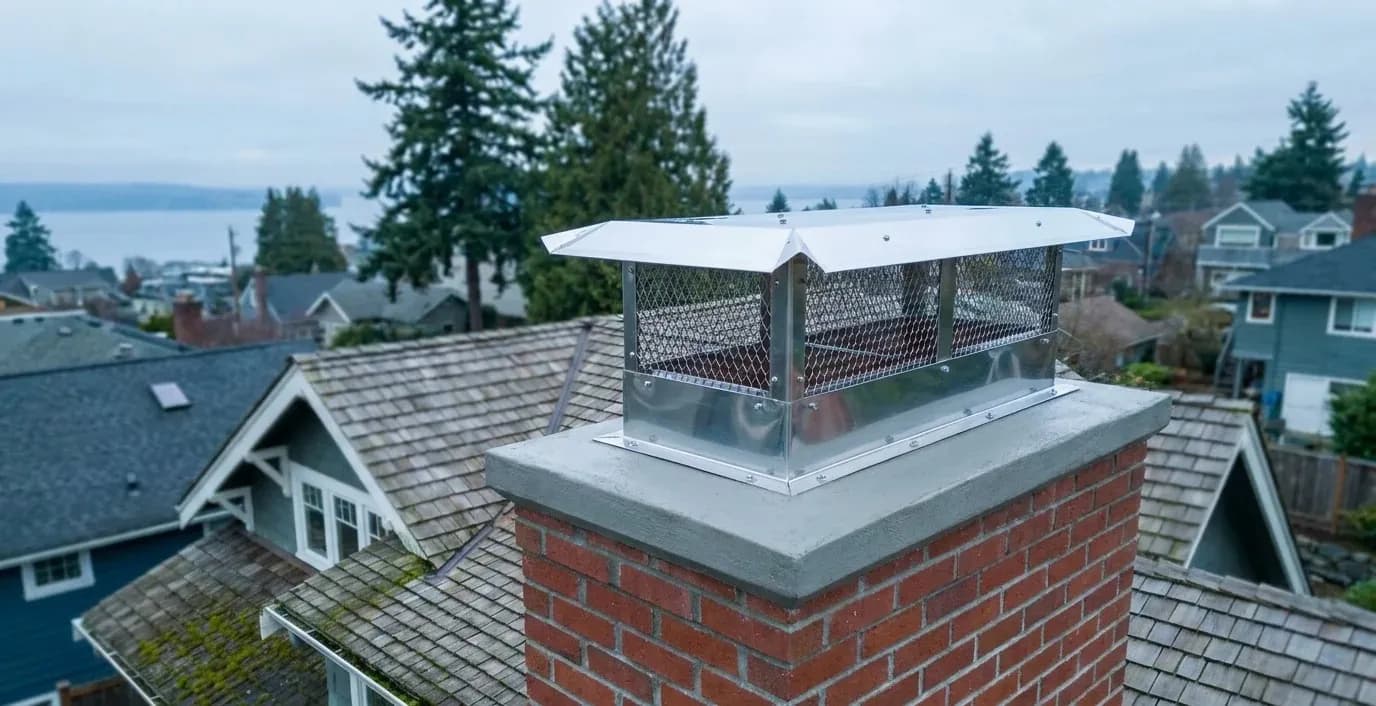
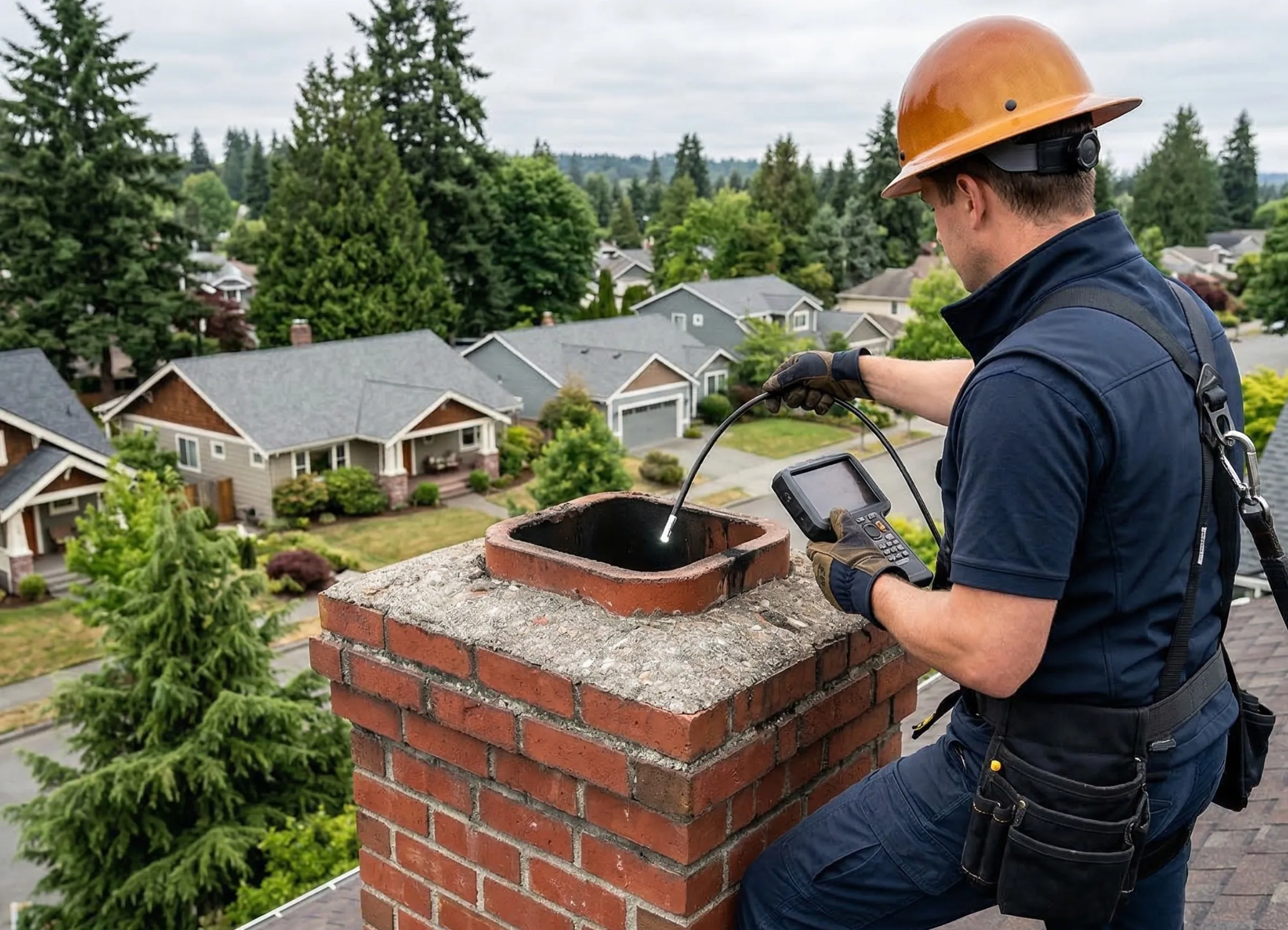
Carlos climbed to the rooftop and ran a camera down the flue. What he found surprised even him: a full inch of stage 2 creosote — the glazed, tar-like variety — had coated the liner from the smoke chamber all the way down. A secondary concern was a small bird nest partially blocking the top of the flue, left over from a spring swallow that had slipped under the missing chimney cap.
'Stage 2 creosote in a six-year-old flue is more than I typically see. The wet Seattle winters slow the draft slightly and that traps more particulates than a dry-climate chimney would accumulate. The missing cap made it worse — moisture was cycling in and baking the deposits into that glazed layer.'
— Carlos, Technician, Seattle Chimney Pros
Carlos completed a full rotary brush sweep, removed the nest, and installed a new stainless steel chimney cap. Total job time: 2 hours and 15 minutes. Total cost: $289 for the sweep plus $185 for the cap installation. Elena booked her next annual sweep on the spot — for August 2026.
How Does Seattle's Rain Specifically Affect Creosote Buildup?
Rain and humidity affect chimney performance in two distinct ways that most homeowners don't know about until a technician explains it on-site:
- Reduced flue draft in wet weather: Cold, damp air is denser than warm air, which slows the updraft that carries combustion byproducts out of the flue. Slower draft means more time for particulates to cool and condense on the liner walls — accelerating creosote deposit.
- Moisture-activated creosote hardening: When creosote is repeatedly exposed to rain infiltration (especially in uncapped or poorly capped chimneys), it can bake into the harder stage 2 and stage 3 varieties that are more expensive and time-consuming to remove.
- Green or wet wood burning: Seattle homeowners often burn freshly cut or improperly stored wood that hasn't fully seasoned, especially in fall when the urge to light a fire outpaces preparation. Wet wood produces three to four times more creosote than properly seasoned hardwood.
In our 2025 data across 45 Seattle neighborhoods, homes with uncapped chimneys showed an average 34% higher creosote accumulation compared to capped chimneys of equivalent use — confirming that a chimney cap installation is one of the highest-ROI investments a Seattle fireplace owner can make.
What Is the Best Chimney Sweep Schedule for a Seattle Home?
The right schedule depends on how often you burn and what you burn. Here is what we recommend based on actual usage patterns we see across the metro area:
| Usage Level | Cords Burned/Year | Recommended Schedule | Best Booking Window |
|---|---|---|---|
| Occasional (weekend use) | Less than 2 cords | Every 2 years | August–September |
| Moderate (2–3x per week) | 2–4 cords | Annually | August–September |
| Heavy (daily in winter) | 4+ cords | Twice yearly | August + February |
| Wood stove (primary heat) | 6+ cords | Twice yearly minimum | August + January |
NFPA 211 requires that chimneys be inspected at least once per year and cleaned whenever deposits exceed 1/8 inch. The Chimney Safety Institute of America (CSIA) echoes this standard. Washington State fire code (WAC 51-54A) references NFPA 211 as the controlling standard for solid-fuel appliances.
What Happens During a Chimney Sweep in Seattle and How Much Does It Cost?
A standard chimney sweep with Seattle Chimney Pros takes 60–90 minutes for a single-flue system. Here is what every appointment includes:
- Rooftop inspection: Our tech checks the chimney crown, cap, flashing, and top of the flue for visible damage, blockages, or animal activity before beginning the sweep.
- Camera scan: A Level 1 inspection camera run documents the interior condition of the flue liner — we share these images with you on-site.
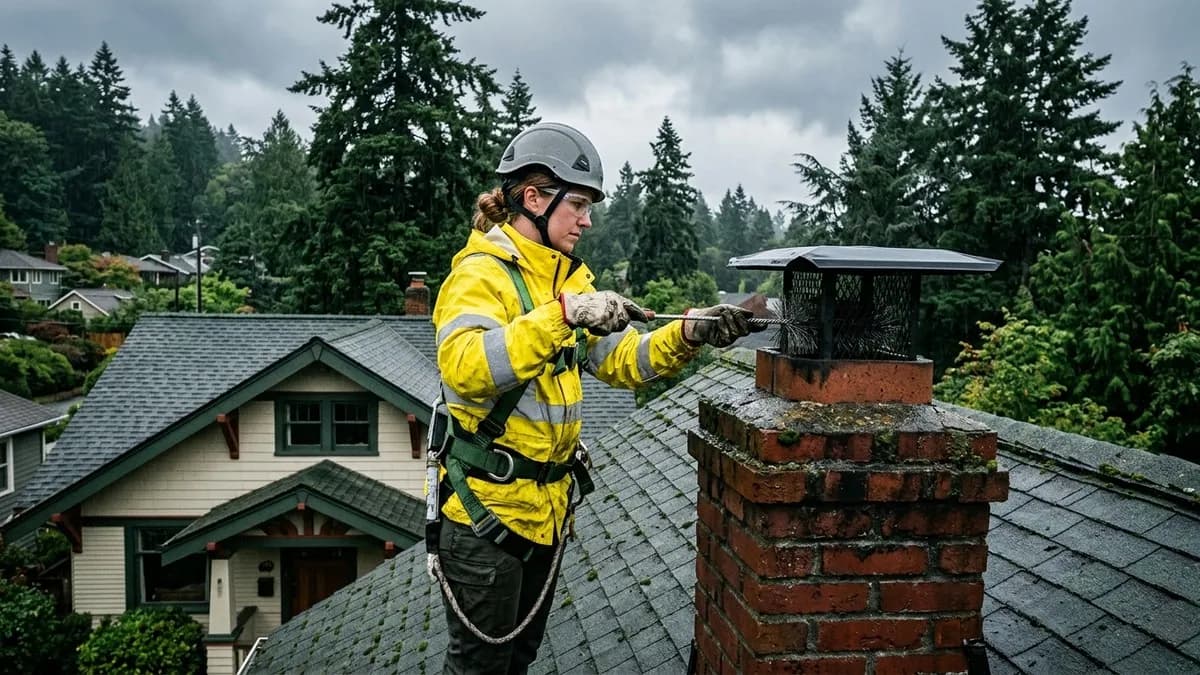
- Brush sweep from the top: Rotary or manual brushes remove loose and stage 1 creosote deposits from the liner, smoke chamber, and firebox.
- Vacuum containment at the firebox: We seal the firebox opening and use a HEPA-rated vacuum to capture all debris as it falls, protecting your living area from soot and ash.
- Post-sweep report: We provide a written summary of findings and recommendations — no upselling, just an honest condition report.
Our pricing for a sweep in 2026: $165–$441, tax included, depending on flue count, chimney height, and creosote stage. For reference, the Seattle market average sits around $189–$299 for a single flue. Stage 2 or stage 3 creosote removal requiring chemical treatment adds $95–$195 per session. See our full chimney sweep service page for current pricing by flue type.
What Should I Do to Prepare My Chimney Before Seattle's Rainy Season?
Beyond scheduling a sweep, here is a pre-fall action list that reduces risk and improves fireplace performance all winter:
- Confirm your chimney cap is in place and undamaged — a missing cap is the fastest path to moisture damage and animal entry.
- Check the damper operation by opening and closing it fully — a stuck or warped damper is a common problem we find in summer-unused chimneys.
- Inspect the firebox for visible cracks in the refractory panels or mortar joints — these should be repaired before the first fire of the season.
- Stock only properly seasoned firewood with a moisture content below 20% — a $30 moisture meter from a hardware store saves significant creosote buildup over a full season.
- Schedule your annual chimney inspection now — August and early September appointments still have good availability; by late October we are typically booked 3+ weeks out.
We serve the full Seattle metro area including Fremont, Greenwood, and 43 other neighborhoods. Book your sweep online or call (206) 278-2924 — our team can usually schedule within one week in August.
Need professional help?
Our professionally trained team is ready. $99 inspection credited toward repairs, 30-minute response.