Chimney Cap Installation Cost in Seattle 2026: Full Pricing Guide
How Much Does a Chimney Cap Cost in Seattle in 2026?
A chimney cap installation in Seattle costs between $150 and $1,500 in 2026, depending on the cap material, number of flues, and roof accessibility. Based on over 340 cap installations our team completed across the Seattle metro last year, the most common job — a stainless steel single-flue cap on a two-story home — lands between $350 and $500 installed. Galvanized caps run $150–$300, copper single-flue caps $500–$1,200, and full chase covers for prefab chimneys $600–$1,500. Current as of July 2026.
A Real Cap Job: Marcus T. in Magnolia
Marcus T. had owned his 1978 Magnolia split-level for six years before he noticed the rust streaks. Every time it rained — which in Magnolia is roughly every other day from October through April — a brown smear would reappear on the white painted brick just below the chimney crown. He wiped it off. It came back. Finally, during a routine gutter cleaning, his contractor pointed up at the chimney and said, 'You need to deal with that cap before it deals with you.'
Marcus found us through a neighbor referral and booked an inspection. Derek arrived on a Tuesday morning, the kind of low-overcast July day where the clouds sit right on top of the Sound. He climbed to the roof and called down immediately. 'The galvanized cap up here is completely shot,' Derek said. 'The frame has rusted through in two corners, the mesh is gone on one side, and there's a gap big enough for a raccoon to walk through — actually, scratch that, I can see claw marks on the crown. Something already has.'
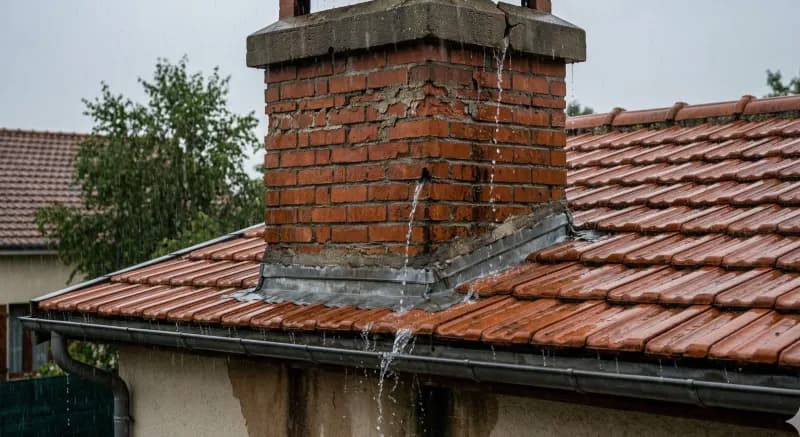
The original galvanized cap had been installed when the house was built — nearly 48 years of Puget Sound salt air had done exactly what salt air does to galvanized steel. Water had been wicking through the rust holes and running down the inside of the flue, pooling on the smoke shelf, and eventually seeping through a hairline crack in the crown mortar. The rust streaks Marcus kept wiping off were the visible symptom of water damage that had been accumulating for years.
'That galvanized cap did its job for maybe 15 years. After that it became the problem — every rain event was pushing water and rust into the flue instead of keeping it out. We see this constantly in Magnolia and Ballard because of the salt air off the Sound.'
— Derek, Field Technician, Seattle Chimney Pros
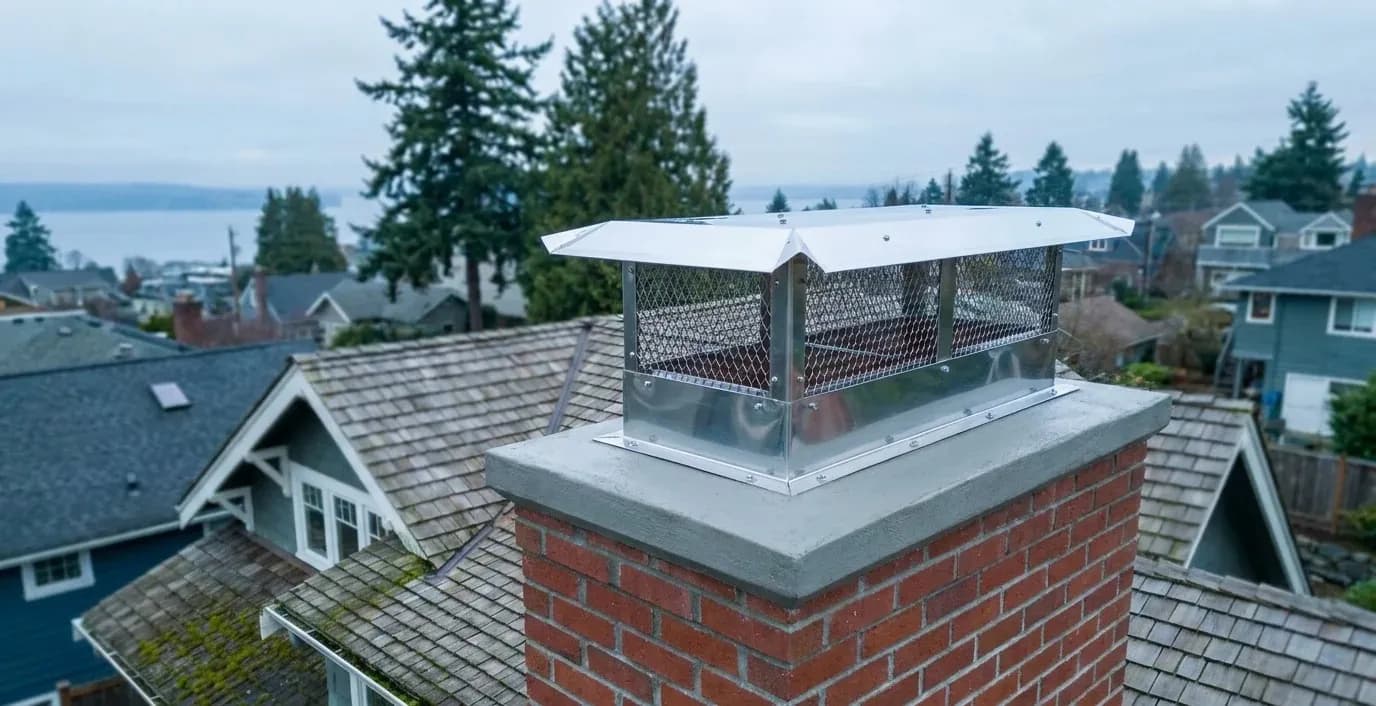
Derek measured the flue tile, inspected the crown, and recommended a 304-grade stainless steel single-flue cap with 3/4-inch mesh, through-bolted into the tile and sealed with high-temp silicone. He also applied a crown coat to seal the hairline crack while he was up there. Total job: $489 for the stainless cap installed, plus $145 for the crown sealer — $634 all in. 'I was expecting worse,' Marcus said afterward. 'I thought I was looking at a full crown replacement. The streaks are already gone after the first rain.' He's now on our annual inspection list.
Why Does Every Seattle Chimney Need a Cap?
In drier climates, a chimney cap is a nice-to-have. In Seattle, it's structural protection. Here's what an uncapped flue faces in a typical Pacific Northwest year:
- 37+ inches of annual rainfall falling straight down the flue, pooling on the smoke shelf and damper plate.
- Wind-driven rain from the southwest during every fall and winter storm — horizontal rain gets past a wide flue tile opening even when the cap is marginal.
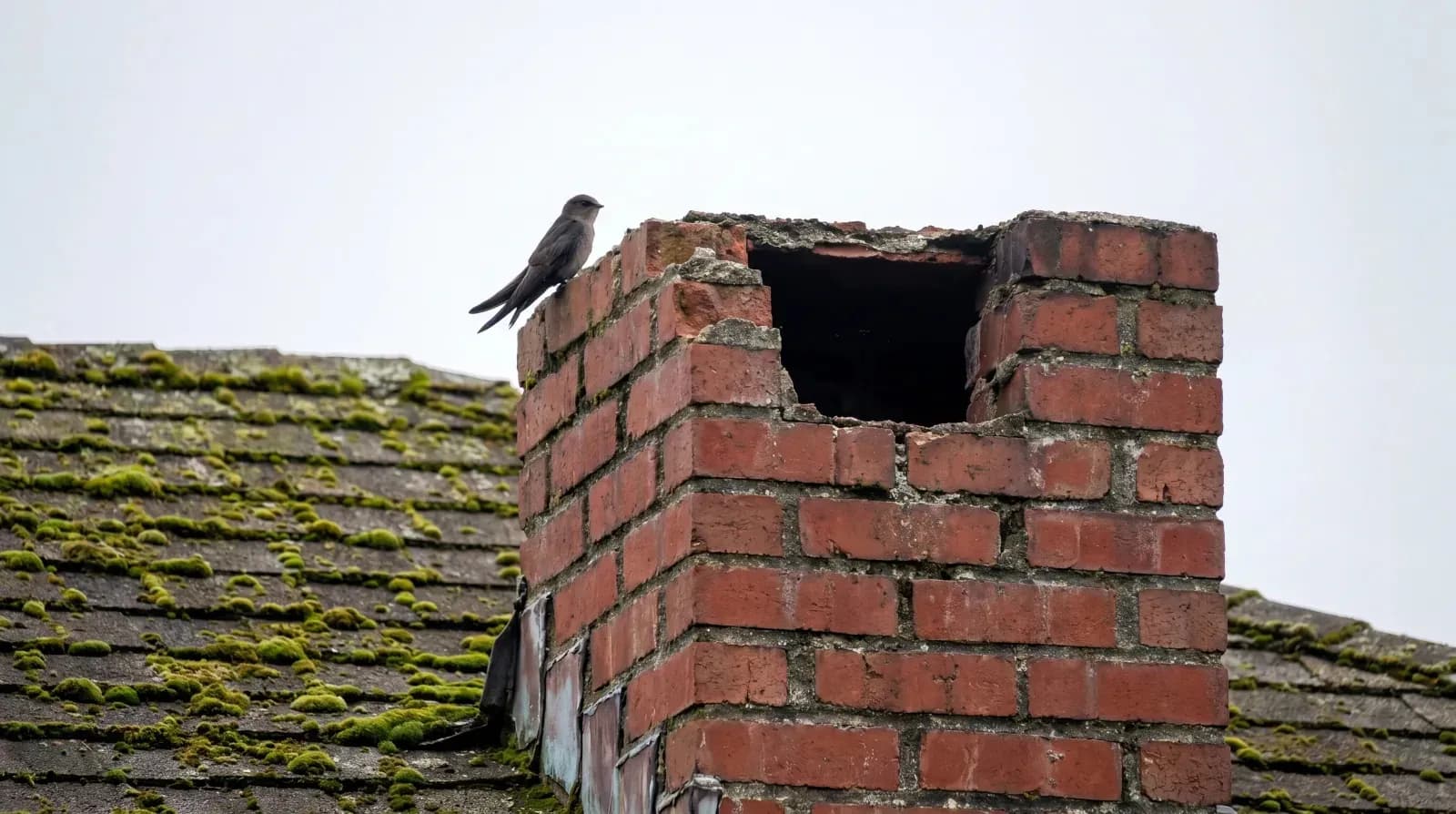
- Chimney swifts, a federally protected migratory species that nests in uncapped Seattle flues from May through August. Once they move in, removal is legally restricted until the young fledge — and professionally removing the nest afterward is $300–$600.
- Raccoons, which treat open chimney flues as ideal den sites. We remove raccoons from uncapped chimneys in every neighborhood from Ballard to Mercer Island. Removal is $250–$500 plus the cap you should have had to begin with.
- Embers that exit the flue during a fire and land on cedar-shake roofs — a real ignition risk during late-summer dry spells.
- Debris — Douglas fir needles, big-leaf maple seeds, moss, and leaves — that accumulate in the flue and cause smoke to back up into the house.
For the animal side in detail, see our guide on removing birds and animals from Seattle chimneys.
What Are the Different Types of Chimney Caps?
Not every cap fits every chimney. Here's a quick breakdown of the main types we install across the Seattle metro:
| Cap Type | Material Options | Typical Seattle Lifespan | Best Fit |
|---|---|---|---|
| Single-flue cap | Galvanized, stainless, copper | 5–50 yrs (material-dependent) | Most residential chimneys |
| Multi-flue cap | Stainless, copper | 25–50 yrs | Chimneys with 2+ flues under one crown |
| Chase cover + cap | Stainless, copper | 25–50 yrs | Prefab / factory-built chimneys with wood chase |
| Top-sealing damper cap | Stainless | 20–30 yrs | Homes with failed throat dampers or high energy loss |
| Draft-boosting cap | Stainless | 20–30 yrs | Chimneys with chronic downdraft or smoke backup |
What Does Chimney Cap Installation Cost in Seattle in 2026?
The table below reflects fully installed pricing — cap plus labor — for a standard single-story home in the Seattle metro. Multi-story, steep-pitch, and hillside homes add 20–40% to the installation cost.
| Cap Type / Material | Cap Price | Installation Labor | Total Installed |
|---|---|---|---|
| Galvanized single-flue | $50–$120 | $100–$180 | $150–$300 |
| Stainless steel single-flue | $120–$280 | $150–$300 | $300–$600 |
| Copper single-flue | $280–$700 | $200–$350 | $500–$1,200 |
| Multi-flue stainless cap | $200–$500 | $200–$400 | $400–$900 |
| Custom stainless chase cover | $350–$1,000 | $250–$500 | $600–$1,500 |
| Top-sealing damper cap | $300–$500 | $200–$400 | $500–$900 |
Want a specific number for your chimney? Book a same-day estimate and we'll measure your flue, inspect the crown, and quote the exact cap you need — no guessing, no upsells.
Why Do Seattle Homes Need Stainless Steel Instead of Galvanized?
Galvanized caps dominate the hardware store shelf because they cost 30–50% less than stainless. In most of the country that tradeoff makes sense. In Seattle, it's a false economy that we see play out on rooftops every single week.
Here's what galvanized steel faces in the Seattle metro that accelerates its failure:
- Salt air corrosion in coastal neighborhoods. Homes in Ballard, Magnolia, West Seattle, and waterfront areas of Mercer Island get steady marine air off Puget Sound. Galvanized zinc coating breaks down in salt environments within 3–7 years; the underlying steel rusts through by year 10–15. We pull corroded galvanized caps off Ballard and Magnolia chimneys on almost every sweep run through those neighborhoods.
- 152 rain days per year. That's roughly 10 times the moisture exposure of a cap in Phoenix or Albuquerque. More moisture cycles mean faster zinc depletion, faster rust formation, and faster structural failure.
- The 30-year math. A $250 galvanized cap replaced twice over 30 years — with two installation visits — costs $750+. A $450 stainless cap installed once lasts 30–50 years and comes out ahead before year 12. If you're within a mile of salt water, choose 316-grade stainless over standard 304.
Copper is the premium tier — a lifetime-of-the-house material with a naturally beautiful patina — but the $700–$1,200 choice is driven more by aesthetics than performance. Both 304 stainless and copper will outlast the average homeownership period by decades.
Should You Use a Multi-Flue Cap or Individual Caps?
Many Seattle chimneys — particularly in pre-1960s homes in Capitol Hill, Queen Anne, and Fremont — have two or even three flues under one crown: one for the fireplace, one for the furnace or water heater, sometimes one for a second fireplace. You have two installation approaches:
Option A: Multi-flue hood cap. One large stainless or copper hood bolts onto the crown and covers every flue simultaneously. Pros: cleanest visual profile, single installation and maintenance point, lowest per-flue cost when you have three or more flues. Cons: if the frame fails, every flue is exposed at once.
Option B: Individual cap on each flue. A separate cap clamps or bolts onto each flue tile. Pros: lowest upfront cost on two-flue chimneys, easy to replace one independently. Cons: the crown surface between flues remains exposed to rain, more mechanical points that can fail over time.
In our experience across 340+ cap jobs last year, multi-flue caps make the most sense for three or more flues — and for two-flue chimneys where the crown surface is already showing wear. Your estimator should measure both crown dimensions and flue tile positions before recommending which approach fits your chimney.
What Does the Installation Process Look Like?
A standard single-cap install on an accessible roof takes 1–2 hours from ladder setup to ladder down. Here's exactly what happens:
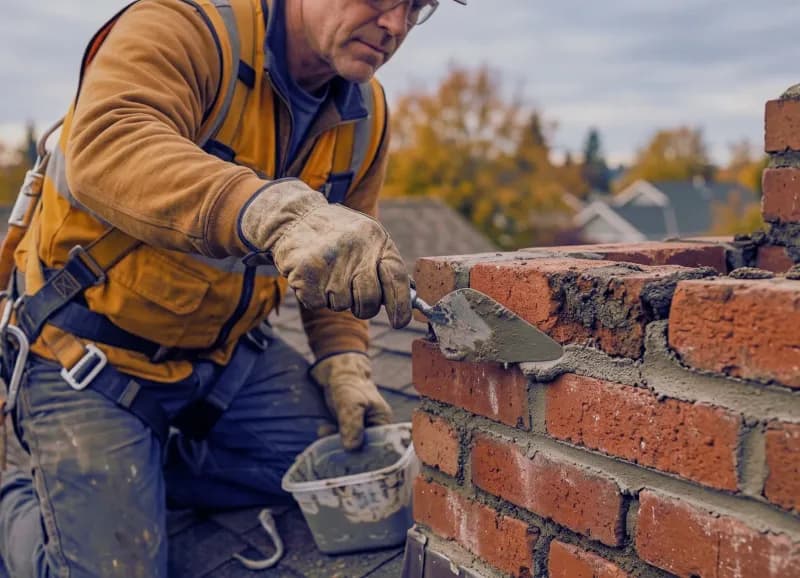
- Safety setup. Ladder placement, roof jacks on steep pitches, and harness on anything above 8/12 pitch or three stories. We don't cut corners on this — roof falls are the leading cause of serious contractor injuries.
- Flue measurement. We take the exact inside and outside dimensions of the flue tile at the crown. Fractional measurements matter: a cap that sits 1/4 inch loose will rock, abrade the crown, and eventually fail. We never order a cap without measuring first.
- Crown and flashing inspection. While we're on the roof we inspect the crown surface and flashing for cracks or deterioration. If we find issues, we flag them before installation — a new cap on a failing crown is money wasted. See our crown repair cost guide for what those repairs typically run.
- Cap mounting. Set screws or through-bolts into the flue tile, sealed with high-temp silicone rated for 500°F+. We never friction-fit a cap — Seattle's 60 mph winter windstorms will pull a friction-fit cap off and send it through a neighbor's window.
- Documentation. Before-and-after rooftop photos for every install, emailed to you the same day.
Multi-flue caps and custom chase covers take 2–4 hours. Custom-fabricated copper caps may require two visits: one to measure precisely, one to return and install after fabrication.
How Does Roof Height and Pitch Affect the Total Price?
The cap material is half the cost equation. Where the chimney sits on your roof drives the other half. Here's how those factors typically move the installed price:
- Single-story ranch, standard pitch: baseline pricing as shown in the table above.
- Two-story home, standard pitch (4/12–7/12): add $50–$150 for extended ladder and additional setup time.
- Three-story home or tall townhouse: add $150–$400; may require a taller ladder, scaffolding, or two-tech crew.
- Steep pitch (10/12 and above): add $100–$250 for roof jacks, harness anchor points, and significantly slower working pace.
- Hillside access (Magnolia, Queen Anne bluffs, Mercer Island slopes): add $100–$350 when the ladder base sits on a grade rather than flat ground.
- Cedar shake roof: add $75–$200; we cannot walk wet cedar shake without risking both the roof and our safety — extra jacks and planks are required.
What About Chase Covers for Prefab Chimneys?
If your home has a metal flue enclosed in a wood-sided chase — common in Seattle construction from the 1980s through the early 2000s — you don't have a traditional masonry crown. You have a chase cover: the flat metal plate at the top of the wood chase with the pipe stub sticking through it.
Chase covers are one of the most neglected components in Pacific Northwest homes. Builders installed them in thin galvanized steel; those covers rust through within 15–25 years in our climate and dump water directly into the chase wall cavity, where it quietly destroys the framing and insulation. By the time interior water stains appear on the ceiling, the damage behind the wall is often already significant.
Warning signs that your chase cover has failed:
- Rust-orange streaks running down the chase siding after rain.
- Standing water visibly pooled in the 'dish' of the cover from the ground or a ladder.
- Water stains on the interior ceiling or wall near the fireplace.
- A bubbling or peeling paint line on the chase exterior.
Stainless steel replacement chase covers cost $600–$1,500 installed and typically integrate the cap into one unit. This is a job worth pairing with a broader inspection of the full cap and chase system — our estimators always check the flue collar seal and vent connector while they're up there.
What Questions Should You Ask Before Hiring a Cap Installer?
A chimney cap installation looks simple. The difference between a cap that lasts 30 years and one that blows off in the first windstorm is almost entirely in execution details. Here's what to verify before you book:
- What grade of stainless? Ask specifically for 304 (standard) or 316 (marine environments). 'Stainless' without a grade number is a red flag.
- How is the cap mounted? Through-bolted into the flue tile with silicone is correct. Friction-fit or 'just set on top' is not acceptable in a Seattle wind climate.
- What mesh size? 3/4-inch is the NFPA 211 standard for animal exclusion and draft balance. 1/2-inch if wildfire ember risk is a concern.
- Will you inspect the crown and flashing while on the roof? Any professional should flag adjacent problems while they're up there — and document them with photos.
- What is the warranty? We offer a lifetime warranty on stainless and copper caps we install. Get any warranty in writing before the job starts.
For the full picture of how a cap connects to the rest of your chimney system, see our guide on why chimneys leak when it rains and our overview of chimney flashing repair.
Ready to Cap Your Seattle Chimney?
A stainless steel chimney cap installed by Seattle Chimney Pros typically pays for itself in avoided repairs within two to three wet seasons — and it's one of the few home improvements that genuinely costs less than the damage it prevents. We've installed caps on 2,500+ Seattle-area homes since 2011, and we stock stainless, copper, multi-flue, and custom chase covers so most jobs happen within a week of quote approval.
Call (206) 278-2924 or request an estimate online — we'll measure your flue, inspect the crown, and give you a written quote with no pressure and no surprises.
Need professional help?
Our professionally trained team is ready. $99 inspection credited toward repairs, 30-minute response.