How to Prevent Chimney Fires in Seattle: Complete 2026 Guide
How Do You Prevent Chimney Fires in Seattle?
Preventing chimney fires in Seattle comes down to three non-negotiable habits: annual professional sweeping, burning only seasoned hardwood with moisture content below 20%, and keeping a properly fitted chimney cap in place year-round. Based on over 900 chimney sweeps our team completed across the Seattle metro area in 2025, Stage 2 or Stage 3 creosote — the direct precursor to chimney fires — was present in roughly 1 in 3 chimneys we inspected. A professional sweep costs $169–$329 in Seattle in 2026 and removes that creosote before it ever gets the chance to ignite. Current as of June 2026.
A Real Chimney Fire Near-Miss: Marcus T. in Greenwood
Last January, Marcus T. called us from his 1952 Greenwood bungalow in a mild panic. He'd heard what he described as 'a low rumbling, like a jet flying too close' coming from inside his chimney wall — then noticed the mantel felt hot to the touch. He'd been burning fires three or four nights a week through December, using a mix of wood he'd bought off Craigslist and some leftover cedar from a fence project.
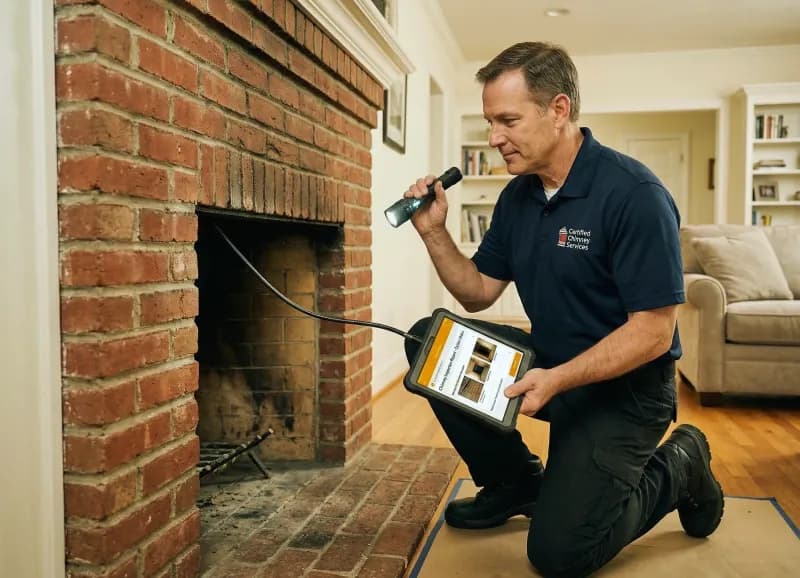
Our technician Ryan arrived within two hours. The moment he opened the cleanout at the firebox base, he found exactly what he expected: a thick coating of shiny, black Stage 2 creosote that had partially ignited and then self-extinguished when Marcus instinctively closed the damper. The flue camera revealed a four-foot section of clay liner tile with a hairline heat fracture near the smoke chamber.
'That cedar fence wood was the culprit. Softwood and construction scraps produce two to three times more creosote than seasoned alder or maple. After a month of burning it three nights a week, this flue had more buildup than some chimneys I see after three full seasons of use.'
— Ryan, Technician, Seattle Chimney Pros
Marcus's chimney required a full creosote sweep, a Level II inspection, and a single liner tile repair — total cost came to $612. More importantly, the fireplace was out of service for two weeks during the coldest stretch of the winter. 'I had no idea what I was putting in there could do that,' Marcus said. 'I'm never buying mystery firewood again.' He's now on our annual maintenance schedule, and his next sweep is booked for September 2026.
What Causes Chimney Fires — and Why Seattle Homes Are at Higher Risk
Nearly every chimney fire shares one root cause: creosote ignition. Creosote forms when wood smoke condenses on the cooler interior walls of the flue. Seattle's climate amplifies the risk — our wet winters mean more wood-burning days, and exterior chimneys (extremely common in our older housing stock) run cooler than interior chimneys, causing faster condensation and heavier deposits.
There are three stages of creosote buildup, each more dangerous than the last:
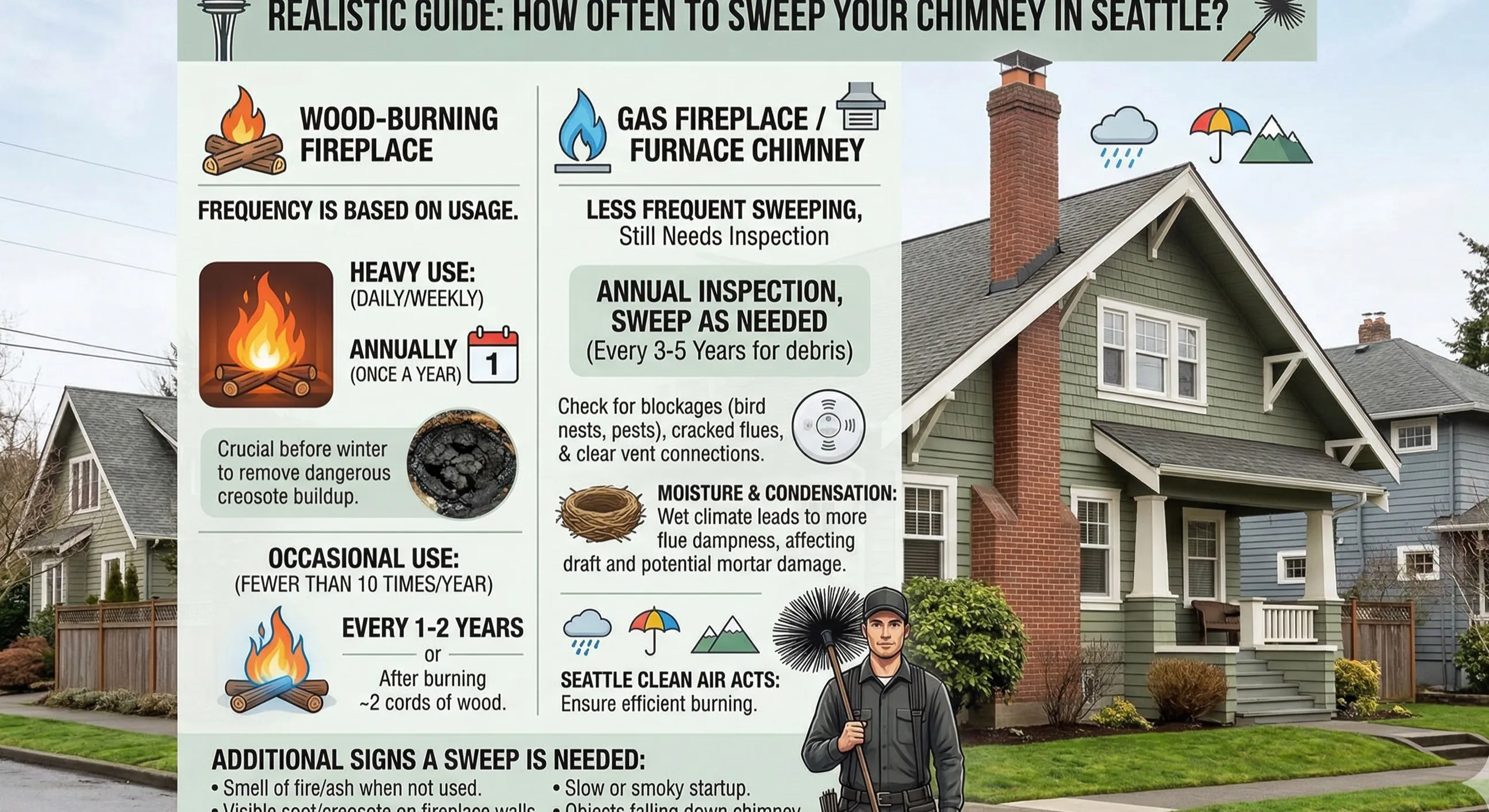
- Stage 1 — Flaky gray soot: Easily brushed away. Low fire risk. This is what a well-maintained chimney looks like at annual sweep time.
- Stage 2 — Shiny, tar-like deposits: Sticks to tile, requires rotary cleaning tools. Moderate fire risk — ignites under high-draft conditions.
- Stage 3 — Hardened, glazed creosote: Extremely flammable. Can ignite at 451°F — a temperature your flue easily reaches during a normal fire. This is what causes chimney fires.
Factors that accelerate creosote buildup in Seattle homes specifically:
- Burning unseasoned or green wood — The #1 cause. Wet wood smolders at lower temperatures, producing thick smoke that deposits creosote rapidly.
- Burning softwoods — Cedar, Douglas fir, and pine (common in Pacific Northwest lumber scraps) produce significantly more creosote than hardwoods like alder, maple, or madrone.
- Cool flue temperatures — Exterior chimneys on the north or west side of homes run cold on rainy Seattle days, increasing condensation inside the flue.
- Restricted airflow — Closing the damper too early, blocked flues, or debris-clogged caps all reduce draft and trap smoke inside longer.
- Short, frequent fires — Multiple short burns per day prevent the flue from reaching temperature equilibrium, keeping walls cool and creosote-prone.
What Are the Most Effective Ways to Prevent a Chimney Fire?
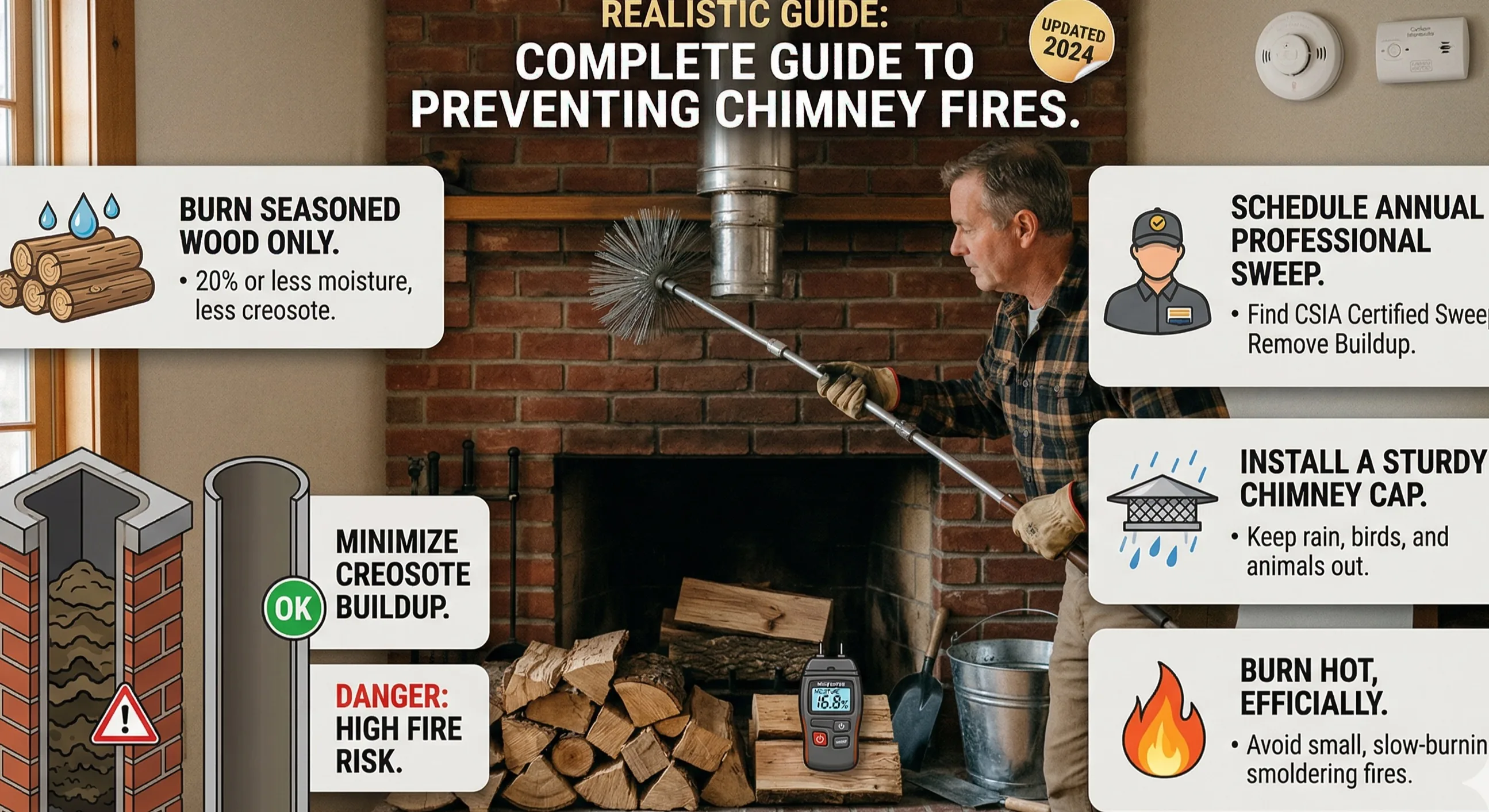
Prevention is straightforward if you follow a consistent routine. Here's the complete checklist our technicians go over with every client:
- Schedule an annual professional sweep: A chimney sweep removes creosote before it reaches Stage 2 or 3. NFPA 211 recommends annual sweeping for all wood-burning fireplaces. In Seattle, we recommend booking in late spring or summer — creosote is softer and easier to remove before it hardens over warm months.
- Burn only seasoned hardwood: Firewood needs at least 12 months of outdoor drying to reach a safe moisture content of 20% or below. Freshly cut or 'green' wood can have 60%+ moisture. Use a $15 moisture meter from any hardware store to check before you burn.
- Build hot, active fires: Smoldering fires are creosote factories. Open the damper fully, start with dry kindling, and build up to a hot, actively burning fire before adding larger logs. Small, hot fires produce far less creosote than large, slow-burning ones.
- Install or inspect your chimney cap: A stainless steel chimney cap prevents debris, leaves, bird nests, and moisture from entering the flue. All of these obstruct airflow and accelerate creosote buildup. Cap mesh should be inspected every fall.
- Never burn prohibited materials: Construction scraps, treated lumber, cardboard, trash, plywood, and synthetic logs (except approved ones) all produce toxic, heavy creosote at accelerated rates. This is non-negotiable.
The following table shows how wood type and moisture content affect creosote production — data from our own field observations across 900+ Seattle sweeps in 2025:
| Fuel Type | Moisture Content | Creosote Risk | Typical Sweep Interval |
|---|---|---|---|
| Seasoned alder or maple | Below 20% | Low | Annual |
| Semi-seasoned hardwood | 20–35% | Moderate | Annual or twice yearly |
| Cedar / Douglas fir (dry) | Below 20% | Moderate–High | Twice yearly |
| Green / unseasoned wood | Above 40% | Very High | After every season |
| Construction scraps / trash | Variable | Extreme | Do not burn |
What Are the Warning Signs of a Chimney Fire in Progress?
Chimney fires don't always announce themselves with drama. Some burn slowly and go unnoticed until a post-season inspection reveals the damage. Others are intense and unmistakable. Know these signs so you can respond immediately:
- Loud cracking, popping, or low rumbling: Often described as a distant freight train or a jet flying overhead. This is the most distinctive audible sign — the sound of burning creosote inside the flue. Marcus in Greenwood described it exactly this way.
- Dense, unusually thick smoke: Much heavier than normal fire smoke, sometimes filling the room even with the damper fully open.
- The chimney structure or mantel becoming hot to the touch: External surfaces near the chimney shouldn't feel significantly warm during a normal fire.
- Flames or glowing sparks exiting the chimney top: Visible from outside, and often spotted by neighbors before the homeowner notices.
- A strong, acrid smell distinct from normal wood smoke: Burning creosote has a sharp, chemical quality that's different from the pleasant smell of a normal wood fire.
- Discolored or warped damper: If you can see the damper handle, extreme heat may cause visible color change. A stuck or deformed damper after a fire is a red flag.
What Should You Do If a Chimney Fire Starts?
If you believe a chimney fire is underway, every second counts. Follow these steps in order:
- Call 911 immediately. Chimney fires can spread to roof framing, attic insulation, and wall cavities within minutes. The Seattle Fire Department has specific protocols for chimney fires — don't wait to see if it 'burns out on its own.'
- Evacuate everyone from the home. Get all people and pets out now. Assign a meeting point away from the structure before you do anything else.
- Close the damper if you can do so safely. Cutting off air supply slows the fire. Only attempt this if the damper handle is accessible without leaning into the firebox opening.
- Close glass fireplace doors if your fireplace is equipped with them — this further limits oxygen supply.
- Do NOT use water. Pouring water into an active chimney fire causes thermal shock that can shatter the clay flue liner, potentially opening pathways for fire to spread into the wall cavity. Never pour water on the fireplace fire itself either — the steam explosion risk in a confined space is serious.
- Monitor from outside and report to dispatch. Watch for flames or sparks from the chimney top and any signs of smoke or fire emerging from the roofline. Report everything to the 911 dispatcher in real time.
What Happens After a Chimney Fire — and What Does Repair Cost?
Even a small, contained chimney fire causes damage that must be evaluated and repaired before the fireplace can be used again. After any chimney fire, NFPA 211 mandates a Level II chimney inspection — this means a full camera scan of the flue interior, structural assessment, and evaluation of heat transfer to surrounding framing.
Based on post-fire inspections we've completed across the Seattle metro area, here's what we typically find and what repairs cost in 2026:
| Post-Fire Damage Type | How Common | Repair Cost Range (2026) |
|---|---|---|
| Cracked or destroyed clay flue liner | Very common (65%+ of fires) | $1,800–$4,200 (relining) |
| Damaged mortar joints / spalled brick | Common | $600–$2,800 |
| Cracked chimney crown | Common | $350–$900 |
| Warped or damaged damper | Moderate | $250–$600 |
| Heat damage to adjacent framing | Less common but severe | $2,000–$15,000+ |
Homeowners insurance generally covers chimney fire damage as a sudden, accidental event. However, insurers will ask about maintenance history — documented annual sweeps and inspections strengthen your claim significantly. Keep your service records. Our inspection reports include detailed photography and written findings that hold up well in insurance proceedings.
Is Annual Chimney Maintenance Really Worth the Cost?
The math is straightforward. Annual prevention costs in Seattle in 2026 run $349–$648 for a sweep plus inspection plus cap check. Post-fire repair costs typically run $3,500–$12,000, and that's assuming the fire doesn't spread to the house structure. Full structural chimney fires that reach roof framing regularly produce $20,000–$200,000 in total property damage. On top of the financial case, a properly maintained chimney and fireplace system also eliminates the carbon monoxide risk that comes with cracked liners or blocked flues — a risk that shows no visible warning signs at all.
In 14 years serving the Seattle metro area, our team has completed post-fire inspections on dozens of chimneys where the homeowner's last professional sweep was more than five years prior. In every single one of those cases, the fire was preventable. Don't let your fireplace become a statistic. Schedule your 2026 chimney sweep today — call us at (206) 278-2924 and we'll get you on the calendar before burning season returns this fall.
Need professional help?
Our professionally trained team is ready. $99 inspection credited toward repairs, 30-minute response.