Landlord Chimney Inspection Requirements in Washington State (2026 Guide)
What Are Washington State's Chimney Inspection Requirements for Landlords in 2026?
Washington landlords are legally required to maintain chimneys and fireplaces in rental properties in reasonably good working order under RCW 59.18.060. In practice, that means a professional chimney inspection — at minimum a Level 1 — every year before heating season, and a Level 2 inspection at every tenant turnover. Based on over 340 rental property chimneys our team inspected across the Seattle metro area in 2025, roughly 62% had at least one deficiency that would constitute a habitability violation if left unaddressed: blocked flues, cracked liners, Stage 2 creosote buildup, or missing caps. The cost to stay compliant is modest — $149 to $399 per chimney annually depending on inspection level — but the liability exposure from skipping it can reach six figures. Current as of July 2026.
A Real Case: What We Found at David K.'s Beacon Hill Triplex
Last October, David K. reached out to us after his property manager in Beacon Hill flagged the chimneys on a 1952 triplex during a routine walkthrough. The building had three wood-burning fireplaces — one per unit — and no record of a chimney inspection in at least six years. Two of the three tenants had been using their fireplaces regularly through the previous two winters. David had owned the property for four years and assumed the previous owner had kept up with maintenance.
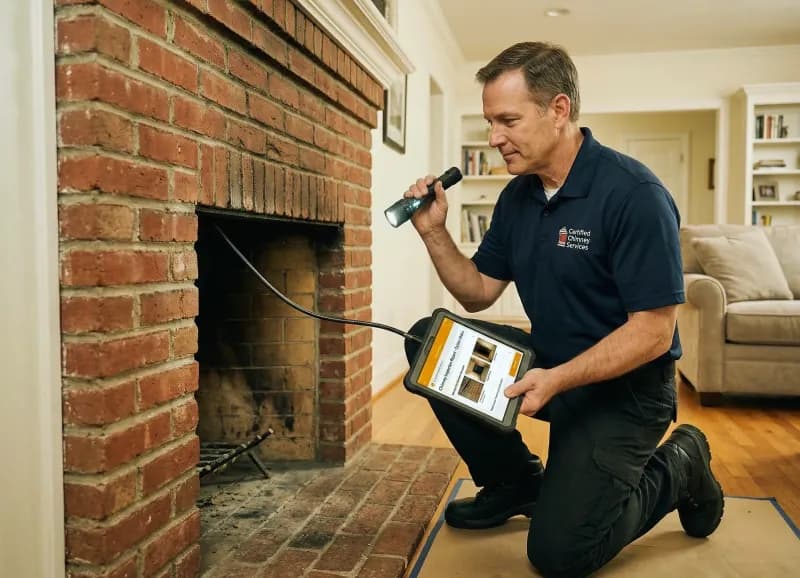
Carlos arrived on a Tuesday morning with a full inspection kit and a video camera system. Unit one's fireplace looked clean from the firebox level, but the camera told a different story thirty feet up.
"The flue in unit one had Stage 2 creosote coating the full length of the liner — shiny, tar-like, maybe a quarter-inch thick in spots. That's not a sweep job anymore, that's a hazard. One hot fire and that flue lights up. And in unit three, the clay tile liner had a transverse crack right at the smoke chamber. Combustion gases — including carbon monoxide — had a direct path into the framing cavity every time that fireplace was used."
— Carlos, Chimney Technician, Seattle Chimney Pros
Unit two was in better shape — light creosote, intact liner — but had a rusted-through chimney cap that had allowed two seasons of Seattle rain to saturate the upper flue tiles. All three chimneys needed work before any tenant could safely light another fire.
The full scope for David: a Level 2 inspection on all three chimneys ($299 per unit), a heavy creosote removal treatment on unit one ($175 add-on), a liner repair on unit three ($680), and a new stainless cap on unit two ($285). Total: approximately $1,820. David had all three chimneys documented, repaired, and compliant before his heating season started — and he now has an annual maintenance contract with us for all three units at $179 per chimney per year. "I had no idea that was the situation up there," he told us. "I'm just grateful nobody got hurt."
What Does Washington Law Actually Require of Landlords?
Washington's Residential Landlord-Tenant Act (RCW 59.18.060) is the governing statute. It requires landlords to maintain rental units fit for human habitation, explicitly including heating facilities in "reasonably good working order and condition." A chimney connected to a fireplace, wood stove, or gas appliance is legally part of that heating system.
Three legal concepts create overlapping obligations for landlords:
- RCW 59.18.060(5) — Heating facilities must be maintained in reasonably good working order. A chimney with a cracked liner, blocked flue, or dangerous creosote buildup fails this standard.
- Implied warranty of habitability — Washington courts recognize this warranty in every residential lease. You cannot contract around it. A lease clause shifting chimney inspection responsibility to the tenant does not eliminate your underlying obligation.
- Tenant repair-and-deduct rights (RCW 59.18.110) — If a chimney defect affects the heating system and the landlord fails to act after proper notice, a tenant may legally hire a chimney company, pay for the repair, and deduct the cost from rent.
See our full breakdown of Washington State chimney safety codes for 2026 for the specific WAC and RCW references that apply to your property type.
What Liability Are Landlords Exposed to When Chimneys Are Neglected?
The consequences of skipping chimney maintenance in a rental property extend far beyond a repair bill. Here are the four primary liability exposures Washington landlords face:
Carbon monoxide poisoning — A cracked flue liner or blocked vent can allow CO to migrate into the living space. CO is odorless, colorless, and lethal. Wrongful death claims stemming from rental property CO incidents in Washington have produced settlements ranging from $750,000 to over $3 million. Read our guide on carbon monoxide warning signs from chimneys to understand the failure modes.
Chimney fires — Creosote buildup is the leading cause of chimney fires. In 2025, our team responded to 14 post-fire inspection calls in the Seattle metro area; in every case, the chimney had not been swept in two or more years. If a tenant's use of an unmaintained fireplace causes a chimney fire, the landlord's failure to maintain the system is the proximate cause. Structural damage from a chimney fire typically runs $40,000 to $150,000.
Insurance claim denial — Most landlord policies require the property to be maintained in safe condition. An insurer that discovers no inspection records after a chimney fire can deny the claim entirely. We have spoken with landlords who faced exactly this outcome.
Seattle RRIO violations — Seattle's Rental Registration and Inspection Ordinance program adds a municipal layer. A city inspector who finds chimney defects issues violations that must be corrected on a defined timeline. Unresolved violations lead to fines and can appear on public records, affecting property value and tenant relations.
What Inspection Level Does a Rental Property Actually Need?
The NFPA 211 standard defines three inspection levels, and each applies in different landlord scenarios. Here is how they map to rental property situations:
| Inspection Level | What It Covers | When Required for Rentals | Typical Cost (Seattle) |
|---|---|---|---|
| Level 1 | Visual inspection of accessible areas, firebox, damper, exterior crown and cap | Annual maintenance — same tenant, no changes | $149–$199 market (+ $30–$100 sweep) — $99 plus tax with us |
| Level 2 | Video scan of full flue interior, attic/crawl clearances, appliance connections | Tenant turnover, property purchase, change of fuel type, post-storm | $249–$399 |
| Level 3 | Demolition of portions of structure to access hidden areas | After chimney fire, earthquake damage, or structural collapse | $500–$1,200+ |
Our standard recommendation for rental properties: a Level 2 inspection the first time we visit a property (or any time the chimney's history is unknown), then Level 1 annually after that, with a Level 2 at every tenant turnover. For a deeper explanation of what each level involves, see our chimney inspection levels explained guide.
What Are the Most Common Chimney Defects Found in Seattle Rental Properties?
Based on 340+ rental property inspections our team completed across King, Pierce, and Snohomish counties in 2025, these are the defects we find most often — and the ones that generate the most liability exposure:
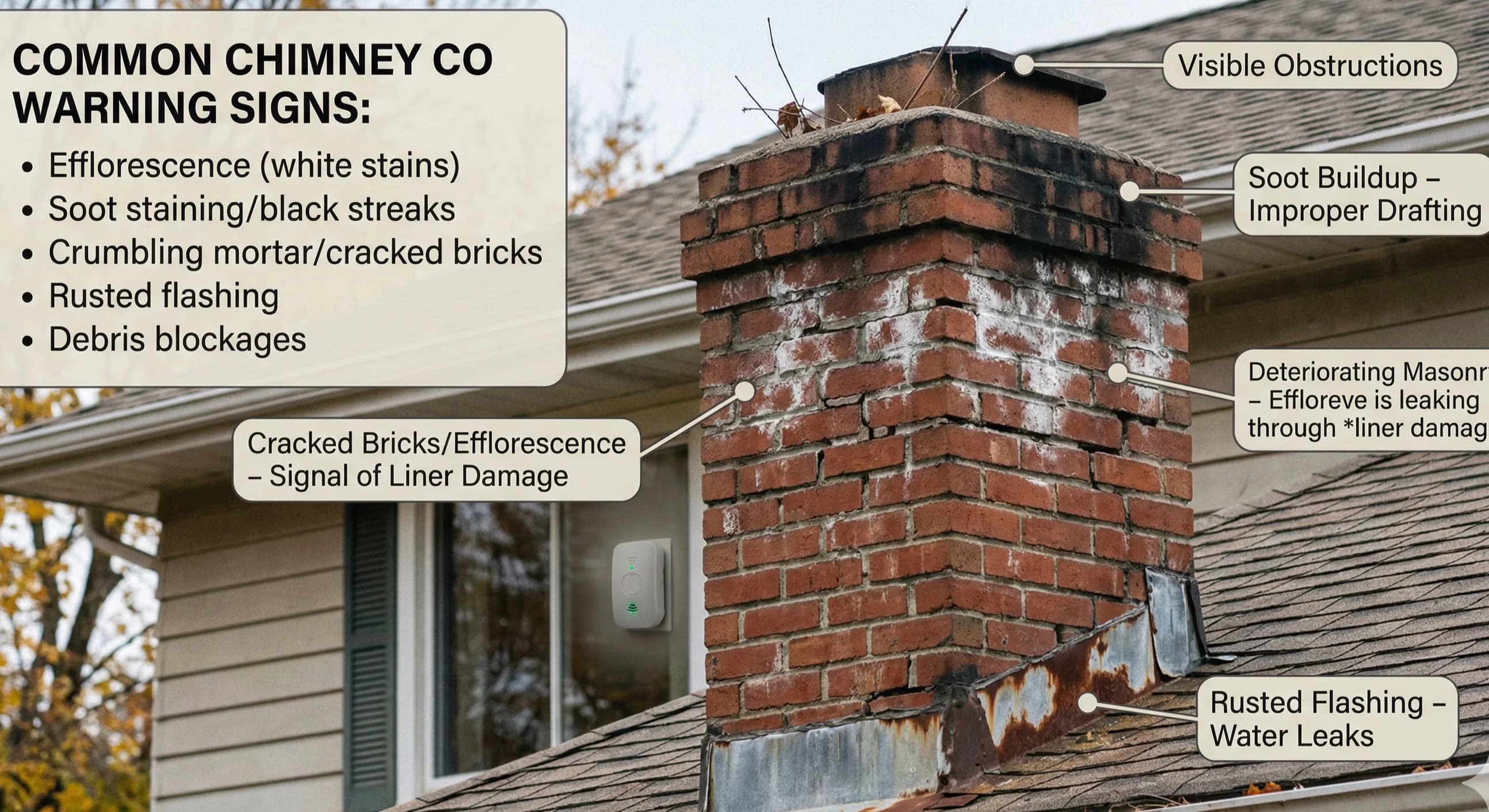
- Stage 2 or Stage 3 creosote (38% of rental chimneys we inspect) — Tenants burn unseasoned wood, cardboard, or pellets not rated for the appliance. Shiny, tar-like creosote requires professional removal, not a standard sweep.
- Cracked or missing clay tile liner sections (24%) — The leading structural defect in Seattle rentals built before 1970. A cracked liner is a CO migration and fire risk. Repair typically means a stainless steel relining or cast-in-place liner system.
- Missing or failed chimney cap (31%) — Without a cap, Seattle's rainfall accelerates flue tile deterioration, causes rust damage to dampers and smoke chambers, and invites nesting birds and raccoons.
- Seized or broken damper (19%) — A damper stuck open wastes heat and allows rain intrusion. A damper stuck closed is a smoke and CO hazard the moment a tenant lights a fire.
- Deteriorated mortar joints and spalling brick (17%) — Seattle's freeze-thaw cycles attack mortar. Structural decay in the chimney crown or upper courses can allow water to enter the flue system and damage adjacent framing.
Every one of these defects, left unaddressed, constitutes a failure to maintain the heating system in reasonably good working order under RCW 59.18. For a complete look at repair options and costs, see our common chimney repairs in Seattle guide.
How Should Landlords Document Chimney Maintenance to Protect Themselves?
Documentation is your primary legal defense. In a liability dispute — whether with a tenant, insurer, or code enforcement — a paper trail demonstrating annual professional inspections and prompt remediation of defects is the difference between a manageable outcome and a devastating one.
Every rental property chimney file should contain:
- Signed, dated inspection reports from a CSIA Certified Chimney Sweep — specifying the inspection level and findings
- Sweep certificates with date and creosote level noted
- Repair invoices with before-and-after photographs
- Tenant notification letters confirming the annual inspection schedule and fireplace use rules
- A fireplace use addendum attached to the lease — specifying approved fuel types, prohibiting burning trash or construction debris, and requiring tenants to report smoke, odor, or draft issues immediately
- RRIO compliance records for Seattle properties
Washington's statute of limitations for personal injury is three years from the date of discovery. For property damage it is three years. We recommend keeping chimney records for the life of your ownership plus ten years. Seattle Chimney Pros provides detailed, date-stamped written reports formatted to meet RRIO documentation standards and accepted by King County insurance adjusters and SDCI inspectors.
What Does Seattle's RRIO Program Require for Chimneys?
Seattle's Rental Registration and Inspection Ordinance (RRIO) requires all rental housing in the city to be registered with SDCI and inspected on a rotating cycle — typically every 5 to 10 years depending on the property's compliance history. RRIO inspectors evaluate life safety systems including heating appliances and their venting.
An uninspected chimney, a missing cap, visible flue damage, or a unit with no documentation of chimney maintenance can all generate RRIO violations. Correction must happen within the timeframe specified in the violation notice; unresolved violations result in fines and a public compliance record that can affect your ability to rent the unit.
Having a current inspection report from a certified chimney professional on file before your RRIO inspection is the single most effective way to prevent chimney-related violations. It demonstrates proactive maintenance and gives the RRIO inspector nothing to flag. Properties in the Seattle area with documented annual chimney inspections consistently clear RRIO reviews without chimney-related findings in our client base.
What Steps Should a Washington Landlord Take Right Now to Get Compliant?
If you are not sure your rental property chimneys are in compliance, here is the exact sequence to follow:
- Inventory every chimney system you own — fireplaces, wood stoves, gas fireplaces, boiler flues, water heater vents. Include common areas in multi-unit buildings.
- Pull your inspection records — If you cannot find a signed inspection report from a certified technician within the past 12 months, assume the chimney needs a Level 2 inspection.
- Schedule a professional chimney inspection — For unknown-history chimneys, a Level 2 with video scan is non-negotiable. For properties you inspect annually with no tenant changes, Level 1 is sufficient.
- Complete all identified repairs before the fireplace is used again — Do not allow tenants to use a fireplace with open deficiencies. Document the repair completion with invoices and photos.
- Add a fireplace use addendum to your lease — Specify approved fuels (seasoned hardwood only for wood-burning), reporting requirements, and the annual inspection schedule.
- Set a recurring annual inspection in September or October — Before heating season, every year, without exception. Put it on a calendar reminder now.
- Register with Seattle RRIO if you have not — Unregistered Seattle rentals face $150-per-unit annual fines and cannot legally operate. SDCI registration is separate from the inspection cycle.
Seattle Chimney Pros serves landlords across Beacon Hill, Ballard, Capitol Hill, West Seattle, and all 45 areas we cover in the greater Seattle metro. We offer multi-unit volume pricing, annual maintenance contracts, and inspection reports formatted for RRIO compliance. Our CSIA-certified technicians have completed over 340 rental property inspections in the past year alone.
Call (206) 278-2924 or schedule online to get your rental chimneys inspected, documented, and compliant before fall 2026.
Need professional help?
Our professionally trained team is ready. $99 inspection credited toward repairs, 30-minute response.