Summer Chimney Preparation in Seattle: 2026 Off-Season Guide
Why Summer Is the Best Time for Chimney Work in Seattle (2026)
Summer chimney preparation in Seattle costs 10–20% less than fall rates, books within 2–5 days instead of 2–3 weeks, and — critically — gives your mortar, sealants, and crown repairs the dry curing window they need to last 20+ years. Based on 700+ summer jobs our team has completed across the Seattle metro area since 2011, the optimal booking window runs from approximately July 5 through September 15, when rainfall averages under one inch per month and daytime temperatures hold between 65°F and 80°F. Homeowners who schedule inspections and repairs in July or August get lower prices, faster scheduling, and structurally superior results compared to the rushed, wet-weather work common in October and November. Current as of July 2026.
A Real Summer Job: Marcus T. in Fremont
Marcus T. had owned his 1952 Fremont brick-and-mortar craftsman for six years without ever having the chimney inspected. He wasn't worried about the fireplace — he'd used it maybe a dozen times — until he noticed a chalky white crust spreading across the upper third of the chimney's exterior bricks sometime in late June. A neighbor who'd seen our truck on nearby Midvale Avenue suggested he call us.
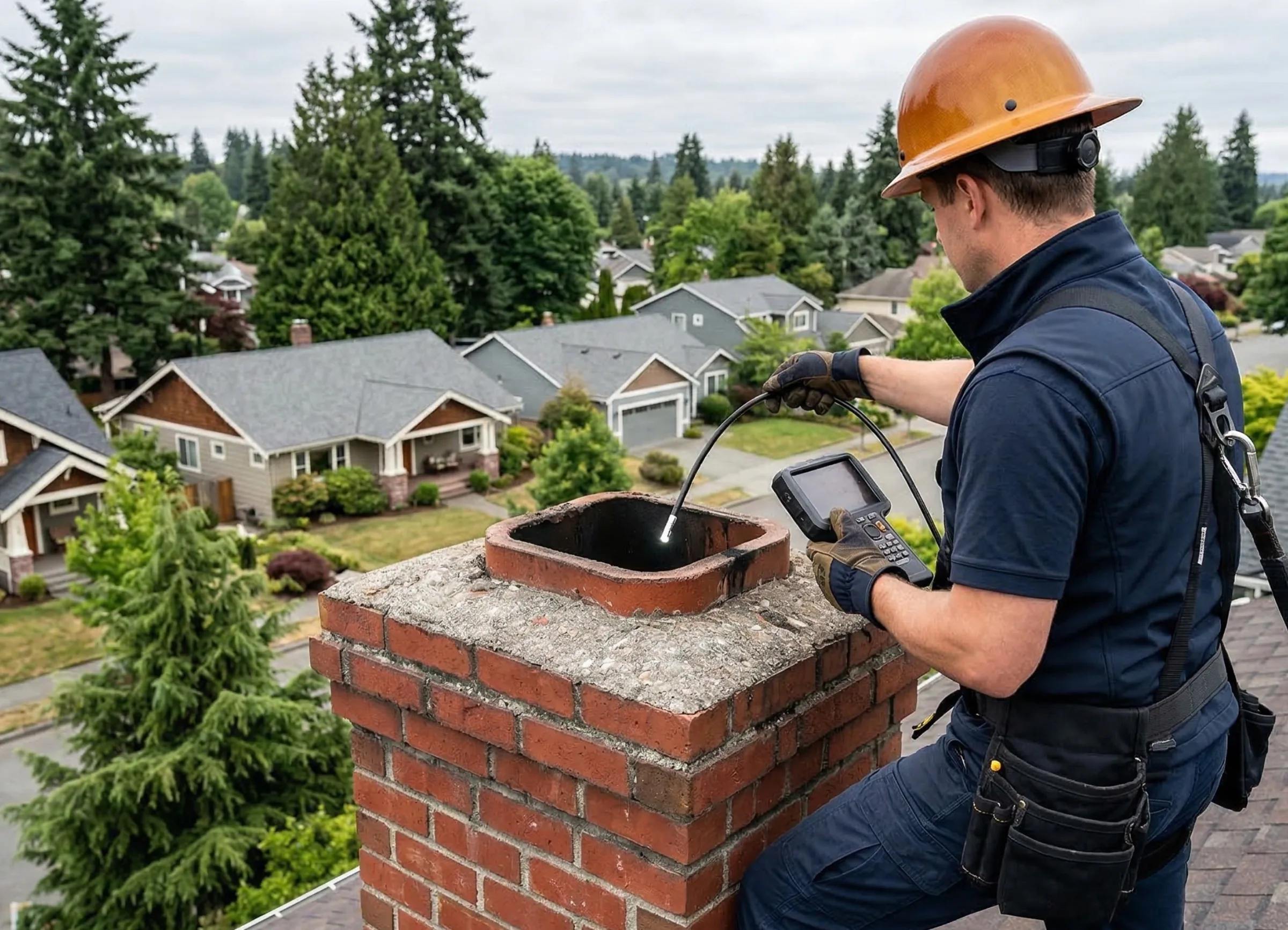
Alex arrived on a Tuesday morning in early July. From the sidewalk, the efflorescence was obvious: a classic sign that water was migrating through the masonry and depositing mineral salts on the surface. Up on the roof, Alex found a crown with a two-inch diagonal crack running from the flue opening toward the front edge, and mortar joints on the top two courses that crumbled to powder when pressed. Inside the flue, the camera showed Stage 1 creosote throughout — light use, but completely unswept for six years.
'That efflorescence on the front face isn't cosmetic — it's a symptom. Water's been entering through that crown crack, wicking through the brick, and the salts it leaves behind are physically pushing the masonry apart from the inside. If we don't seal this before October, you're looking at spalling brick and a much bigger repair by spring.'
— Alex, Lead Technician, Seattle Chimney Pros
The scope of work came to a crown reseal with hydraulic cement overlay, full tuckpointing on the top two courses, a vapor-permeable waterproofing treatment across the entire chimney face, and a standard single-flue sweep. Total cost: $1,340. Because it was booked in July, all the masonry work had a full seven-day cure window before any moisture arrived. Marcus scheduled a follow-up inspection for July 2027 — already on our calendar.
What Happens When Seattle Homeowners Wait Until Fall?
Every September, Seattle chimney companies get flooded with calls. Homeowners suddenly remember their fireplaces exist, rain is two weeks away, and everyone wants their chimney swept or repaired before the first fire of the season. The predictable results:
- Booking backlog: By early October, most reputable CSIA-certified sweeps in King County are booked 2–4 weeks out. Same-week service becomes nearly impossible.
- Weather constraints on repairs: Mortar repair, crown rebuilds, and waterproofing require 48–72 hours of dry weather to cure. Once Seattle's rainy season starts in mid-October, finding a reliable 3-day dry window is rare.
- Rushed workmanship: Contractors racing to complete last-minute fall bookings are more likely to skip proper curing times or apply sealers in marginal conditions.
- Higher pricing: Peak-season rates typically run 10–20% above summer prices across every service category.
- Compromised safety: Homeowners who can't book a sweep before November may light their first fire without an inspection — one of the leading causes of chimney fires in the Pacific Northwest.
How Do Summer vs. Fall Chimney Prices Compare in Seattle?
Demand drives pricing in every service industry, and chimney services are no exception. The table below shows 2026 pricing patterns across the Seattle metro area — including the repair categories most affected by seasonal timing.
| Service | Summer (Jun–Aug) | Fall (Sep–Nov) | Winter (Dec–Feb) |
|---|---|---|---|
| Standard chimney sweep | $195–$295 | $275–$395 | $295–$425 |
| Level 1 inspection | $169–$229 | $195–$275 | $195–$295 |
| Level 2 inspection (camera) | $325–$475 | $395–$595 | $425–$650 |
| Waterproofing (full chimney) | $550–$850 | $700–$1,100 | Not recommended |
| Crown rebuild or reseal | $1,100–$2,000 | $1,400–$2,600 | Weather-dependent |
| Tuckpointing (per sq ft) | $20–$32 | $28–$42 | Rarely possible |
| Typical scheduling wait | 2–5 days | 10–21 days | 7–14 days |
For a full breakdown of what specific repairs cost, see our Seattle chimney repair cost guide.
Which Repairs Specifically Need the Dry Summer Window?
Not every chimney service is weather-sensitive. A sweep can happen in the rain. But the most expensive and durability-critical repairs absolutely require dry conditions — and in Seattle, that means summer.
Tuckpointing and mortar repair: Portland cement mortar requires ambient temperatures above 40°F and at least 48 hours of dry weather to cure properly. Below those thresholds, the hydration reaction slows or stops, producing weak joints that fail within a few freeze-thaw cycles. In our 14 years serving Seattle, we've re-done tuckpointing work that was applied in October rain more times than we can count. Summer locks in a 7-day cure window that delivers joints lasting 20–25 years.
Chimney waterproofing: Vapor-permeable masonry sealers — the only type that should ever be used on brick chimneys — require 24–48 hours of dry surface before application and 24–72 hours of dry weather after. Quality chimney waterproofing in Seattle is effectively a summer-only service. Homeowners in Fremont, Ballard, and Queen Anne with older masonry chimneys should plan to waterproof every 7–10 years, always in summer.
Crown rebuild or repair: The crown is the single most important element for preventing water intrusion at the top of the chimney. A proper crown rebuild uses high-PSI portland cement mortar that needs a full 7 days of protected cure time. In our data from 2025, 68% of the crown failures we inspected in fall were on chimneys where the prior crown repair had been done in wet weather — often just a season or two earlier.
Chimney flashing repair: While flashing replacement itself isn't blocked by rain, any sealants used cure properly only in summer heat, and leaks that appear during rain events are easiest to diagnose and trace in dry conditions when you can rule out active precipitation as a confounding factor. See our guide to chimney leaks during rain for full diagnostic steps.
What Are the Summer-Specific Chimney Threats in Seattle?
Summer isn't risk-free for chimneys — it brings its own set of hazards that catch Seattle homeowners off guard.
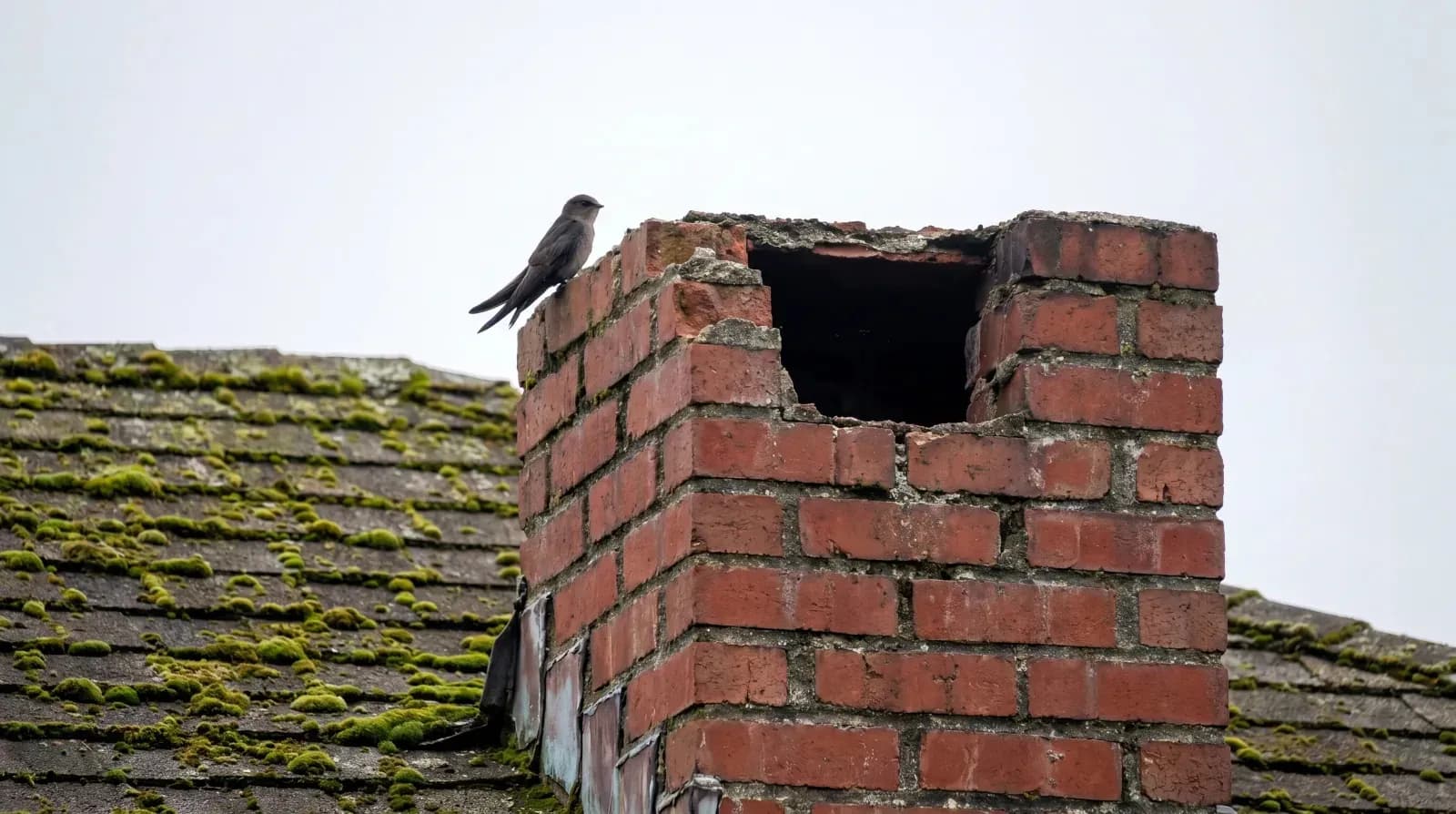
Vaux's Swifts: Seattle sits along the Pacific Flyway, and Vaux's swifts — a federally protected migratory bird species under the Migratory Bird Treaty Act — regularly nest in uncapped chimneys between May and August. Once a swift has built a nest with eggs or chicks inside your flue, federal law prohibits removal for 6–8 weeks until the young fledge. The only solution is prevention: a properly sized stainless steel chimney cap installed before nesting season. Our complete guide to birds and animals in Seattle chimneys covers all the legal and technical details.
Raccoons and other wildlife: Raccoons actively seek out unused chimneys in summer as denning sites for newborn kits. Once a mother raccoon moves in, the entire flue is contaminated with urine, feces, and parasites requiring professional remediation. A $200 chimney cap routinely prevents $2,000–$4,000 in cleanup costs.
UV damage to crown coatings: Older elastomeric crown coatings break down under Pacific Northwest UV exposure over the summer. A crown that appeared sealed last October may be cracked by August. A July visual check — even just with binoculars from the ground — catches this before fall rains arrive and water enters the crack.
Creosote-related odors: Warm summer temperatures combined with humidity cause any residual creosote in the flue to off-gas, producing a strong smoky or tar-like odor that enters the living space through the fireplace opening. If your home smells like a campfire in July, a professional chimney sweep is the fix — not candles or air fresheners.
How Do You Properly Close a Fireplace for Summer?
If you're not planning to use your fireplace between now and October, a few deliberate steps protect the system and make fall startup safer and easier. Here's the sequence we walk homeowners through after every summer sweep:
- Have the flue professionally swept: Creosote left in the flue all summer absorbs humidity, creating corrosive acidic compounds that attack metal liners and clay tiles. Don't skip this step even if you used the fireplace only a handful of times last winter.
- Clean out the firebox completely: Remove all ash and debris. Ash is hygroscopic and corrodes cast-iron damper plates and fireplace grates during Seattle's humid summers.
- Inspect and close the damper: Confirm the damper plate seals completely — no visible light from below with the firebox door open. A stuck-open damper wastes AC all summer and invites pest entry.
- Verify your chimney cap is in place: Check from the ground with binoculars. The cap mesh should be intact with no gaps or rust holes. If it's missing or damaged, schedule a chimney cap installation this week — not in September.
- Consider a chimney balloon or top-sealing damper: These add a secondary airtight seal that dramatically reduces AC loss and humid air infiltration. A $60 chimney balloon pays for itself in one summer's energy savings in most Seattle homes.
What Should You Look for in a Summer DIY Visual Inspection?
You don't need to climb a ladder or hire anyone to do a useful first pass on your chimney's condition. Here's what our technicians tell homeowners to look for from the ground and inside the house — any of these findings should trigger a professional chimney inspection before fall:
- Visible lean or lean-away from the roofline — even a slight tilt is a structural red flag
- Missing, cracked, or displaced bricks anywhere on the chimney exterior
- Mortar joints that appear hollowed-out, dark-colored, or crumbling
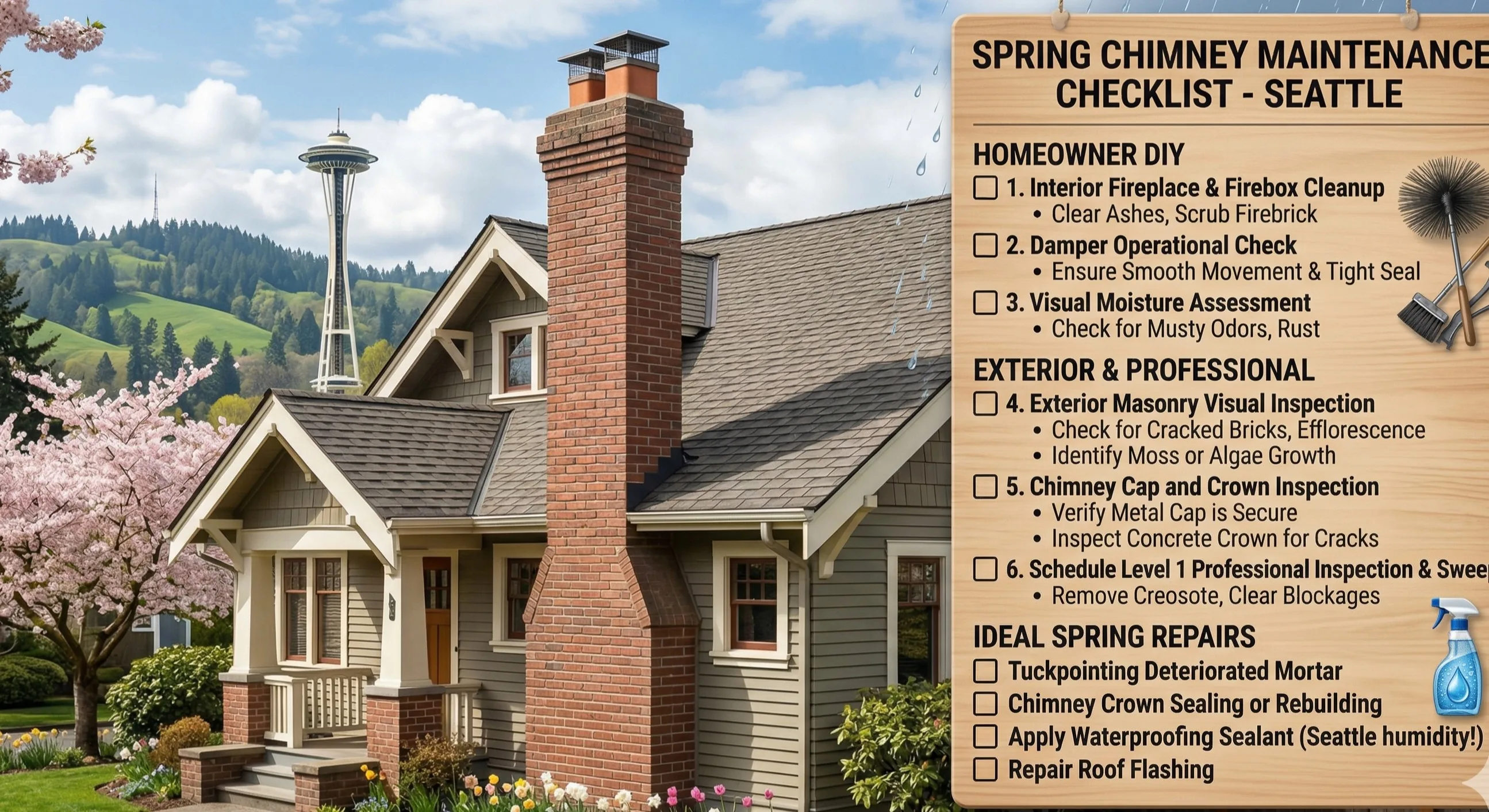
- White chalky deposits (efflorescence) on the brick face — a sign of active water infiltration
- Dark streaks or water staining running vertically down the chimney exterior
- A chimney cap that's missing, rusted through, or tilted at an angle
- Interior ceiling or wall stains near the fireplace chase
- A strong musty, smoky, or tar-like odor from the firebox opening in warm weather
If any of these match what you're seeing, review our full guide to signs your chimney needs repair before booking.
When Should You Book Summer Chimney Work to Be Ready for Fall?
The general rule: book chimney work 2–3 months before your first planned fire. If you typically light your first fire in mid-October, that means scheduling your inspection in July or early August. This timeline gives you:
- A guaranteed dry window for mortar, waterproofing, and crown work to fully cure
- Time to get a second opinion or competing estimate if major repairs are recommended
- Off-season pricing and fast scheduling availability
- A buffer for unexpected findings — flue liner damage, animal contamination, hidden flashing failure
- Complete peace of mind before the first cold snap hits in late September
Based on National Weather Service Seattle data, the highest-probability dry periods in a typical year are the last three weeks of July and the first two weeks of August. If you're planning major chimney work — an extensive crown rebuild, full tuckpointing project, or comprehensive waterproofing — aim for this core window and book at least 4–6 weeks in advance. By mid-August, the best contractors start filling their remaining summer slots quickly. We serve Seattle and the surrounding metro area — book your summer inspection now before the calendar fills. Call (206) 278-2924 or request an estimate online.
Need professional help?
Our professionally trained team is ready. $99 inspection credited toward repairs, 30-minute response.