Wood Stove Chimney Requirements in Washington State (2026 Code Guide)
What Are the Chimney Requirements for a Wood Stove in Washington State?
In Washington State in 2026, a wood stove chimney must follow the IRC 3-2-10 height rule, use a UL 1777-listed liner rated for solid fuel, maintain 36-inch clearances to combustible walls, and sit on a code-compliant hearth pad — all backed by a mechanical permit from your local building department. If you live in King, Pierce, Snohomish, or Kitsap County, the Puget Sound Clean Air Agency (PSCAA) adds burn ban rules and stove-replacement mandates on top of the state building code. Based on over 600 wood stove chimney inspections our team has completed across the Seattle metro area, most failed installations miss the same handful of requirements — liner type, hearth pad size, and chimney height. This guide covers every rule that applies as of July 2026, with specific attention to Seattle, King County, and the greater Puget Sound region.
A Real Wood Stove Installation: Marcus T. in Greenwood
Last October, Marcus T. called us from his 1952 Greenwood bungalow with a question that starts about 40% of our wood stove jobs: 'I bought a used wood stove at an estate sale — can I just hook it up to my existing chimney?' Our scheduler booked him for an initial inspection the following Tuesday, and Alex — our lead technician — headed over with a full assessment kit.
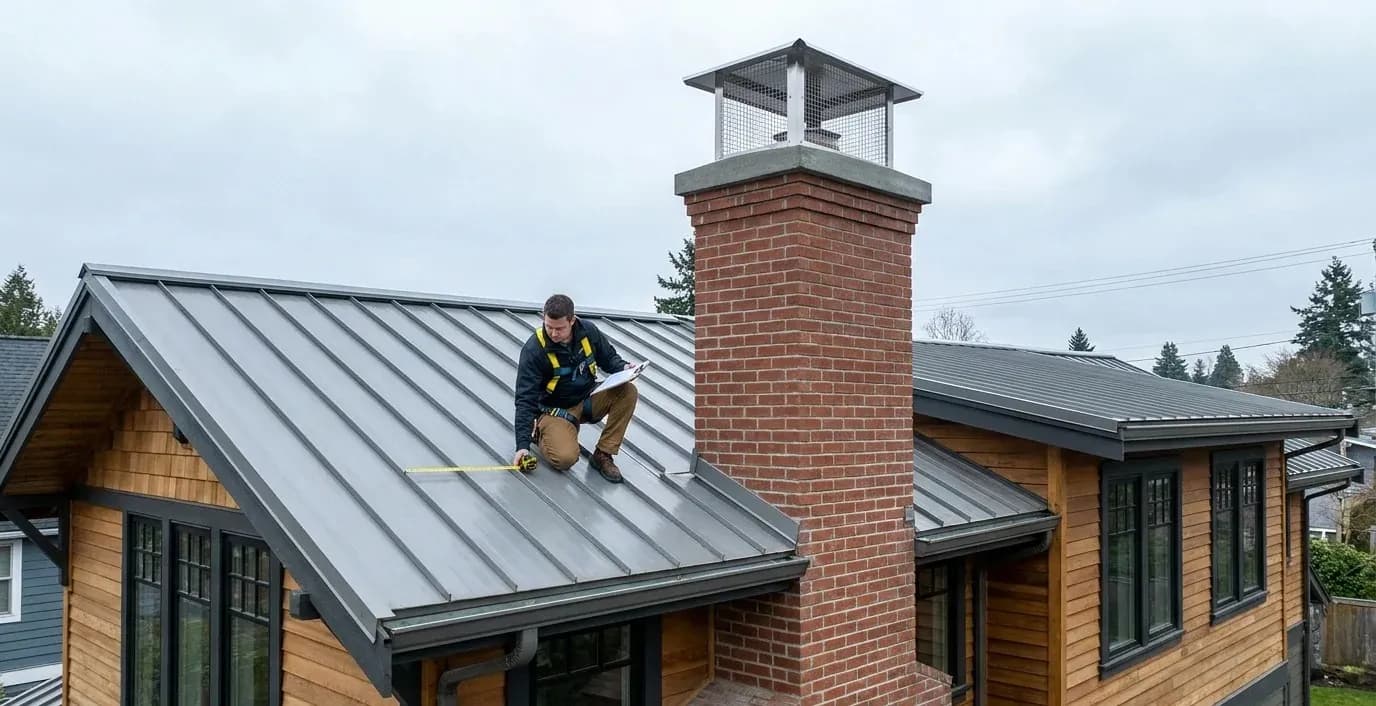
The house had a single brick masonry chimney serving both the living room fireplace below and a long-disconnected oil furnace flue above. Alex started on the roof, measuring chimney height against the 3-2-10 rule. The chimney cleared the roofline by only 26 inches — four inches short of the minimum three feet required. Then he dropped the camera into the flue.
'The clay liner is cracked at three separate tile joints, and the flue is 13 inches by 13 inches — that's oversized for the six-inch collar on the stove Marcus bought,' Alex explained to Marcus in the driveway afterward. 'Connecting to this as-is would fail inspection on day one, and honestly it would be a creosote factory. An oversized flue runs cold, and cold flues mean fast buildup.'
'An oversized, cracked clay flue is actually more dangerous than no liner at all for a wood stove. The cold masonry accelerates creosote formation, and those cracks give it a direct path into the framing. We needed a 316Ti stainless liner, insulated, sized down to six inches — and the chimney had to come up four inches to meet 3-2-10.'
— Alex, Lead Technician, Seattle Chimney Pros
Marcus decided to do it right. We pulled the mechanical permit from SDCI, extended the chimney crown by six inches (giving comfortable clearance above the 3-foot minimum), and installed a 6-inch UL 1777-listed 316Ti stainless liner with full insulation wrap. We also fabricated a 24-inch-by-28-inch concrete hearth pad to meet the 18-inch front extension and 8-inch side extension requirements. Total cost: $3,100, which included the liner, hearth pad, permit, chimney extension, and two building inspections. Marcus passed final inspection on the first visit. He burned his first fire in November — 'cleanest burn I've ever seen,' he told us.
What Is the 3-2-10 Rule for Chimney Height in Washington?
The 3-2-10 rule is the single most-cited chimney height standard for wood stove installations in Washington. It comes from IRC Section R1003.9, which Washington State has adopted, and it works like this:
- 3 feet: The chimney must extend at least 3 feet above the point where it passes through the roof surface.
- 2 feet: The top of the chimney must be at least 2 feet higher than any part of the building — ridge, parapet, dormer — within 10 feet horizontally.
- 10 feet: That 2-foot clearance rule applies to everything within a 10-foot horizontal radius of the chimney.
On a steep Seattle roofline — common in Queen Anne, Capitol Hill, and Magnolia — this can mean 6 to 8 feet of chimney above the roofline to clear the ridge. Our crews see this underestimated constantly. The rule exists to keep the chimney outlet above the building's wind pressure zone, ensure adequate draft, and prevent sparks and embers from landing on the roof surface. A chimney that falls short of the rule produces poor draft, downdraft during wind events, and a guaranteed failed inspection — no exceptions.
What Clearances Does a Wood Stove Need from Walls and Ceilings?
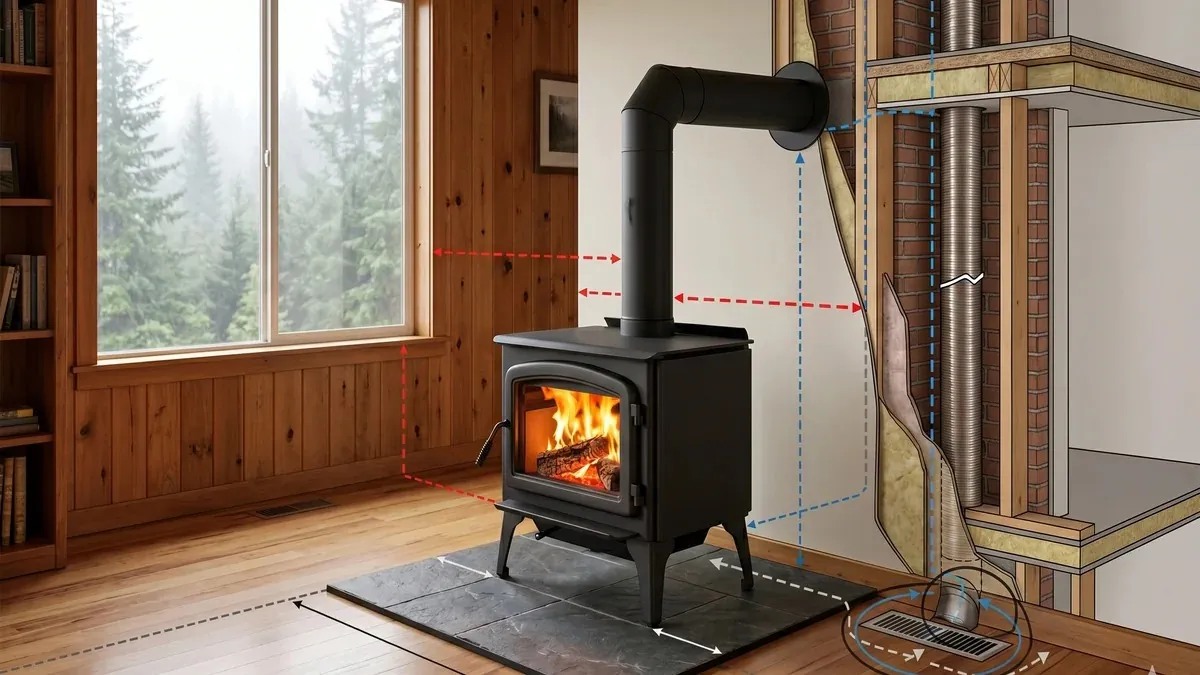
IRC Section R1003.18 and NFPA 211 Chapter 14 set the minimum distances between the stove, its connector pipe, and any combustible material. These are not suggestions — every inspector will measure them.
| Surface | Unshielded Clearance | With Approved Heat Shield |
|---|---|---|
| Back wall | 36 inches | 12–18 inches (depends on shield type) |
| Side walls | 36 inches | 12–18 inches |
| Ceiling / overhead | 36–48 inches | 18–36 inches |
| Front of stove (loading door) | 48 inches | 48 inches (no reduction allowed) |
Connector pipe clearances follow a separate set of rules:
| Pipe Type | Minimum Clearance to Combustibles |
|---|---|
| Single-wall stove pipe | 18 inches |
| Double-wall stove pipe | 6–8 inches (per manufacturer listing) |
| Class A chimney (through wall/ceiling) | 2 inches (per UL 103 listing) |
| Masonry chimney — interior | 2 inches airspace to combustibles |
| Masonry chimney — exterior | 1 inch airspace to combustibles |
Pre-1960 homes in Ballard, Wallingford, and Fremont frequently have wood framing built directly against masonry chimneys with zero clearance. That is a code violation and a real fire risk. If your existing chimney has this condition, it must be corrected before any wood stove is connected. A chimney fire in a zero-clearance situation can ignite framing in minutes.
What Type of Chimney Liner Is Required for a Wood Stove in Washington?
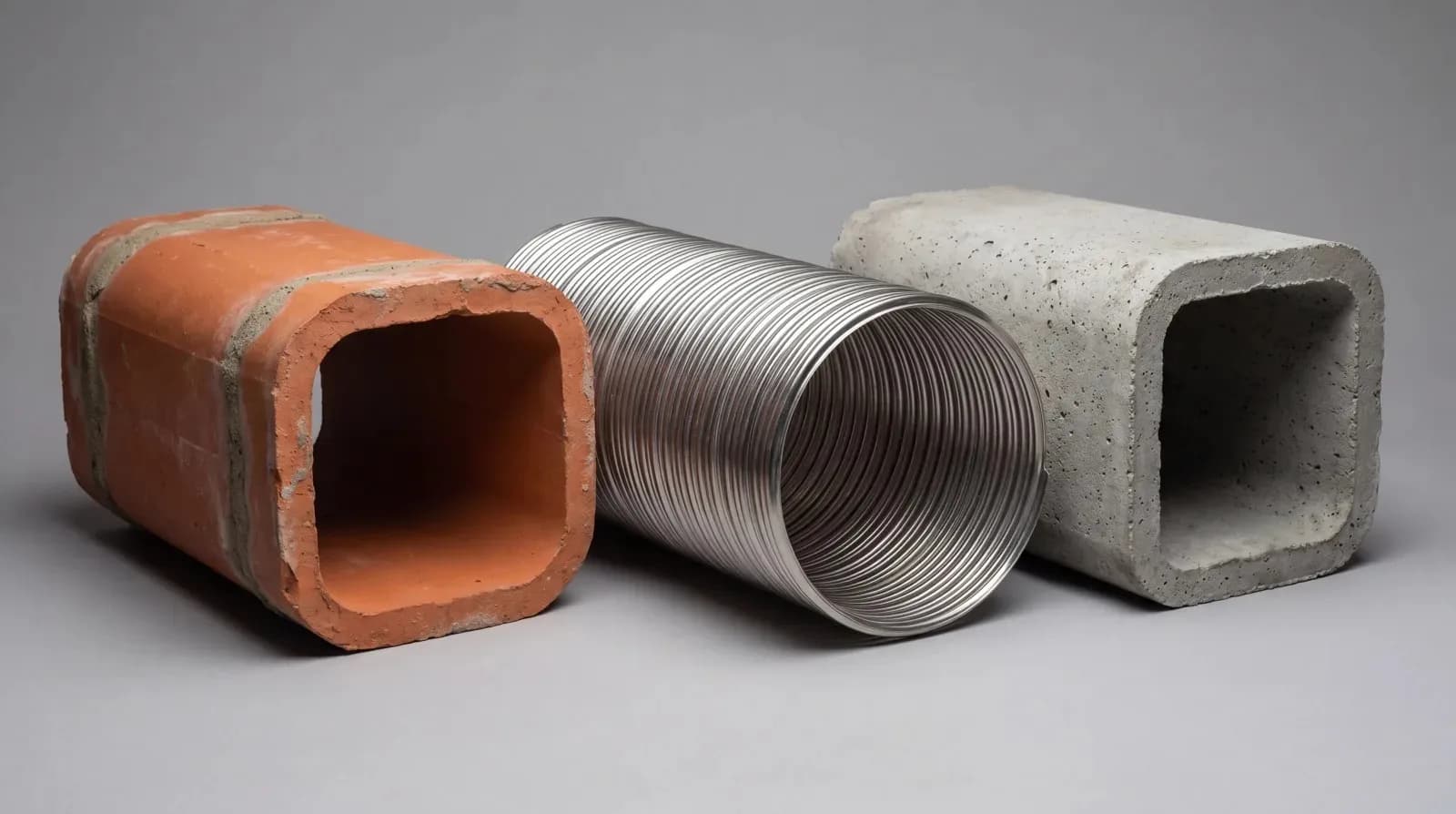
Washington State building code, following IRC Section R1003.11, requires every wood-burning appliance to vent through a lined chimney. There are three approved liner types:
- Clay tile liner — the original liner in most pre-1980 masonry chimneys. Acceptable if intact, uncracked, and correctly sized for the stove's BTU output.
- UL 1777-listed stainless steel liner — the standard for relining existing chimneys. Must be 316Ti alloy rated for solid-fuel use, not a thinner gas-only liner.
- Cast-in-place liner — a poured cementitious liner that creates a seamless, structurally reinforced flue. Best choice for severely deteriorated chimneys.
For stainless steel liners specifically, Washington installations must meet these requirements:
- Carry a UL 1777 listing for solid-fuel applications — gas-rated liners are thinner and will fail under wood stove temperatures.
- Use 316Ti alloy — the titanium-stabilized grade that resists acidic condensate from wood combustion.
- Be sized to match the stove's flue collar diameter — typically 6 or 8 inches. Oversized flues run cold and accelerate creosote buildup dramatically.
- Include a top plate at the chimney crown and a tee connector at the stove pipe entry, both sealed with high-temperature sealant.
- Be insulated with a UL-listed wrap or poured insulation — not bare metal inside a cold masonry chase.
In Seattle's climate, where exterior temperatures drop below 40°F for months, an uninsulated liner inside a cold masonry chimney produces excessive condensation and rapid creosote accumulation. Insulation is not optional here. If your existing clay liner is cracked or undersized, chimney relining is required before connection. For a full breakdown, see our guide on chimney liner types: clay vs. stainless vs. cast-in-place.
What Are the Hearth Pad Requirements for a Wood Stove?
Every wood stove must sit on a non-combustible hearth pad meeting IRC and NFPA 211 standards. The required size depends on the stove's leg height:
| Stove Leg Height | Front Extension | Side / Back Extension | Minimum R-Value |
|---|---|---|---|
| 6 inches or taller | 18 inches past door | 8 inches on each side and back | R-2 (single-layer cement board or tile) |
| Under 6 inches / pedestal | 18 inches past door | 8 inches on each side and back | R-4 (two-layer system required) |
Acceptable materials include ceramic tile, brick, stone, and concrete — all over a cement board substrate. Wood flooring, carpet, vinyl, and laminate directly under a pad do not satisfy the requirement. The pad itself must rest on a non-combustible surface or be a listed manufactured pad rated for the stove's output.
The three hearth pad failures we find most often in Seattle-area inspections:
- Pad is the right material but does not extend 18 inches in front of the loading door
- Tile laid directly on a wood subfloor without cement board underneath
- Decorative hearth pads from big-box stores that carry no code rating for actual use
What Combustion Air Requirements Apply to Wood Stoves in Seattle Homes?
A typical EPA-certified wood stove draws 20 to 50 cubic feet of air per minute during a burn. In tight, well-insulated homes — especially post-2010 construction built to Washington State Energy Code — this creates negative pressure that causes smoke spillage, backdrafting of gas appliances, and carbon monoxide accumulation. IRC Section R1006 addresses this directly.
There are three accepted ways to satisfy the combustion air requirement:
- Existing infiltration — pre-1970 Seattle homes with original windows and drafty construction typically have enough natural air leakage. No additional work needed, but an inspector may verify.
- Outside air kit — a 4-inch or 6-inch duct from the exterior connected directly to the stove's dedicated air intake. Many modern stoves include this connection on the back or bottom panel.
- Room ventilation — a permanently open or closeable vent in the stove room providing at least 50 square inches of free area.
If your home has been recently weatherized, has new triple-pane windows, or was built after 2010, an outside air kit is strongly recommended and may be required by your inspector. In our experience across newer construction in Redmond, Issaquah, and Sammamish, this is the single most commonly overlooked requirement in DIY installations.
How Do Puget Sound Burn Bans Affect Wood Stove Use?
Homeowners in King, Pierce, Snohomish, and Kitsap County live under Puget Sound Clean Air Agency (PSCAA) regulations that go beyond state building code. These rules determine when and how you can legally burn, and what stove you are allowed to install.
| Burn Ban Level | Uncertified Stoves | EPA-Certified Stoves | Pellet Stoves | Fine Range |
|---|---|---|---|---|
| Stage 1 Ban | Prohibited (unless sole heat source) | Allowed | Allowed | $100–$1,000 |
| Stage 2 Ban | Prohibited (unless sole heat source) | Prohibited (unless sole heat source) | Allowed | $1,000+ |
| No Ban (year-round) | Allowed — max 20% opacity | Allowed | Allowed | Varies |
The opacity standard — visible chimney smoke must not exceed 20% for more than 6 consecutive minutes — applies year-round regardless of ban status. In plain terms, if your chimney is putting out visible smoke beyond a thin wisp after startup, you may be in violation even on a non-ban day. Older, uncertified stoves burning unseasoned wood are the most common source of opacity complaints in neighborhoods like Beacon Hill and Columbia City where houses sit close together.
When selling a home in King County, any uncertified wood stove (generally pre-1995 models without an EPA certification label) must be removed, rendered permanently inoperable, or replaced with an EPA-certified unit before the sale closes. Real estate agents and inspectors flag this routinely across Bellevue, Kirkland, Redmond, and Mercer Island. If you are buying a home and the inspection flagged a wood stove, see our guide on chimney red flags when buying a home in Seattle.
What Do the EPA 2020 Emission Standards Require for New Wood Stoves?
Since May 2020, every new wood stove manufactured or sold in the United States must meet the EPA Step 2 emission limits: a maximum of 2.0 grams of particulate per hour for both catalytic and non-catalytic models. This is a dramatic reduction from the previous Step 1 limit of 4.5 g/hr and a near-elimination compared to pre-1988 stoves that routinely emitted 40 g/hr or more. Modern EPA-certified stoves burn 70 to 80 percent cleaner and use 30 to 50 percent less wood for the same heat output.
If you own a stove installed before EPA certification requirements existed, it remains legal to operate in Washington — with caveats:
- PSCAA burn bans restrict uncertified stoves first and most severely
- King County home sales require removal or replacement of uncertified stoves
- Insurance carriers increasingly exclude or surcharge homes with uncertified stoves
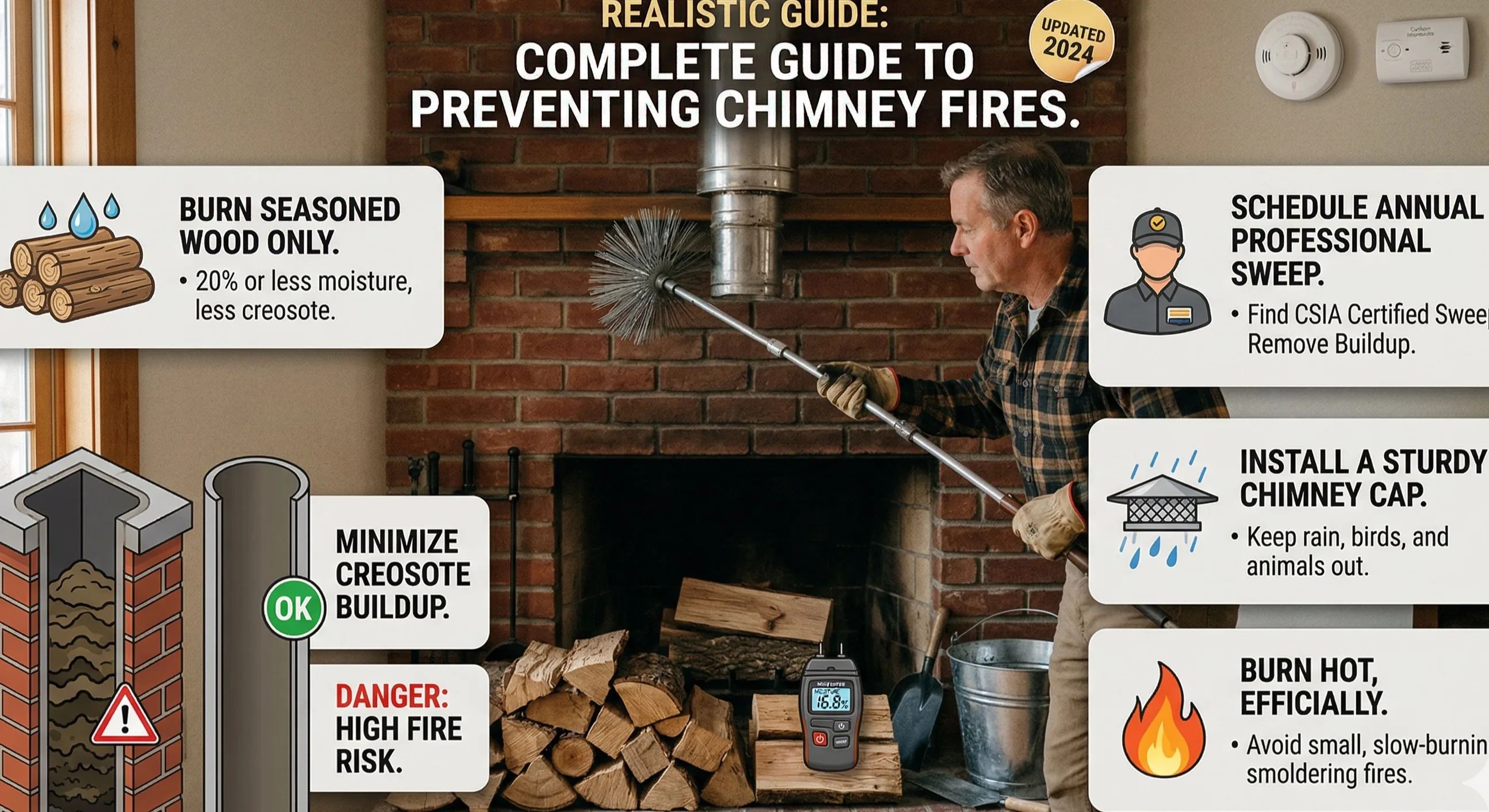
- Older stoves produce dramatically more creosote, raising chimney fire risk significantly
Washington State's Department of Ecology periodically runs woodstove buyback programs offering $300 to $1,500 toward a new EPA-certified stove when you surrender an uncertified unit. Check the Ecology website seasonally — these programs open and close quickly.
What Is the Permit Process for a Wood Stove in Seattle and King County?
Every wood stove installation in Seattle and King County requires a mechanical permit. Here is what the process looks like in 2026:
- Chimney inspection first — before applying for a permit, have a Level 2 chimney inspection to document existing conditions, liner status, and any code issues that must be resolved. This gives you the information you need to complete the permit application accurately.
- Permit application — submit to SDCI (Seattle) or King County Department of Local Services. Include a floor plan showing stove placement, clearances to combustibles, hearth pad dimensions, and chimney routing. Attach the stove manufacturer's installation manual and EPA certification tag number. Fees run $150 to $300.
- Rough-in inspection — called after chimney and connector pipe are installed but before any walls are closed. Inspector verifies liner type, wall pass-through assembly, and rough clearances.
- Complete the installation — stove set, hearth pad installed, all penetrations sealed, CO detector and smoke detector installed per RCW 19.27.530.
- Final inspection — inspector measures all clearances, verifies 3-2-10 compliance, checks EPA label, inspects hearth pad size and material, and confirms combustion air supply is adequate.
Unpermitted installations are a serious liability in Washington. They can void homeowner insurance, fail home sale inspections, and result in fines. If you have an existing wood stove installed without a permit, a Level 2 chimney inspection is the first step toward retroactive compliance — we document what exists, identify what must be corrected, and help you pull the permit. We serve homeowners across Seattle, Greenwood, and all 45 areas in our coverage zone.
What Are the Most Common Code Violations in Seattle-Area Wood Stove Installations?
Based on over 600 wood stove chimney inspections our team has completed in the Seattle metro area since 2011, these are the violations we document most often:
- Wrong liner alloy — a gas-rated stainless liner (304 alloy) installed for a wood stove. It is not rated for solid-fuel temperatures and will fail prematurely.
- No liner insulation — bare stainless inside a cold masonry chimney accelerates creosote formation and shortens liner life by years.
- Chimney too short — the 3-2-10 rule is underestimated, especially on shed-roof additions and low-slope dormers.
- Hearth pad undersized — missing the required 18-inch front extension or the 8-inch side extensions.
- Single-wall pipe through a combustible wall — requires a listed wall thimble with proper clearance, not a hole cut in drywall and caulked.
- No carbon monoxide detector — RCW 19.27.530 requires CO detectors in every home with a fuel-burning appliance. This is a permit inspection checklist item.
- Mixing connector pipe types — single-wall and double-wall pipe in the same connector run without proper UL-listed transitions.
- Oversized flue — connecting a 6-inch collar stove to an 8-inch or larger flue without a proper liner reduction. Cold oversized flues are creosote factories.
Most of these violations can be corrected without removing the stove, but all of them must be addressed before the installation is safe and insurable. Last year, about 35 percent of the wood stove jobs we were called to in Seattle involved at least one of these issues on an existing installation.
Ready to Install or Inspect Your Wood Stove Chimney?
A code-compliant wood stove installation in Seattle in 2026 typically runs $2,500 to $6,000 all-in — covering the stove, connector pipe, liner, hearth pad, permit, and both building inspections. If a new Class A chimney must be built from scratch, expect $4,000 to $8,000. It is a significant investment, but one that produces decades of efficient, insurable, code-compliant heat — and a fireplace system that passes any home inspection without surprises.
Seattle Chimney Pros has been inspecting, lining, and permitting wood stove chimney systems across the Puget Sound region since 2011. We handle the paperwork, the liner work, the clearance verification, and the inspection coordination so you do not have to navigate the code maze alone. Call (206) 278-2924 or request a consultation online — we will assess your existing chimney and give you a clear picture of exactly what it takes to get your installation right the first time.
Need professional help?
Our professionally trained team is ready. $99 inspection credited toward repairs, 30-minute response.