Getting a Chimney Repair Estimate in Seattle: Free vs. Paid, What's Included & Red Flags
Why Chimney Repair Estimates in Seattle Require More Than a Phone Quote
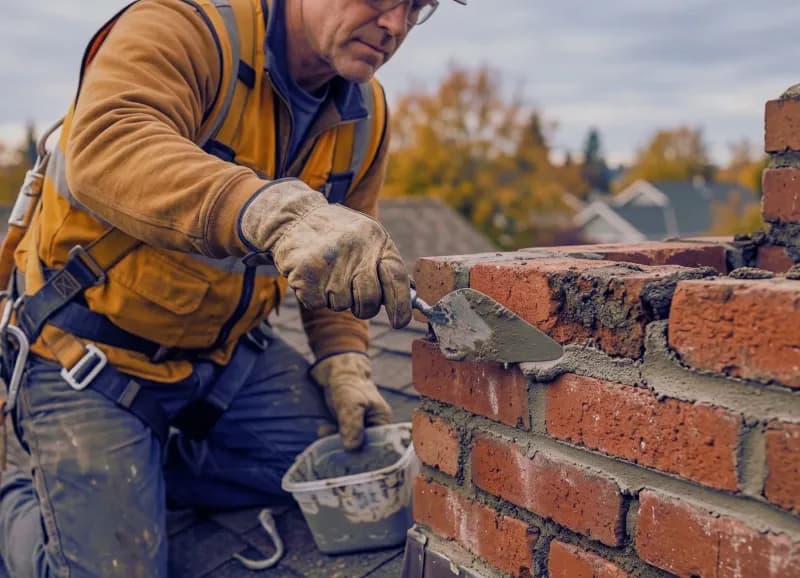
When a Seattle homeowner discovers a cracked chimney crown, failing flashing, or mortar joints that have eroded to the point of concern, the instinct is to call two or three contractors and get prices over the phone. For commodity services, phone estimates work fine. Chimney repair is different — and understanding why matters before you authorize any work.
Every chimney repair project is a product of three variables that cannot be assessed accurately without an on-site visit: the specific failure mode and its extent (a hairline crown crack and a crown fractured clean through to the masonry below are described identically over the phone but differ by $500–$2,000 in repair cost), the rooftop access complexity of your specific property (Seattle's steep residential lots and multi-story homes are highly variable), and whether secondary damage must be addressed alongside the primary repair (flashing failure often causes underlying deck damage; mortar joint failure often involves spalling brick that requires replacement, not just repointing).
The result: two homeowners in Queen Anne describing 'chimney mortar problems' may have repair needs that differ by a factor of five. Phone estimates either give you a number so vague it is useless for budgeting, or they lock in a price before the contractor has seen the scope — which inevitably leads to change orders and cost expansions mid-project. A legitimate estimate is always preceded by an on-site assessment, and this guide explains everything that assessment and the resulting quote should cover.
This guide walks through what a professional chimney repair estimate in Seattle should include, when you need a paid diagnostic inspection before getting a quote, what legitimate pricing looks like for common repair types, and which contractor behaviors in the estimating process should cause you to look elsewhere.
Free Chimney Repair Estimates: What Seattle Companies Actually Provide
Most Seattle chimney repair companies advertise free estimates. What this means in practice varies significantly, and understanding the difference between a genuine free estimate and a 'free estimate' that functions as a pressure-sale tool is essential before you book an appointment.
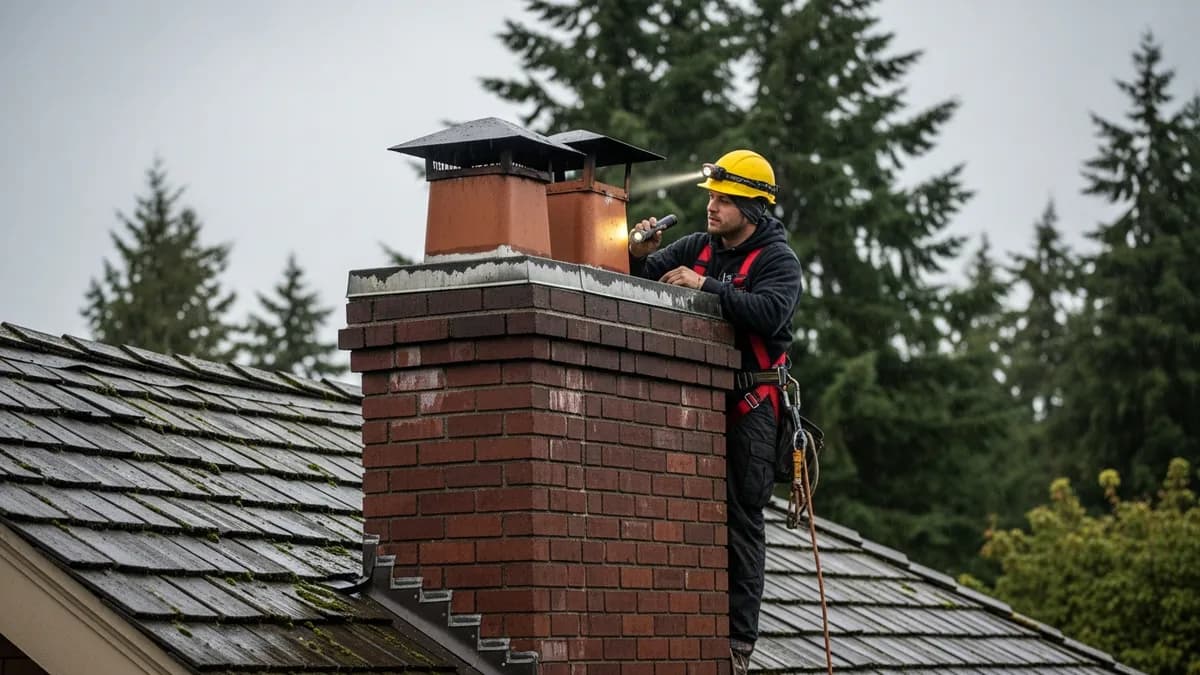
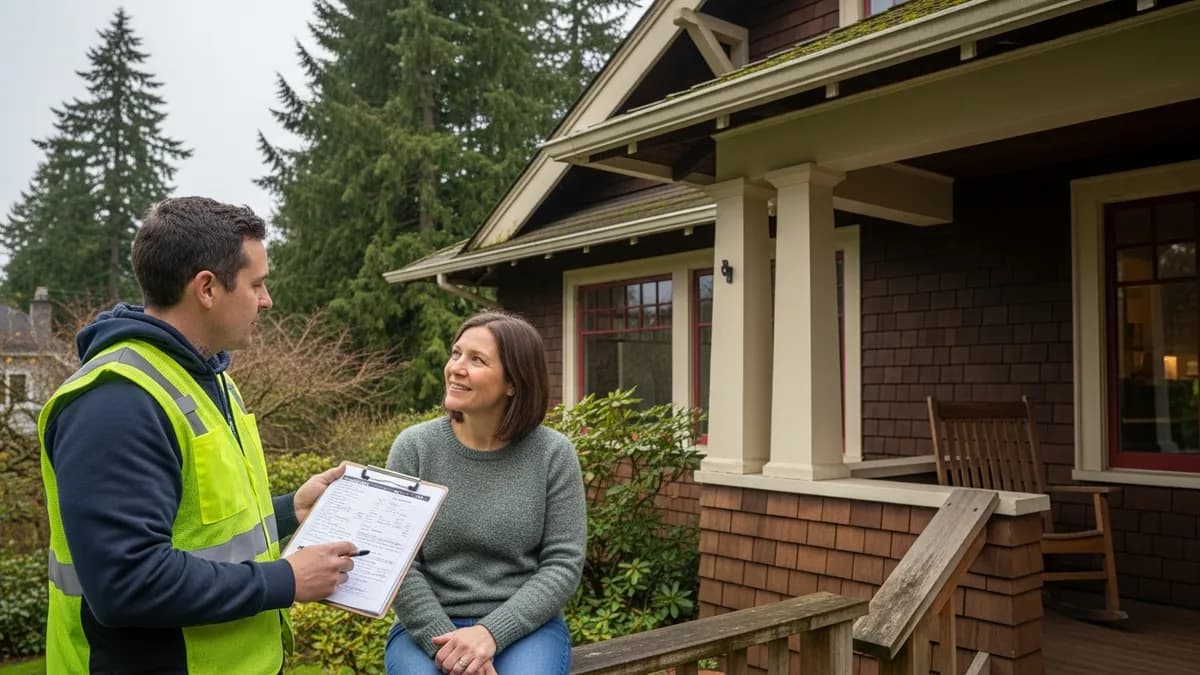
A legitimate free chimney repair estimate includes: an on-site visual assessment of the chimney exterior and interior (from the firebox and from the rooftop), identification of the specific failure or failures present, an explanation of what is causing the problem and what will happen if it is not addressed, a written scope of work describing exactly what the repair involves, and an itemized written price for that scope. The estimate is provided in writing before any work begins, with no pressure to authorize work on the day of the estimate visit.
For straightforward exterior repairs — chimney cap replacement, visible crown cracking, obvious mortar joint failure in accessible sections — a visual inspection provides sufficient information for an accurate estimate. A technician who spends 20–30 minutes on-site can visually confirm crown damage extent, mortar joint condition, flashing seating, and cap fit, and produce a written estimate for those repairs that is reliable without additional diagnostic work.
Where free visual estimates have limits: any repair involving the flue interior, any repair following a chimney fire, any scenario where visible exterior damage may be a symptom of deeper structural or liner failure, and any property where the chimney has not been inspected in more than 3–4 years. In these situations, the visible damage is only part of the picture. An estimate based solely on what can be seen from the roof and the firebox will be incomplete — and projects scoped on incomplete information become larger mid-job.
Seattle Chimney Pros provides written free estimates for exterior chimney repairs following an on-site assessment. For repairs that require flue interior evaluation, we sequence the estimate correctly: a diagnostic camera chimney inspection first, then the repair estimate scoped to the documented findings. This is how accurate estimates are produced — not by guessing what is inside the flue without looking.
When a Paid Chimney Inspection Must Come Before the Repair Estimate
There are specific circumstances where a Level 2 camera inspection is a necessary prerequisite to an accurate repair estimate — not an upsell or an unnecessary delay. Understanding when this applies protects you from both incomplete estimates that expand mid-job and from contractors who skip the inspection and estimate repairs that aren't actually needed.
Situations that require a Level 2 camera inspection before estimating repair scope:
- Any chimney fire, past or suspected: A chimney fire — even a brief, low-intensity event — generates temperatures that can crack clay tile liners through thermal shock. The damage is inside the flue and invisible from the roof or the firebox. A repair estimate that doesn't include liner assessment after a known or suspected chimney fire is incomplete and potentially dangerous. Our guide to what to do after a chimney fire covers the required inspection sequence in detail.
- Smoke backing up into the house or carbon monoxide concerns: These symptoms point to draft or liner problems that cannot be diagnosed from the exterior. Estimating 'chimney repair' for a home with these symptoms without a flue inspection is estimating blindly. Our article on fireplaces backing up smoke covers the full diagnostic process.
- Exterior efflorescence at or below flue level: White salt staining that appears to originate at the flue area suggests moisture is traveling through liner cracks — not merely washing down from the crown or cap. Without a camera inspection confirming liner condition, any exterior repair estimate is addressing symptoms rather than the cause.
- Pre-purchase inspection findings: A home inspector's report noting 'chimney issues' or recommending 'chimney specialist evaluation' requires a Level 2 inspection before repair scope can be defined. General home inspectors are not qualified to diagnose chimney interior conditions.
- Pre-1970 Seattle homes without documented inspection history: The clay tile liners in Seattle's historic housing stock — the Craftsman bungalows of Ballard and Phinney Ridge, the Victorian homes of First Hill and Capitol Hill — have been in service 50–80 years. Without a Level 2 inspection within the past 3–4 years, a camera inspection before any repair quote is the responsible starting point. Seattle's 152 annual rain days and the region's freeze-thaw cycling accelerate liner deterioration in ways not visible from the exterior.
A Level 2 camera inspection in Seattle typically costs $250–$500. When the inspection results in a repair project, this cost is frequently credited toward the repair by reputable companies. Our detailed breakdown of chimney inspection costs in Seattle covers what each inspection level includes and what to expect to pay.
What a Legitimate Chimney Repair Quote Should Include — Line by Line
A written chimney repair estimate protects both you and the contractor. It defines scope so there are no disputes about what was or wasn't included, establishes price basis so change orders only occur when genuinely unforeseen conditions emerge, and provides the documentation your insurance company needs if the repair is part of a claim. Every legitimate chimney repair estimate in Seattle should contain all of the following:
- Specific description of each repair item: Not 'chimney repair — $2,200' but 'rebuild chimney crown using Type S mortar, brush-applied CrownCoat sealer, 3 coats with 24-hour cure between applications' or 'replace 14 spalled brick in courses 4–8 on south face, tuckpoint surrounding mortar joints.' Vague scope descriptions allow contractors to interpret included work narrowly when disputes arise.
- Itemized pricing for each repair component: If multiple repairs are needed — crown repair plus flashing reseal plus cap replacement — each item should have a line price. Itemized quotes let you see what each component costs, compare specific items across bids, and make informed decisions about which repairs to prioritize if budget is a constraint.
- Material specifications: What mortar type, what sealant product, what liner grade if liner work is involved, what cap material and size. These specifications determine how long the repair lasts. A crown repaired with hydraulic cement (a common low-cost substitution) will fail again within 1–3 years in Seattle's wet climate. A properly spec'd Type S mortar crown with CrownCoat or CrownSeal applied will last 15+ years. You cannot compare quotes meaningfully if material specs aren't stated.
- Labor, timeline, and weather conditions: How many technicians, how many days, and what conditions must exist for the work to proceed. Most mortar work cannot be applied in rain or temperatures below 40°F — directly relevant given Seattle's climate. Seasonal scheduling constraints should be addressed explicitly in the estimate.
- Warranty terms: Legitimate Seattle chimney repair contractors stand behind their work. Industry standard for most repair types is 1–5 years labor plus manufacturer terms on materials. Crown coatings typically carry 5-year warranties when applied per manufacturer specifications. If an estimate doesn't mention warranty, ask.
- Licensing and insurance confirmation: Washington State requires contractor licensing (verify at L&I's online database). General liability insurance and workers' compensation coverage protect you if a worker is injured on your property. The estimate or accompanying company documents should confirm both.
- Payment terms: When deposits are due (typically 20–30% for materials on larger projects), when final payment is due (on completion, after your walk-through), and what forms of payment are accepted. Contractors requesting more than 50% upfront before work begins are a significant red flag.
2026 Seattle Chimney Repair Price Ranges by Repair Type
Understanding what specific repairs cost — not just 'chimney repair' in aggregate — helps you evaluate whether an estimate is reasonable and identify if a contractor is significantly over- or under-pricing specific line items. The ranges below reflect installed costs for Seattle-area chimney repair projects in 2026, accounting for the 15–25% premium Seattle carries over national averages due to labor costs, rooftop access complexity, and the regulatory environment under WAC 51-51.
| Repair Type | Typical Seattle Range | Key Cost Drivers |
|---|---|---|
| Chimney crown repair (coating / partial) | $200–$600 | Severity of cracking; coating product; chimney height and accessibility |
| Chimney crown replacement (full) | $600–$1,500 | Chimney footprint; height; scaffold requirements |
| Chimney cap replacement | $200–$700 | Single- vs. multi-flue; steel vs. copper; flue dimensions |
| Chimney flashing repair / reseal | $250–$700 | Extent of separation; number of sections; roofing material |
| Chimney flashing replacement (full) | $700–$2,500 | Chimney perimeter; metal type (aluminum vs. copper); counter-flashing vs. step flashing |
| Tuckpointing / mortar joint repointing | $500–$2,500 | Extent of joint deterioration; chimney height; number of courses affected |
| Spalled brick replacement | $300–$1,500 | Number of bricks; matching difficulty; rooftop access |
| Chimney liner repair / relining | $1,500–$4,500 | Flue length; liner grade; whether old liner removal is needed |
| Chimney waterproofing treatment | $300–$800 | Exposed surface area; product used; number of coats |
| Smoke chamber repair / parging | $500–$2,000 | Extent of deterioration; chamber dimensions; access |
| Partial chimney rebuild (above roofline) | $1,500–$6,000 | Courses rebuilt; chimney size; scaffold and multi-story access needs |
These ranges assume normal residential access. Properties with steep lots, multi-story access requirements, or chimneys requiring scaffolding (common in parts of Capitol Hill, Queen Anne, and West Seattle) may carry 10–25% access surcharges over the base repair cost. For a more detailed breakdown of individual repair costs, our complete chimney repair cost guide for Seattle covers each repair type in depth with the factors that move cost within each range.
Red Flags to Watch For in Chimney Repair Estimates
Seattle's chimney repair market includes contractors who provide excellent work at fair prices — and others who operate on high-pressure sales tactics, inflated damage claims, or bait-and-switch pricing. In our 14+ years of work in the Seattle area, we've seen homeowners who authorized $3,000–$8,000 in repairs that either weren't needed, weren't completed correctly, or weren't completed at all despite full payment. These are the specific red flags that preceded those situations:
- Same-day urgency pressure without documented evidence: Legitimate safety concerns do exist — a collapsed liner, a carbon monoxide source, a chimney fire — and a responsible contractor will explain them clearly with written documentation. A contractor who visits for a free estimate and immediately declares a crisis requiring same-day authorization (without camera inspection documentation to support the finding) is using urgency as a sales tool. Demand written documentation of any safety finding before authorizing work.
- No written scope before work begins: Every authorized chimney repair project must begin with a signed written estimate defining exactly what work is being done. If a contractor asks you to sign a blank work authorization or a document that says 'repairs as needed,' decline.
- Vague repair descriptions: 'Chimney repair — $2,200' tells you nothing about what is actually being done, with what materials, or by what method. Vague descriptions allow post-job disputes about what was included and shield contractors from accountability for skipped or substandard work.
- Large upfront deposits (over 40%): Material costs for cap and mortar work are low relative to labor — most chimney repair projects do not require more than 20–30% upfront for materials. Requests for 50–100% upfront before work begins are a financial risk.
- No licensing or insurance documentation: Washington State requires a contractor license for any repair work. A company unwilling to provide their license number for L&I verification or unable to provide a certificate of insurance should not be working on your property.
- Extremely low initial quote that grows mid-project: Some contractors win bids with below-market pricing, then find 'additional damage' once work has started that requires immediate additional authorization. While genuine unforeseen conditions do occasionally occur, the pattern of a consistently low initial estimate followed by rapid cost growth is the most common form of chimney repair price manipulation in the Seattle market.
- Dismissing the permit question: Certain chimney repairs in Seattle require permits — particularly structural work involving chimney rebuilds, liner installations, or flashing replacement connected to roofing. A contractor who dismisses the permit question is either unaware of the requirement or planning to skip it.
If you have received an estimate that triggered any of these concerns, getting a second opinion from a company that conducts their own on-site assessment is the appropriate step. Our guide to choosing a chimney professional in Seattle covers contractor verification in detail, including how to check Washington State contractor licensing status.
How to Compare Multiple Chimney Repair Bids in Seattle
Getting two or three chimney repair estimates is standard practice for any project above $500, and it is the most effective protection against overpaying. But comparing bids is only useful if the bids are actually comparable — if two estimates have different scopes, different material specifications, or different warranty terms, comparing only the bottom-line price is meaningless. Here is how to run an apples-to-apples comparison:
Confirm the scope is identical. If Contractor A's estimate includes chimney crown repair plus waterproofing and Contractor B's estimate includes only crown repair, Contractor B's lower price doesn't mean they are cheaper for the same work. Ask each contractor to explicitly confirm their estimate covers the specific items identified in the site assessment.
Check material specifications. Ask each contractor what mortar type they use for crown work (Type S is the standard for exterior masonry in Seattle's wet climate — Type N or Portland cement mixes are less appropriate), what sealant or coating product they apply, and what liner grade they specify if liner work is included. Cheaper materials produce cheaper results, sometimes within a single Seattle rainy season.
Verify warranty coverage. A 1-year labor warranty on mortar work versus a 5-year warranty is a meaningful difference in long-term value, particularly for repairs on older chimneys that may have secondary failure modes. Ask each contractor what their warranty covers and get it in writing as part of the estimate document.
Confirm licensing and insurance. Before making a final decision, verify each contractor's Washington State contractor license at L&I's online lookup and request a certificate of general liability insurance. This takes five minutes and eliminates contractors operating without coverage.
Ask who actually performs the work. Will the estimator who visits be the same technician who performs the repair? Larger companies sometimes use sales-focused estimators and separate installation crews — which can create gaps between what was assessed and what is actually repaired. This matters more for complex, multi-item repair projects than for simple cap or crown replacements.
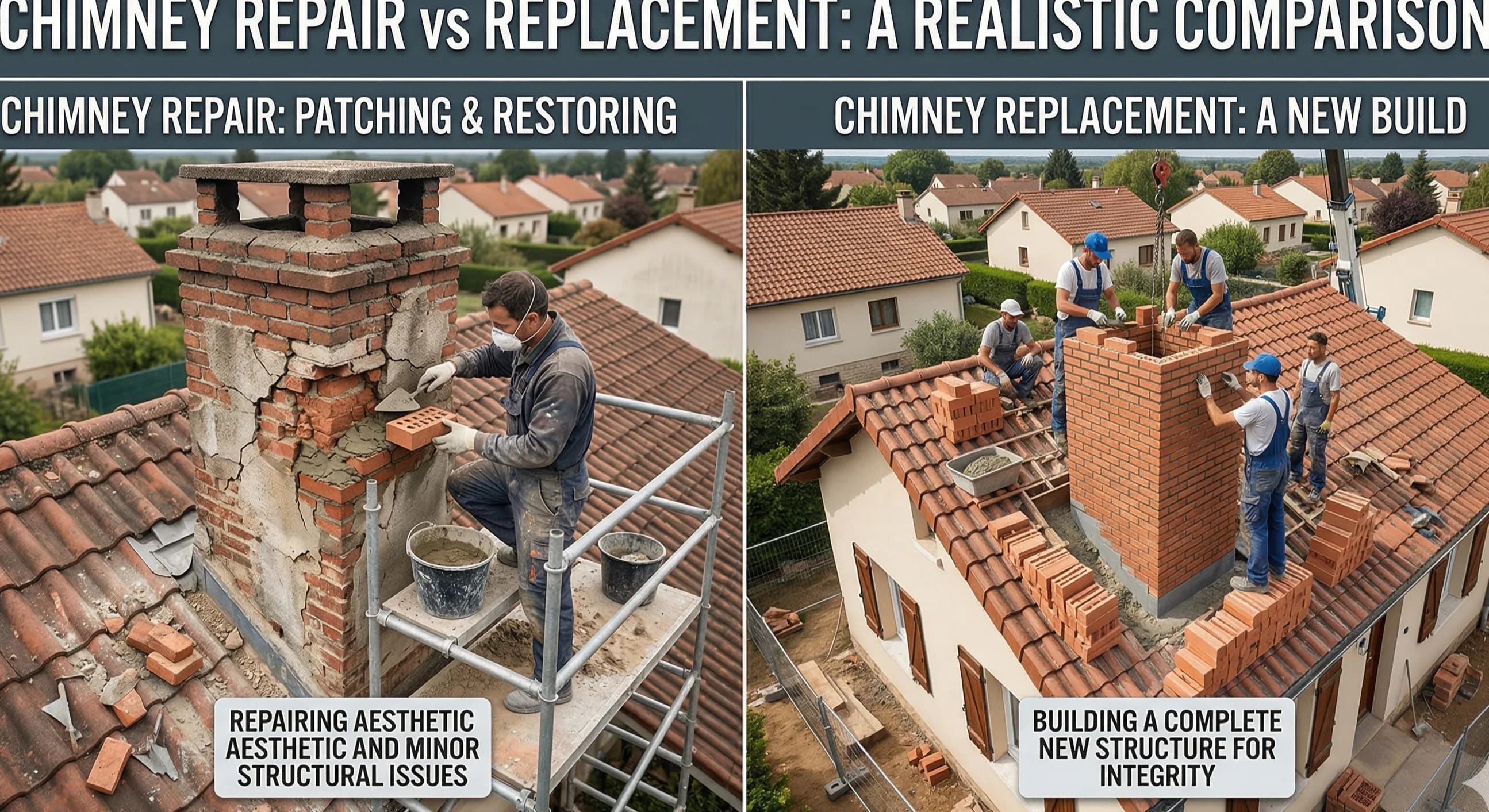
When evaluating a major repair estimate — one that involves structural work, full relining, or partial rebuild — consider whether the contractor's recommendation has properly assessed whether repair or replacement is the more appropriate long-term decision. Our guide to when to repair vs. replace a chimney covers the factors that make replacement the more economical choice over time in some situations.
Spring: The Best Time for a Chimney Repair Estimate in Seattle
Seattle's seasonal rhythm creates a clear optimal window for chimney repair estimates and work: late spring through early summer, specifically May through July. Here is why this timing matters in the Pacific Northwest:
Mortar work requires dry conditions. Type S mortar for crown repair and tuckpointing cannot be applied in rain or temperatures below 40°F. Seattle's rainy season runs roughly October through April — which means an estimate obtained in May can typically be scheduled within 2–3 weeks for actual work completion under ideal conditions. An estimate obtained in November may sit for months before conditions permit the repair.
Spring reveals winter damage fully. Seattle's freeze-thaw cycling — wet masonry freezing, expanding, and cracking through the winter months — produces its full damage picture by March–April. A spring inspection and estimate gives you a complete view of what the past winter caused, before spring rain causes secondary damage through new cracks and deteriorating mortar joints. In our 14+ years of inspections, we consistently find that spring assessments reveal damage that homeowners weren't aware had occurred over the winter.
Catching damage before it compounds saves money. A crown with hairline cracks caught in May is a $300–$600 coating repair. Left through another Pacific Northwest winter, the same crown may crack through to full replacement — a $600–$1,500 project. Minor mortar joint deterioration sealed now is an $800 tuckpoint job. Left for two more wet winters, the same joint failure may involve spalled or loose brick requiring replacement in addition to repointing, a $1,500–$3,000 project.
Scheduling availability is better in spring than fall. September through November is peak demand season for Seattle chimney work. Spring estimates can typically be scheduled within a week, with repair work 2–3 weeks after authorization. Fall frequently means 3–6 week waits for both assessment and project completion — often pushing repair work into rain-season conditions that limit what can actually be done.
Seattle Chimney Pros is currently scheduling spring chimney repair assessments throughout King, Pierce, and Snohomish counties, including Bellevue, Kirkland, Redmond, and South Sound communities. We are a family-owned company that has served more than 2,500 Seattle-area homeowners since 2011. Every estimate we provide is written, itemized by repair component, includes material specifications and warranty terms, and is delivered with no pressure to authorize same-day. Our technicians explain every finding in plain language with photographs of any damage areas before recommending any repair work.
To schedule your free on-site chimney repair assessment, call (253) 429-8006 or request an appointment online. Appointments are available Monday–Saturday throughout the greater Seattle metro area. Most spring assessment slots are available within 5–7 business days of scheduling.
Need professional help?
Our professionally trained team is ready. Free estimate, 30-minute response.