Fireplace Not Drawing? 8 Causes of Weak Chimney Draft in Seattle (2026)
Why Is My Fireplace Not Drawing in Seattle? (Quick Answer)
A fireplace that fails to draw — pushing smoke into the room instead of up the flue — is caused by one of eight conditions: a cold flue, a closed or stuck damper, creosote buildup, negative house pressure, insufficient chimney height, wind downdrafts, an incorrect flue-to-opening ratio, or a cracked liner. In Seattle, the most common culprit is a cold flue combined with the tight construction of modern homes — accounting for roughly 65% of the draft complaints our team diagnoses each year. Most issues cost between $0 (a DIY flue-priming fix) and $500 (cap replacement or professional sweep) to resolve. Structural problems like liner damage run $1,500–$5,500. Current as of June 2026.
A Real Draft Diagnosis: Marcus T. in Fremont
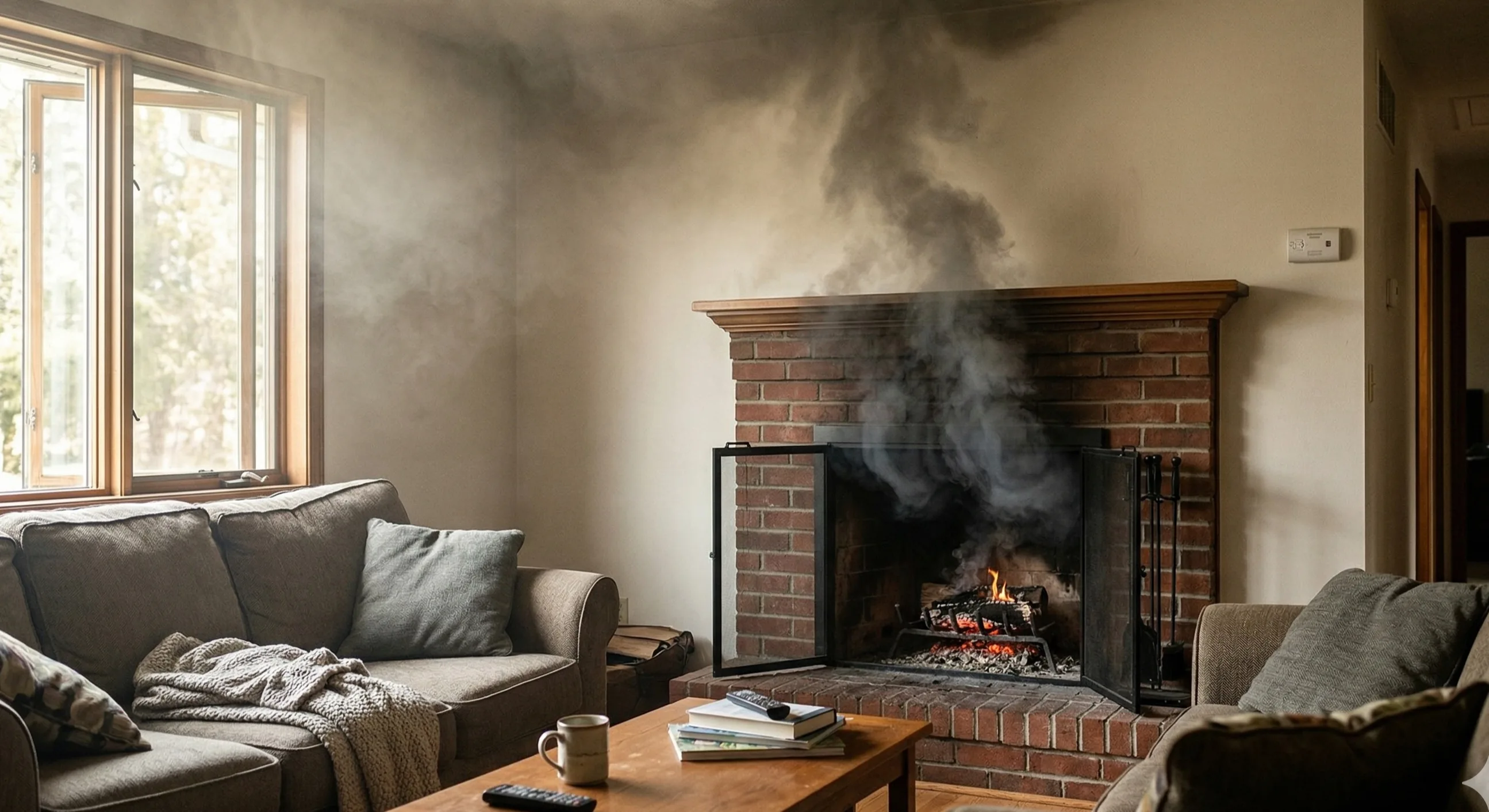
Last January, Marcus T. called us from his 1952 Fremont bungalow after his first fire of the winter season turned into a smoke-filled disaster. He'd opened the damper, stacked the wood correctly, and lit the kindling — but within five minutes the living room was hazy and his smoke alarm was screaming. A quick search for 'smoke coming into room from fireplace Seattle' landed him on our scheduling page. He booked a same-day visit.
Carlos arrived that afternoon with a camera and inspection kit. The moment he opened the damper with a flashlight, the picture was clear. 'The flue was almost completely blocked — Stage 2 creosote coating the walls, and a bird nest sitting right at the smoke chamber junction,' Carlos explained to Marcus. 'Add in the fact that your kitchen range hood was pulling air out of the house while you tried to light the fire, and you had every possible draft-killing condition active at once.'
'The flue was essentially a sealed tube. Cold air, creosote buildup, a bird nest, and negative house pressure — Marcus had hit the draft-problem jackpot. Any one of those issues alone would cause smoke rollout. All four together made the fireplace completely unusable.'
— Carlos, Chimney Technician, Seattle Chimney Pros
Carlos cleared the bird nest, performed a full chimney sweep that removed the creosote, and primed the flue before lighting a test fire. Total visit: 2.5 hours. Total cost: $289 for the sweep and nest removal. Marcus watched the smoke rise cleanly up the flue and stayed warm all winter. 'I had no idea one chimney could have that many problems at the same time,' he told us afterward. He scheduled his next sweep for October 2026 — before the first fire of fall.
What Causes a Fireplace to Stop Drawing? The 8 Culprits Explained
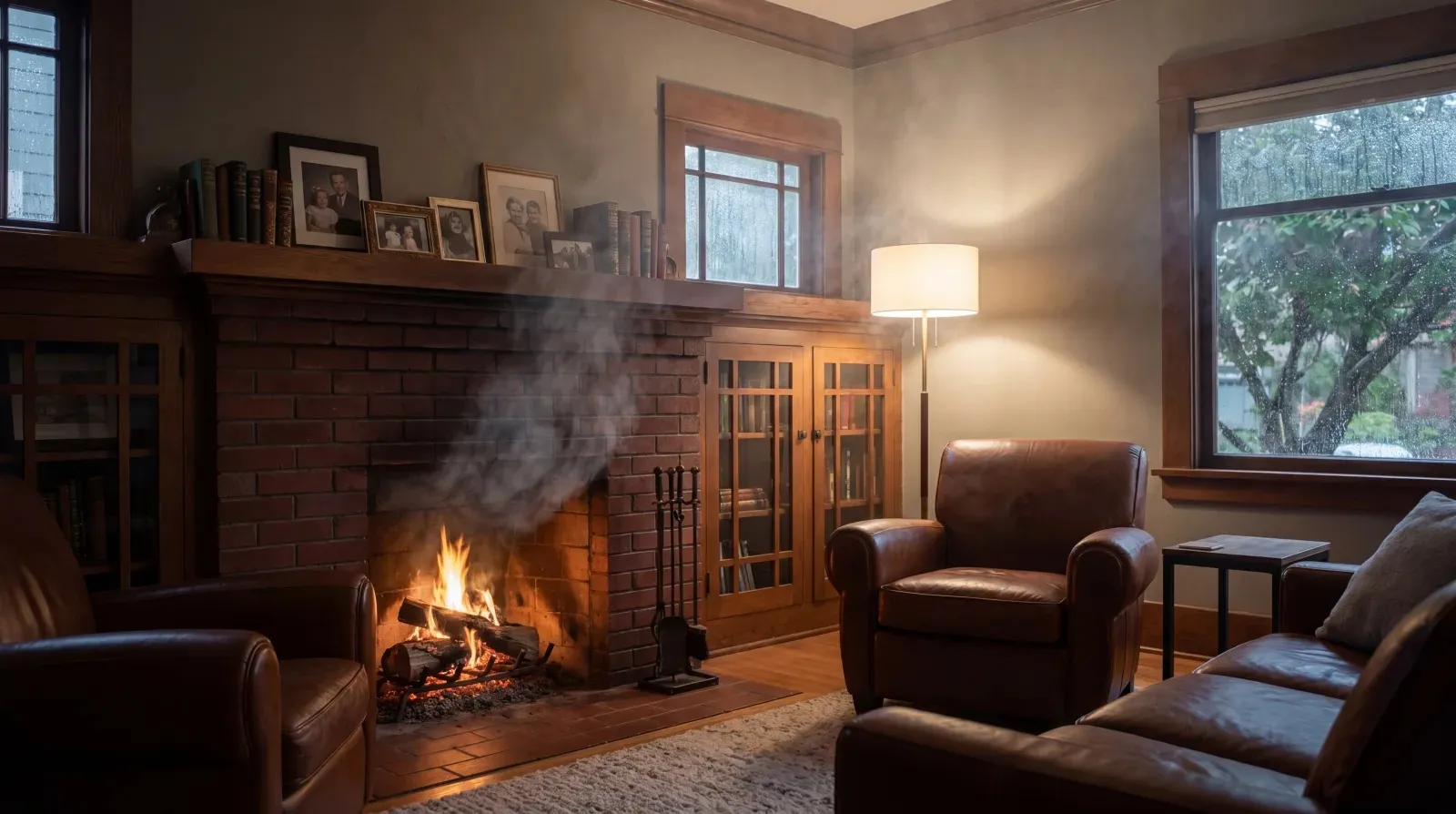
Draft is created by the pressure difference between warm combustion gases inside the flue and cooler outdoor air. When that balance is disrupted — by cold air, blockages, negative pressure, or structural defects — smoke takes the path of least resistance: back into your living room. Here are all eight causes, from most to least common based on our 2025–2026 Seattle-area diagnostics.
| Cause | How Common | DIY Fix Available? | Typical Cost to Resolve |
|---|---|---|---|
| Cold chimney flue | Very common | Yes — flue priming | $0 |
| Closed / stuck damper | Common | Sometimes | $0–$350 |
| Creosote buildup | Common | No | $169–$329 |
| Negative house pressure | Common in new builds | Yes — open a window | $0–$500 |
| Insufficient chimney height | Occasional | No | $500–$2,000 |
| Wind downdrafts | Occasional (hilly areas) | No | $300–$600 |
| Flue-to-opening ratio | Less common | No | $200–$800 |
| Cracked / damaged liner | Less common but serious | No | $1,500–$5,500 |
How Do You Fix a Cold Chimney Flue?
A cold flue is the single most common cause of smoke rollout in Seattle, especially on the first fire of the season or after weeks of not using the fireplace. The flue contains a column of cold, dense air that resists upward movement until it is displaced by warm air from the fire.
The DIY fix: Roll a sheet of newspaper into a tight torch. Light the end, open the damper fully, and hold the burning torch up into the damper opening for 30 to 60 seconds. You'll feel the draft shift — the flame will start pulling upward instead of blowing back at you. Once the updraft is established, set the torch in the firebox and light your fire normally. This simple technique resolves more than 60% of the draft complaints we hear from Seattle homeowners each week.
Why Seattle homes are especially prone to this: Our maritime climate keeps outdoor temperatures moderate but damp. Chimneys that aren't used for weeks absorb that cold moisture, creating an unusually stubborn cold-air column. Homes with exterior chimneys (built on the outside wall rather than through the interior of the house) cool down fastest and benefit most from priming.
Can Negative House Pressure Cause Smoke to Back Up?
Yes — and this is a growing problem in Seattle as homeowners upgrade insulation and seal air gaps for energy efficiency. A tightly sealed home creates negative pressure when exhaust fans, range hoods, or HVAC systems pull air out without an equal supply of makeup air coming in. Your fireplace becomes the easiest air inlet — meaning outdoor air rushes down the chimney and pushes combustion gases into the room.
Common culprits in Seattle homes include: bathroom exhaust fans running simultaneously, large commercial-style kitchen range hoods (very popular in Fremont and Capitol Hill remodels), clothes dryers running during fire use, and sealed HVAC return systems. In our experience across 400+ draft-diagnosis calls in 2025, negative pressure was a contributing factor in nearly 30% of cases — often combined with a cold flue.
The fix: Before lighting any fire, turn off all exhaust fans. Crack a window 2–3 inches in the same room as the fireplace to equalize pressure. If your home consistently battles this problem, a certified HVAC contractor can install a dedicated makeup-air system that feeds combustion air directly to the fireplace. Cost: $800–$2,500 installed.
Does Creosote Buildup Cause Draft Problems?
Absolutely. Creosote coats the interior walls of the flue and progressively narrows the opening available for airflow. A standard 10-inch round flue with just one inch of Stage 2 creosote on all sides effectively becomes an 8-inch flue — reducing draft capacity by more than 35%. At Stage 3 (the glazed, tar-like deposits), airflow restriction can be severe enough to make the fireplace completely unusable.
Seattle's long burning season (October through April for most households) accelerates creosote accumulation. Burning unseasoned wood — common among homeowners who stack logs in the rain — dramatically increases creosote production. Based on our 2025 sweep data across the Seattle metro, the average flue we service has accumulated more creosote than CSIA guidelines recommend before the homeowner notices draft issues.
A professional chimney sweep removes creosote buildup and often resolves draft complaints entirely in the same visit. See our full guide to creosote stages and removal for more detail. Fremont and Ballard homeowners with older craftsman-style homes tend to see the heaviest buildup due to long flue runs and cooler burn temperatures.
What Are Wind Downdrafts and How Do You Stop Them?
Seattle's varied topography — hills, tree canopy, and waterfront exposures — creates swirling, unpredictable wind patterns that can push air directly down a chimney. Homes on elevated lots in Queen Anne, Magnolia, and West Seattle experience downdraft problems most frequently. Trees within 20 feet of the chimney top, neighboring structures taller than the chimney, and certain roof pitches all contribute to the problem.
The symptom is distinct: the draft problem tends to occur only on windy days or when the wind comes from a specific direction, and it often resolves on calm days. You may hear a low rumbling or feel a cold puff from the firebox when wind gusts hit.
The fix: A wind-directional chimney cap (commonly called a Vacu-Stack or Wind Director cap) automatically rotates to face into the prevailing wind, converting wind pressure into draft rather than fighting it. Our team installs these across Queen Anne and West Seattle regularly during spring and fall. Installed cost: $300–$600, depending on chimney height and access.
How Do You Know if Your Flue Liner Is Causing Draft Problems?
A cracked or deteriorating flue liner allows cool outside air to infiltrate the flue at the crack locations, disrupting the warm-air column needed for good draft. Unlike other draft causes, liner damage tends to get worse over time — cracks expand with freeze-thaw cycles, and deteriorating clay tiles can collapse into the flue, creating partial blockages.
Signs that your liner may be causing the problem include: smoke seeping through mortar joints on interior walls, visible pieces of clay tile in the firebox, water staining on walls near the chimney chase, or a draft problem that developed gradually over one or two seasons rather than suddenly. A Level II chimney inspection with video camera scan is the definitive way to diagnose liner damage — our techs can show you the footage in real time on a tablet.
If liner damage is confirmed, chimney relining is required. See our guide to liner types for a full cost and material comparison. Relining costs in Seattle range from $1,500 for a stainless steel liner insert to $5,500 for a full cast-in-place system.
What Should You Do Right Now If Your Fireplace Is Smoking?
Follow these steps in order before calling a professional — resolving a draft problem yourself can save $169–$329 in service fees if the fix is simple.
- Open the damper fully. Reach up into the firebox and confirm the damper lever or handle is in the fully open position. Use a flashlight to verify you can see the flue above.
- Prime the cold flue. Roll a sheet of newspaper into a tight torch, light it, and hold it up near the open damper for 30–60 seconds until you feel the draft reverse upward.
- Turn off all exhaust fans. Shut off bathroom fans, range hoods, and the dryer before lighting the fire. Crack a nearby window 2–3 inches.
- Use only dry, seasoned wood. Wet wood produces more smoke and less heat, making it harder to establish draft. Check that your firewood has been dried for at least 12 months.
- Look for visible blockages. Shine a flashlight up the flue (with damper open). Look for bird nests, debris piles, or heavy dark coating on the walls. If you see nesting material, stop and call a professional — animal removal requires specific handling.
If smoke still enters the room after completing all five steps, you have a structural or buildup issue that requires professional diagnosis. Do not continue using the fireplace until it is evaluated — ongoing smoke intrusion means carbon monoxide exposure risk.
Ready to Fix Your Fireplace Draft? Seattle Chimney Pros Can Help.
Draft problems are among the most diagnosable issues in the chimney world — an experienced tech can usually identify the root cause within the first 15 minutes of a visit. Our CSIA-certified team has resolved draft complaints in over 500 Seattle-area homes in the past two years alone, from simple flue-priming coaching to full liner replacements. We give you a clear diagnosis and honest recommendation before any work begins.
Call us at (206) 278-2924 or schedule online for a same-week diagnostic visit. We serve all 45 Seattle metro neighborhoods, and most draft inspections are completed within 90 minutes.
Need professional help?
Our professionally trained team is ready. $99 inspection credited toward repairs, 30-minute response.