Gas Fireplace Inspection Cost in Seattle 2026: What You'll Pay & What Gets Checked
How Much Does a Gas Fireplace Inspection Cost in Seattle in 2026?
A professional gas fireplace inspection in Seattle costs between $150 and $500 in 2026, depending on the inspection level, appliance type, and whether maintenance tasks are bundled in. Based on over 400 gas fireplace inspections and service calls our team completed across the Seattle metro last year, the average homeowner pays $249 for a full inspection-plus-tune-up — the most common service combination. Basic Level 1 safety inspections run $150–$225, while Level 2 inspections with camera evaluation of the vent system range from $300–$500. Seattle prices run 10–20% above national averages due to local labor rates and the older housing stock that frequently requires more access complexity. Current as of July 2026.
What We Found at a Queen Anne Gas Fireplace Call: A Real Inspection
Marcus T. from Queen Anne had owned his 1928 Tudor for three years before he ever had the gas fireplace inspected. It had worked fine — or so he thought. When a neighbor mentioned she'd smelled something odd near her fireplace last winter and ended up having a failed gasket repaired, Marcus did a quick Google search for 'gas fireplace inspection Seattle' and landed on our scheduling page.
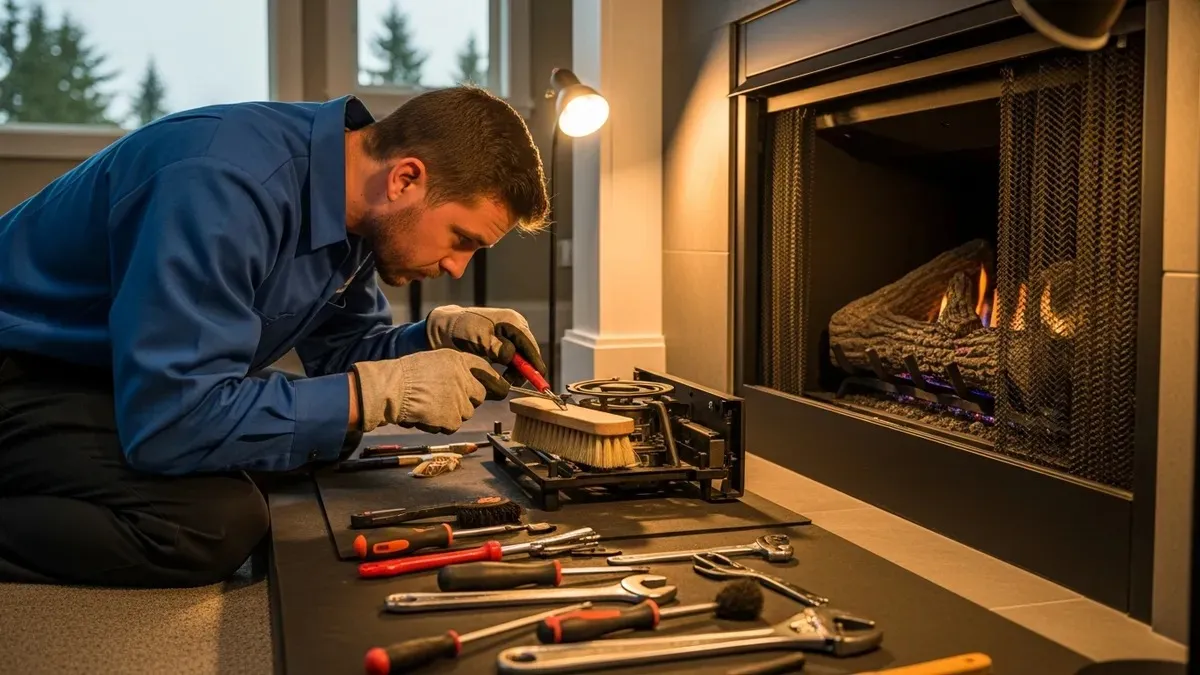
Alex arrived on a Tuesday morning with a full inspection kit: manometer, thermocouple tester, inspection camera, and cleaning tools laid out on a protective mat over the original hearth tile. The moment he opened the firebox panel, he spotted the first issue — the ceramic log set had been repositioned, probably by a previous owner who'd rearranged the logs for aesthetics. The repositioning was partially blocking the primary combustion air port on the burner.
'That explains the sooty glass,' Alex told Marcus. 'The logs are sitting right where the air needs to enter. The fire looks fine but it's not burning completely — you're getting more carbon monoxide than you should be.'
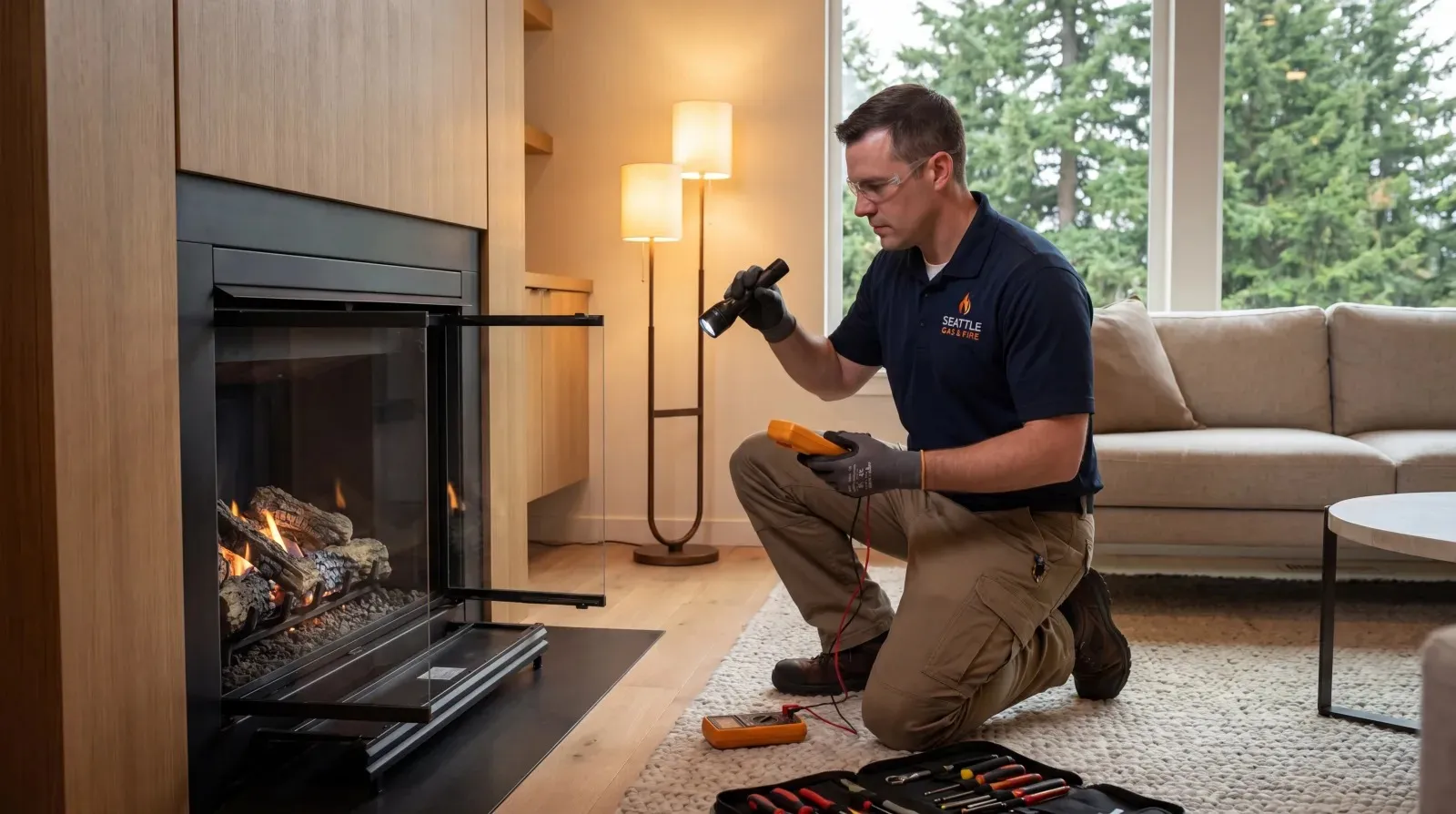
The second finding came when Alex tested the thermocouple output with his millivolt meter: 14 millivolts, against a minimum acceptable threshold of 25. The pilot stayed lit, but the safety margin was gone. One more season and Marcus would have been calling us on a cold October night with a fireplace that wouldn't stay lit at all.
'The log repositioning and the thermocouple degradation together were making this appliance genuinely unsafe — not dramatically, not in an emergency way, but the kind of quiet unsafe that doesn't announce itself until there's a problem. That's exactly why annual inspection matters for gas units.'
— Alex, Lead Technician, Seattle Chimney Pros
Alex repositioned the logs to manufacturer specs, replaced the thermocouple, cleaned the burner ports — two of which had spider webs partially blocking them — and cleaned the glass. He tested the pilot through five cold-start cycles before signing off. Total cost: $319, which covered the inspection, tune-up, thermocouple replacement, and parts. Marcus now has a maintenance reminder set for the following spring. 'I honestly didn't realize how different this was from a regular chimney thing,' he said. 'Worth every dollar to know it's actually safe.'
What Does a Gas Fireplace Inspection Actually Check?
A complete gas fireplace inspection covers three categories: the combustion and ignition system, the venting system, and the firebox structure. Here is exactly what a thorough inspection evaluates in each area.
Combustion and Ignition System
- Gas valve and supply pressure: Verified using a calibrated manometer. Incorrect pressure causes incomplete combustion, accelerated valve wear, and excess carbon monoxide production. This is the check that can't be done visually — it requires specialized equipment.
- Pilot assembly and flame quality: A healthy pilot produces a blue flame that fully envelops the thermocouple tip. Yellow or orange flame indicates incomplete combustion and requires immediate correction.
- Thermocouple and thermopile output: Measured with a millivolt meter. Thermocouple below 25 millivolts is the most common reason gas fireplaces stop holding a pilot — and the most common service call we receive throughout Seattle each October when homeowners turn their appliances on for the first time after summer.
- Burner ports: Inspected for blockage from insects, corrosion, and debris. In our experience across Seattle-area homes, spider and wasp nesting in burner ports during summer dormancy contributes to more ignition failures than component aging in appliances that are only 5–10 years old.
- Ceramic logs and media positioning: Confirmed against manufacturer specifications. Out-of-position media is one of the most common findings we document — and one of the most consequential, since it directly affects combustion completeness and CO output.
- Electronic components: Igniter spark, thermopile output, remote receiver, and wall switch operation are all tested. Battery-powered systems receive fresh batteries as part of a standard tune-up.
Venting System
- Vent pipe joints and seals: All connections in the vent run are confirmed sealed. Separated joints allow combustion gases including carbon monoxide to enter wall cavities and living spaces. Seattle's older construction — particularly the structural settling common in pre-1960 homes — makes vent connection separation more prevalent here than in newer markets.
- Exterior vent termination: Inspected for blockage (webs, nesting, debris), physical damage, and correct clearances from windows and doors. A blocked exterior vent causes CO to backdraft directly into the living space.
- Draft performance: For natural-vent and B-vent appliances, the technician confirms adequate draft. Seattle's well-insulated modern construction frequently creates negative indoor air pressure that causes gas appliances to backdraft — a serious and underdiagnosed CO risk in the Puget Sound region.
Firebox Structure
- Refractory panels: Inspected for cracks, spalling, and separation. Cracked panels allow heat to contact surrounding construction materials.
- Glass and gasket seal: A failed gasket between the firebox glass and the frame allows combustion gases to enter the living space rather than exhaust through the vent. This is one of the most commonly missed issues in homeowner self-inspections because the gasket deteriorates gradually and invisibly.
- Clearances to combustibles: Confirmed to be within manufacturer and code requirements — particularly important after mantel renovations or built-in additions near the firebox.
Gas Fireplace Inspection Pricing in Seattle: 2026 Breakdown by Service Type
The table below reflects 2026 pricing across the Seattle metro for the most common gas fireplace inspection and service combinations. All price ranges reflect what we charge and what comparable certified technicians in the area charge for these service tiers.
| Service | Seattle 2026 Range | What's Included |
|---|---|---|
| Level 1 safety inspection (basic) | $150–$225 | Visual check of accessible components, pilot test, vent terminal inspection, written report |
| Full inspection + annual tune-up | $200–$350 | Complete safety inspection plus burner cleaning, glass cleaning, battery replacement, log repositioning |
| Level 2 inspection (extended evaluation) | $300–$500 | Full Level 1 plus camera evaluation of vent system and documentation of concealed components; required before home sale |
| Gas insert inspection (with insert removal) | $225–$425 | Insert pull-out for full firebox access, complete component inspection, reseating |
| Inspection + thermocouple replacement | $250–$450 | Inspection plus most common repair; thermocouple part $15–$50, labor varies by access complexity |
| Inspection + pilot assembly rebuild | $300–$550 | Inspection plus cleaning and replacement of pilot orifice, thermocouple, thermopile — common in appliances 10+ years old |
| Inspection + gas valve service | $350–$650 | Inspection plus valve cleaning or replacement; valve parts $80–$250 depending on appliance model |
If your gas fireplace hasn't been serviced in more than two years, budget for the inspection-plus-tune-up tier rather than a basic inspection alone. In our experience, appliances with more than 24 months since last service almost always have cleaning and minor maintenance needs that make the combined service the better value. For repair costs identified during an inspection, see our gas fireplace repair cost guide for Seattle covering 2026 pricing on common repairs including burner, valve, and ignition system replacements.
What Is the Difference Between a Level 1 and Level 2 Gas Fireplace Inspection?
NFPA 211 — the national standard referenced by Washington State's building code under WAC 51-51 — defines three inspection levels. For gas fireplaces, the Level 1 versus Level 2 distinction determines what is actually examined and what documentation you receive.
A Level 1 inspection is a visual examination of all accessible portions of the appliance, vent connections, and surrounding structure. No camera equipment is required. It is appropriate for appliances in regular service with no symptoms and no changes to the unit or venting. NFPA 211 recommends Level 1 inspection at minimum annually for all gas fireplaces.
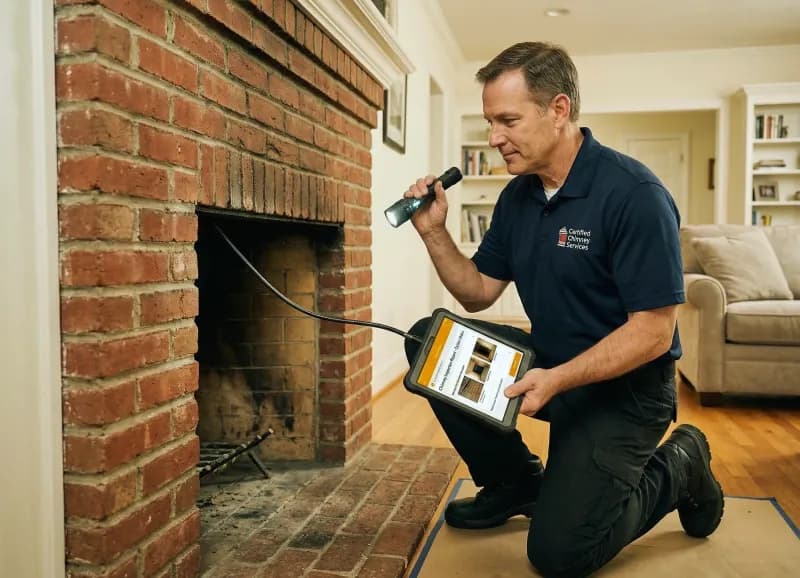
A Level 2 inspection includes everything in Level 1 plus camera evaluation of the full vent system run, examination of accessible areas where vent pipe runs through attic or wall cavities, and photographic documentation of all findings. NFPA 211 requires Level 2 in specific situations:
- Before any real estate sale or property transfer — standard practice for Seattle home purchases that include a gas fireplace
- After any event that could have affected the system: a chimney fire, a significant earthquake (relevant in Seattle's seismic zone), or a major storm event
- When symptoms have occurred — carbon monoxide alarm activation, combustion odors, venting problems — that weren't explained by the accessible component inspection
- Any change of appliance type or fuel type
- When Level 1 findings suggest concealed portions of the system may also be affected
For most Seattle homeowners with a normally operating gas fireplace: Level 1 annual inspection is appropriate. If you are buying a home with a gas fireplace, have experienced any warning symptoms, or haven't had service in more than three years, Level 2 is the right choice. Our full guide to fireplace and chimney inspection levels explains when each level applies across all appliance types.
What Are the Warning Signs That a Gas Fireplace Needs Inspection Now?
The following symptoms mean your gas fireplace should not be operated until it has been professionally inspected. If you're seeing any of these, schedule service before your next use — not as a precaution, but as a safety requirement.
- Stop using the fireplace immediately if you smell combustion byproducts indoors during operation, if your carbon monoxide detector activates, or if you notice yellow or orange flame instead of a primarily blue flame. These three conditions indicate combustion gases may be entering your living space.
- Test whether the pilot holds without your hand on the button. If the pilot extinguishes the moment you release the starter button, the thermocouple has degraded below its safe output threshold. The gas valve is doing exactly what it should — shutting off when the safety sensor fails — but the appliance needs thermocouple replacement before further use.
- Note how often you're cleaning the glass. Some glass darkening over a season is normal. Glass that soots heavily in a short period of regular use indicates incomplete combustion producing excess carbon monoxide — a professional inspection is needed, not more frequent cleaning.
- Check when you last had professional service. If it's been more than three years, schedule inspection regardless of symptoms. In Seattle's climate — 152 average annual rain days, temperature cycling, and a summer dormancy period when insects nest in burner ports — component degradation between service visits happens faster than in drier climates.
- After any seismic event or major storm, inspect the exterior vent termination. Seattle's seismic environment means vent pipe connections in attics and wall cavities can separate during ground movement even when no visible structural damage is apparent. If you experienced noticeable shaking, a Level 2 inspection of the vent system is warranted.
For a full picture of gas fireplace symptoms and their causes, our gas fireplace repair cost guide maps each symptom to its most likely cause and the typical repair cost in Seattle.
How Often Should a Gas Fireplace Be Inspected in Seattle?
NFPA 211 and the Chimney Safety Institute of America both recommend annual inspection for all gas fireplaces. Based on 14 years serving Seattle-area homeowners, we've found that annual inspection — timed for spring — produces the best outcomes for appliance reliability and safety documentation. Here's why spring works best in the Pacific Northwest specifically.
Seattle's heating season runs September through April. A May or June inspection evaluates thermocouple output, pilot stability, and valve performance after a full season of operation — when wear is most accurately measurable. It also catches insect nesting in burner ports before summer dormancy cements the problem. And it means your appliance is confirmed ready before September, when fall scheduling books out three to six weeks in our market. Spring appointments typically have five to ten day lead times versus multi-week waits in October.
Annual inspection is appropriate for most situations. More frequent service — every six months — is warranted for: gas appliances 20 years or older, appliances in rental properties with multiple tenants, any appliance that showed symptoms during the previous season, and appliances in high-humidity coastal locations within the Seattle metro such as West Seattle or Shoreline neighborhoods. For a side-by-side comparison of inspection versus cleaning services and which your appliance needs at each maintenance interval, see our guide to gas fireplace cleaning costs in Seattle.
Washington State Requirements for Gas Fireplace Inspections
Washington State's building code under WAC 51-51 adopts the International Residential Code and references NFPA 211 as the standard for all gas appliance venting systems. NFPA 211 explicitly recommends annual inspection. While Washington does not impose mandatory annual enforcement for owner-occupied residential homes, the standard is the baseline for insurance claims, real estate transactions, and liability assessment in any CO or fire incident.
What this means practically for Seattle-area property owners:
- Real estate transactions: A Level 2 gas fireplace inspection is standard practice — and increasingly required by buyers' representatives — when purchasing a Seattle-area home. Older gas appliances in Capitol Hill, Queen Anne, Ballard, and Madrona homes require more careful evaluation than newer construction in Bellevue or Kirkland, where direct-vent inserts are more common and typically in better condition at point of sale.
- Homeowner's insurance: Washington insurers can and do consider inspection history when a gas fireplace is implicated in a CO incident or fire. A documented annual inspection record affects both claim processing and coverage outcomes. This is not a hypothetical — we have had clients reach out to us specifically to establish inspection documentation at the request of their insurance carrier after an incident.
- Rental properties: Under RCW 59.18 and WAC 365-210, landlords must maintain all appliances in safe working condition. A gas fireplace in a rental unit requires annual inspection documentation as part of basic habitability compliance. Our guide to landlord fireplace inspection requirements in Washington covers what rental property owners need to document and retain.
We serve homeowners and landlords across Seattle, Bellevue, and 43 additional communities throughout King, Pierce, and Snohomish counties. Our inspections produce written reports that satisfy real estate disclosure requirements, insurance documentation requests, and NFPA 211 compliance standards.
Schedule Your Gas Fireplace Inspection With Seattle Chimney Pros
If your gas fireplace hasn't been inspected this year — or you can't remember the last time it was — now is the right time to schedule. Summer is our best availability window before fall demand peaks. Our CSIA-certified technicians carry calibrated manometers, millivolt meters, and inspection cameras to every gas fireplace call, and we complete most standard repairs in the same visit so you aren't waiting on a second appointment for a thermocouple or burner cleaning.
Call (206) 278-2924 or book an appointment online. We serve 45 communities across the Seattle metro, Monday through Saturday, with appointments typically available within five to seven business days for summer scheduling.
Need professional help?
Our professionally trained team is ready. $99 inspection credited toward repairs, 30-minute response.