Chimney Sweep vs Chimney Inspection: What's the Difference? (2026 Guide)
Chimney Sweep vs. Inspection: The Direct Answer
A chimney sweep is a cleaning service that physically removes creosote, soot, and debris from your flue, smoke chamber, and firebox. A chimney inspection is an evaluation service that documents the structural and safety condition of every chimney component and produces a written report. In Seattle, a standard sweep costs $169–$299 and a Level 1 inspection runs $149–$250 — and most active fireplace owners need both every one to two years. Based on over 2,500 jobs our team has completed across the Seattle metro since 2011, roughly 60% of homeowners who call us for one service actually need the other as well. Current as of July 2026.
A Real Seattle Call: Marcus T. in Fremont Learns the Hard Way
Last September, Marcus T. from Fremont called us asking for a chimney sweep. He'd moved into his 1952 craftsman two years earlier and wanted to use the fireplace heading into fall. A neighbor had mentioned getting a sweep done and Marcus assumed that was all he needed — clean the flue, light a fire, done.
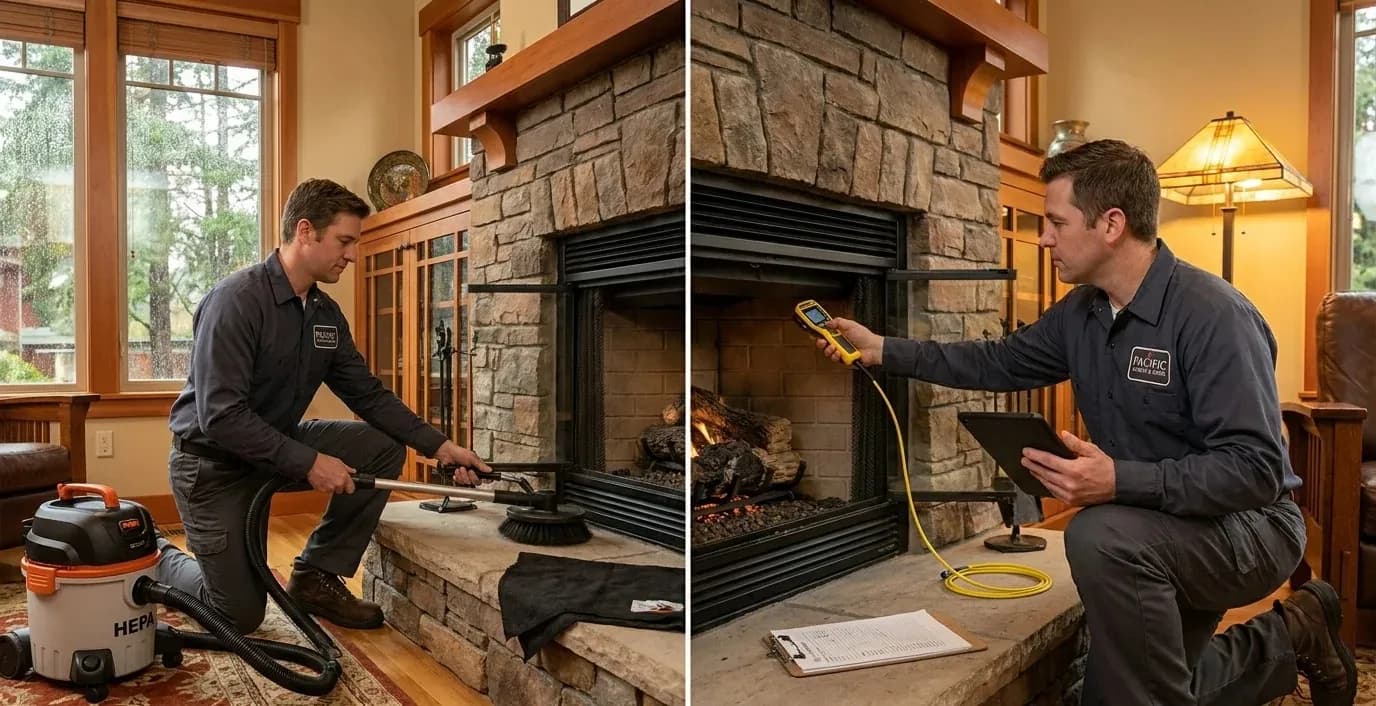
Our technician Ryan arrived on a gray Tuesday morning with the full kit: rotary brushes, HEPA vacuum, drop cloths, and a Chim-Scan camera. He started with a quick visual pass before touching anything.
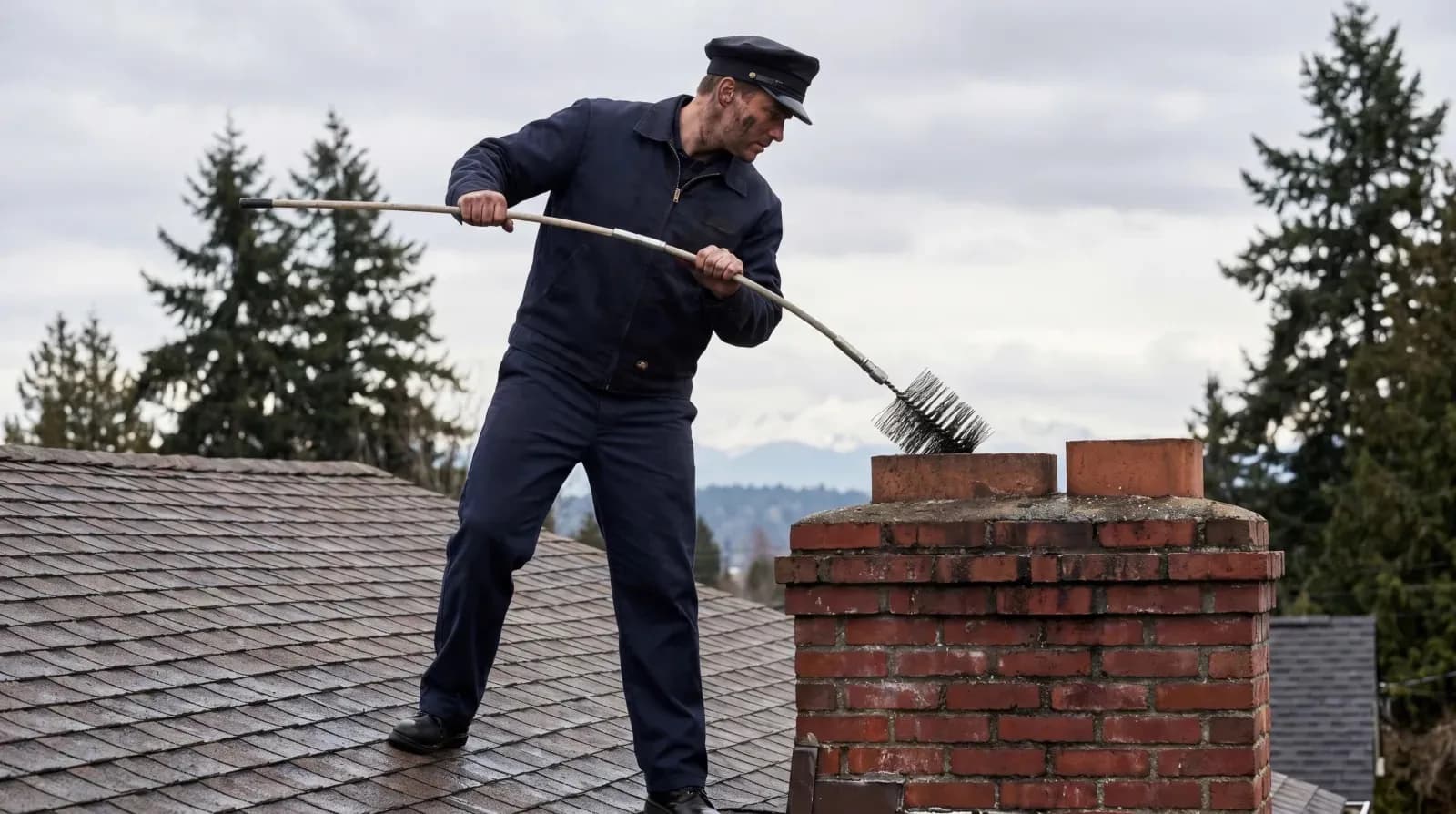
'I got up on the roof and the crown was already telling me a story,' Ryan explains. 'There was a hairline crack running the full width of the cap — moss had worked into it over two winters and the freeze-thaw cycles had done real damage. Water had been getting into the flue every time it rained.'
'The flue liner had two separate sections with visible spalling — chunks of clay tile were sitting in the smoke shelf. If Marcus had lit a fire that night, he'd have been venting combustion gases through a broken liner directly into the wall cavity. That's not a creosote problem, that's a carbon monoxide problem.'
— Ryan, Lead Technician, Seattle Chimney Pros
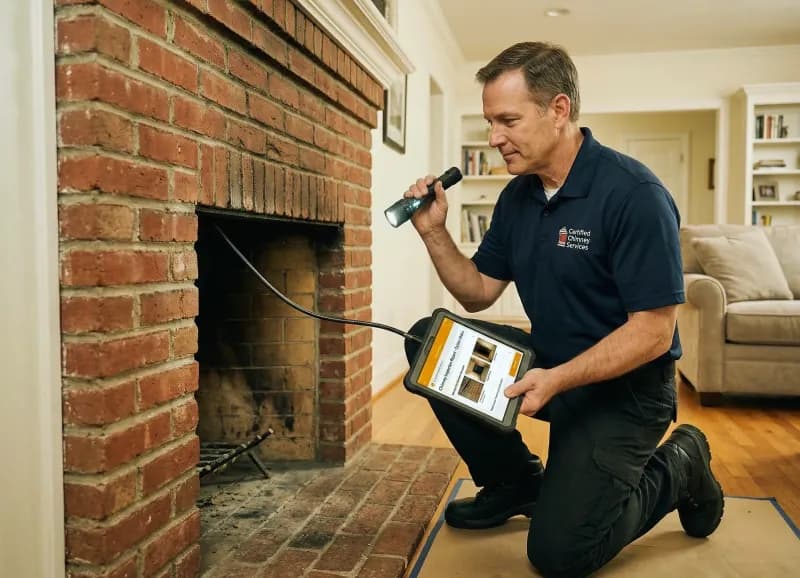
Ryan completed the sweep as requested — 75 minutes of mechanical brushing from the rooftop down, full smoke shelf scrape, firebox vacuum — and then sat down with Marcus to walk through the inspection photos on a tablet. The swept flue was clean. But the liner damage meant the fireplace couldn't be safely used until the liner was addressed.
Marcus had budgeted $219 for a sweep. The sweep itself was $219. The Level 2 inspection Ryan recommended — and which revealed the liner damage — was an additional $299. The chimney relining cost $2,400. Not a surprise Marcus wanted, but far better than a CO emergency in January. 'I didn't even know what a flue liner was,' he told us. 'Ryan explained it like I was a smart adult, not like he was talking me into something. I'm glad I asked questions.'
Marcus is now on our annual maintenance schedule. His next Level 1 inspection is booked for August 2026, before the burning season begins.
What Does a Chimney Sweep Actually Include?
A chimney sweep is a cleaning service — nothing more, nothing less. Its purpose is to remove combustion byproducts before they create a fire hazard or air quality problem. Here's what a proper sweep covers:
- Drop cloths and dual-HEPA vacuum setup to contain soot inside the home
- Mechanical brushing of the full flue length from the rooftop or firebox opening (rotary or manual rods depending on flue geometry)
- Scraping of the smoke chamber and smoke shelf — the zones where creosote concentrates most heavily
- Cleaning of the firebox floor, walls, and damper assembly
- Removal of Stage 1 (flaky/dusty) and Stage 2 (tar-like) creosote; Stage 3 (glazed) requires chemical or thermal treatment as a separate service
- A brief visual check for obvious issues — but this is not a certified inspection
In Seattle, a standard single-flue sweep takes 45 to 90 minutes. Based on 847 sweeps we completed in 2025, the average job cost $224. Homes in Fremont, Capitol Hill, and Queen Anne with taller multi-story chimneys or heavy Stage 2 buildup typically run $259–$299. See the full breakdown in our Seattle chimney sweep cost guide.
One terminology note: 'chimney cleaning' and 'chimney sweep' mean the same thing. The only distinction to watch for is companies that use 'cleaning' to describe a quick firebox vacuuming without actual mechanical brushing of the flue — always ask whether the full flue length and smoke shelf are being addressed.
What Does a Chimney Inspection Actually Include?
A chimney inspection is an evaluation, not a cleaning. Its purpose is to determine whether your chimney is structurally sound, free of hazards, and compliant with NFPA 211 standards. A certified inspector examines every component — crown, cap, flashing, masonry, flue liner, firebox, damper, smoke chamber, connector pipe — and delivers a written report with photos or video.
NFPA 211 defines three inspection levels, and knowing which one you need matters:
| Level | What It Covers | When Required | Cost (Seattle) |
|---|---|---|---|
| Level 1 | Visual check of all readily accessible components — exterior masonry, firebox, damper, visible flue | Annual baseline inspection when nothing has changed | $149–$250 |
| Level 2 | Everything in Level 1 plus full camera scope of the flue interior, accessible attic and crawlspace sections | Real estate transactions, after a chimney fire, after an earthquake, after a fuel change | $249–$999 |
| Level 3 | Everything in Level 2 plus removal of chimney components to access hidden areas | Serious damage investigations where concealed areas must be accessed | $750+ |
For a deeper breakdown of what each level covers and which one your situation calls for, read our complete guide to chimney inspection levels.
Sweep vs. Inspection: Full Side-by-Side Comparison
| Criteria | Chimney Sweep | Chimney Inspection |
|---|---|---|
| Primary purpose | Remove creosote and debris | Evaluate safety and structural condition |
| Tools used | Rotary brushes, rods, HEPA vacuum, drop cloths | Chim-Scan camera, moisture meters, inspection mirrors, written report |
| Findings documented? | No formal report | Written report with dated photos or video |
| Certification required | CSIA Certified Chimney Sweep recommended | CSIA CCS or NFI certification strongly recommended |
| Typical duration | 45–90 minutes | 60–120 minutes (Level 2) |
| Cost in Seattle | $169–$299 | $149–$999 (Level 1–2) |
| Recommended frequency | Every 1–2 years or when creosote hits 1/8 inch | Annually (Level 1 minimum) |
| Required by NFPA 211? | Only when creosote exceeds 1/8 inch | Yes — annual Level 1 minimum |
| Fixes problems? | Removes creosote buildup only | No — identifies problems so you can fix them |
When Do You Need a Chimney Sweep — Specifically?
A sweep is the right call in these concrete scenarios. If any of these apply, schedule a sweep before your next fire:
- Your last inspection found creosote at or above 1/8 inch — NFPA 211's mandatory cleaning threshold
- You burn wood regularly and haven't had the flue cleaned in the last one to two years
- You notice a strong smoky or tar-like smell inside the firebox or living room even when the damper is open
- You see flakes of black creosote or debris falling into the firebox from above
- Smoke is drafting sluggishly or backing into the room when you light a fire — often a partial blockage
- You're preparing for the burning season and it's late summer or early fall in Seattle
In our experience across Seattle-area homes, about 34% of the chimneys we sweep have Stage 2 or higher creosote that required more than a standard brush pass. Heavy burners in neighborhoods like Ravenna and Lake City tend to hit that threshold faster than occasional users in Mercer Island or Sammamish. For a more detailed answer on timing, read our guide on how often to have your chimney swept in Seattle.
When Do You Need a Chimney Inspection — Specifically?
NFPA 211 is explicit: every chimney, fireplace, and vent should receive a Level 1 inspection at minimum once per year. Beyond that annual requirement, these specific events should trigger an inspection immediately:
- Buying or selling a home — a Level 2 is non-negotiable during escrow; general home inspectors are not certified to assess flue liners or masonry structure (why this matters in Washington State)
- After an earthquake — Seattle sits on active fault lines; hidden flue cracks and shifted crowns are common after even moderate seismic events (how earthquakes damage chimneys)
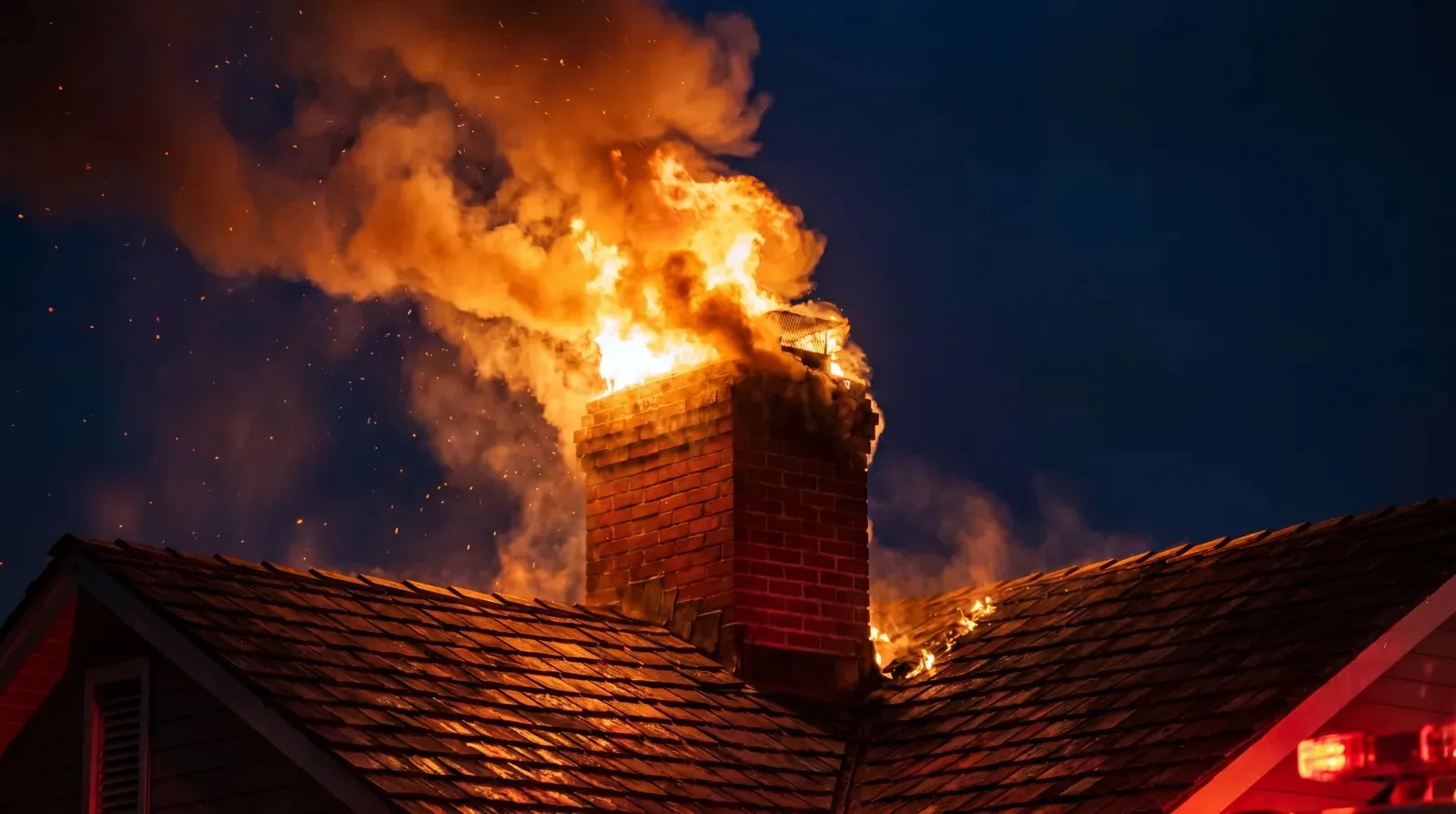
- After a chimney fire — even a small puff-back can glaze or fracture the liner beyond safe use
- After a major windstorm — Seattle's fall and winter bomb cyclones regularly dislodge crowns, caps, and flashing
- Switching fuel types — converting from wood to gas, or installing an insert, requires a Level 2 to confirm liner compatibility
- Chimney unused for 12 or more months — animals, moisture, and debris accumulate surprisingly fast in an idle flue
- Visible warning signs — water stains inside the firebox, crumbling mortar, white efflorescence on the brick exterior, or carbon monoxide warning signs
Why Most Seattle Homes Need Both — Every Year
An inspection tells you what's wrong. A sweep fixes the specific problem of creosote buildup. Neither replaces the other, and in Seattle's climate — 152 rain days a year, freeze-thaw cycles from November through March, and aggressive moss growth on chimney crowns — skipping either one carries real financial risk.
Last year, 41% of the chimneys we inspected in Seattle metro showed active water intrusion at some stage, and 28% had creosote levels at or above the NFPA 211 sweep threshold. These aren't problems you can diagnose with a flashlight from your living room.
Here's the recommended annual maintenance timeline for a Seattle homeowner with an active wood-burning fireplace:
- Late July or August: Schedule your annual Level 1 inspection before the burning season demand spike
- If creosote at or above 1/8 inch is found: Book a sweep immediately, before the first fire of fall
- After any triggering event (storm, earthquake, chimney fire, real estate transaction): Order a Level 2 inspection regardless of when the last annual was performed
- Every 3 to 5 years: Evaluate chimney waterproofing and reseal the crown and masonry if needed
- Cap and flashing check: Ask your tech to confirm cap integrity and flashing seal on every visit — these are the two most common entry points for water damage in Seattle
For seasonal prep guides, see our fall maintenance checklist and spring chimney maintenance checklist.
How to Spot a Contractor Who Blurs the Line on Purpose
A common scam pattern in the greater Seattle area: a $79 or $99 'chimney sweep special' appears on Groupon or Google Ads. A technician shows up, spends 20 minutes, then 'discovers' $2,000–$3,500 of urgent repairs — cracked liner, dangerous crown, failed cap — and offers to fix everything that same day at a 'discount.' The pressure is on before you've had a chance to think.
Watch for these three red flags that separate a legitimate pro from a high-pressure operator:
- No written inspection report with dated photos or video — if they found a problem but can't show it to you on camera with a timestamp, that's a problem
- Pressure to authorize repairs on the same visit — a legitimate tech will document the issue, give you a written estimate, and encourage you to think it over or get a second opinion
- No CSIA or NFI certification visible — ask to see the certification number and verify it at csia.org; in Washington State you can also verify their contractor license at Verify.License.wa.gov
In 14 years of serving Seattle metro, we've re-inspected dozens of chimneys where homeowners paid for 'emergency repairs' from uncertified contractors who found nothing we could verify. If something doesn't feel right, get a second opinion — our $99 inspection buys you an honest one, credited toward any work you book.
What to Look for When Hiring in Seattle
Before hiring any chimney company — whether for a sweep, an inspection, or both — verify these four things. They take five minutes and can save you thousands:
- CSIA Certified Chimney Sweep or NFI credential — both are searchable in public databases online; don't take the contractor's word for it
- Washington State contractor license and liability insurance — ask for the certificate of insurance before anyone gets on your roof
- Local references and area experience — a pro who has worked in Fremont, Bellevue, or West Seattle understands the quirks of Seattle's housing stock: the 1920s–1950s brick chimneys, the shared-flue duplexes, the earthquake retrofits
- Written inspection report policy confirmed before booking — you should receive a dated report with photos even if nothing is wrong; if they say 'we only write things up if we find something,' walk away
For the full hiring checklist with questions to ask over the phone, see our guide on how to choose a chimney sweep in Seattle.
Ready to Book — Sweep, Inspection, or Both?
The bottom line is simple: a sweep cleans your flue, an inspection tells you whether it's safe. Most Seattle homeowners with an active fireplace need a Level 1 inspection every year and a sweep every one to two years — and combining both on the same visit is the most efficient approach. Our CSIA-certified team will tell you honestly which service your chimney actually needs, with a written report and photos regardless of what we find.
Call (206) 278-2924 or request your estimate online. We've served 2,500+ Seattle-area homes since 2011, including Fremont, Ballard, Capitol Hill, Queen Anne, and 40+ surrounding communities. No pressure, no surprises — just a straight answer and a clean chimney.
Need professional help?
Our professionally trained team is ready. $99 inspection credited toward repairs, 30-minute response.