Spring Chimney Inspection Seattle 2026: What Gets Checked and Why It Matters
What Does a Spring Chimney Inspection in Seattle Cover in 2026?
A professional spring chimney inspection in Seattle costs between $149 and $349 in 2026 — $149–$229 for a standard Level 1 inspection, and $249–$349 for a Level 2 inspection with a full video camera scan of the flue liner. Based on the 420+ spring inspections our team completed across the Seattle metro area this past April and May, the most common findings are mortar joint deterioration (roughly 65% of jobs), chimney crown cracking (55%), and flashing separation or sealant failure (40%). Spring is the optimal inspection window in Seattle because it catches the cumulative damage from six months of Pacific Northwest rain and freeze-thaw cycling at the point when repairs are still modest — before another full heating season drives the damage deeper. Current as of July 2026.
A Real Spring Inspection: Marcus T. in Ravenna
Marcus T. had owned his 1952 Ravenna brick ranch for eleven years and had never once scheduled a chimney inspection. He'd used the fireplace casually through winter — maybe a dozen fires per season — and figured that as long as smoke went up and nothing caught fire, everything was fine. What changed his mind was his neighbor mentioning that our truck had been parked on their street twice that spring. Marcus looked us up and booked an appointment almost on impulse.
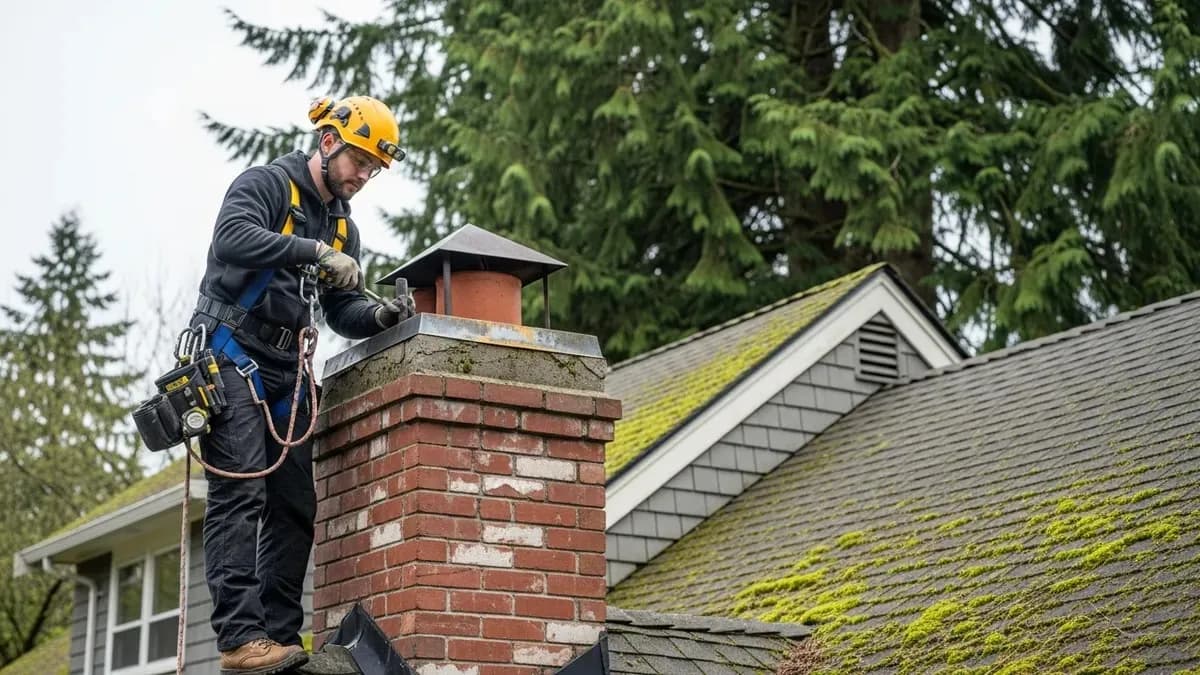
Carlos arrived on a damp Tuesday morning in late April. The roof was slick with the kind of persistent Seattle drizzle that never quite becomes rain, and a thick band of moss had crept halfway up the north face of the chimney. From the ladder, the problems were already obvious before Carlos even reached the top. The crown — original Portland cement from the 1950s — had fractured into three distinct sections, and a gap roughly the width of a finger ran along the back edge where the crown met the flue collar. Two seasons of Seattle rain had been pouring directly into that gap.
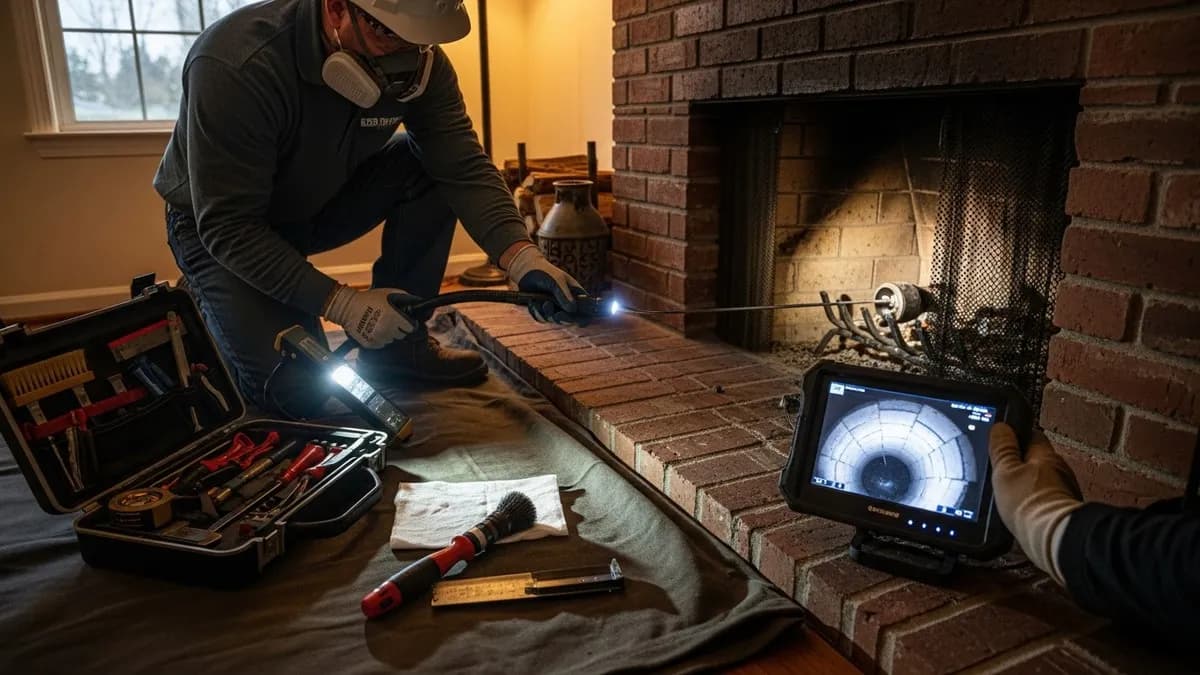
Inside, the camera told the rest of the story. The clay tile liner had a full horizontal crack at the third joint from the top, almost certainly from freeze-thaw pressure in the gap above. The damper plate was frozen in a half-open position, corroded stiff from moisture that had been draining past it for years. The smoke chamber showed heavy efflorescence staining — white mineral deposits blooming across the parging where water had been wicking through for at least two or three winters.
'That crown gap is the source of everything else I'm seeing. Once water gets past the crown in a Seattle winter, it just keeps going — liner joint, damper frame, smoke chamber parging. Each season it travels a little further down. If this had gone another two or three years, we'd be talking about a full relining instead of a crown rebuild and a damper swap.'
— Carlos, Lead Technician, Seattle Chimney Pros
Marcus approved the priority repairs on the spot: crown rebuild with elastomeric sealant, new top-mount stainless damper replacing the frozen throat damper, and a thorough chimney sweep to clear the creosote that had accumulated while draft was restricted by the half-open damper. Total for inspection plus repairs: $1,340. 'I kept thinking about what another winter would have cost me,' Marcus said afterward. 'The inspection itself was worth it just to know what I was dealing with.' He's now scheduled for an annual maintenance visit every April.
Why Is Spring the Best Time for a Chimney Inspection in Seattle?
Most Seattle homeowners assume fall is the right time for a chimney inspection — something to check off before the first fire of the heating season. Fall inspections matter, but spring inspections catch a category of damage that fall inspections routinely miss: the cumulative effect of Seattle's wet winter on chimney masonry, crowns, flashing, and caps.
Seattle's winters deliver consistent rain from October through March, with enough freeze-thaw cycling to fracture mortar joints, crack chimney crowns, and compromise flashings that were borderline the previous fall. By May, that damage has been sitting for months — taking on water with every rainstorm, progressing from a manageable repair into a more expensive one. Spring inspections identify this damage while repair costs are still modest.
Spring timing also matters for two other Pacific Northwest-specific reasons. First, May and June mark the beginning of wildlife nesting season — squirrels, raccoons, starlings, house sparrows, and chimney swifts actively move into uncapped or damaged chimneys. An inspection now catches wildlife activity before a nest becomes established, which complicates removal significantly. Second, the spring shoulder season is when chimney inspection scheduling is easiest — fall appointments book two to four weeks out as every homeowner calls simultaneously in October and November.
CSIA and NFPA 211 both recommend annual inspection for any chimney in regular use. If your last inspection was before fall 2024, this is the right window to schedule one. Our chimney inspection cost guide covers what to expect to pay by inspection level.
What Do Inspectors Check on the Outside of the Chimney?
A thorough spring inspection begins on the roof — the exterior tells most of the story before the inspector ever looks inside the flue. Crown, cap, masonry, and flashing are all assessed from the rooftop, and in our experience these components account for the majority of findings that lead to interior damage.
Crown: The crown is the first thing our techs examine from the rooftop. In Seattle, crown cracking appears in roughly 55% of our spring inspections — the combination of Portland cement, Pacific Northwest temperature swings, and direct rain exposure creates nearly ideal conditions for crown failure. Inspectors look for surface cracks (especially radiating from the flue collar), sections that have broken away entirely, and crowns that are flush with the chimney face rather than extended with a drip edge.
Cap: After winter, cap damage is common — particularly on chimneys beneath Seattle's large deciduous trees. Branch strikes bend and displace caps; freeze-thaw loosens improperly fastened caps. Inspectors check for missing caps, damaged or corroded mesh screens, and any evidence of animal entry. May is peak nesting season, so even a marginally damaged cap should be assessed promptly.
Masonry and Mortar: All visible masonry is examined for mortar joint deterioration, spalling brick, efflorescence, and structural cracking. On Seattle's Craftsman and Victorian homes, inspectors also look for signs that prior repair used Portland cement instead of appropriate lime mortar — a finding that sometimes requires remediation before new tuckpointing can succeed. For what masonry repairs involve and cost, see our guide to common chimney repairs in Seattle.
How Do Inspectors Assess Chimney Flashing in Spring?
Chimney flashing — the metal barrier sealing the junction between the chimney and the roof — is one of the most common sources of water damage in Seattle homes, and one of the areas where professional inspection adds the most value over a homeowner's visual check. From the ground or inside the attic, flashing failures are nearly impossible to diagnose reliably. From the rooftop with hands-on access, they are straightforward to assess.
During a spring inspection, our techs check the following at every flashing junction:
- Counter-flashing embedment in the mortar joints — whether it is mechanically anchored or just surface-caulked, and whether sections have pulled free from the masonry
- Step flashing integration with the roof shingles along the chimney sides — whether shifting or shingle movement has created gaps
- The back pan flashing behind the chimney, where runoff from the upper roof concentrates — often the highest water-contact point on the entire chimney
- Condition of sealant at all flashing transitions — Seattle's wet climate degrades caulk at the chimney perimeter significantly faster than in drier regions
- Signs of prior water intrusion in the roof deck and adjacent sheathing visible from above
Active flashing failures that allowed water entry over the winter are high-priority repairs. One Seattle rainy season with a failed flashing can introduce significant moisture into wall framing and ceiling assemblies. Our chimney flashing repair service includes assessment of adjacent shingles and masonry to ensure no secondary entry points are missed. See our flashing repair cost guide for pricing expectations.
What Does the Flue Camera Reveal That a Visual Inspection Misses?
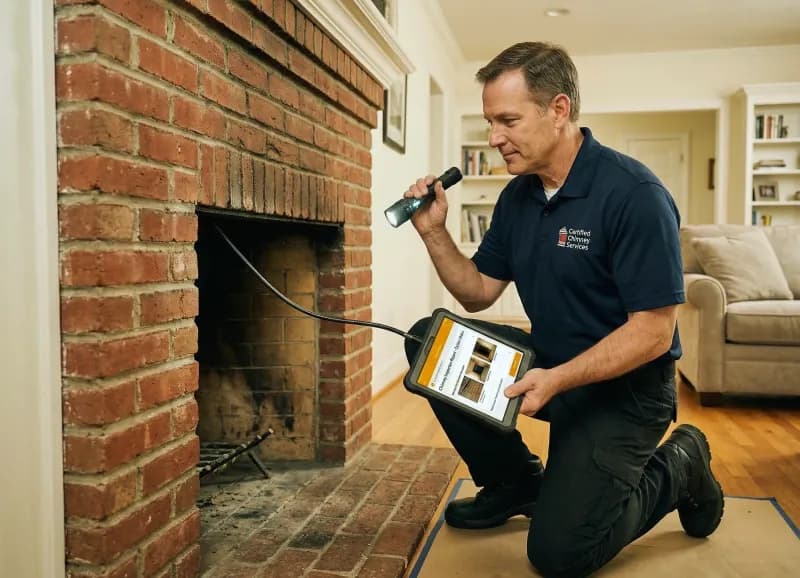
After the exterior, a thorough spring inspection moves inside the flue using a camera system — the only reliable way to assess liner condition in a chimney that cannot be directly observed by eye. NFPA 211 defines three inspection levels; most residential spring inspections are Level 1 (accessible components) or Level 2 (full camera scan, required when appliances are changed or after events like chimney fires or earthquakes).
The flue camera travels the full height of the liner, providing a documented record of what is actually there. In Seattle homes, our techs look for:
- Clay tile liner cracks, joint separation, or collapsed sections — common in Seattle's pre-1960 housing stock after decades of thermal cycling
- Stainless steel liner joint integrity — whether any connectors have separated from seasonal thermal movement
- Creosote accumulation — glazed Stage 3 creosote requires chemical treatment before standard sweeping and indicates the chimney has been operating with insufficient draft
- Smoke chamber mortar joint deterioration, exposed parge coat failures, and any intrusion of liner material
If the liner shows significant deterioration, fireplace use should be suspended until relining is complete. Our chimney liner replacement guide explains the relining options in detail. The guide to chimney inspection levels explains how Level 1 and Level 2 inspections differ and when each is appropriate.
What Do Seattle Chimney Inspectors Find Most Often in Spring?
After 14+ years of spring inspections across more than 2,500 Seattle-area homes, we see a consistent pattern of findings heavily influenced by the severity of the preceding winter and the age of the chimney system. The table below summarizes what we find most frequently in our spring inspection work across King, Pierce, and Snohomish counties:
| Finding | Frequency (Spring) | Homes Most Affected | Typical Repair Cost |
|---|---|---|---|
| Mortar joint deterioration (tuckpointing needed) | ~65% | Pre-1970 homes throughout Seattle metro | $500–$2,500 |
| Crown cracking (minor to severe) | ~55% | All ages; especially chimneys without prior waterproofing | $250–$2,000 |
| Flashing separation or sealant failure | ~40% | Homes 15+ years since last flashing work | $400–$2,000 |
| Cap damage or missing cap | ~30% | Homes near mature trees or on exposed ridgelines | $100–$500 |
| Damper corrosion or restricted movement | ~30% | Chimneys with prior water infiltration history | $150–$500 |
| Wildlife entry (nesting or evidence) | ~20% | Uncapped or damaged-cap chimneys | $200–$800 removal + cap |
| Clay liner cracking (moderate to severe) | ~15% | Pre-1960 homes with original clay tile liners | $2,500–$5,500 relining |
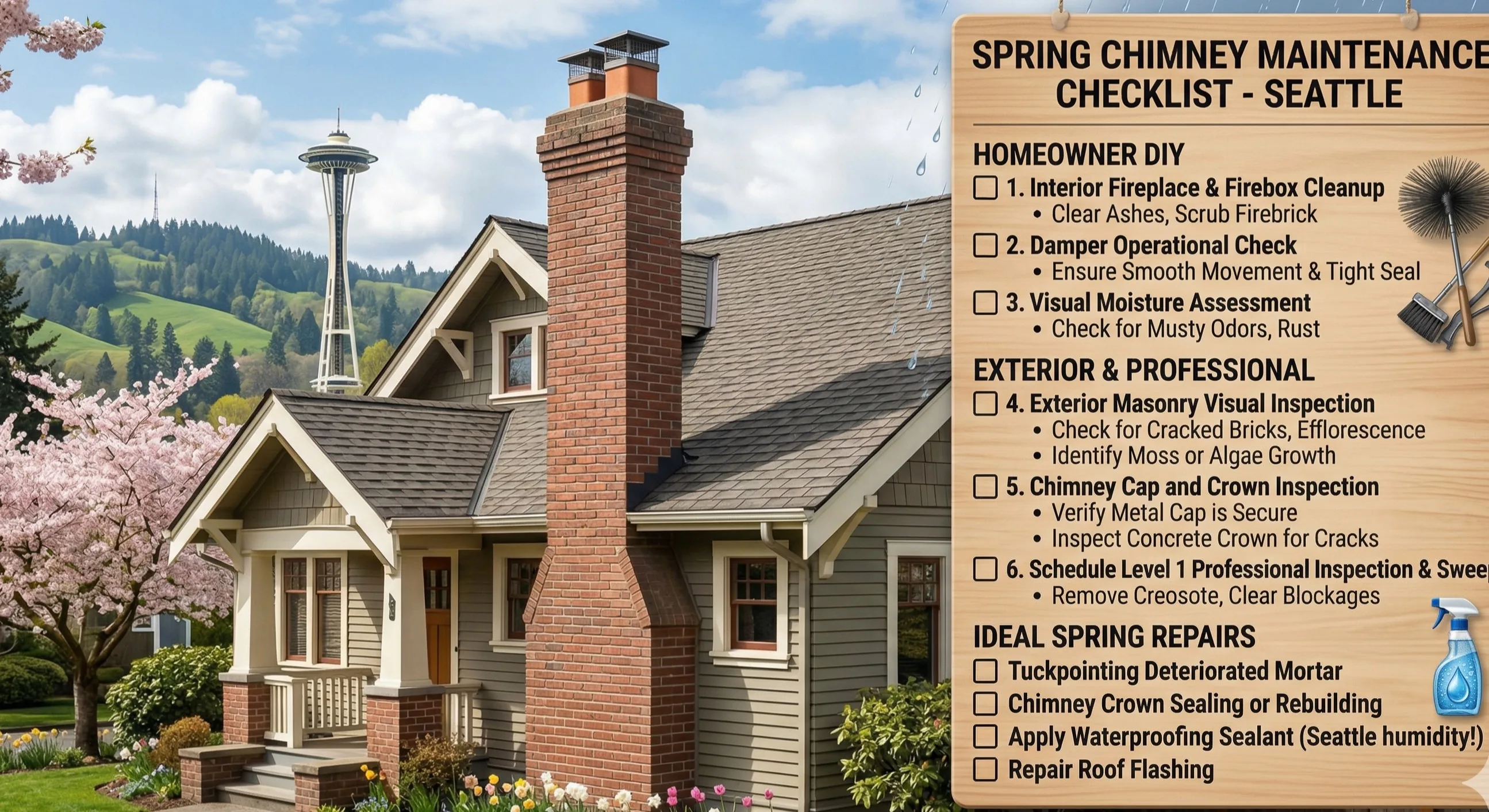
These frequencies reflect our Seattle and greater King County service area — the numbers in Tacoma and older Bellevue neighborhoods with comparable housing stock are nearly identical. In newer construction (post-1990), mortar and crown issues are less frequent, but liner and gas appliance-related findings are proportionally higher. Our spring chimney maintenance checklist covers the homeowner-accessible checks you can do between professional inspections.
What Should You Do If Your Inspection Report Finds a Problem?
A professional inspection should produce a written report — not just a verbal summary — documenting each finding, its severity, and the recommended action. At Seattle Chimney Pros, every inspection generates a written report with photographs so you have a clear visual record of what was identified and where. Here is how to act on what you receive:
- Identify safety findings first. Liner deterioration with exposed gaps, open smoke chamber joints, or compromised firebox components are use-stopping issues. Do not light a fire until these are addressed by a qualified technician.
- Address active water entry within weeks. Failed flashing, missing or damaged caps, and severe crown cracking should be repaired promptly. In Seattle, even a brief delay means additional water infiltration through ongoing summer rain events.
- Schedule deterioration repairs this season. Mortar repointing, minor crown cracking, and damper issues are not emergencies, but addressing them this summer prevents a more expensive repair by fall.
- Monitor low-priority findings and re-inspect next year. Minor refractory joint cracking, minor efflorescence, or early-stage mortar softening may be flagged for monitoring rather than immediate action — ask your inspector for a specific re-check timeline.
- Request itemized written estimates before authorizing any repair. A legitimate inspection company gives you time to review findings without manufacturing urgency. Get a written, itemized estimate and compare it against our repair cost guides before approving work.
For context on what each repair type should cost in Seattle, our chimney inspection cost guide and related resources give you the benchmarks to evaluate estimates fairly. Our Ravenna service area page lists typical repair timelines for that neighborhood, and our Wallingford area page covers scheduling in that part of the city.
Schedule Your Spring Chimney Inspection With Seattle Chimney Pros
Summer is the ideal time to address winter damage before another heating season begins. Seattle Chimney Pros performs spring and summer chimney inspections across the entire Seattle metro — from Capitol Hill and Queen Anne to Ballard, Bellevue, and Tacoma. Every inspection is performed by a CSIA-certified technician who documents findings with photographs and delivers a written report before leaving your property.
To schedule a chimney inspection, call (206) 278-2924 or request an appointment online. Most summer appointments are available within five to seven business days, with priority scheduling for active leaks or safety concerns. Don't wait until October — summer slots fill fast once homeowners start thinking about fall.
Need professional help?
Our professionally trained team is ready. $99 inspection credited toward repairs, 30-minute response.