Winter Chimney Safety Tips for Seattle Homeowners in 2026
What Every Seattle Homeowner Must Know About Winter Chimney Safety in 2026
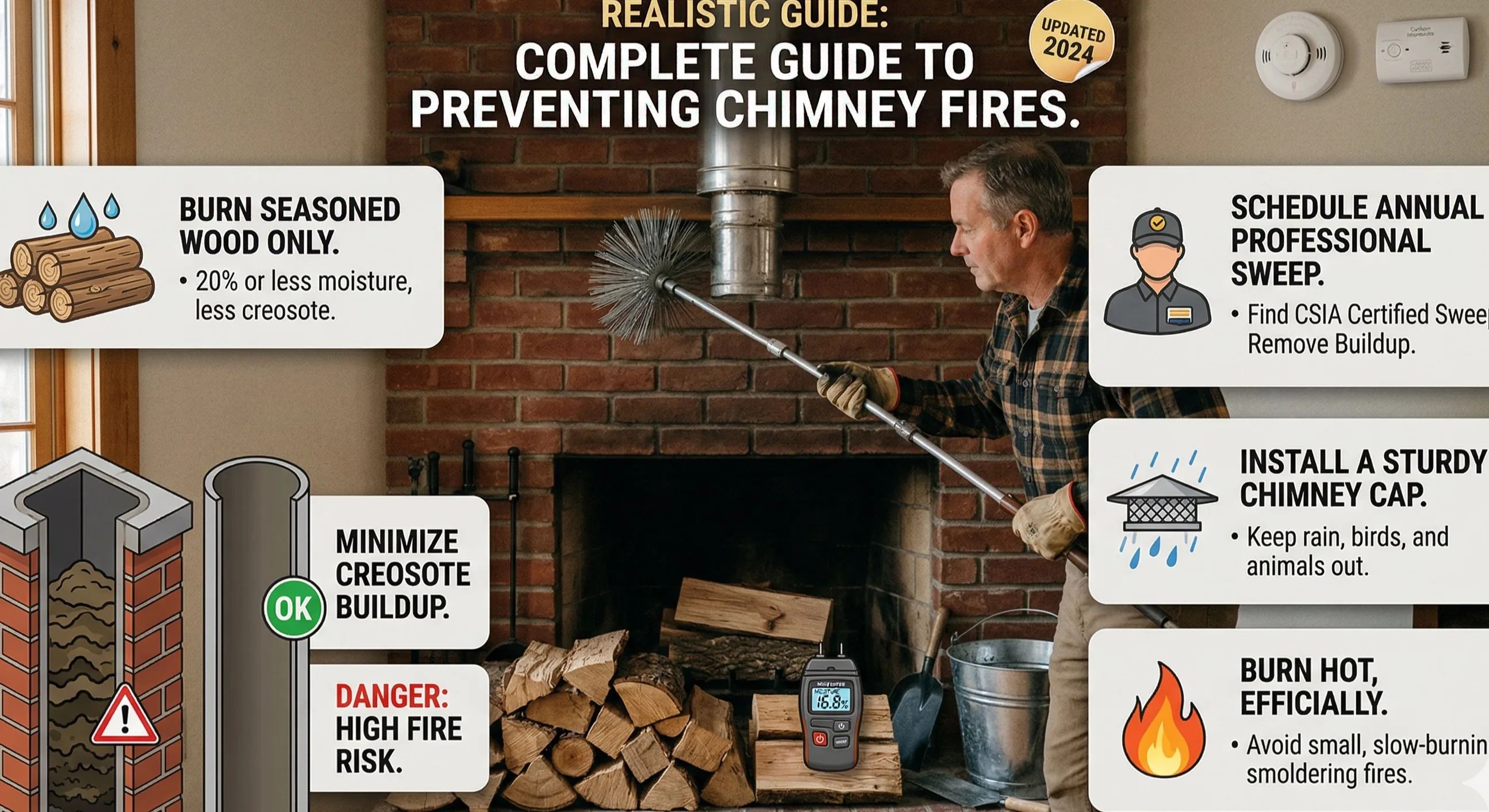
In Seattle, winter chimney safety means preventing three distinct dangers: chimney fires from creosote buildup, carbon monoxide intrusion from cracked liners or blocked flues, and structural water damage from our 38+ inches of annual rainfall. Based on over 870 chimney inspections and sweeps our team completed across the Seattle metro area last winter, roughly 1 in 4 chimneys we visit shows at least one active safety hazard before the homeowner is aware of it. The good news: every major risk is preventable. Annual sweeping ($169–$329), working CO detectors, seasoned hardwood, and a monthly visual exterior check address the vast majority of issues before they become emergencies. Current as of June 2026.
A Real Winter Emergency: Marcus T. in Greenwood
Last January, Marcus T. noticed something alarming in his 1958 Greenwood split-level: a low, rumbling sound coming from the fireplace, followed by a sharp smell of burning tar. He'd had a fire going for about two hours. His wife spotted dark smoke puffing back into the living room and Marcus immediately called 911 — and then called us.
Our technician Ryan arrived within the hour after the fire department cleared the scene. The exterior of the upper flue was warm to the touch even from the ladder. Inside, the story was clear.
'This was a textbook Stage 2 creosote fire. The shiny, tar-like deposits had built up to about a quarter-inch thickness and ignited during a hot burn. The smoke Marcus saw backdrafting was the chimney pressure reversing as the fire inside the flue competed with the fire in the firebox. He did exactly the right thing calling 911 first.'
— Ryan, Senior Technician, Seattle Chimney Pros
Ryan found a cracked clay tile in the mid-section of the flue where the fire had concentrated heat, along with a partially blocked rain cap that had been trapping moisture and accelerating creosote hardening through freeze-thaw cycles all fall. The repair required a stainless steel liner replacement and a new chimney cap installation — total cost $1,840. The family had not had the chimney swept since moving in three years prior.
'We burn maybe four or five times a month,' Marcus told us afterward. 'I had no idea that was enough to cause this. We're on the annual sweep list now — no question.' His next scheduled inspection is October 2026, right before burning season opens.
How Much Does a Chimney Fire or CO Incident Actually Cost Seattle Homeowners?
The financial case for preventive chimney maintenance is stark. Here's what we see regularly across the Seattle metro, based on jobs completed in 2025–2026:
| Scenario | Preventive Cost | Reactive / Damage Cost |
|---|---|---|
| Annual chimney sweep | $169–$329 | N/A — this IS prevention |
| Creosote fire / flue damage | Sweep prevents it | $1,200–$6,000+ (relining + repair) |
| Cracked liner → CO intrusion | $299 Level 2 inspection | $3,000–$9,000 (relining) + medical bills |
| Water intrusion from failed cap/crown | $185–$450 (cap + crown seal) | $800–$4,500 (masonry + liner damage) |
| Chimney fire structural damage | Sweep + inspection | $8,000–$50,000+ (rebuild or demolition) |
The U.S. Fire Administration reports over 25,000 residential chimney fires annually nationwide. In Washington State, our wet winters and long burning seasons mean the risk window is nearly double that of drier states.
What Are the Most Dangerous Winter Chimney Hazards in Seattle?
Seattle's climate creates a specific risk profile that differs from inland or drier cities. Three hazards dominate our winter call volume:
- Stage 2 and Stage 3 creosote buildup: Long, cool burns with wet wood — common in Seattle — produce the most dangerous forms of creosote. Stage 2 is a shiny, tar-like coating; Stage 3 is a thick, glazed deposit that is extremely difficult to remove and highly flammable. In 2025, about 38% of chimneys we swept in Greenwood, Ballard, and Northgate showed Stage 2 buildup.
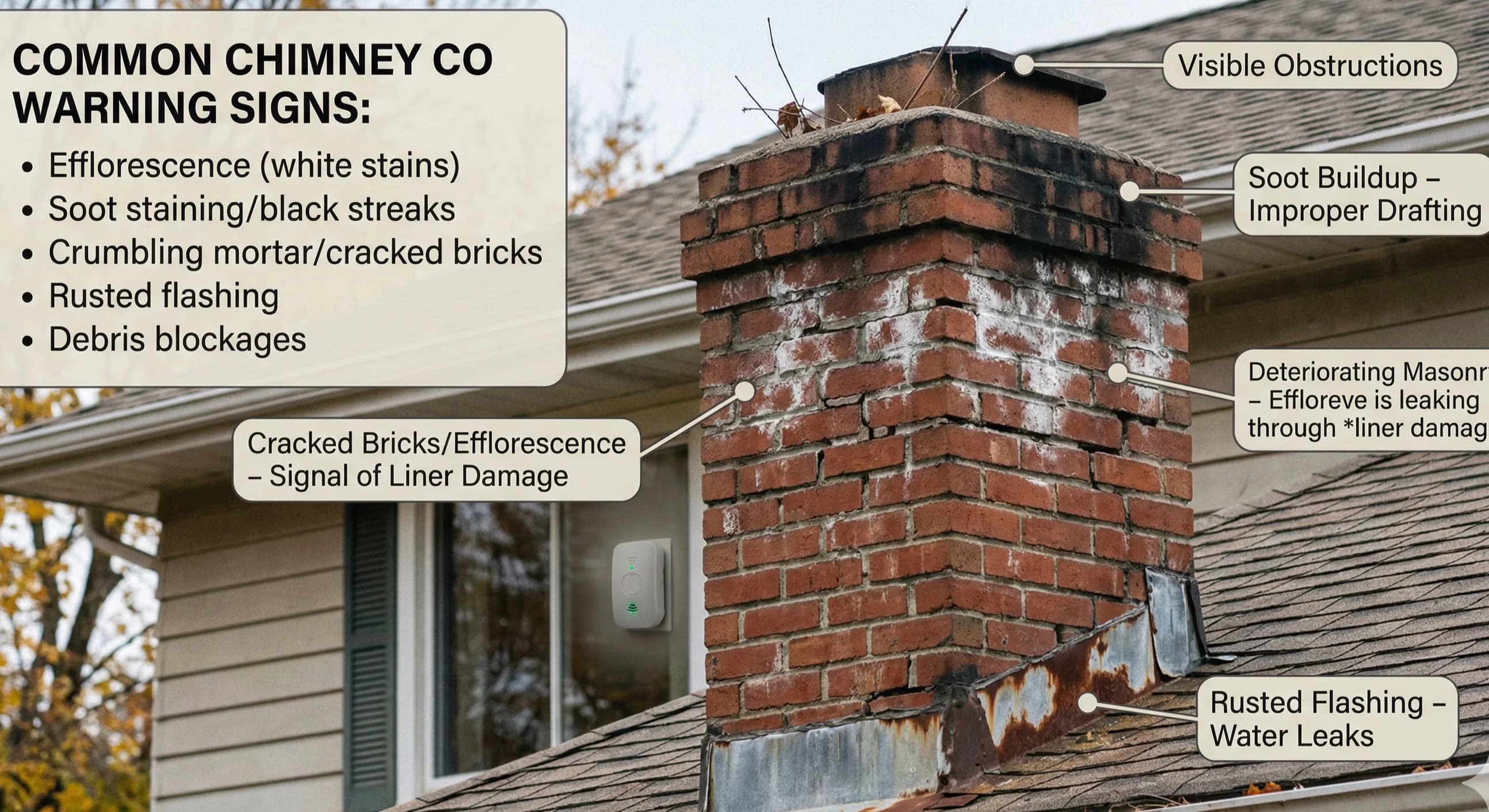
- Liner cracks from freeze-thaw cycling: Seattle's winter temperatures oscillate around freezing repeatedly each season. Water absorbed by mortar joints and clay flue tiles expands when it freezes, cracking the liner from the inside. A cracked liner allows carbon monoxide to seep into living spaces.
- Blocked or missing chimney caps: Winter storms dislodge caps regularly. A missing cap lets rain and debris — including birds and squirrels — enter the flue. Debris blockages are a leading cause of CO buildup and smoke backdrafting.
What Should You Do Right Now to Make Your Chimney Winter-Safe?
If you're heading into a Seattle winter and haven't done a chimney check yet, here's the priority order based on what our technicians find most urgently during fall inspections:
- Schedule a sweep and Level 1 inspection immediately if you haven't had one in the last 12 months. Don't wait until October — our schedule fills by mid-September every year. A sweep removes creosote and the inspection catches liner cracks and cap damage before the first fire of the season.
- Test every smoke and CO detector in your home today. Washington State law requires CO detectors within 15 feet of all fuel-burning appliances. Replace any unit older than 7 years. Ensure battery backup exists even if hardwired.
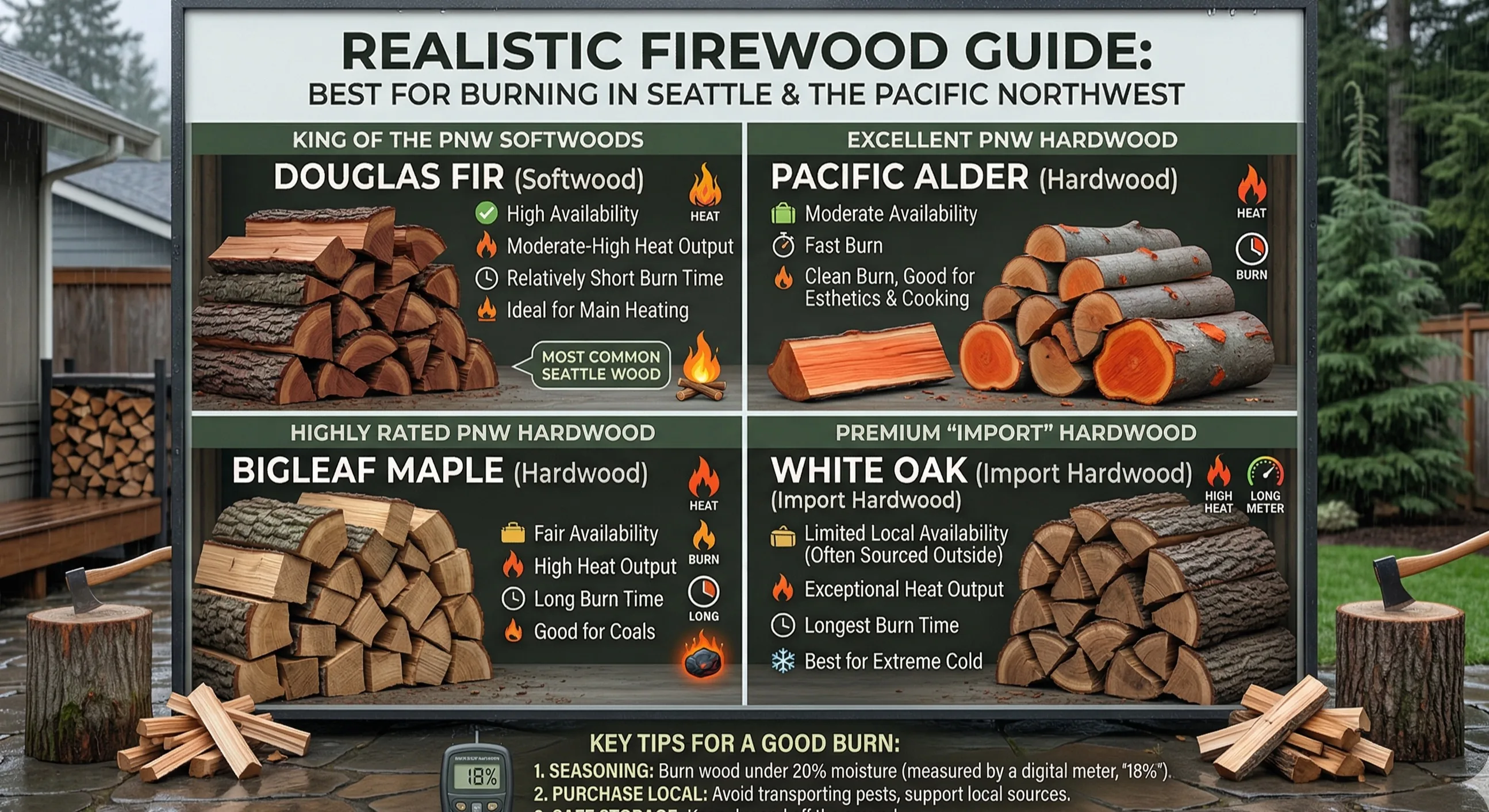
- Verify your firewood is properly seasoned. Check the end grain — it should show visible cracks. Strike two pieces together: seasoned wood sounds hollow, green wood sounds dull. Moisture content should be below 20% (a $20 moisture meter confirms this).
- Walk outside and look at your chimney cap and crown. A missing or cracked cap needs replacement before the first burn. Look for white staining (efflorescence) on the brick — it signals water has already been entering the masonry.
- Clear a 3-foot radius around the firebox opening before your first burn of the season. Remove decorations, furniture, rugs, and any stored materials from the hearth area.
What Types of Wood and Materials Should You Never Burn in a Seattle Fireplace?
Burning the wrong fuel is one of the fastest ways to create Stage 2 creosote and toxic fume hazards. Our technicians see the consequences of these mistakes on nearly every non-maintained chimney we inspect:
- Green or wet wood: Produces 3–5x more creosote than seasoned hardwood. The single biggest contributor to dangerous buildup in Seattle homes.
- Treated, painted, or stained lumber: Releases arsenic, chromium, and copper oxide fumes. These are toxic and also corrode stainless steel liners over time.
- Plywood, OSB, or particleboard: Formaldehyde-based adhesives produce carcinogenic fumes at fireplace temperatures.
- Cardboard in large quantities: Burns extremely hot and fast, launching large burning embers up the flue and onto the roof or nearby trees.
- Driftwood or saltwood: Salt content corrodes clay and stainless liners rapidly. We see this in homes near Puget Sound frequently.
- Holiday gift wrap, ribbons, or foil: Metallic inks and coatings produce toxic compounds. Keep the Christmas morning fire purely wood.
The best firewood choices for Seattle homes are Douglas fir, maple, madrone, and alder. See our complete Pacific Northwest firewood guide for seasoning timelines and local suppliers.
How Do You Recognize the Warning Signs of a Chimney Fire in Progress?
Chimney fires don't always announce themselves with dramatic flames shooting from the top. Many — called 'slow chimney fires' — burn through creosote deposits at lower temperatures, causing liner damage without obvious visual signs. Here's what to watch and listen for during any fire:
- Loud cracking or popping sounds from inside the flue — distinct from normal wood-burning sounds
- Deep rumbling or roaring resembling a freight train passing nearby
- Unusually intense flames that are difficult to control with the damper
- Dense, dark smoke billowing from the chimney top (ask a family member to check outside)
- Smoke backing into the room from the firebox — a sign of flue pressure disruption
- A strong, acrid burning smell different from normal wood smoke
If you observe any of these signs: close the damper if you can do so safely, get everyone out of the house, call 911, and do not use water on the fire. After the fire department clears the scene, call us before relighting. Read our complete chimney fire emergency guide for the full protocol.
How Does Seattle's Winter Rain Affect Chimney Safety?
Seattle averages 38 inches of annual rainfall, with the heaviest months running November through March — exactly when chimneys are in heaviest use. Water is chimneys' most persistent enemy for three reasons:
First, water infiltration through a cracked crown or failed chimney flashing saturates the masonry. When temperatures drop below freezing — which happens repeatedly in Seattle winters — that water expands inside the brick and mortar, accelerating spalling and cracking. Second, moisture inside the flue reacts with creosote deposits and combustion byproducts to form sulfuric and carbonic acids that erode clay liner tiles from the inside. Third, a saturated chimney structure is a far weaker fire barrier — cracks that would otherwise be minor gaps become pathways for combustion gases and CO to migrate into wall cavities and living spaces.
In our Seattle service area, we recommend a chimney waterproofing treatment every 3–5 years using a vapor-permeable masonry sealant. It costs $275–$450 and dramatically extends the life of the crown and upper courses of brick. If you notice water stains in the firebox, a musty smell near the hearth, or dripping sounds during rain, stop using the fireplace and call us — water damage compounds quickly once it starts. Learn more about what causes chimney leaks in Seattle rain.
Winter Chimney Safety at a Glance: Monthly Checklist for Seattle Homeowners
Here's what our technicians recommend homeowners track through Seattle's October–April burning season:
| Month | Action Item | DIY or Pro? |
|---|---|---|
| September / October | Schedule annual sweep + Level 1 inspection before first burn | Pro required |
| October | Test all smoke and CO detectors; replace batteries | DIY |
| October | Confirm firewood is seasoned (moisture meter check) | DIY |
| November | Exterior visual check: cap, crown, flashing | DIY (from ground) |
| December | Clear 3-foot hearth radius; check screen / glass doors | DIY |
| January | Check for water stains in firebox after heavy rain events | DIY |
| February | Mid-season check: any unusual smells, smoke behavior, sounds? | DIY — call us if yes |
| March | Post-winter exterior inspection for freeze-thaw damage | Pro recommended |
| April | Final burn of season; schedule spring waterproofing if needed | Pro for waterproofing |
Stay Safe This Winter — We're One Call Away
Seattle's long burning season makes chimney maintenance a genuine safety necessity, not an optional extra. The three most important actions you can take right now: schedule your annual sweep if it's been more than 12 months, confirm your CO detectors work with battery backup, and do a quick exterior visual check of your cap and crown before your next fire. If anything looks wrong — or if you just want peace of mind before winter — our team is ready. Call us at (206) 278-2924 or schedule online at our contact page. We serve the full Seattle metro area and offer same-day service for emergencies.
Need professional help?
Our professionally trained team is ready. $99 inspection credited toward repairs, 30-minute response.