Chimney Relining Cost in Seattle 2026: Liner Types, Prices & What to Expect
What Does Chimney Relining Cost in Seattle in 2026?
Chimney relining in Seattle costs between $1,500 and $5,000 in 2026, with most homeowners paying $2,200–$3,200 for a flexible double-wall stainless steel liner on a standard two-story home with a 25–35 foot flue. Based on over 340 relining projects our team completed across the Seattle metro area in the past two years, the average installed cost for a wood-burning system is $2,650, including the pre-inspection and top hardware. Gas appliance liner installs average $1,750 — lower because gas systems tolerate a lighter-gauge liner and rarely require clay tile removal. Seattle runs 15–25% above national averages due to local labor rates and the rooftop access complexity of the Pacific Northwest's steep residential lots. Current as of July 2026.
A Real Relining Job: Margaret T. in Capitol Hill
Margaret T. purchased a 1927 brick Craftsman on 15th Avenue East last spring. Her home inspector flagged the chimney for further evaluation, specifically noting 'possible liner deterioration — Level 2 inspection recommended before use.' Margaret wanted to use the fireplace that winter, so she called us in June to get ahead of the fall rush.
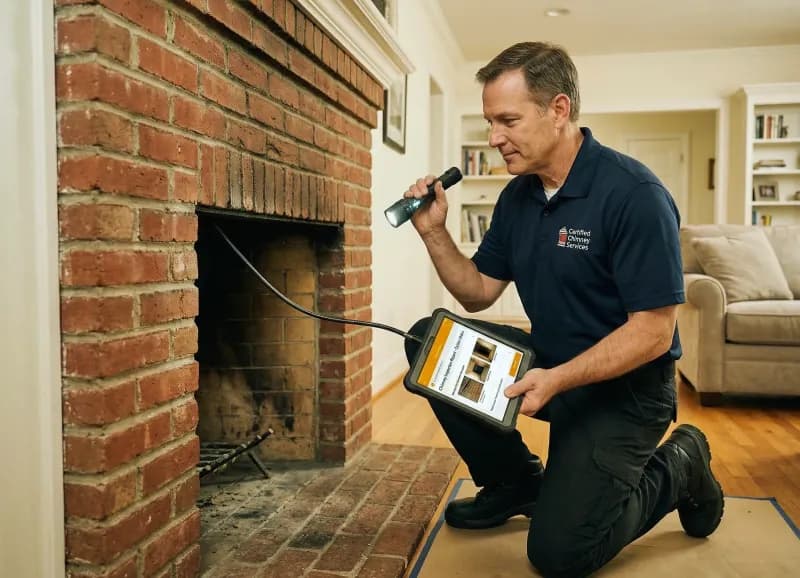
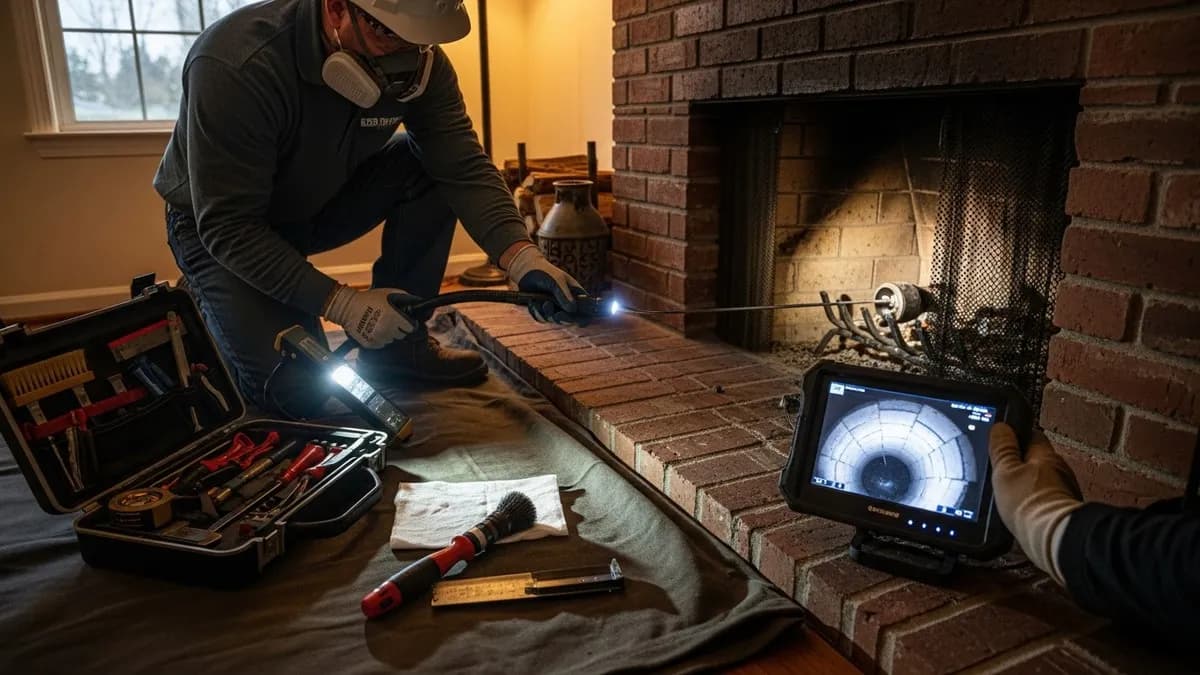
Ryan arrived on a Tuesday morning with a full camera inspection kit. The chimney was a two-story stack — about 28 feet from the firebox to the crown — with what appeared from below to be the original clay tile liner. He set up the camera at the firebox and began working it up the flue.
What he found was textbook moisture damage: nearly every mortar joint between the clay tiles had deteriorated significantly from the top 12 feet down, and three of the tiles themselves had partially shaled — fragments were visible on the smoke shelf. The bottom half of the liner was structurally intact but the joint failures in the upper section meant combustion gases could contact the surrounding masonry and, in the worst case, migrate through the brick toward the attic framing on the adjoining wall.
'That upper section is the problem. Those mortar joint gaps are wide enough that in a hot fire, you're pushing combustion gases directly into the brick cavity. The tile itself might look okay from a distance, but once the joints go, the liner's containment function is compromised — that's when it becomes a safety issue, not just a maintenance one.'
— Ryan, Lead Technician, Seattle Chimney Pros
Ryan walked Margaret through the camera footage on his tablet. Given the degree of joint failure in the upper flue and the shaling, the recommendation was a full flexible double-wall 316L stainless liner — fed from the top down through the existing tile structure, which could remain in place since it was not collapsed. No clay removal needed. The liner was installed the same week. Total project cost: $2,850, which included the Level 2 inspection, the 28-foot double-wall 316L liner with insulation wrap, and a new stainless cap fitted to the existing crown. Margaret's fireplace was confirmed safe and operational before the first cold week of September.
What Is a Chimney Liner and When Does a Seattle Home Need Relining?
A chimney liner is the interior channel that runs the full height of your chimney — from the firebox or appliance connection at the bottom to the cap at the top. It does three things: contains combustion byproducts so they exit the home safely rather than seeping into masonry and living spaces; protects surrounding brick from direct heat exposure; and provides the correctly sized flow path that determines how efficiently your fireplace or appliance drafts.
Every chimney in the Seattle metro serving a solid-fuel appliance is required by Washington State building code — WAC 51-51, adopting the International Residential Code — to have a liner meeting NFPA 211 standards. Gas appliances venting through a masonry chimney also require a properly sized liner per fuel type. Yet in our inspections of pre-1970 Seattle homes, we find that roughly 38% have liners that are either unlined, deteriorated past safe use, or sized incorrectly for the appliance currently connected.
Relining becomes necessary in four situations:
- Inspection reveals the liner is cracked, collapsed, or deteriorated: The most common trigger in Seattle's older housing stock. Clay tile liners installed in the 1920s–1960s fail through mortar joint deterioration and freeze-thaw tile cracking, particularly when chimney caps have failed and allowed direct rain entry over years.
- You are installing a new appliance or converting fuel types: Converting from a wood fireplace to a gas insert, or adding a high-efficiency furnace that vents through an existing chimney, requires a liner sized to the new appliance's BTU output and fuel type — the original liner may be the wrong diameter or wrong material.
- After a chimney fire: Even a brief chimney fire reaching high temperatures can crack clay tile liners through thermal shock. Never use a fireplace after a known or suspected chimney fire until a Level 2 inspection confirms liner integrity.
- Purchasing a home with an older chimney: A Level 2 inspection is standard practice for any home purchase with a wood-burning fireplace — particularly pre-1970 construction. Our guide to chimney inspections when buying a home in Washington covers what to look for and how to negotiate repair credits.
What Are the Signs Your Chimney Liner Needs Replacement?
A failing liner does not always announce itself dramatically. Some signs are subtle and require a camera inspection to confirm. Others are visible at the firebox or on the exterior masonry.
Signs at the Firebox
- Clay tile shaling: Small fragments of tile appearing on the firebox floor are liner debris — pieces breaking off and falling down inside the flue. This is one of the clearest homeowner-visible signs that liner replacement is needed.
- Smoke backing into the house: A damaged or partially collapsed liner loses the smooth, correctly sized flow path that creates efficient draft. If a fireplace that previously drew well begins consistently pulling smoke into the room at startup, a damaged liner is among the likely causes. See our article on why smoke backs up into the house for a full diagnostic.
- Visible cracks when viewed from below: Using a strong flashlight angled up into the flue from the firebox, visible cracking or displacement of clay tiles indicates structural failure. A Level 2 camera inspection provides complete documentation from top to bottom.
Signs on the Exterior Chimney
- Efflorescence running down from the flue area: White salt staining originating at the flue level and running down the exterior masonry suggests moisture is traveling through liner cracks and saturating surrounding brick. This is distinct from efflorescence caused by crown or flashing issues, which typically appears at the very top.
- Spalling or staining of firebox walls above the damper: Dark staining or deterioration of firebox walls above the damper can indicate combustion gases bypassing a failed liner and contacting masonry directly.
Situation-Based Triggers
- After any chimney fire: NEVER use a fireplace after a known or suspected chimney fire until a Level 2 camera inspection has confirmed liner integrity. Cracked liners after chimney fires are a documented cause of house fires on subsequent use. Our guide to chimney fire emergencies covers immediate steps and inspection requirements.
- Appliance conversion or new appliance installation: The original liner may be the wrong diameter or material for the new appliance. Correct sizing is a safety and code requirement, not optional.
Chimney Relining Cost in Seattle: 2026 Pricing by Liner Type
Relining costs reflect material costs, linear footage of the flue, any existing liner removal required, and local labor. The table below covers installed cost ranges for the liner types most commonly used in Seattle metro relining projects in 2026:
| Liner Type | Material/ft | Total Installed Range | Best Application |
|---|---|---|---|
| Flexible stainless steel — single-wall (304 grade) | $20–$40/ft | $1,000–$2,600 | Gas appliances; simple straight-run retrofits in newer homes |
| Flexible stainless steel — double-wall (316L grade) | $40–$90/ft | $1,500–$3,800 | Wood stoves, wood-burning fireplaces; preferred for Seattle wet climate |
| Rigid sectional stainless steel | $30–$60/ft | $1,700–$3,700 | Straight-run flues with unobstructed path; masonry fireplaces |
| Cast-in-place liner (pumped-in cementitious) | $100–$200/ft | $2,400–$6,000 | Severely deteriorated masonry; irregular or offset flue shapes; all fuel types |
| Clay tile — full replacement | Variable | $3,500–$8,000+ | New chimney construction or full structural rebuild only; not a retrofit option |
Additional costs that commonly affect the final price: existing clay liner removal ($500–$2,500 depending on condition and degree of collapse), insulation wrapping ($575–$1,200 for high-efficiency appliances and wood stoves where code requires it), and the Level 2 pre-inspection that must precede any relining work ($250–$500, sometimes credited toward the project total).
Based on the 340+ relining projects we completed between 2024 and mid-2026, approximately 61% used a double-wall flexible stainless liner, 22% used cast-in-place, 11% used single-wall stainless for gas applications, and 6% used rigid sectional systems. The double-wall flexible stainless dominates because it handles the offsets and slight angles common in older Seattle chimneys while offering 25-year-plus service life in Pacific Northwest conditions.
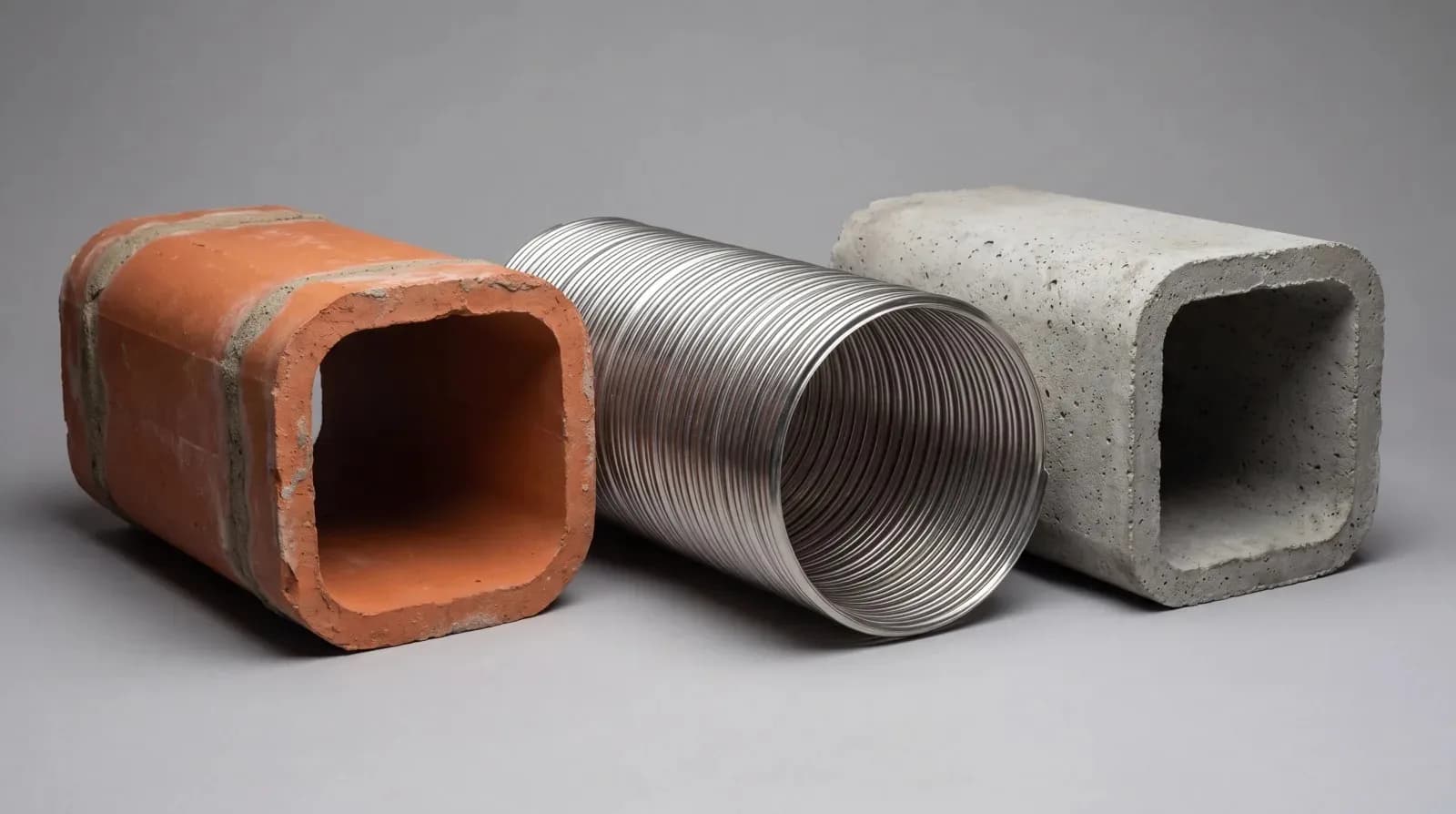
Stainless Steel vs. Cast-in-Place vs. Clay Tile: Which Liner Is Right for Your Seattle Chimney?
Each liner type has specific applications where it outperforms the alternatives. Choosing the wrong liner for your chimney configuration or fuel type creates performance problems and potentially shortens the liner's service life. Here is how each type performs in Pacific Northwest conditions:
Flexible Double-Wall Stainless Steel (the Seattle Standard for Retrofit)
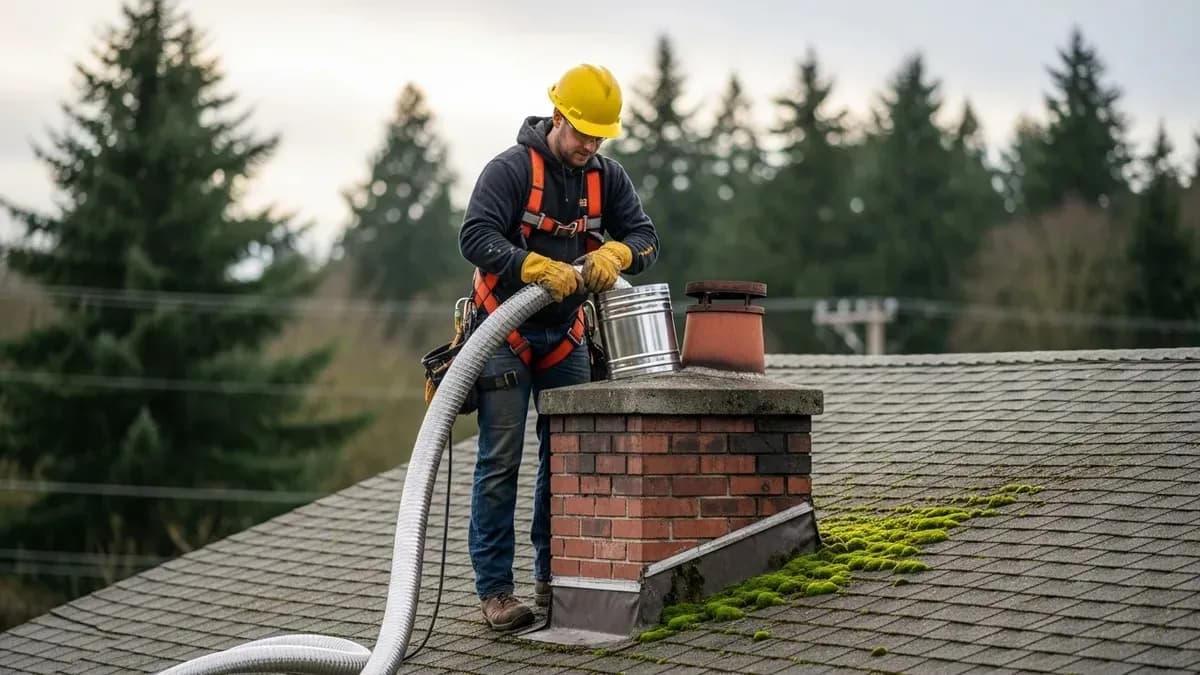
Flexible stainless steel is the dominant choice for Seattle chimney relining because it installs through existing flues without major masonry work, handles the offsets and slight angles common in older Seattle chimneys, and resists the corrosion that Seattle's wet climate accelerates in inferior materials. For wood-burning applications, 316L stainless — higher chromium and molybdenum content than 304 — is the specification to request. It outperforms 304 grade in the acidic, high-moisture environment inside an active wood-burning flue, and most quality manufacturers offer 25-year or lifetime limited warranties on 316L liners.
The double-wall (air-insulated) version is strongly recommended for wood stoves and wood fireplaces. The insulated wall keeps flue gases hotter through the full liner length, which maintains draft velocity and reduces creosote condensation — critical performance factors in Seattle's climate, where cool ambient temperatures outside the chimney can cool flue gases faster than in warmer regions.
Cast-in-Place (When Masonry Is Too Deteriorated for a Flexible Liner)
Cast-in-place lining involves pumping a specialized cementitious compound into the existing flue using a form that is pulled up as the material is placed, creating a seamless circular liner bonded to the surrounding masonry. It is more expensive per linear foot than stainless — roughly $100–$200/ft versus $40–$90/ft for double-wall stainless — but it is the right choice when the existing flue masonry is too deteriorated or structurally irregular to reliably support a flexible liner.
In our inspections of pre-1920 Seattle masonry chimneys — the brick stacks of Capitol Hill's Victorian homes and Madrona's craftsman-era construction — we regularly encounter flues with mortar joint failure, loose tile, and irregular shapes that would not provide stable liner support. Cast-in-place essentially rebuilds the flue interior with a new, smooth, correctly sized channel that is bonded to the surrounding masonry and provides structural reinforcement as well as a reliable liner. It handles all fuel types under NFPA 211 and lasts 25–30 years in service.
Clay Tile (New Construction Only)
Clay tile is the original liner material in Seattle's pre-1980 chimney stock and can last 50+ years when intact, properly maintained, and protected by a functioning cap. But clay tile cannot be installed as a retrofit inside an existing flue — it requires full interior access during construction. For the vast majority of Seattle relining projects, which involve repairing or upgrading an existing chimney, stainless or cast-in-place is the appropriate choice.
Our full comparison of chimney liner types — clay, stainless, and cast-in-place covers the material differences, performance characteristics, and NFPA specifications in detail.
What Factors Affect Chimney Relining Cost in the Seattle Metro?
The price ranges in the table above are starting points. Several factors specific to your chimney and property move the final number within or beyond those ranges:
- Flue length: Most relining quotes are priced on a per-linear-foot basis for materials, plus labor. A single-story Seattle home with a 15–20 foot chimney will pay less for the same liner type than a two-story home with a 28–35 foot flue.
- Flue cross-section size: Larger flue dimensions require proportionally more liner material. An 8×8 inch flue takes less material than a 12×12 or 13×13 — common sizes in older Seattle Victorian and Craftsman homes built for large, open-hearth fireplaces.
- Roof access complexity: Seattle's residential topography includes many steep lots and multi-story homes where rooftop access requires additional safety equipment and longer setup time. Properties in Queen Anne, Capitol Hill, and portions of Madrona with challenging lot grades frequently carry access surcharges that reflect actual equipment and labor costs.
- Existing liner removal: If the clay tile liner is collapsed or must be removed before the new liner is installed, removal adds $500–$2,500 to the project. Whether removal is needed is determined during the Level 2 pre-inspection. In our experience, about 40% of Seattle relining projects require at least partial clay removal.
- Insulation requirement: Wood stoves and high-efficiency gas appliances typically require insulated liner installation per NFPA 211 and manufacturer specifications. Insulation wrap adds $575–$1,200 depending on flue length and insulation type.
- Number of flues: Victorian and older Craftsman homes in Seattle commonly have two- or three-flue chimneys. Each flue requires its own liner, though rooftop access labor is shared across all flues on a single chimney, reducing per-flue access cost.
- Timing and urgency: Scheduled relining work is priced at standard rates. Emergency relining after a chimney fire typically carries a 20–30% surcharge due to priority scheduling and potential after-hours work.
How Long Will a New Chimney Liner Last in Seattle's Climate?
Liner longevity in Seattle's wet Pacific Northwest climate is meaningfully affected by liner grade, whether the chimney is properly capped, how the connected appliance is operated, and whether annual maintenance is maintained. Here are realistic service lives for each liner type:
- 304 grade stainless steel (single-wall): 15–20 years in typical Seattle conditions. Used primarily for gas applications. The lower chromium content of 304 versus 316L makes it less suitable for wood-burning applications, where combustion byproducts are more acidic and moisture-laden.
- 316L grade stainless steel (double-wall): 25–30+ years with proper maintenance. Most manufacturers offer 25-year or lifetime limited warranties on 316L liners. This is the specification to require in any wood-burning relining project in Seattle.
- Cast-in-place liner: 25–30 years. The seamless, bonded nature of cast-in-place eliminates the joint-by-joint deterioration pathway that affects clay tile, and the material is inherently resistant to the acidic flue gas environment.
Three practices extend liner life significantly in Seattle's climate:
- Annual chimney sweeping: Creosote is acidic when it absorbs moisture and accelerates stainless liner corrosion when allowed to accumulate. Annual sweeping removes creosote before it has an extended contact period with the liner surface. Our guide on how often Seattle chimneys need sweeping covers frequency recommendations by fuel type and use level.
- Proper chimney cap installation: Rain is the primary accelerant of liner deterioration in the Pacific Northwest. A correctly fitted chimney cap eliminates direct rainwater entry into the flue. Our chimney cap installation service covers the cap options that work best with each liner type.
- Correct appliance operation: Hot, efficient fires maintain high flue temperatures that minimize creosote formation and reduce condensation inside the liner. Smoldering, low-temperature fires are the leading cause of rapid creosote accumulation — and the associated accelerated liner deterioration — in wood-burning systems. Burning only dry, seasoned hardwood and running hot fires rather than extended smoldering fires is the single most impactful maintenance practice a homeowner controls.
Is Chimney Relining Covered by Homeowner's Insurance in Washington?
This is one of the most common questions we receive when presenting relining findings to Seattle homeowners. The short answer: it depends on the cause of the liner damage, and documenting that cause clearly is the key to a successful claim.
Standard homeowner's insurance typically does NOT cover: Normal wear and tear. A clay tile liner that has deteriorated over 40 years from regular use and age-related thermal cycling is considered normal maintenance deterioration — not a covered peril. Similarly, a stainless liner that has corroded past its expected service life is a maintenance issue in most standard policy language.
May be covered when the damage results from a covered peril:
- Chimney fire: If a chimney fire damages your liner, and chimney fires are included as a covered peril in your policy (most standard Washington homeowner's policies cover fire damage), the liner damage may be claimable. The key is documentation: a Level 2 inspection report with photographs demonstrating that the liner damage is attributable to a specific chimney fire event, not pre-existing deterioration.
- Lightning strike: Direct lightning strikes are covered under most standard policies. Document the event and get a Level 2 inspection promptly.
- Storm damage: Storm-related chimney damage — a falling tree, windstorm displacement of the crown allowing water intrusion — may be claimable depending on policy language.
If you suspect your liner damage may be claim-eligible: (1) do not use the fireplace, (2) document everything with photographs, (3) notify your insurer before any repair work begins, and (4) get a Level 2 inspection that produces a written report linking the damage to the covered event. Our guide on filing a chimney insurance claim in Washington covers the full documentation and claim process.
Ready to Schedule a Chimney Liner Assessment?
If a chimney inspection has flagged liner damage, if you are planning an appliance conversion, or if you own a pre-1970 Seattle home with an original clay tile liner that hasn't been inspected recently, the right first step is a Level 2 camera inspection — not a relining quote. The inspection determines whether relining is actually needed, which liner type is appropriate, and what the full scope of work looks like before you make any financial commitment.
Seattle Chimney Pros has completed chimney relining projects across Seattle's historic neighborhoods — Capitol Hill, Queen Anne, Ballard, Beacon Hill, Madrona — as well as throughout the Eastside and South King County. We serve Seattle and Bellevue and 43 additional communities across King, Pierce, and Snohomish counties. Our relining assessments include a full Level 2 camera inspection with photographic documentation, a written report, and a clear itemized estimate before any work proceeds.
July is a practical time to address chimney relining in Seattle — the heating season is over, scheduling availability is strong, and any liner work completed now means your fireplace is confirmed safe well before the first cold night calls it back into service this fall. Call us at (206) 278-2924 or request an appointment online. Most assessment appointments are available within 3–7 business days of scheduling.
Need professional help?
Our professionally trained team is ready. $99 inspection credited toward repairs, 30-minute response.